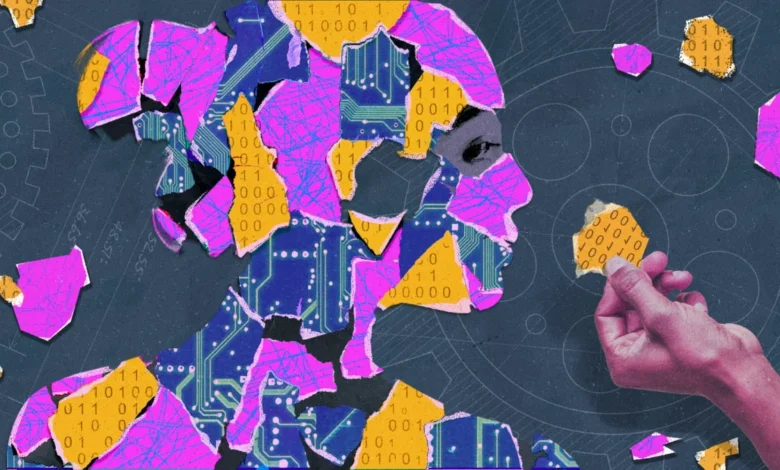
The rapid evolution of generative artificial intelligence has fundamentally dismantled the traditional "visual Turing test" that once served as a primary defense against digital misinformation. For years, internet users were conditioned to spot AI-generated content by identifying classic hallmarks: distorted hands, inconsistent skin textures, or the "uncanny valley" gaze that signaled a computer-generated fabrication. Today, those visual artifacts have largely been engineered out of existence by sophisticated diffusion models, leaving the public vulnerable to a new era of highly convincing, hyper-realistic propaganda and digital fraud.
The stakes of this technological shift are not merely theoretical. In 2025 alone, digital scams facilitated by deepfakes and AI-driven social engineering resulted in global financial losses exceeding $148 billion, marking a staggering 25 percent increase from the previous year. As these tools become more accessible to malicious actors, the boundary between documented reality and synthetic deception has blurred, forcing a paradigm shift in how we process information online.
A New Reality: When Sight is No Longer Believing
The recent history of viral imagery provides a stark case study in the volatility of modern digital information. While legitimate photographs—such as widely circulated images of Mitch McConnell in medical attire or President Trump’s high-profile meeting with Mike Tyson—often face initial scrutiny, they are frequently overshadowed by sophisticated hoaxes. Conversely, manipulated images, such as the widely debunked photograph of activist Nekima Levy Armstrong purportedly being arrested at an ICE protest, demonstrate how synthetic media can be weaponized to manipulate public perception of political figures and social movements.
The problem, according to Marijus Briedis, Chief Technology Officer at NordVPN, is that our reliance on visual inspection is a strategy with an expiration date. "Any guide built on visual artifacts has a short shelf life," Briedis notes. "Those tells are mostly gone, and whatever replaces them will be gone in a year too." As generative models are fine-tuned to eliminate glitches, the burden of verification has shifted from the pixel to the provenance.
The Chronology of the Synthetic Crisis
The transition from "detectable" to "perfect" AI content has occurred in three distinct phases.
The first phase, roughly spanning 2020 to 2023, was characterized by "low-fidelity" AI. During this period, users could reliably spot a fake by counting fingers or looking for artifacts in the background of an image.
The second phase, beginning in 2024, saw the introduction of high-fidelity latent diffusion models. This era saw the rise of the "deepfake influencer" and the widespread use of voice-cloning technology, which allowed for the creation of convincing audio recordings that could bypass automated security systems.
We are currently in the third phase: the era of "contextual manipulation." In this stage, the imagery itself is often technically perfect. The deception no longer lies in the image quality, but in the context in which it is presented. A photo might be authentic, but it may be presented with a caption, timestamp, or location that is entirely fabricated. This strategy exploits human cognitive biases, specifically confirmation bias, to spread misinformation rapidly through social media algorithms.
The Fallacy of the Automated Fact-Check
As the public has become more aware of the dangers of deepfakes, many have turned to Google and other search engines to verify the authenticity of viral media. However, recent developments in AI-integrated search have complicated this process. Sofia Rubinson, a senior editor at the misinformation watchdog NewsGuard, highlights a growing concern: AI-powered search overviews are increasingly prone to reinforcing, rather than debunking, digital hoaxes.
"Fact-checkers used to depend on traditional search platforms to help research the origins of photos and videos," Rubinson explains. "But we have found that the AI-powered Google Search often misattributes imagery as depicting what misinformers claim." This feedback loop creates a dangerous environment where the very tools designed to provide answers can be manipulated to serve as engines for misinformation.
Strategic Verification: Moving Beyond the Image
Cybersecurity experts, including Roei Sherman, senior director of research at the cloud security firm Mitiga, suggest that the most effective way to combat synthetic media is to abandon the hunt for "glitches" and focus on the source. "Short clips cut out of context are where most of the manipulation lives," Sherman states. "Every detection tip we publish eventually becomes a line in someone’s prompt."
Instead of analyzing pixels, experts recommend a more methodical approach to information hygiene:
- Cross-Referencing Sources: If an image or video depicts a significant news event, search for it across multiple, independent, and reputable news outlets. If a "viral" moment is only appearing on a single social media account or an obscure blog, the probability of manipulation is high.
- Contextual Integrity: Look for the original, unedited footage or the full speech. Manipulation often relies on the selective editing of audio or video to change the meaning of a statement.
- The "Ragebait" Test: Be cognizant of emotional triggers. If an image or video evokes an immediate, visceral reaction—specifically anger, fear, or a sense of injustice—it is likely designed to bypass critical thinking. Algorithms are programmed to amplify content that drives high engagement, and emotional manipulation is the most effective way to achieve that.
- Professional Vigilance: Utilize resources provided by specialized organizations. Entities such as NewsGuard, McAfee, and the AI or Not tracker provide databases and monitors that document trending deepfakes and AI-powered scams.
The Logic of Plausibility
Beyond technical tools, the most reliable sensor remains the human brain’s capacity for logical analysis. Experts advise that users must cultivate a healthy skepticism toward "incendiary" content. Before sharing a post, one should ask: Is this behavior consistent with the known public record? Is it plausible that this person would say or do this in a public forum?
This logic test applies equally to the "bizarre" and the "outrageous." While some viral content—such as AI-generated art depicting improbable scenes—is created for entertainment, other content is intentionally crafted to erode public trust in institutions. The danger is that, over time, the constant exposure to fake, high-stakes content leads to "reality apathy," where the public ceases to believe in anything they see, regardless of whether it is authentic.
The Path Forward: Regulation and Provenance
While personal vigilance is the current front line of defense, the broader issue of digital authenticity is increasingly shifting toward systemic solutions. As federal oversight in the United States continues to lag behind the rapid pace of technological development, several states are beginning to enact their own regulations regarding the labeling of AI-generated content.
Simultaneously, the tech industry is moving toward "content provenance" measures. These standards, such as digital watermarking or metadata tagging, aim to cryptographically verify the origin of a digital asset from the moment of capture. Apple and other major hardware manufacturers are exploring ways to implement these standards into camera software, ensuring that users can trace a photo back to a legitimate, human-operated camera sensor.
However, no single tool or regulation will act as a "silver bullet." The history of cybersecurity has proven that for every defensive measure, there is a corresponding offensive technique. As Briedis suggests, digital detection tools should be used as a starting point—a way to confirm a suspicion—rather than a definitive arbiter of truth.
If an image or video feels "off," it is a signal to stop and perform due diligence. If the source cannot be verified, or if the content cannot be corroborated by credible, independent, and primary documentation, the most responsible action is to refrain from sharing it. In an era where reality is increasingly programmable, the responsibility for maintaining the integrity of the information ecosystem rests with the consumer. As the digital landscape continues to evolve, the most essential tool in the fight against misinformation will remain the human capacity for critical inquiry and the refusal to succumb to emotional manipulation.
Related posts: