The Unflinching Lens: How Remy Buisine Became the Digital Chronicler of France’s Pension Protests

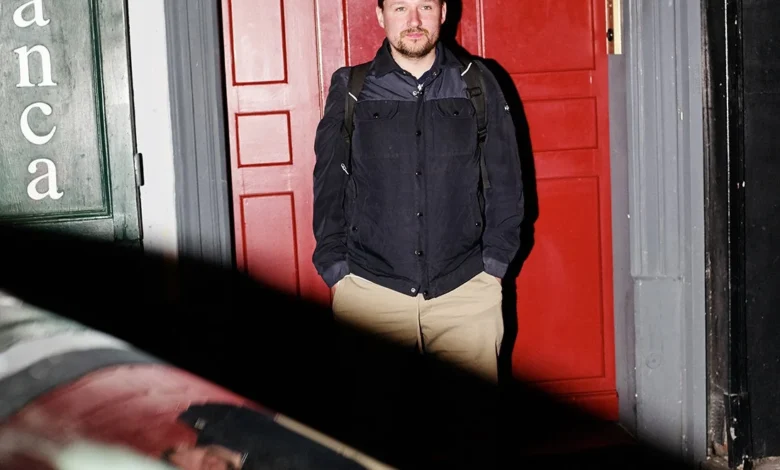
The April 6 demonstration in Paris was a sprawling, multifaceted affair, with crowd estimates fluctuating wildly between 57,000 and 400,000, depending on the source—police or union organizers. Amidst the surging tide of humanity stood Rémy Buisine, a 32-year-old video journalist for the digital outlet Brut. Dressed in a nondescript navy puffer jacket and jeans, Buisine navigated the dense crowd with the practiced ease of a veteran street reporter. His presence has become an inescapable fixture of the current French political landscape, serving as a primary digital window for millions of viewers who follow the unfolding unrest via the unfiltered, long-form medium of livestreaming.
The Catalyst: Pension Reform and Democratic Frustration
The demonstrations were originally sparked in January by President Emmanuel Macron’s proposed pension reforms. The core of the legislation—increasing the minimum retirement age from 62 to 64—was met with immediate resistance from France’s powerful labor unions. Initially, the movement was dominated by middle-aged union members and institutional labor representatives. However, the political temperature shifted drastically on March 16. When the French government invoked Article 49.3 of the Constitution to force the pension bill through the National Assembly without a parliamentary vote, the nature of the protest changed.
Thousands of citizens, particularly those under the age of 30, flocked to the Place de la Concorde in a spontaneous eruption of dissent. What followed was a series of nightly, decentralized "wild" protests across Paris and other major cities. These gatherings marked a departure from traditional, pre-organized labor marches, signaling a broader, generational disillusionment with the perceived anti-democratic maneuvers of the executive branch.
The Rise of Digital-First Journalism
Buisine’s work represents a fundamental shift in how news is consumed. His livestreams from the frontlines of teargas-filled streets have spanned up to eight hours, drawing peak audiences of 70,000 concurrent viewers on TikTok alone. Since the intensification of the protests in mid-March, Brut’s TikTok account has surged by one million followers, reaching a total of 4.2 million.
This success highlights a shift toward "native" social media reporting. Unlike legacy media, which often relies on edited packages, Buisine’s unfiltered approach allows viewers to experience the protest in real-time, including the chaotic escalation between protesters and the gendarmerie. His methodology is simple yet effective: he provides a platform for those on the street, offering long-form interviews that allow protesters to articulate their grievances beyond the soundbites typically featured on television news.
A Chronology of Confrontation: April 6
The day of the April 6 protest was characterized by high-intensity maneuvers. By 3:29 p.m., the atmosphere had thickened near the Montparnasse station. After reports of an unidentified loud bang, the crowd’s mood darkened, punctuated by chants of "ACAB." A line of gendarmes—the militarized branch of the French national police—stood with riot shields, signaling an imminent standoff.
At 3:37 p.m., the authorities issued warning shots, a standard precursor to the deployment of crowd-control munitions. As the crowd surged and retreated, Buisine positioned himself in the center of the fray, his camera active and recording. Within sixty seconds, the first tear gas canisters were launched. This specific sequence—the warning, the surge, and the chemical suppression—has become a recurring rhythm in the current wave of French civil unrest, a pattern Buisine captures with relentless consistency.
Contextualizing the Violence
The use of force during these protests has drawn international scrutiny. Journalists, including Buisine, have frequently found themselves caught in the crossfire, enduring tear gas and, on occasion, physical confrontation with law enforcement. Despite established protocols intended to protect the press, the reality on the ground remains dangerous. Buisine’s experience is not isolated; it is reflective of a volatile relationship between state security forces and the demonstrators they are tasked with containing.
Buisine recalls the earlier "Gilets Jaunes" (Yellow Vests) protests of 2018 as significantly more traumatic, citing instances of severe injury, including lost limbs and ocular trauma. While the current protests have seen fewer such catastrophic injuries, the psychological toll on those reporting on the ground is evident. The physical exhaustion is compounded by the "always-on" nature of his role, which often leaves him with little time to decompress after surviving tear-gas exposure or witnessing the destruction of urban infrastructure, such as the fire that consumed the awning of the Café de la Rotonde during the April 6 protests.
The Professional Evolution of a Digital Pioneer
Buisine’s career trajectory is as unconventional as his reporting style. Growing up in a rural village in northeastern France, he lacked the traditional pedigree of the Parisian media elite. After finishing high school with a focus on horticulture, he entered the workforce managing social media for professional soccer players.
His entry into journalism was self-taught, beginning in 2015 when he utilized the Periscope app to cover the El Khomri labor law protests. By listening to his audience’s feedback and observing the techniques of established reporters, he honed his craft. He was recruited as a founding member of Brut in 2016, at a time when the French establishment was still skeptical of social media-only outlets. The skepticism evaporated in 2020, when Buisine secured a two-and-a-half-hour, long-form interview with President Macron, proving the legitimacy and reach of the digital-first model.
Broader Implications for Democracy
The popularity of Buisine’s reporting underscores a critical trend: the decline of trust in traditional media institutions among younger, "extremely online" populations. By providing a platform for long-form, unedited dialogue, Buisine creates a sense of intimacy and accountability that traditional news cycles often lack. Protesters value his willingness to remain on-site for hours, documenting their perspective without the editorial framing of a traditional newsroom.
However, this model brings its own set of challenges. The reliance on individual "citizen-journalist" influencers to act as the primary recorders of state-citizen conflict raises questions about the sustainability of such work. The physical risks are constant, and the demand for continuous, real-time coverage prevents the kind of reflection and verification that traditional editorial boards provide. Furthermore, the reliance on platforms like TikTok and Facebook—private entities with their own algorithms and content moderation policies—means that this vital historical record is subject to the whims of tech giants.
Looking Ahead: The Cost of Commitment
For Buisine, the work is all-consuming. There is little separation between his personal and professional lives, a reality that keeps him perpetually connected to his audience. His dedication is evident in his commitment to staying at the scene long after others have departed, often following the most defiant protestors to the last of the "kettled" zones, where he provides a final, exhaustive summary of the day’s events.
Even after the cameras turn off, the adrenaline remains. Following the April 6 protest, Buisine was back to work almost immediately, despite the exhaustion and the lingering effects of tear gas. His schedule, involving high-stakes editorial management at Brut, leaves little room for rest. Yet, when a new crisis arises—such as the building collapse in Marseille—his instinct is to mobilize immediately.
The story of Rémy Buisine is not merely a story of a journalist on the beat; it is a case study in the evolving nature of public record. In an era where the divide between the state and its citizens is increasingly mediated through screens, the role of the digital chronicler has become essential. Whether through his lens, millions of people witness the complexities of the French social contract being negotiated on the streets, one livestream at a time. As the political climate in France remains fraught, Buisine continues to stand on the front lines, acting as the eyes of a generation that demands to be seen and heard, regardless of the cost.
Related posts: