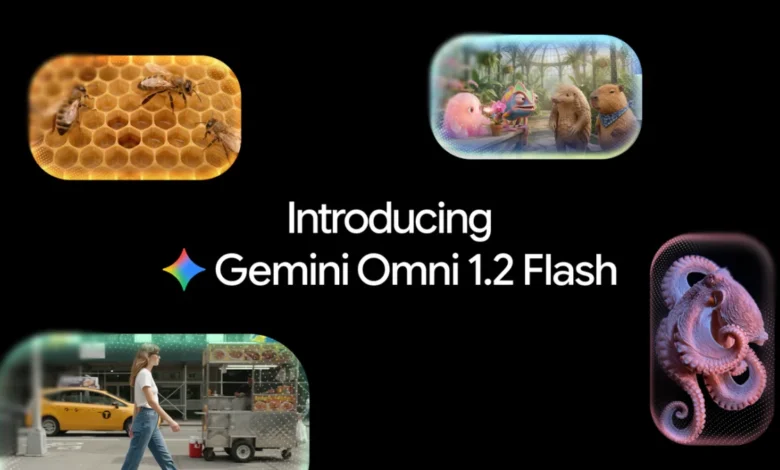
Google DeepMind has officially announced the global rollout and general availability of Gemini Omni 1.2 Flash, its next-generation multimodal artificial intelligence model designed for high-efficiency video generation, editing, and deployment. Released across the Gemini API and integrated into Gemini for business environments, the new model introduces a suite of advanced features, including native 15-second video synthesis, multi-turn conversational editing, and substantially enhanced reference adherence. Alongside these technical upgrades, Google DeepMind has slashed pricing by 30% compared to its predecessor, Gemini Omni 1.1, making 720p video generation available at an economical rate of $0.07 per second. This strategic move aims to democratize professional-grade video creation for enterprises, marketing agencies, and independent creators alike.
The release marks a significant milestone in the rapid commercialization of generative video technologies. As businesses increasingly turn to synthetic media for digital marketing, product catalogs, and corporate communications, the demand for scalable, cost-effective, and temporally consistent video generation tools has surged. By optimizing both its underlying architecture and its operational workflows, Google DeepMind is positioning Gemini Omni 1.2 Flash as a foundational infrastructure layer for the digital content industry.
Evolution of the Gemini Omni Architecture
The development of Gemini Omni 1.2 Flash follows a rapid iteration cycle within Google DeepMind’s generative media division. The journey began with foundational multimodal frameworks that struggled with temporal drift, brief output durations, and high computational latency. The introduction of Gemini Omni 1.1 established a baseline for commercial video synthesis, offering 10-second clips and basic prompt-following mechanics. However, creators frequently encountered limitations when attempting to maintain visual consistency across longer narratives or complex camera movements, often necessitating cumbersome workarounds or complete re-generations of entire video sequences.
Gemini Omni 1.2 Flash directly addresses these historical pain points through refined neural architecture and optimized training datasets. The model extends native generation limits from 10 to 15 seconds while introducing precise, one-second incremental duration controls ranging from 3 to 15 seconds. This granularity allows directors, marketers, and developers to tailor output lengths precisely to specific ad placements, social media constraints, or narrative requirements. Furthermore, the incorporation of advanced multi-turn conversational editing decouples the generation process from linear prompting; users can now refine existing video clips iteratively—swapping out backgrounds, altering lighting conditions, or modifying clothing textures—without sacrificing the core performance, character identity, or framing of the original generation.
Economic Efficiency and Scalable Workflows
In the competitive landscape of generative artificial intelligence, cost efficiency remains a primary driver of enterprise adoption. Gemini Omni 1.2 Flash introduces a 30% price reduction over the 1.1 iteration, pricing standard 720p generation at $0.07 per second. To maximize cost-effectiveness at scale, Google DeepMind has engineered a tiered workflow architecture.
Under this new operational model, production teams can draft initial concepts rapidly at lower resolutions, such as 360p or 720p. Once the structural layout, motion dynamics, and keyframes are confirmed, editors can apply targeted, low-cost modifications using conversational follow-up prompts rather than re-rendering the entire scene. Finally, approved assets can be upscaled to 1080p or 4K resolution for final delivery. This methodology drastically reduces compute overhead, rendering times, and operational expenses for high-volume content producers.
Enhanced Reference Adherence and Visual Consistency
Maintaining structural and visual fidelity across motion transitions has long been one of the most difficult challenges in AI video generation. Gemini Omni 1.2 Flash introduces major breakthroughs in reference adherence, enabling the model to ingest a diverse array of conditioning inputs—including character photographs, product shots, style boards, short motion clips of up to three seconds, and audio cues—and lock those details in place from the first frame to the last.

Whether applied to virtual try-on sequences, catalog rotations, or intricate typographic motion graphics, the model successfully preserves facial features, fabric drapes, packaging typography, and brand colors across dynamic camera angles and lighting shifts. In comparative demonstrations against Gemini Omni 1.1, the new iteration demonstrated superior capability in assembling complex, multi-layered visual compositions sequentially, eliminating the morphing artifacts and visual drift that previously plagued extended AI video sequences.
Audio Integration and Cinematic Control
Beyond visual fidelity, Gemini Omni 1.2 Flash delivers substantial improvements in audio-visual synchronization and natural speech generation. The model features enhanced multi-speaker conditioning and clearer lip-sync capabilities, allowing creators to direct multi-character dialogue with realistic comedic timing and expressive emotional delivery. These audio features integrate seamlessly across Google’s broader software ecosystem, including Google Vids, the Flow tool within Google Labs, and Google Cloud enterprise environments.
Cinematographers and creative directors also benefit from enhanced camera control mechanics. The model facilitates complex, continuous camera movements—ranging from sweeping FPV drone flythroughs to dramatic zoom-outs and orbital rotations—with minimal jump cuts and stable spatial scaling. Demonstrations featuring architectural walkthroughs, such as simulated flights through historical monuments, underscore the model’s ability to maintain spatial coherence over extended continuous shots.
Enterprise Security, Governance, and Availability
With its transition to general availability, Gemini Omni 1.2 Flash is fully supported by Google Cloud’s enterprise-grade infrastructure, security frameworks, and compliance protocols. Organizations can leverage Provisioned Throughput options to guarantee performance and latency parameters for mission-critical operations.
To address growing concerns regarding content authenticity and digital provenance in the era of generative media, all video outputs generated by Gemini Omni 1.2 Flash are embedded with an imperceptible SynthID watermark. Developed by Google DeepMind, SynthID enables the reliable identification and verification of AI-generated content directly within the media file, even after modifications such as compression, cropping, or color grading have been applied.
Broader Industry Implications and Future Outlook
The commercial release of Gemini Omni 1.2 Flash arrives at a critical juncture for the creative and corporate sectors. As generative video tools mature from experimental novelties into indispensable enterprise software, platforms that offer predictable consistency, granular editing control, and robust copyright/provenance protections are expected to capture significant market share.
Industry analysts note that the ability to rapidly produce tailored video variations for distinct regional markets and demographic segments without incurring prohibitive production costs could fundamentally alter the advertising and e-commerce industries. By lowering the barrier to entry while introducing professional-grade controls, Google DeepMind has set a new benchmark for multimodal AI capabilities.
While ongoing research and development efforts continue to target complex physical interactions, high-speed sports action, and rapid script-to-video transitions, Gemini Omni 1.2 Flash is immediately available to developers and enterprises through the Gemini API and Google Cloud services. As businesses integrate these capabilities into their daily workflows, the software is poised to redefine the speed, scale, and economics of global visual storytelling.