Apple Smashes Records with Highest-Ever Q3 Global Smartphone Revenue Despite Industry Headwinds

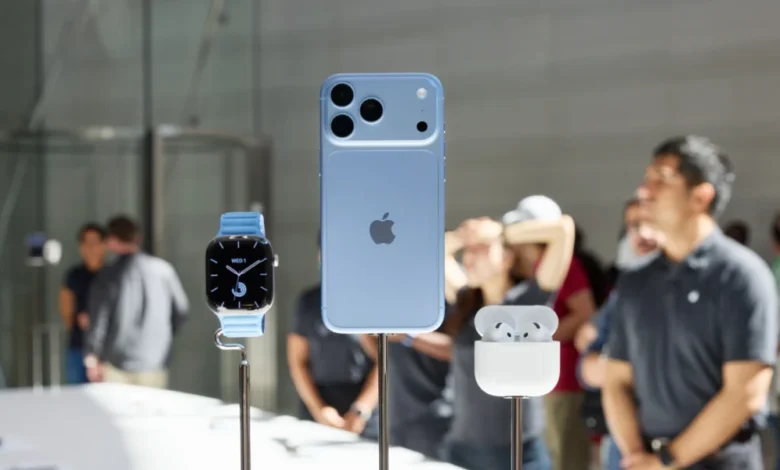
Apple has once again demonstrated its unparalleled market dominance and pricing power, capturing its highest-ever global smartphone revenue for a third calendar quarter. According to comprehensive market intelligence data published by Counterpoint Research, the Cupertino-based tech giant defied broader macroeconomic stagnation and flat shipment numbers to dominate the industry’s financial landscape. This milestone highlights not only the enduring appeal of the iPhone ecosystem but also Apple’s unique ability to successfully navigate rising component costs and shifting consumer demands.
The newly released Counterpoint Research report maps out the global smartphone market’s performance during the third quarter of 2026. While the broader market experienced mixed shipment volumes and shifting consumer priorities, Apple secured a commanding lead in total revenue generation. Trailing far behind in revenue was longtime rival Samsung, which captured 19% of global smartphone revenue. Chinese manufacturers rounded out the top tier of financial performance, with Xiaomi taking 6%, OPPO claiming 5%, and vivo accounting for 4% of total market revenue.
Unprecedented Growth in Average Selling Price
One of the most striking revelations in the Counterpoint Research findings is the dramatic surge in the iPhone Average Selling Price (ASP). Apple saw its ASP climb to an all-time high of $1,031 during the third quarter, representing a significant 19% increase year-over-year. This upward trajectory underscores a profound industry trend: consumers are increasingly willing to pay a premium for high-end devices, prioritizing long-term durability, advanced processing capabilities, and sophisticated camera hardware over budget alternatives.

Elaborating on the factors driving this financial milestone, Tarun Pathak, Research Director at Counterpoint Research, highlighted the strategic positioning of Apple’s hardware lineup during the quarter.
"Apple remained the most resilient major brand in Q3 2026, with shipments nearly flat YoY," Pathak explained in the report. "Apple has the pricing power to absorb rising memory costs and pass them on to consumers with minimal impact on demand. At the same time, ASP growth was supported by higher launch prices for the iPhone 18 Pro series, the absence of the base iPhone 18 from the launch and price increases across older models in September. Together, these factors helped Apple deliver strong revenue growth in an otherwise challenging market."
The strategic decision to debut the iPhone 18 Pro and iPhone 18 Pro Max near the tail end of the third calendar quarter provided an immediate financial injection. By omitting a standard base-model iPhone 18 from the initial autumn launch window and simultaneously implementing price adjustments across legacy device tiers in September, Apple effectively steered prospective buyers toward its highest-margin products. This meticulously orchestrated hardware rollout protected profit margins against escalating global memory and semiconductor manufacturing costs while cementing record-breaking financial returns.
The Global Shipment Landscape
While Apple comfortably dominated the revenue charts, the battle for sheer shipment volume remains fiercely

competitive. Samsung maintained its long-standing position as the global leader in total smartphone shipments, capturing 22% of the market share. However, Apple narrowed the gap significantly, pressing closely behind with 21% of global smartphone shipments.
The narrow one-percentage-point differential in shipment share between Samsung and Apple illustrates a fascinating dynamic within the mobile sector. While Samsung moves a vast volume of units across a highly diversified product portfolio—ranging from ultra-budget Galaxy A-series devices to premium foldable flagships—Apple achieves nearly identical shipment volumes while concentrating almost exclusively on the high-end tier of the market. This structural divergence explains why Apple captures the lion’s share of industry profits despite shipping fewer total units than its primary competitor over extended periods.
Broader Economic Context and Industry Implications
The third quarter of 2026 has proven to be a rigorous testing ground for consumer electronics manufacturers. The global economy continues to grapple with fluctuating supply chain expenses, inflationary pressures, and climbing costs for essential hardware components, particularly high-density memory chips. Many original equipment manufacturers (OEMs) have struggled to maintain healthy profit margins without pricing themselves out of competitive emerging markets.
Apple’s successful navigation of these headwinds offers a compelling case study in brand loyalty and vertical integration. By leveraging its proprietary silicon designs, deeply entrenched software ecosystem, and powerful brand equity, the company has insulated itself from the commodity pricing traps that frequently ensnare Android competitors. When component costs rise, Apple has demonstrated that its customer base exhibits remarkably inelastic demand, absorbing price hikes with negligible attrition in sales volume.

Furthermore, the absence of a standard base model during the initial autumn launch event marks a subtle yet profound shift in Apple’s product release strategy. Industry analysts suggest that staggering the release of different tier levels or altering traditional launch cadences allows the company to optimize manufacturing yields, manage component allocation more efficiently, and maximize early-adopter revenue streams. If this strategy continues to yield record-breaking Average Selling Prices, other manufacturers may attempt to emulate Apple’s playbook by leaning heavier into high-margin flagship devices while scaling back immediate reliance on low-margin entry-level hardware.
Looking Ahead
As the technology sector enters the critical fourth-quarter holiday shopping season, the momentum established by Apple during the third quarter positions the company favorably. The continued global rollout of the iPhone 18 Pro series, paired with sustained demand for wearables and ecosystem services, suggests that Apple’s financial dominance will persist into the new year.
Meanwhile, competitors such as Samsung, Xiaomi, OPPO, and vivo face mounting pressure to innovate and carve out sustainable profitability in a market increasingly polarized between ultra-budget utility devices and premium luxury smartphones. As Counterpoint Research’s latest data underscores, the modern smartphone market is no longer merely a game of moving units; rather, it is an environment where pricing power, brand cachet, and ecosystem lock-in dictate true market leadership.
For further details and an exhaustive breakdown of regional market shares, consumer adoption trends, and macroeconomic indicators, the complete Counterpoint Research report remains publicly accessible through the firm’s official insights portal.