The Definitive Guide to Online Reputation Management Software: Comparing the Top 12 Platforms for Brand Protection

In the contemporary digital ecosystem, maintaining a brand’s public standing requires far more than basic public relations and reactive crisis communications. Online reputation management (ORM) software has evolved into a critical enterprise tool, merging social listening, sentiment tracking, review collection, and digital presence monitoring into unified dashboards. As digital consumption habits shift and the public increasingly relies on a mix of social media networks, consumer review forums, and search engine results, organizations must adopt proactive software solutions to protect their brand equity.

Understanding the modern market landscape requires examining what these tools do, how they differ from external services, and which platforms deliver the necessary scale for mid-market and enterprise operations.
Defining Online Reputation Management Software and Its Scope
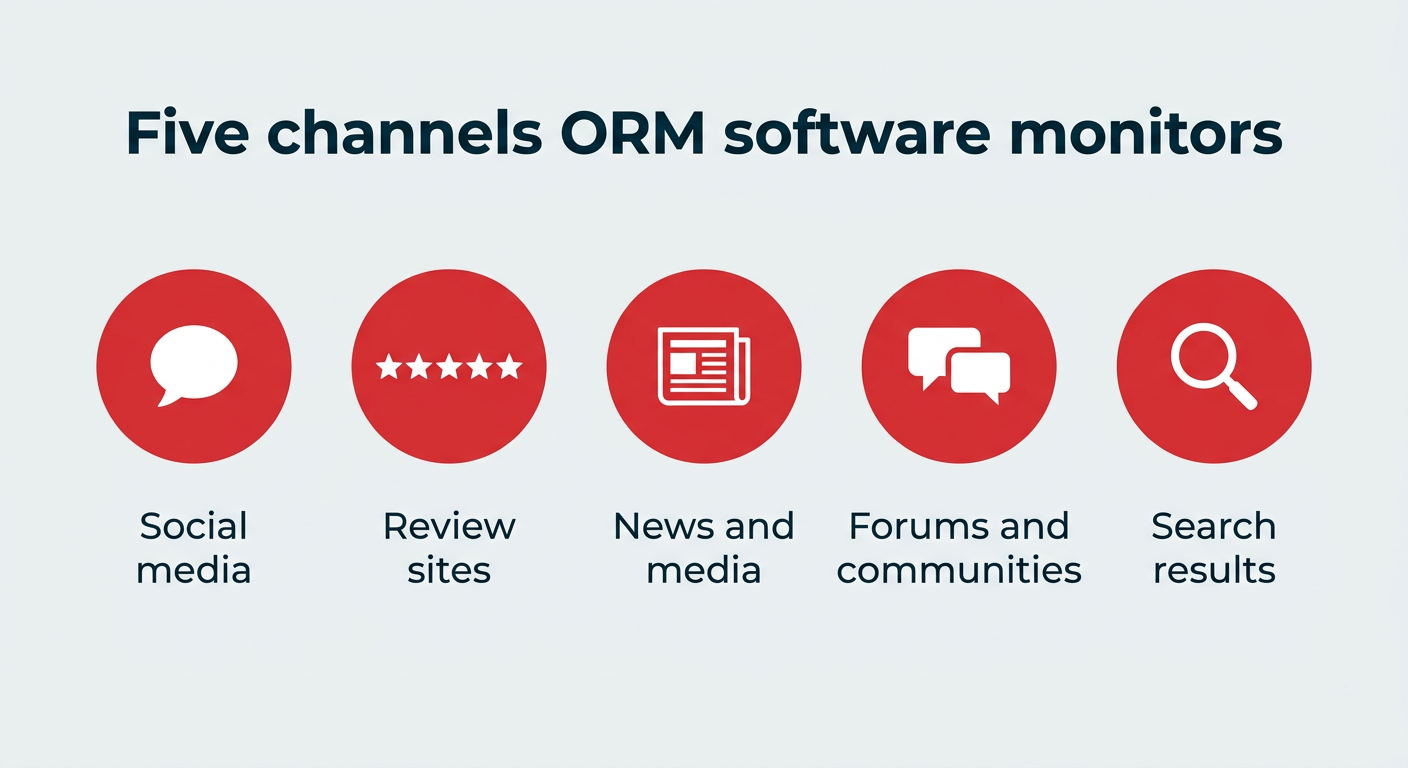
Online reputation management software monitors, analyzes, and facilitates responses to brand mentions, customer reviews, and general public sentiment across a wide array of channels. These channels include dedicated review sites, news outlets, web forums, search engine result pages, and social media networks.

While traditional social media monitoring concentrates primarily on platforms like Instagram, TikTok, and X, ORM software provides a broader lens. This expansion is underscored by shifting demographic trust patterns; recent data from the Pew Research Center indicates that adults under the age of 30 now place equal trust in traditional news organizations and social media sites. Consequently, organizations can no longer afford to silo their monitoring strategies.
Furthermore, the volume of data is staggering. Major review repositories like Yelp host over 330 million consumer reviews globally. Manually tracking this influx across hundreds of distinct touchpoints is virtually impossible for modern marketing and communications teams. ORM platforms automate this process, aggregating multi-channel data to highlight potential risks and positive feedback in real time.
Software Versus Managed Services: Finding the Right Balance
Organizations navigating reputation management generally choose between two primary paths: acquiring in-house software or hiring an external agency.
Reputation management services are external consultancies or agencies that handle brand monitoring, review responses, crisis management, and search result optimization on a retainer basis. They provide human labor and specialized public relations expertise, making them ideal for companies lacking dedicated communications departments or those facing acute legal and PR crises.
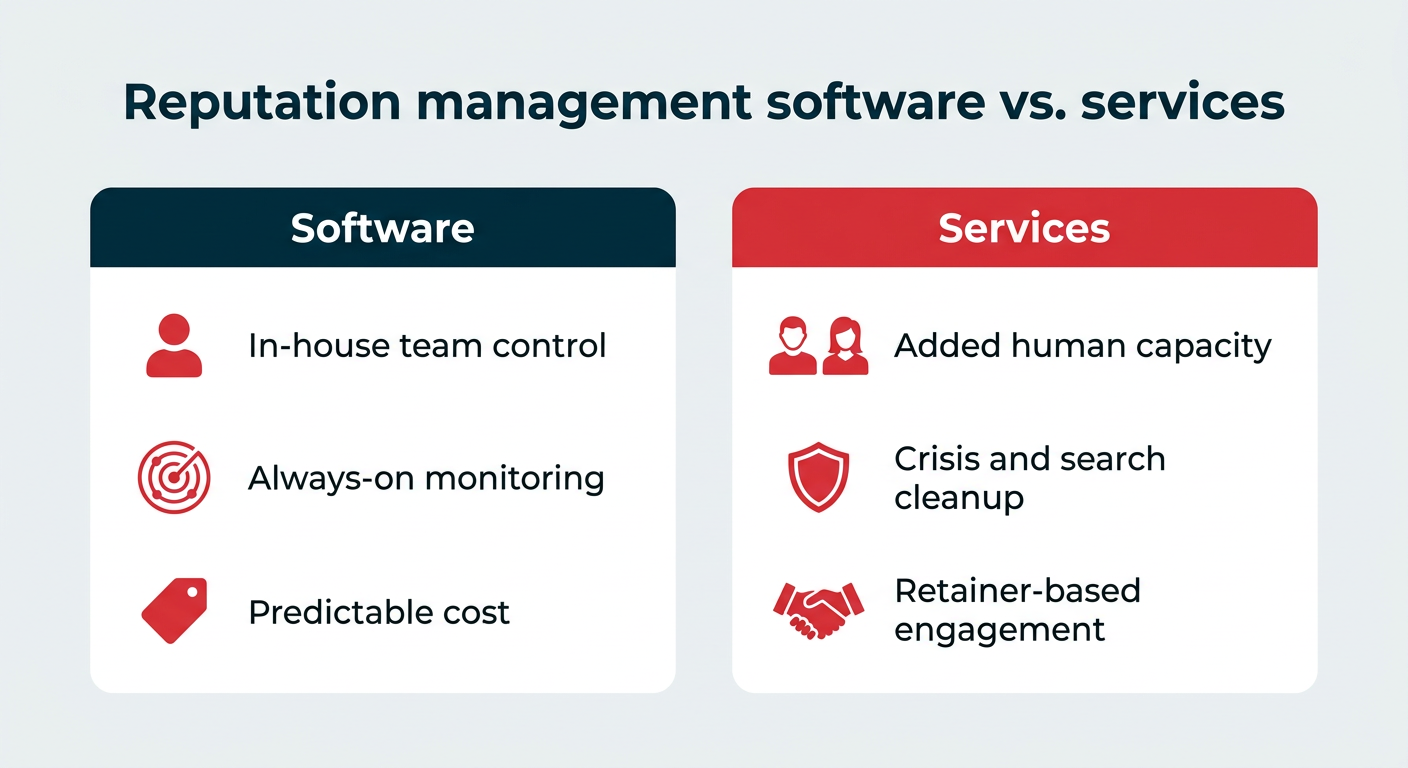
Conversely, ORM software empowers an organization’s in-house teams through direct administrative control, automated workflows, dashboards, and predictable subscription costs. Many corporations utilize a hybrid model: deploying software as an always-on, real-time monitoring layer while retaining specialized agencies to handle complex legal disputes or severe public relations incidents.
The Business Imperative of Brand Trust
Investing in reputation management is fundamentally an investment in business continuity and revenue protection. Brand trust has transitioned from a secondary communications metric to a core economic driver. According to the 2025 Edelman Trust Barometer, consumer trust now rivals product quality and competitive pricing as a primary purchase consideration.

When brand trust erodes, the financial consequences are immediate and measurable. Companies face heightened customer churn, depressed sales figures, and substantial expenditures dedicated to damage control and public relations rehabilitation. Unaddressed consumer complaints or unanswered negative reviews can rapidly escalate into viral public crises. Conversely, recognizing and amplifying positive customer feedback can turn brand advocates into a powerful marketing asset.
Because organizations cannot resolve issues they cannot see, real-time alerting and comprehensive sentiment tracking have become indispensable components of corporate strategy.

Core Evaluation Criteria for Enterprise Selection
When evaluating ORM software, enterprise procurement teams typically focus on several key vectors to ensure the chosen platform can scale alongside the business:
- Channel Coverage: The breadth of monitoring across social media, search engines, news feeds, forums, and specialized review directories.
- Actionability: The ability to not just view data, but to respond, assign tasks, and route customer queries directly within the platform.
- AI and Sentiment Analysis: The sophistication of natural language processing in detecting nuance, sarcasm, and emerging sentiment shifts.
- Integration Ecosystem: Seamless connectivity with existing Customer Relationship Management (CRM) tools, helpdesks, and business intelligence suites.
- Scalability and Pricing: Transparent cost models that accommodate multi-location footprints, multi-brand architectures, and growing user counts.
Top 12 Online Reputation Management Tools Compared
The market offers a diverse array of platforms tailored to specific operational needs, ranging from lightweight web monitors to comprehensive enterprise suites.
1. Hootsuite
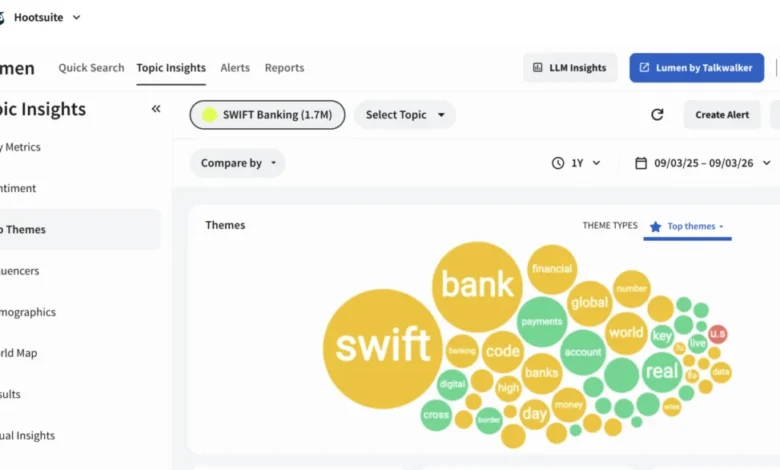
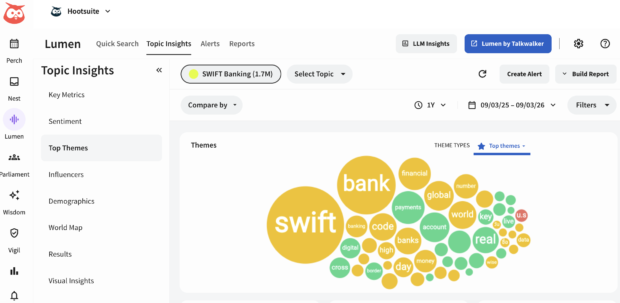
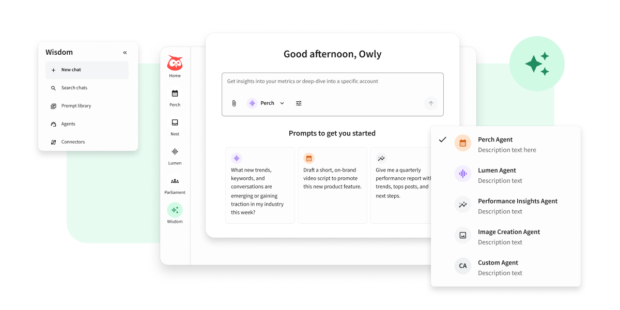
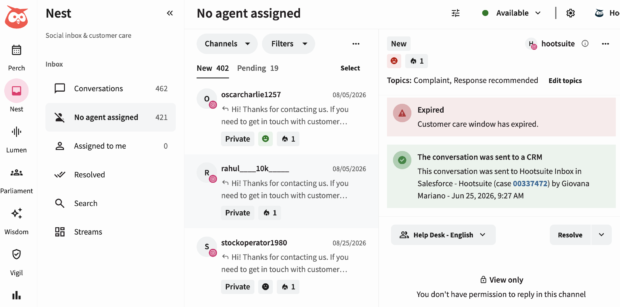
Hootsuite integrates robust social media management with advanced online reputation management. Through its integrated application suite—including Lumen for deep social listening across more than 150 million sources in 187 languages, Nest for unified customer care, and Wisdom for AI-driven trend analysis—Hootsuite allows enterprises to monitor and respond to brand sentiment from a single dashboard.
- Best for: Enterprise social media and unified reputation management.
- Starting Price: $99/user/month (billed annually).
2. Birdeye
Birdeye is tailored for businesses heavily reliant on local reviews and multi-location operations. It automates review collection across hundreds of sites while maintaining accurate business listings.
- Best for: Multi-location businesses and review-heavy industries like healthcare and retail.
- Starting Price: Custom pricing based on location count.
3. Podium
Podium specializes in local business engagement, leveraging text messaging to streamline review generation and customer communication. Its SMS-first approach typically yields higher response rates than traditional email campaigns.
- Best for: Local businesses prioritizing SMS reviews and customer interaction.
- Starting Price: Custom pricing.
4. Brand24
Brand24 provides real-time mention tracking across news sites, blogs, social media, and forums. Its anomaly-detection alerts flag unusual spikes in mention volume before they materialize into full-scale public relations issues.
- Best for: Real-time brand monitoring and mention tracking.
- Starting Price: $199/month (billed annually).
5. Trustpilot
Trustpilot is an established consumer review platform centered on transparency and verified trust signals. It equips e-commerce and service brands with on-site widgets and verified badges to bolster buyer confidence.
- Best for: E-commerce companies building consumer trust.
- Starting Price: Free plan available; paid tiers begin at $99/month.
6. Yext
Yext functions as a digital presence management platform, ensuring business data remains uniform across search engines, maps, and directories while offering centralized review management capabilities.
- Best for: Enterprise digital presence and listings management.
- Starting Price: Custom pricing.
7. Meltwater
Meltwater offers extensive media intelligence by combining global news monitoring, broadcast media tracking, social listening, and PR analytics into a single holistic framework.
- Best for: Enterprise PR and media intelligence teams.
- Starting Price: Custom pricing.
8. Semrush
While fundamentally an SEO and competitive intelligence suite, Semrush features robust brand and position tracking capabilities that help organizations monitor their online visibility and search engine reputation.

- Best for: Organizations combining SEO monitoring with brand tracking.
- Starting Price: $139.95/month.
9. Brandwatch
Brandwatch delivers deep consumer intelligence for large enterprises, utilizing advanced natural language processing and unique image recognition technology to track visual brand mentions across the web.
- Best for: Enterprise consumer research and deep data analytics.
- Starting Price: Custom pricing.
10. Google Alerts
Google Alerts provides a basic, complimentary web monitoring service. By tracking specific keywords, brands, or executives, users receive email notifications whenever those terms appear in newly indexed web content.

- Best for: Small teams requiring basic, zero-cost web alerts.
- Starting Price: Free.
11. Reputation
Reputation is a customer experience platform designed for multi-location enterprises. It aggregates surveys, reviews, and operational feedback to generate unified performance scores for individual business locations.
- Best for: Multi-location enterprises in automotive, hospitality, and healthcare.
- Starting Price: Custom pricing.
12. SOCi
SOCi is engineered for franchises and multi-location brands that require localized reputation management, automated review responses, and localized content distribution at scale.

- Best for: Franchise networks and decentralized multi-location brands.
- Starting Price: Custom pricing.
Regulatory Considerations: The Legality of Review Gating
As organizations refine their review collection strategies, regulatory scrutiny regarding ethical practices has intensified. A notable compliance issue in the industry is "review gating"—the practice of screening customers prior to requesting a public review, directing unhappy clients to private feedback forms while inviting only satisfied customers to post publicly.
While review gating is not universally illegal, the United States Federal Trade Commission (FTC) views the practice as a deceptive method under regulations governing consumer reviews and testimonials, as it skews the overall representation of customer sentiment. Furthermore, major platforms like Google explicitly prohibit selective review solicitation in their terms of service. Violations can result in suppressed business listings, removed reviews, or penalties.

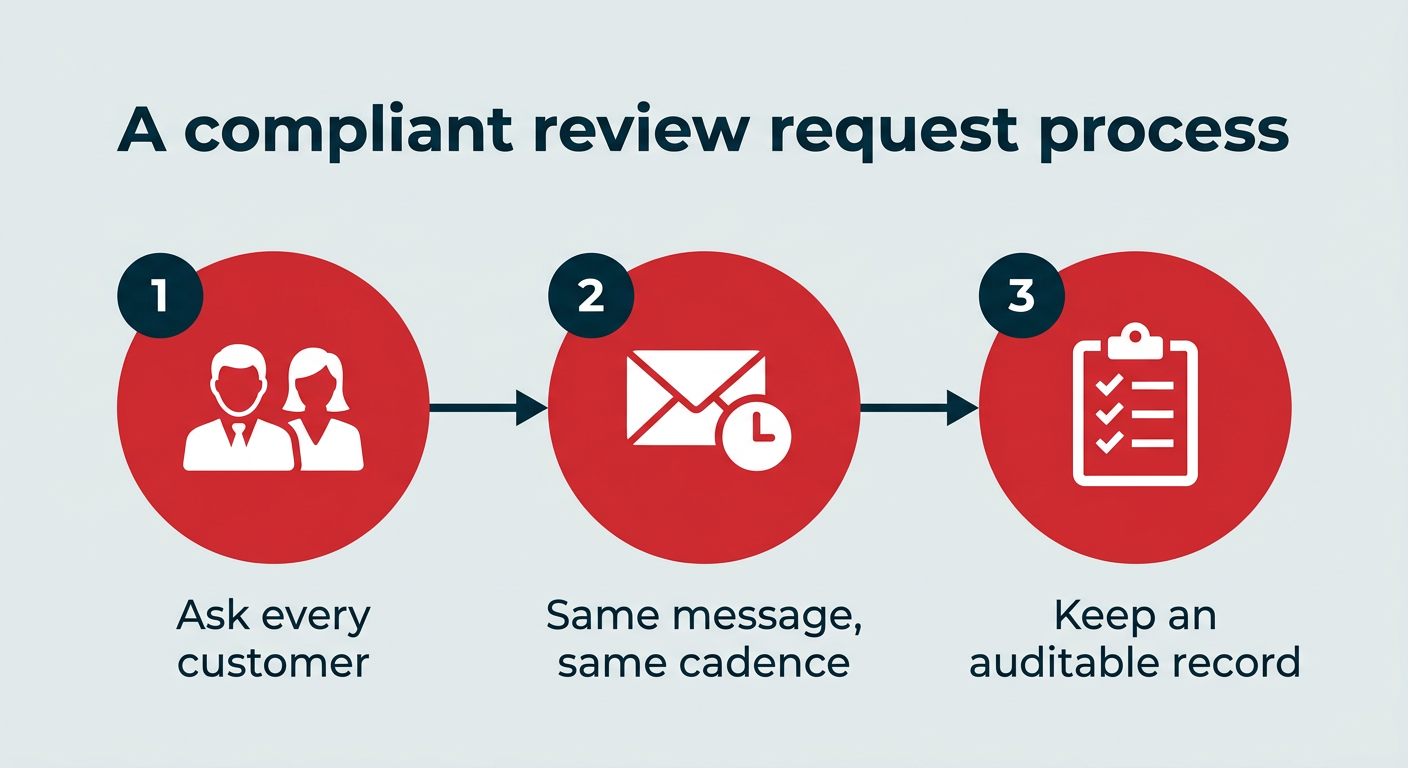
To maintain regulatory compliance, marketing and customer service teams are advised to request feedback uniformly from all customers within a given segment, utilizing a consistent cadence and standardized messaging. Modern ORM software assists in maintaining this compliance by automating audit trails that record when and how review requests are distributed.
Strategic Implementation and Monitoring Framework
Successfully deploying an online reputation management strategy requires a structured, repeatable methodology:

- Conduct a Comprehensive Audit: Search across search engines, review platforms, forums, and social channels to establish a baseline of the organization’s current public standing.
- Deploy Multi-Channel Monitoring Tools: Implement software capable of tracking brand names, key executives, product lines, and competitor keywords simultaneously.
- Categorize Incoming Mentions: Filter incoming data by intent and sentiment—separating genuine product praise, service complaints, sales inquiries, and media coverage to ensure rapid routing to the appropriate internal department.
- Analyze Sentiment Trends: Utilize AI-powered sentiment analytics to identify gradual shifts or sudden anomalies in public perception.
- Engage and Respond: Address public complaints and reviews swiftly and professionally, turning negative interactions into demonstrations of exceptional customer service.
- Report and Optimize: Distribute regular sentiment and reputation metrics to executive leadership to guide broader customer experience and operational strategies.
By unifying listening, customer care, and analytics into a cohesive operational workflow, organizations can move away from reactive crisis management and transform brand reputation into a durable competitive advantage.