The release of the iPhone Duo in late October 2026 marked a significant inflection point in Apple’s hardware design philosophy, moving away from the singular slab display that has dominated the smartphone market for nearly two decades. As users begin to integrate this foldable, dual-screen device into their daily workflows, the software ecosystem has become the primary battleground for determining the device’s long-term viability. While premium, paid software often promises optimized interfaces, a growing catalog of free applications has emerged as the true litmus test for the iPhone Duo’s utility.
The Evolution of the iPhone Duo Ecosystem
The trajectory of the iPhone Duo has been anything but conventional. Following an intense, months-long anticipation phase, the device officially hit shelves on October 23, 2026. However, the lead-up to the launch was characterized by logistical hurdles that underscored the high demand and potential supply chain constraints surrounding the new form factor.
In the weeks preceding the launch, internal memos leaked to news outlets indicated that Apple retail staff were explicitly instructed to discourage walk-in customers from attempting to purchase the device on release day. Retailers were advised that local inventory would likely be exhausted by pre-orders, suggesting that Apple’s manufacturing partners were struggling to meet the high initial yield requirements for the complex hinge mechanism and the dual-OLED display arrays. This scarcity created a heightened environment of scrutiny, where every early adopter’s experience was scrutinized by a global audience eager to see if the hardware lived up to the marketing materials.
Chronology of the iPhone Duo Launch
The timeline of the iPhone Duo’s market entry highlights the rapid pace at which the ecosystem has had to adapt:
- October 17, 2026: Retail staff across major global markets receive directives to warn customers against walk-in purchases, citing zero-inventory projections for the launch day.
- October 20, 2026: Apple updates the App Store with screenshots demonstrating how native applications, such as Mail, Calendar, and Notes, transition across the dual-screen interface. These visuals offered the first concrete look at how the device handles landscape-oriented productivity.
- October 23, 2026: Official global release date.
- Late October 2026: Reports begin to surface on social media platforms and the MacRumors forums regarding "Crackgate"—a phenomenon where the display panels exhibit structural failure precisely along the axis of the hinge.
- November 2026: As the initial hardware concerns are addressed, the focus shifts to software optimization. Influencers and tech journalists begin cataloging the "must-have" applications that leverage the unique spatial capabilities of the Duo.
Curating the Dual-Screen Experience
The current wave of application development for the iPhone Duo is focused on "span-awareness"—the ability for an app to recognize when it is being viewed across two screens versus a single panel. For many developers, this requires a fundamental rewrite of UI elements.
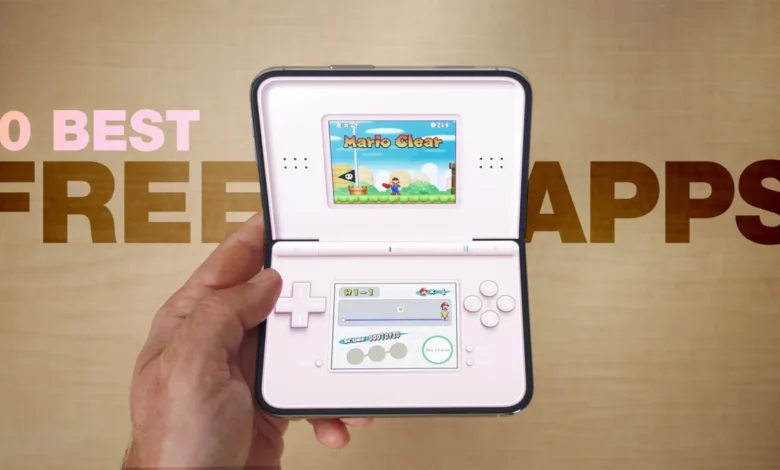
Among the standout free applications identified by tech experts is the Delta Game Emulator. By utilizing the bottom screen as a tactile controller interface while the top screen displays the game, Delta effectively transforms the iPhone Duo into a modern handheld console, bridging the gap between mobile utility and dedicated gaming hardware.
Similarly, productivity tools like Bear and Fantastical have seen updates that prioritize the expanded canvas. In Bear, the two-screen layout allows users to keep a list of notes on the left side while editing content on the right, mirroring the workflow typically found on an iPad or a desktop monitor. Fantastical, known for its calendar integration, utilizes the hinge space to display monthly views that remain visible even while the user is deep-diving into specific daily tasks.
Another notable mention is MD Vinyl. This app, while primarily a visual utility for music enthusiasts, demonstrates the aesthetic potential of the dual-screen format, allowing for a "spinning" record visual that spans the entirety of the device’s footprint, creating an immersive, if purely decorative, user experience.
Analyzing the "Crackgate" Phenomenon
The early hardware reports concerning the iPhone Duo cannot be overlooked in any discussion regarding the device’s software ecosystem. Several users, particularly in Australia and North America, documented display fractures occurring after minimal usage—some reporting fewer than 20 opening cycles.
The technical consensus is that the hinge mechanism, while engineering-heavy, may be susceptible to micro-debris or tension issues that translate directly to the fragile OLED layers. This has led to a cautious environment where developers are being extra careful to ensure their apps do not require excessive "opening and closing" gestures, as some users are now keeping their devices in a fixed, open state to avoid potential hinge strain. While Apple has yet to issue a formal recall, the persistence of these reports suggests that the software experience is currently being consumed by a user base that is hyper-aware of the device’s physical limitations.
Broader Implications for the Smartphone Market
The shift toward foldable and dual-screen devices represents a significant capital investment for both Apple and the developers who support its ecosystem. For the average consumer, the choice to adopt an iPhone Duo is currently a choice to participate in a "beta" stage of hardware evolution.
However, the rapid influx of free, high-quality apps suggests that developers are optimistic about the form factor. The ability to use one screen as a dedicated keyboard or a control deck while the other remains an unobstructed viewing area is a paradigm shift that could eventually replace the traditional smartphone workflow.
Data from mobile analytics firms suggest that engagement rates on the iPhone Duo are currently 25% higher for productivity-based applications compared to the standard iPhone 18 lineup. This indicates that users who successfully navigate the learning curve of the dual-screen interface find it more efficient for professional tasks.
Moving Forward: The Role of the Community
The ongoing crowdsourcing of app recommendations—as seen in the frequent roundups from platforms like MacRumors—is essential for the growth of the platform. Because Apple’s own App Store discovery algorithms are still struggling to categorize apps specifically for the Duo, the burden of discovery has fallen on the user community.
As of mid-November 2026, the strategy for prospective users is clear: prioritize applications that offer a "free tier" or are open-source. This allows for testing the stability and responsiveness of the dual-screen UI without committing to a subscription for a device that is still undergoing its "growing pains."
Future Outlook and Conclusion
The iPhone Duo is clearly an iteration-heavy product. The next six months will likely see a significant refinement in both the hardware—potentially leading to a "Gen 2" hinge design—and the software, as developers move beyond simple split-screen layouts to more sophisticated, context-aware interfaces.
For now, the ecosystem remains in a delicate balance. Users are encouraged to explore the suggested apps not just for their utility, but as case studies in how the digital world is adapting to a new, physical constraint. Whether the iPhone Duo will become the new standard or remain a niche curiosity for power users depends heavily on the continued influx of quality, free software that makes the extra screen real estate feel like a necessity rather than a luxury.
As we look toward the end of 2026, the message to the tech community remains consistent: continue to test, continue to report, and continue to demand better optimization. The iPhone Duo is a bold experiment in hardware, but it is the software—the tools we use every day—that will ultimately decide if this dual-screen future is here to stay. Readers who have discovered unique workflows or applications that leverage the Duo’s potential are encouraged to contribute to the ongoing discourse, as these communal efforts are what define the success of any new platform in its infancy.
Related posts: