Apple Intensifies Legal Battle Against OpenAI, Issuing Preservation Letters to Dozens of Former Employees

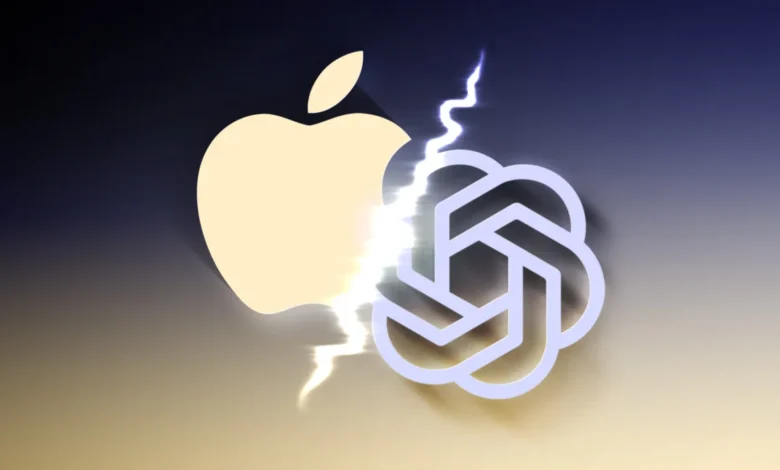
Apple has reportedly escalated its legal offensive against OpenAI, dispatching legal preservation letters to approximately 40 former employees who have transitioned from the Cupertino tech giant to the rapidly expanding artificial intelligence firm. This significant move underscores Apple’s resolve in its ongoing trade secret lawsuit, indicating a belief that the alleged misappropriation of confidential information may extend far beyond the individuals initially identified in its complaint. The letters instruct these former employees to meticulously preserve all potentially relevant documents and communications, signaling Apple’s intent to broaden the scope of its investigation and litigation.
The Escalating Legal Confrontation
The distribution of these preservation letters, first reported by the Financial Times, follows swiftly on the heels of a lawsuit filed by Apple last week, on July 10, 2026, against OpenAI. In its original complaint, Apple accused OpenAI of engaging in a coordinated and systematic effort to unlawfully obtain confidential information pertaining to its highly guarded hardware engineering and product development. This lawsuit posits that OpenAI actively recruited key engineers and executives from Apple, subsequently benefiting from proprietary designs, advanced manufacturing processes, and other invaluable trade secrets.
Central to Apple’s allegations are two prominent former executives: Tang Tan and Chang Liu. Tan, who now serves as OpenAI’s Chief Hardware Officer, boasts an extensive 24-year tenure at Apple, during which he held pivotal roles in leading product design initiatives. Liu, currently a member of OpenAI’s hardware team, previously contributed significantly as a senior system electrical engineer at Apple. Apple’s complaint explicitly states that the recruitment of such high-level talent, particularly into a rival’s nascent hardware division, raises serious questions about the transfer of proprietary knowledge. The company’s legal filings suggest that the expertise these individuals brought to OpenAI could be directly linked to Apple’s closely guarded innovations, providing OpenAI with an unfair competitive advantage in the burgeoning AI hardware market.
A Culture of Secrecy Meets Rapid Expansion
Apple has long been renowned for its stringent secrecy protocols and unwavering commitment to protecting its intellectual property. This corporate philosophy is deeply embedded in its operational DNA, from product development to supply chain management. The company invests colossal resources in research and development, and the proprietary information generated from these efforts is considered a cornerstone of its competitive edge. Trade secrets, in Apple’s context, encompass everything from advanced material science and component integration techniques to intricate software-hardware optimization strategies and unreleased product roadmaps. The alleged leakage of such information could severely compromise Apple’s future product launches and strategic positioning.
OpenAI, on the other hand, has experienced meteoric growth, rapidly transitioning from a research-focused entity to a dominant force in commercial AI, with ambitions that increasingly span beyond software to hardware. Its aggressive talent acquisition strategy is well-documented, as it seeks to attract the brightest minds in AI, engineering, and product development to fuel its diverse projects, including its ventures into physical devices. This clash of corporate cultures—Apple’s entrenched secrecy versus OpenAI’s rapid, expansive growth and recruitment—forms the volatile backdrop against which this legal battle is unfolding.
The legal action also highlights a broader "talent war" that has intensified across the technology sector, particularly in the highly competitive and lucrative field of artificial intelligence. Companies are vying for top-tier engineers, researchers, and product developers, leading to unprecedented salary packages and incentives. However, the movement of employees, especially those with access to sensitive information, between direct competitors invariably raises concerns about the integrity of intellectual property and the enforcement of non-disclosure agreements (NDAs) and non-compete clauses.
Chronology of Accusations
The unfolding legal drama can be traced through a series of key events:
- Prior to July 2026: OpenAI actively recruits a substantial number of former Apple employees, including high-profile figures like Tang Tan and Chang Liu, into its burgeoning hardware division. This period is critical for Apple’s allegations, as it forms the basis of the alleged "coordinated effort" to acquire confidential information.
- July 10, 2026: Apple officially files its lawsuit against OpenAI, along with Tang Tan and Chang Liu, alleging trade secret misappropriation and breach of contract. The lawsuit is filed in a relevant court jurisdiction, initiating the formal legal process.
- July 14, 2026: OpenAI issues its initial public response to the lawsuit. Speaking to Bloomberg, the company stated that it was "not aware of any evidence that this complaint has merit," signaling its intent to vigorously defend against Apple’s claims. This denial sets the stage for a protracted legal dispute.
- July 17, 2026 (Date of Current News): Apple sends legal preservation letters to approximately 40 additional former employees now working at OpenAI. This action indicates Apple’s expanded focus, moving beyond the initially named individuals to a broader group, suggesting a deeper investigation into potential widespread misappropriation. These letters serve as a crucial legal tool, compelling recipients to retain all relevant documents and communications, which could later be used as evidence in court.
The "Tip of the Iceberg" Allegation
Apple’s complaint goes further than just naming a few individuals, asserting that more than 400 former Apple employees currently work at OpenAI. This substantial number, according to Apple, suggests that the alleged misconduct is not merely a few isolated actions by individual employees but rather indicative of a more systemic and broader pattern of behavior. The lawsuit explicitly states that the evidence uncovered so far may represent only the "tip of the iceberg," implying that Apple anticipates discovering further instances of trade secret misappropriation as the legal process unfolds, particularly through discovery and forensic investigations.
This "tip of the iceberg" claim is significant as it frames the lawsuit not just as a dispute over specific secrets, but as a challenge to OpenAI’s overall hiring practices and its perceived disregard for the proprietary information of other companies. It places the burden on OpenAI to demonstrate that its recruitment of Apple personnel and subsequent hardware development efforts are entirely independent of Apple’s confidential data.
OpenAI’s Stance and Denial
In response to Apple’s sweeping allegations, OpenAI has maintained a firm stance of denial. As reported by Bloomberg on July 14, 2026, the company issued a concise statement asserting that it is "not aware of any evidence that this complaint has merit." This categorical denial suggests that OpenAI will likely argue that its hiring practices are legitimate, its hardware development is based on its own innovation and public knowledge, and that any former Apple employees working for them are adhering to their legal obligations regarding past employers’ confidential information.
The challenge for OpenAI will be to substantiate this denial through concrete evidence during the discovery phase of the lawsuit. They will likely need to demonstrate clear firewalls between new hires and projects involving potentially sensitive areas, and to show that their internal development processes are sufficiently distinct from Apple’s proprietary methods. The legal proceedings will undoubtedly delve into the specifics of what information was accessible to the former Apple employees and how it was or was not utilized in OpenAI’s projects.
The High Stakes of AI Hardware
The legal battle underscores the immense strategic importance of artificial intelligence hardware. As AI models become increasingly sophisticated and computationally intensive, specialized hardware—often referred to as AI accelerators or neural processing units (NPUs)—is becoming critical for efficient processing, both in data centers and on edge devices. For Apple, integrating AI capabilities deeply into its hardware ecosystem, from iPhones and Macs to its nascent mixed-reality devices, is paramount for delivering next-generation user experiences and maintaining its competitive edge. Its proprietary chip designs, such as the A-series and M-series silicon, already incorporate advanced neural engines, showcasing its deep investment in this area.
OpenAI’s foray into hardware, while still relatively new, signals its ambition to control more aspects of the AI stack, potentially developing custom silicon or integrated systems optimized for its own large language models and other AI services. Such a move could reduce its reliance on third-party hardware providers and offer performance advantages. The alleged misappropriation of Apple’s hardware engineering and product development secrets would, therefore, provide OpenAI with an invaluable shortcut, potentially saving years of R&D, billions of dollars, and accelerating its entry into a highly complex and capital-intensive market. This convergence of software and hardware is a defining characteristic of the current AI frontier, making trade secrets in this domain exceptionally valuable.
Legal Ramifications and Precedents
Apple is seeking a multi-pronged legal remedy. Firstly, it has requested an injunction, which if granted, would legally compel OpenAI to immediately cease using any Apple-derived information in the development of its AI hardware device. Such an injunction could severely impede OpenAI’s hardware ambitions, potentially forcing it to redesign or delay its projects. Secondly, Apple is seeking substantial damages, which could amount to significant financial penalties if the court finds in its favor. Proving damages in trade secret cases can be complex, often involving expert testimony on the value of the stolen secrets and the financial harm caused.
Furthermore, Apple is suing Tang Tan and Chang Liu directly for breach of contract, specifically for violating their employment agreements, which would have included stringent non-disclosure and intellectual property clauses. Breaches of contract can lead to personal liability for the individuals involved, in addition to corporate liability for OpenAI.
Trade secret litigation is notoriously complex and often protracted. The burden of proof lies with Apple to demonstrate several key elements: (1) that the information constitutes a trade secret, (2) that it took reasonable measures to protect the secrecy of the information, (3) that the trade secret was actually misappropriated, and (4) that the misappropriation caused harm. The preservation letters issued by Apple are a standard yet critical step in this process, ensuring that potential evidence is not destroyed and can be reviewed during discovery. The outcome of this case could set significant precedents for how talent mobility and intellectual property are managed in the rapidly evolving AI industry, especially concerning the movement of high-level personnel between direct competitors.
Impact on Talent Mobility and Industry Dynamics
The lawsuit has far-reaching implications for talent mobility within the tech industry. For individual employees, it serves as a stark reminder of the legal obligations that persist even after leaving an employer, particularly concerning non-disclosure agreements and the handling of confidential information. It may prompt greater caution among engineers and executives considering moves between rival companies, leading to more rigorous internal compliance checks and potentially slowing down the rapid flow of talent.
For companies, the case highlights the critical importance of robust intellectual property protection strategies, comprehensive onboarding and offboarding procedures, and clear communication with employees about their ongoing legal duties. It may also encourage companies to review and strengthen their non-disclosure agreements and consider the enforceability of non-compete clauses, where legally permissible, especially for key personnel.
Beyond the immediate parties, this legal battle contributes to a broader narrative of heightened corporate espionage and intense competition in the tech sector. As AI becomes increasingly central to product differentiation and market dominance, companies are becoming more aggressive in defending their innovations. The outcome of this lawsuit could influence future M&A activities, partnership structures, and overall competitive strategies as companies weigh the risks and benefits of collaborating with or competing against entities with diverse talent pools and potentially overlapping intellectual property.
Protecting Innovation in the Age of AI
Ultimately, the Apple v. OpenAI lawsuit is more than just a dispute between two tech giants; it is a testament to the escalating value of intellectual property in the age of artificial intelligence. As AI capabilities become more integrated into every aspect of technology, from software services to physical hardware, the lines between different industry segments blur, and the potential for overlap and conflict increases. The legal system will be challenged to adapt to these new realities, defining the boundaries of fair competition and protecting the proprietary innovations that drive progress. The outcome will be closely watched by the entire technology world, potentially shaping how companies innovate, hire, and compete in the defining technological frontier of our time.