The Age of Digital Illusion: Why Media Literacy is Now a Survival Skill in the Era of AI

The modern internet is a landscape defined by an inherent paradox: while it provides unprecedented access to global information, the infrastructure supporting that access has become increasingly hostile to the truth. For the average user, the digital experience is no longer merely a tool for communication or productivity; it is a battleground where human attention is captured, monetized, and frequently manipulated by automated systems. As artificial intelligence continues to permeate the fabric of online content, the traditional methods of discerning fact from fiction are failing. Professionals across the fields of cybersecurity, education, and public policy are now warning that without a fundamental shift in how we consume media—moving from reactive scrolling to critical engagement—the integrity of our collective reality remains at risk.
The structural design of the internet, particularly the social media platforms that serve as the primary news source for more than half of all Americans, is fundamentally at odds with the reflective thinking required to combat misinformation. These platforms rely on algorithms engineered for speed and engagement. Infinite scrolling, autoplay features, and personalized recommendation engines are not accidental; they are highly effective mechanisms designed to maximize the time users spend on a site. By rewarding content that triggers an emotional response—whether through outrage, fear, or validation—these platforms create an ecosystem where misinformation, which is often more emotionally stimulating than dry, verified fact, thrives.
The current crisis of information is compounded by the rapid proliferation of artificial intelligence. Recent data from the Pew Research Center indicates that over one-third of new web content is now AI-generated, with some analysts estimating that more than half of the internet now consists of what is colloquially termed "AI slop." This content is increasingly indistinguishable from human-produced work. When combined with the fact that bot traffic now constitutes an estimated 57.4 percent of total internet activity, the environment in which users search for news is effectively saturated with synthetic influence.
The historical shift toward this reality can be traced through the evolution of digital engagement over the last decade. Following the initial era of human-curated web content, the rise of the platform economy in the mid-2010s incentivized the mass production of low-quality content to feed advertisement-driven algorithms. By 2020, the onset of the global pandemic accelerated the reliance on digital platforms for essential services, government resources, and news. During this period, the mechanisms for fact-checking and human moderation were often outpaced by the sheer volume of information being shared. By 2023, the emergence of accessible generative AI tools allowed for the industrial-scale creation of deepfakes, text-based disinformation, and automated bot accounts, fundamentally altering the "Indistinguishability Threshold"—the point at which a human being can no longer reliably tell if a piece of content was created by another person or a machine.

The impact of this shift is measurable. A 2024 survey conducted by the National Association for Media Literacy Education found that only 12 percent of schools in the United States currently include media literacy in their core curriculum. This educational gap leaves a generation of digital natives vulnerable to manipulation. Furthermore, the 2025 Pew Research survey highlighted that approximately half of American adults report significant difficulty in identifying false news, a figure that correlates with the declining state of adult digital literacy.
The implications of this are not limited to individual confusion; they have systemic consequences for democracy and public health. When large-scale platforms like Meta and X (formerly Twitter) reduce their human moderation teams, they create a vacuum often filled by AI-powered tools that have themselves been accused of censorship or, conversely, failing to flag clear instances of disinformation. This "moderation deficit" leaves users to navigate an environment where their own intuition is the only defense, despite that intuition being regularly exploited by sophisticated psychological design choices.
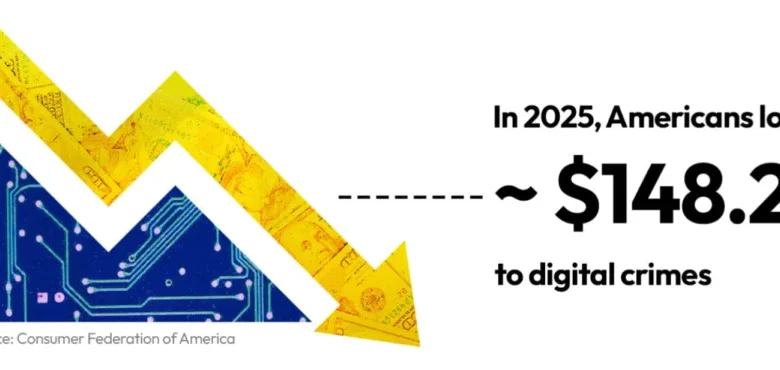
Experts point to the "friendly chatbot" as a particularly effective tool for this exploitation. As companies integrate AI agents into everyday tasks—such as banking, shopping, and information retrieval—users are becoming conditioned to trust these systems implicitly. Eyal Elazar, head of market intelligence at Riskified, notes that bad actors are actively weaponizing this psychological trust. By designing agents that feel helpful, personable, and "cute," scammers can lower the user’s natural defenses, leading to significant financial losses. In 2025 alone, Americans lost approximately $148.2 billion to digital crimes, a figure that illustrates the tangible cost of eroding digital trust.
Addressing this problem requires a departure from the current "speed-first" culture of the internet. Media literacy experts, including Chuck Salter of the News Literacy Project, argue that the solution is not a complete withdrawal from the internet, which is now essential for modern life, but rather the intentional practice of "the pause." This involves asking critical questions of the content we consume: Why is this post in my feed? Who benefits from my reaction? Is this information verifiable through external, non-algorithmic sources?
The challenge, however, is that this advice asks users to fight against the very design of the platforms they are using. The "frictionless" experience is the product; the user’s thought process is the obstacle. As Andrew Jones of Adaptive Security puts it, the digital environment is built to prevent the exact kind of critical thinking that is necessary for protection. "Every autoplay and every infinite scroll is training the user to react in a second and move on," Jones explains. To counter this, individuals must consciously build a habit of skepticism.

Crucially, this skepticism must be distinguished from cynicism. While healthy skepticism encourages a person to verify sources and cross-reference information, cynicism leads to a total rejection of all media, including legitimate reporting. When people lose the ability to trust any information, they become prone to extremist narratives and conspiracy theories, which fill the void left by discarded facts. Marijus Briedis of NordVPN warns that once a society loses the ability to distinguish between a synthetic fabrication and a real event, that trust is incredibly difficult to reclaim.
As we look toward the future, the responsibility for this shift cannot fall solely on the user. Public policy and regulatory oversight are increasingly focusing on the design of platforms. The recent wave of legal challenges against major tech companies regarding "endless scroll" and addictive algorithmic features represents an initial attempt by regulators to force platforms to account for the psychological and societal impacts of their design choices. However, until such regulations are fully implemented, the burden of proof remains with the reader.
The path forward is one of active, rather than passive, digital engagement. This includes verifying viral claims with trusted institutions, engaging in offline discussions about current events with friends and family to gain diverse perspectives, and recognizing that digital platforms are not neutral public squares, but rather commercial entities with specific incentives. The "Indistinguishability Threshold" is a permanent feature of our new reality, and the ability to navigate it with clarity is no longer an optional skill; it is a fundamental requirement for informed citizenship in the 21st century. By slowing down, questioning the source, and maintaining a tether to the physical world, users can reclaim their agency in a digital age that is increasingly designed to strip it away.
Related posts: