The Enigmatic Jimothy: Seattle’s Viral Raccoon Sparks Identity Debate and Wildlife Discourse

Seattle, Washington – The Emerald City finds itself captivated by a curious creature named Jimothy, an unusually shaped raccoon whose viral fame has transcended local notoriety to become a national internet sensation. However, as residents of the Ballard neighborhood continue to share alleged sightings, some dating back years, wildlife experts and the public alike are increasingly questioning whether the beloved internet celebrity is a singular animal or if Seattle is, in fact, home to a whole lineage of distinctive, round-bodied raccoons – a veritable "Jimothy dynasty" whose plural form remains as unsettled as its true identity. This unfolding mystery has ignited a broader conversation about urban wildlife, responsible human-animal interaction, and the fleeting nature of internet fame.
The Rise of a Raccoon Icon: Jimothy’s Viral Journey
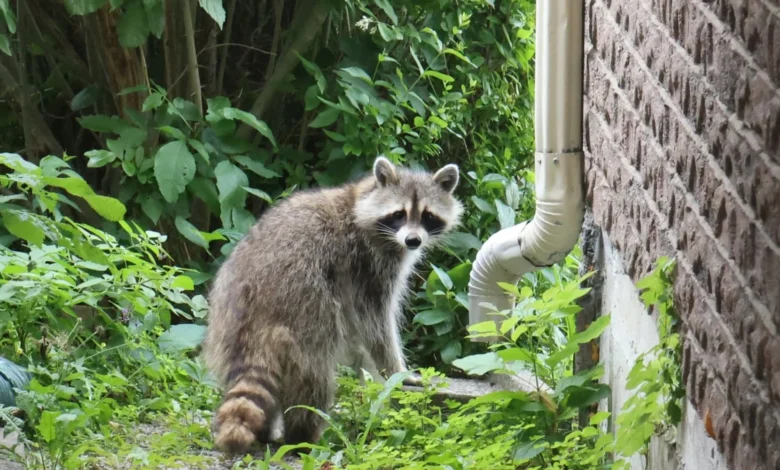
Jimothy’s meteoric ascent to stardom began on July 13 when Seattle resident Kiana Hall encountered the peculiar animal during a casual stroll through Ballard. Initially mistaking the creature lurking beneath a parked car for a domestic feline, Hall’s curiosity piqued when it emerged, revealing the unmistakable masked face of a raccoon, albeit one with a notably shortened torso and neck. Captivated by its unique appearance, Hall began recording, and her brief video clip, quickly uploaded to social media, became an overnight phenomenon, accumulating millions of views across various platforms. Hall, struck by the raccoon’s distinct demeanor, bestowed upon it the moniker "Jimothy," explaining later to Today that "he simply looked like one."
The immediate aftermath of the video’s release was nothing short of a cultural explosion. Social media platforms buzzed with discussions, theories, and expressions of adoration for the peculiar creature. Fans enthusiastically declared it "Hot Jimothy Summer," launching a torrent of creative tributes. Jimothy’s image rapidly proliferated across the internet, inspiring a wave of memes, digital art, and even physical merchandise ranging from T-shirts to coffee mugs. Local artists took to their canvases and walls, creating murals immortalizing the raccoon’s distinctive silhouette, while some devoted followers went as far as getting tattoos in his honor.
The fascination with Jimothy extended beyond individual admirers, permeating local institutions and organizations. Government public service announcements (PSAs) playfully referenced the raccoon, leveraging his popularity to convey important community messages. The University of Washington, in a nod to the widespread adoration, bestowed an honorary doctorate upon the furry icon. Perhaps one of the most memorable public appearances, albeit by a costumed impersonator, occurred at a Seattle Mariners game, where a mascot dressed as Jimothy triumphantly defeated four oversized fish during the team’s traditional seventh-inning Salmon Run, cementing his status as a beloved local figure. Even tech giant Google joined the celebration, integrating an interactive animation of Jimothy scurrying across the screen when users search for "Jimothy" or "Jimothy the raccoon," further cementing his digital legacy.
The Enigma of Jimothy’s Identity: One Raccoon or Many?
As Jimothy’s following swelled and his image became ubiquitous, a fascinating subplot began to unfold within the Ballard community. Residents, energized by the viral phenomenon, started poring over old photographs, security-camera footage, and personal anecdotes, seeking to identify previous encounters with the distinctive raccoon. It was through this collective archival effort that inconsistencies began to surface, casting a shadow of doubt over the assumption of a single Jimothy.
Ballard resident Rebecca Sorenson articulated this growing skepticism in an interview with FOX 13 Seattle, highlighting the conflicting accounts of Jimothy’s age and historical presence. "There’s posts now that say that he was born a year ago and then other people with posts that saw him in 2017," Sorenson noted, articulating the central question: "I’m curious now if there are more than one?" These disparate timelines presented a significant challenge to the narrative of a singular, identifiable Jimothy.
To provide context to these age claims, wildlife experts weighed in on the typical lifespan of raccoons. Wendi Mallo, an experienced animal keeper who cares for raccoons at Northwest Trek Wildlife Park, explained that the average lifespan for a wild raccoon is typically three to five years. This relatively short duration is due to the myriad dangers inherent in their natural habitat, including vehicular accidents, predation by domestic animals, diseases, and the general challenges of urban living, with many not surviving their first year. For a raccoon to have been sighted in 2017, it would need to be at least nine years old today. While not entirely impossible, Mallo conceded, such an age for a wild raccoon is exceptionally rare and would indicate an animal of remarkable resilience. "Yeah, that seems like a very long-lived raccoon to me for the wild," Mallo told FOX 13 Seattle, adding a touch of whimsy, "But who knows, there’s magic in the wild. We’ve just got to look for it."
The conflicting timelines and expert analysis gave rise to a compelling alternative theory: that Ballard might be home to not one, but multiple raccoons exhibiting similar spinal abnormalities. This theory posits that the distinctive "short spine" appearance, while rare, could potentially manifest in more than one individual within a localized population, perhaps due to a shared genetic predisposition or environmental factors. However, this remains a speculative hypothesis, as no official confirmation of multiple short-spined raccoons has been established, nor has it been definitively proven that all reported sightings pertain to the same animal. Without a scientific examination or a reliable method of individual identification, the "Jimothy paradox" continues to baffle and intrigue. The uncertainty complicates the collective narrative of Jimothy’s life, with residents piecing together a mosaic of alleged past sightings, some claiming to show a "young Jimothy" living with his family in earlier years, each contributing to a rich but potentially fragmented lore.
Understanding Jimothy’s Unique Physiology: Short Spine Syndrome
The most compelling explanation for Jimothy’s distinctive physique points to a congenital spinal deformity, widely believed by experts to resemble "short spine syndrome." This rare condition, also known as congenital vertebral anomaly, results from a malformation of the vertebrae during fetal development. Instead of growing to their typical length and spacing, the vertebrae are compressed, fused, or otherwise underdeveloped, leading to a significantly shortened and often hunched back, a compressed neck, and a somewhat "squat" appearance. While commonly observed in certain dog breeds due to selective breeding, it is far less common in wild animals and is typically a congenital defect rather than an injury.
For a wild animal like a raccoon, such a condition presents numerous challenges. Mobility can be affected, potentially hindering their ability to run, climb, or evade predators with the same agility as their unaffected counterparts. Foraging for food, which often involves navigating complex urban landscapes and scaling fences or trees, could also be more demanding. Despite these potential handicaps, observations of Jimothy (or the Jimothys) show a remarkably resilient creature. Videos depict the raccoon walking, climbing, successfully finding food, and independently navigating the bustling Ballard neighborhood, suggesting a commendable adaptation to his unique physical constraints. Wildlife officials and experts have noted that, despite his compressed build, the raccoon appears to be in good overall body condition, indicating that he is managing to thrive in his environment, a testament to the adaptability of urban wildlife. It is important to reiterate that without a direct veterinary examination, Jimothy’s specific diagnosis remains an informed assumption based on his visible characteristics.
Raccoon Ecology and Urban Wildlife in Seattle’s Ballard Neighborhood
Raccoons (Procyon lotor) are highly adaptable and intelligent mammals renowned for their ability to thrive in diverse environments, particularly urban and suburban landscapes. Seattle, with its abundant green spaces, proximity to water bodies, and readily available food sources (often human-derived), provides an ideal habitat for these nocturnal creatures. The Ballard neighborhood, characterized by a mix of residential areas, commercial zones, and pockets of natural vegetation, offers a rich tapestry of resources for raccoons, from sheltered dens in culverts, attics, or hollow trees to a varied diet of fruits, nuts, insects, small animals, and, inevitably, discarded human food.
In urban settings, raccoons face a unique set of challenges. Traffic, domestic pets (especially dogs), and exposure to human-borne diseases or toxins are significant threats. The average lifespan of a raccoon in the wild is relatively short, around 2-3 years, with a maximum rarely exceeding 5 years due to these pressures. In captivity, with proper care and absence of predators, they can live significantly longer, often 10-15 years. This stark contrast underscores the remarkable survival skills of any wild raccoon that manages to reach an advanced age, further emphasizing the intrigue surrounding the "2017 Jimothy" sightings. The presence of raccoons in urban areas also necessitates a cautious approach from human residents, as their intelligence and adaptability can lead to conflicts, particularly concerning property damage or disease transmission if interactions become too close.
The Broader Implications of Viral Wildlife Encounters
The saga of Jimothy the raccoon offers a compelling case study into the complex and often contradictory implications of viral fame for wild animals. On one hand, Jimothy’s overnight celebrity has undeniably generated an unprecedented level of public interest in urban wildlife. This heightened awareness can foster local pride, encouraging communities to learn more about the animals sharing their spaces and potentially galvanizing support for wildlife conservation efforts. The playful institutional responses, from Google’s animation to the University of Washington’s honorary doctorate, illustrate how a charismatic animal can become a cultural touchstone, breaking down barriers between humans and the natural world.
However, the allure of a viral wild animal also carries significant risks and ethical considerations. The increased attention can lead to a surge of visitors to the neighborhood, all hoping to catch a glimpse of the celebrity raccoon. This influx of human presence can disturb the animal’s natural routines, increase stress levels, and expose them to additional hazards, such as increased traffic. More critically, the desire to interact with a famous animal often leads to inappropriate behaviors like attempting to approach, feed, or even pet the raccoon. Feeding wild animals, while seemingly benevolent, is profoundly detrimental to their well-being. It can lead to animals associating humans with food, making them lose their natural fear, increasing aggression, and disrupting their natural foraging behaviors. It can also cause dietary imbalances, make them reliant on human handouts, and facilitate the spread of diseases within the animal population or to humans.
Wildlife officials and animal welfare organizations universally advise against direct interaction with wild animals, including Jimothy. Their recommendations are clear and consistent: observe from a respectful distance, never attempt to feed, approach, capture, or pet them. This guidance is not only for the animal’s safety but also for public health and safety. Raccoons, like many wild animals, can carry diseases such as rabies or roundworm, and direct contact can pose risks. The "Jimothy" phenomenon underscores the delicate balance between human curiosity and the imperative to protect wildlife by allowing them to live undisturbed in their natural habitats, even if those habitats are increasingly intertwined with human settlements.
The Ongoing Search for Answers and Coexistence
As the cooler months approach and the vibrant "Hot Jimothy Summer" begins to wane, the central mystery of Jimothy’s identity remains unresolved. Seattle could be marveling at one remarkably resilient and long-lived raccoon, a testament to an individual animal’s survival against the odds. Alternatively, the city might be home to several similarly shaped relatives, a unique localized phenomenon of raccoons exhibiting the same rare genetic anomaly. Or, perhaps most likely, the narrative is a complex blend of genuine Jimothy sightings intertwined with mistaken identities, where any unusually round raccoon in Ballard is affectionately (and understandably) dubbed "Jimothy" by an adoring public.
Without a direct veterinary examination or a scientifically reliable method of individual identification, such as microchipping or unique markings verified over time, a definitive answer is unlikely to emerge. In the absence of such certainty, the name "Jimothy" has arguably transcended its original intent as a singular moniker. It has evolved into something more profound: a collective title, a symbol passed among Ballard’s most distinctive, round-bodied residents. It embodies the charm, the mystery, and the wonder that urban wildlife can inspire in a community.
Ultimately, the story of Jimothy is a poignant reminder of our shared urban landscape with wildlife. It highlights the power of the internet to create instant celebrities out of the most unexpected subjects and underscores the crucial responsibility humans bear in interacting with their wild neighbors. As Seattle continues to monitor its unique raccoon population, the advice from wildlife officials remains paramount: enjoy the spectacle from afar, respect their wild nature, and ensure that Jimothy – or any Jimothys – can continue to thrive independently in their urban domain, forever etched into the folklore of the Pacific Northwest.