Android Auto Users Report Widespread Reversion from Gemini to Google Assistant Amidst Bug Concerns

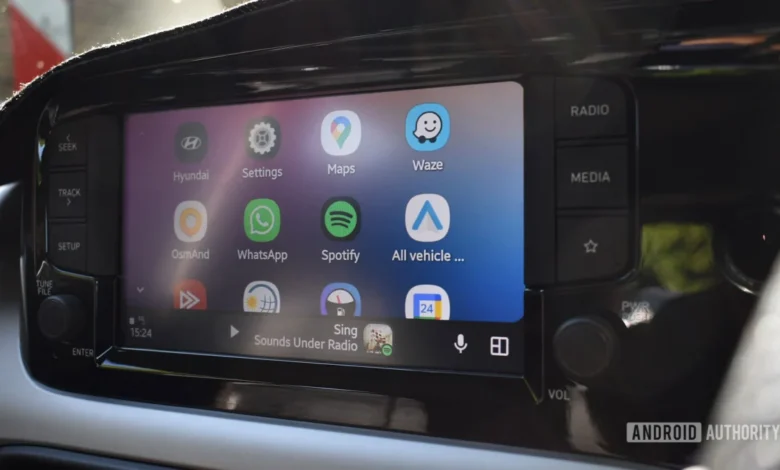
For several months, Google has been steadily rolling out its advanced artificial intelligence model, Gemini, to Android Auto (AA) users, a move intended to enhance the in-car digital assistant experience. This integration, however, has been met with a spectrum of reactions, ranging from enthusiastic adoption to palpable skepticism, leaving a significant portion of the user base with mixed feelings about the AI upgrade. Now, an unforeseen technical glitch is causing a widespread reversion from Gemini back to the familiar Google Assistant for many users, an ironic turn of events that some might actually welcome given Gemini’s divisive reception.
The issue, which has surfaced prominently across various online communities, sees Gemini unexpectedly disappearing from Android Auto interfaces, with the system defaulting to the older Google Assistant. Reports of this anomaly have proliferated across platforms such as Reddit, where numerous threads detail users’ experiences with the sudden change. These anecdotal accounts are not isolated; internal confirmations from technology journalists further corroborate the existence and reach of this bug, indicating it’s a more widespread phenomenon than an isolated incident. While some users report a persistent inability to revert to Gemini, others have found the issue to be temporary, with the AI assistant eventually reappearing.
A deeper dive into the Android Auto community forums reveals more specific details regarding the potential trigger for this unexpected downgrade. One user meticulously documented their experience, noting that Gemini’s integration was functioning flawlessly until they updated their Android Auto application to version 16.7. Following this update, the system inexplicably reverted to the Google Assistant. Despite exhaustive troubleshooting steps—including clearing the cache for both the Android Auto and Google applications, meticulously toggling digital assistant settings within the app, and performing multiple restarts of both their smartphone and the vehicle’s head unit—the old Assistant interface continued to manifest, resisting attempts to restore Gemini. This detailed account points to a direct correlation between the software update and the emergence of the bug, suggesting a potential flaw in the latest iteration of the application.
However, the precise cause remains somewhat elusive. While version 16.7 has been implicated by some, other reports introduce an element of complexity. Another user in the forum claimed to have encountered the identical bug while operating on an earlier version, specifically 16.6.661414. This conflicting information suggests that the issue might not be exclusively tied to version 16.7 but could potentially stem from a broader backend change, a server-side update, or an interaction with specific device configurations or vehicle head units that manifests differently across various software versions. The inconsistency in reported triggers adds a layer of challenge for Google’s development teams in pinpointing and resolving the root cause.
The Evolution of In-Car AI: From Assistant to Gemini
To fully appreciate the significance of this bug, it is crucial to contextualize the journey of Google’s digital assistants within the automotive environment. For years, Google Assistant has been the cornerstone of Android Auto, providing drivers with hands-free control over navigation, media playback, communication, and basic vehicle functions. Its strength lay in its familiarity, reliability for core tasks, and deep integration with Google’s expansive ecosystem of services. Users grew accustomed to its voice commands, its predictable responses, and its relatively streamlined interaction model, which prioritized safety and minimal distraction while driving.
The introduction of Gemini into Android Auto represented a significant strategic pivot for Google. Announced with much fanfare, Gemini is Google’s most advanced and capable AI model, designed to be multimodal, understand complex queries, and generate more nuanced and creative responses. Its integration into Android Auto was touted as a leap forward, promising a more conversational, intuitive, and powerful in-car assistant. The vision was to move beyond simple commands, enabling drivers to engage in more natural dialogues, ask follow-up questions, and receive more contextually relevant information without diverting attention from the road. This ambition aligns with a broader industry trend towards integrating sophisticated AI into vehicles, transforming them into intelligent, connected hubs.
However, the real-world rollout of Gemini in Android Auto has been a mixed bag, contributing to the paradoxical reception of the current bug. While some early adopters praised Gemini’s enhanced conversational abilities, its potential for more complex task completion, and its generally more human-like interaction, others voiced considerable frustrations. Common complaints included slower response times compared to the instantaneous reactions of Google Assistant, occasional inaccuracies in understanding commands, and a perceived over-complication of interactions for simple, routine tasks. For drivers who prioritize efficiency and predictability during their commute, the perceived benefits of Gemini sometimes failed to outweigh its initial quirks and learning curve. There were also concerns about Gemini’s integration with certain Android Auto features that users had come to rely on from Google Assistant, leading to a sense of feature regression for some. This divergence in user experience underscores why a reversion to Google Assistant, though a bug, might be seen as a temporary reprieve by a segment of the user base.
Technical Scrutiny and User Frustration
The technical underpinnings of this bug highlight the complexities inherent in managing large-scale software deployments, especially those involving advanced AI models. The transition from one AI backend (Google Assistant) to another (Gemini) within a system as intricate as Android Auto involves numerous layers of code, API calls, and server-side configurations. A glitch in any of these layers during an update process could easily lead to an unexpected fallback or a failure to properly initialize the new system.
User reports detailing failed attempts to restore Gemini after the bug’s manifestation offer further insight. The actions taken by affected users—clearing app caches, toggling settings, and device restarts—are standard troubleshooting steps for Android applications. The fact that these actions often prove ineffective suggests the problem lies deeper than a simple local configuration issue. It points towards a more fundamental disruption in how Android Auto identifies and interfaces with the digital assistant backend, or potentially a persistent flag on Google’s servers that incorrectly directs certain user profiles back to the Assistant.
The disruption caused by an unexpected change in the digital assistant during driving conditions extends beyond mere inconvenience. Drivers rely on these systems for critical functions like navigation, emergency calls, and controlling vehicle features, all of which demand consistency and reliability. An abrupt switch from Gemini to Google Assistant can disrupt muscle memory for voice commands, lead to confusion over feature availability, and potentially cause moments of distraction as users try to reorient themselves with the unexpected interface. This underscores the paramount importance of stability and predictability in in-car infotainment systems, where safety is a primary concern.
Google’s Official Response and Interim Solutions
Fortunately, Google has acknowledged the growing number of reports concerning this issue. A Google community specialist has issued a formal statement, indicating that the development team is aware of the situation and actively investigating. The statement reads: "Thanks for reporting this issue. We’ve forwarded your issue to the rest of the team. We’ve also reached out to you via e-mail for further assistance, please reply back to the same email." This official response is a crucial first step, confirming that the bug is on Google’s radar and that resources are being allocated to diagnose and resolve it. The personalized email outreach to affected users suggests a more targeted approach to gathering diagnostic data, which is often essential for understanding complex, intermittent software bugs that might be tied to specific user environments or configurations.
In the interim, a potential workaround has emerged from the community, offering a temporary reprieve for some users eager to restore Gemini. This solution involves navigating to the Android Auto settings, locating the digital assistant section, explicitly switching the assistant from Gemini to Google Assistant, and then immediately toggling it back to Gemini. While not a guaranteed fix for everyone, many users have reported success with this method, suggesting that it might force a re-initialization of the assistant selection or refresh the connection with Google’s backend services. However, it is vital to emphasize that this is a user-discovered workaround, not an official patch, and its effectiveness may vary. Users should remain cautious and await an official software update from Google for a permanent resolution.
Broader Implications and Future Outlook
This bug, while seemingly technical, carries broader implications for user experience, trust in AI integration, and the future trajectory of in-car technology.
Firstly, user experience and trust are directly impacted. When a core feature like the digital assistant—especially a new, highly anticipated AI one—malfunctions or reverts unexpectedly, it erodes user confidence. This is particularly true for a platform like Android Auto, which is deeply integrated into daily driving routines. Such glitches can foster skepticism about the stability and readiness of new AI technologies, potentially slowing down their adoption even when fully functional. For those who had embraced Gemini, the sudden loss of its capabilities is frustrating; for those who preferred Assistant, the "bug" might be a welcome, albeit unintended, feature, highlighting the need for user choice in digital assistant preferences.
Secondly, the incident underscores the inherent challenges of integrating advanced AI models into complex, distributed systems. Android Auto operates across a vast ecosystem of smartphones, car manufacturers, and head unit configurations, each with its own software layers and hardware specifications. Ensuring seamless and consistent performance of a sophisticated AI like Gemini across such a fragmented environment is a monumental task. Bugs like this can reveal underlying architectural dependencies or unforeseen interactions that only manifest under specific conditions or during large-scale updates. This speaks to the immense importance of rigorous quality assurance, extensive beta testing, and robust rollout strategies.
Thirdly, this event offers a glimpse into the competitive landscape of in-car infotainment. Google is not alone in its pursuit of an intelligent vehicle experience; Apple CarPlay, various car manufacturers’ proprietary systems, and third-party solutions are all vying for dominance. Stability, reliability, and a seamless user experience are critical differentiators. Persistent or widespread bugs, especially in core AI features, can provide rivals with an opportunity to highlight the robustness of their own offerings.
Looking ahead, Google’s commitment to Gemini within Android Auto remains unwavering. The company has invested heavily in its AI capabilities, and its integration into Android Auto is a strategic move to position itself at the forefront of the connected car revolution. The resolution of this bug will be a crucial test of Google’s ability to manage the complexities of AI deployment in a user-critical environment. It is expected that Google will release an official patch in an upcoming Android Auto update, addressing the root cause of the reversion and restoring Gemini for all users who wish to utilize it. Until then, users are advised to monitor official announcements from Google and utilize the temporary workaround if they wish to re-enable Gemini. The incident serves as a stark reminder that even the most advanced technologies are subject to the occasional, unpredictable glitch, requiring constant vigilance and responsive development.