Google’s Strategic Tech Moves: Gemini for Mac, Foldable Market Battles, and YouTube’s Shorts Evolution

In a notable week for Google’s expansive digital ecosystem, key developments spanning artificial intelligence, hardware innovation, and user experience adjustments have emerged, sparking discussions among tech analysts and industry observers. The spotlight has fallen on Google’s introduction of a native Gemini application for macOS, its ongoing battle for market share in the burgeoning foldable smartphone segment against the potential entry of Apple, and a newly identified workaround for users seeking to disable YouTube Shorts. These movements underscore Google’s multifaceted approach to maintaining and expanding its influence across critical technology fronts, reflecting both proactive innovation and responsive adaptation to user and market dynamics.
The Dawn of Gemini on Mac: A Strategic AI Play
Google’s decision to launch a native Gemini application for macOS marks a significant step in its ambitious artificial intelligence strategy. Gemini, Google’s advanced multimodal AI model, has been at the forefront of the company’s efforts to compete in the rapidly evolving AI landscape. Prior to this, Gemini’s primary interfaces were its dedicated mobile application on Android and iOS, and its web-based platform. The introduction of a standalone desktop application for Apple’s macOS operating system raises pertinent questions about Google’s strategic intent and the broader implications for AI integration into daily computing.
Background and Context of Gemini’s Evolution
Google officially unveiled Gemini in December 2023, positioning it as its most capable and general-purpose AI model to date. Designed to understand and operate across various modalities—text, code, audio, image, and video—Gemini was developed to challenge and surpass existing large language models (LLMs) like OpenAI’s GPT series. Its rollout has been gradual, starting with the mobile app and integration into various Google services, including Workspace applications. The initial focus was largely on mobile productivity and creative assistance, leveraging the ubiquity of smartphones.
The move to a native macOS application represents a clear expansion of Gemini’s operational footprint into the desktop environment. While web-based access has always been available, a native application typically offers several advantages: enhanced performance, deeper integration with the operating system, access to local files and system functionalities, and a potentially more seamless user experience. For Google, this could mean better leveraging macOS’s powerful hardware for AI computations, even if some processing still occurs in the cloud.
Why Now? Decoding Google’s Desktop AI Strategy
The timing of the Gemini Mac app’s release prompts speculation. One primary driver is likely the intensifying competition in the desktop AI assistant space. Microsoft has aggressively integrated its Copilot AI into Windows 11, making it a prominent feature of the operating system. Apple itself is rumored to be enhancing Siri with more advanced AI capabilities, potentially powered by its own on-device models, with significant announcements anticipated at WWDC. By launching a native Mac app, Google positions Gemini as a direct competitor to these platform-native AI offerings, aiming to capture a segment of the professional and creative users who rely on macOS for their work.

Furthermore, the "why now" could also be attributed to Google’s broader commitment to making its AI accessible and ubiquitous across all major platforms. As AI transitions from a niche technology to a fundamental computing layer, its presence on every device a user interacts with becomes crucial. A native Mac app signals Google’s intent to not be confined to its own Android ecosystem or the web, but to establish Gemini as a cross-platform AI powerhouse. This move also aligns with a trend where major software companies are increasingly offering dedicated desktop applications rather than solely relying on web wrappers or browser-based experiences, recognizing the demand for more robust and integrated tools.
Implications for Users and the AI Landscape
For macOS users, the Gemini app could offer a more robust and integrated AI experience, potentially enhancing productivity, content creation, and information retrieval. Users might find it easier to switch between tasks and leverage Gemini’s capabilities without the friction of browser tabs. This could lead to increased adoption of Google’s AI services among Mac users, potentially eroding the market share of other AI tools or even Apple’s own nascent AI efforts.
From a broader industry perspective, Google’s push into native desktop AI applications underscores the growing importance of "ambient intelligence"—where AI is seamlessly integrated into every aspect of computing. It highlights a strategic pivot for Google, which traditionally favored web-based services, towards a more platform-agnostic approach when it comes to its cutting-edge AI. This could pave the way for more standalone Google applications on macOS and Windows, signifying a shift in how Google intends to deliver its core services beyond the browser.
The Foldable Frontier: Google’s Struggle Amidst Apple’s Shadow
The foldable smartphone market, while still nascent, represents a significant battleground for innovation and market share. Google’s entry with the Pixel Fold was seen as a crucial step in diversifying its hardware portfolio and challenging established players. However, recent reports indicate that Google’s portion of this niche market remains modest, and the looming prospect of Apple’s entry poses a considerable risk to its long-term ambitions in the segment.
Evolution of the Foldable Market and Google’s Entry
The foldable smartphone market was pioneered by Samsung, which launched its first Galaxy Fold in 2019. Despite initial hurdles, Samsung has consistently refined its foldable technology, leading to the highly successful Galaxy Z Fold and Z Flip series. Other manufacturers, including Huawei, Xiaomi, Oppo, and Motorola, have also introduced various foldable designs, contributing to a diverse but still specialized market.
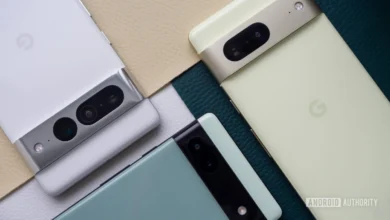
Google officially entered the foldable fray with the Pixel Fold in June 2023, positioning it as a premium device with a focus on seamless software integration, robust camera capabilities, and a distinct design language. The Pixel Fold aimed to leverage Google’s strengths in AI and Android optimization to offer a compelling alternative to Samsung’s dominance. Its internal screen was designed to be wider than many competitors, catering to a tablet-like experience when unfolded.

Market Performance and Data Insights
Despite critical acclaim for its software and camera, the Pixel Fold has struggled to gain significant traction. Industry reports and analyst projections consistently place Google’s foldable market share in the low single digits. For instance, according to Counterpoint Research, the global foldable smartphone market shipped 7.8 million units in 2021, growing to 14.9 million in 2022, and projected to reach over 20 million units in 2023. Samsung has historically held the lion’s share, often exceeding 70-80% of the market, with Chinese manufacturers making up most of the remainder. Google’s share, while present, has not significantly altered this landscape.
The challenges for Google include a premium price point (often exceeding $1,700-$1,800), intense competition from more established players with longer product cycles and greater economies of scale, and the inherent durability concerns that still shadow the nascent foldable technology. While Google has touted the durability of the Pixel Fold’s hinge and display, consumer apprehension persists.
The Apple Factor: A Potential Game-Changer
The greatest long-term threat to Google’s, and indeed all current foldable manufacturers’, ambitions is the eventual entry of Apple into the foldable market. While Apple has not officially confirmed its plans, numerous patents, supply chain rumors, and analyst predictions suggest that a foldable iPhone or iPad is in active development, potentially launching in the next few years (estimates range from 2026 to 2028).
Apple’s entry would be transformative for several reasons:
- Market Validation: Apple’s endorsement would instantly legitimize and mainstream the foldable form factor, potentially accelerating adoption rates significantly.
- Technological Refinement: Apple is known for its meticulous engineering and user experience focus. Its foldable device would likely set new benchmarks for durability, software integration, and overall polish, forcing competitors to elevate their game.
- Ecosystem Lock-in: Apple’s vast ecosystem and loyal customer base mean that even a premium-priced foldable would likely see substantial demand, shifting market dynamics dramatically.
For Google, an Apple foldable could mean intensified competition for premium users, potentially marginalizing the Pixel Fold further if it cannot offer a uniquely compelling proposition. Google’s strategy will need to focus on leveraging its AI superiority, Android flexibility, and potentially more accessible price points to carve out a sustainable niche before Apple enters the fray.
Broader Implications for Hardware Innovation

The foldable market represents the bleeding edge of smartphone hardware innovation. Google’s continued participation, despite challenges, is crucial for fostering competition and driving Android’s adaptability to new form factors. The lessons learned from the Pixel Fold will undoubtedly influence future iterations and Google’s broader hardware strategy. The industry awaits to see if Google can refine its foldable offering sufficiently to withstand the impending pressure from a potential Apple entry, ensuring a diverse and innovative foldable landscape for consumers.
YouTube’s Shorts Evolution: Balancing Creator Incentives and User Preference
YouTube Shorts, the platform’s answer to the meteoric rise of short-form video content popularized by TikTok, has been a significant focus for Google. However, the omnipresence of Shorts within the YouTube interface has also led to a segment of users seeking ways to disable or minimize their exposure to this format. The recent emergence of workarounds for disabling Shorts highlights YouTube’s ongoing challenge in balancing its strategic growth initiatives with diverse user preferences.
The Rise of Short-Form Video and YouTube’s Response
The past five years have witnessed an explosive growth in short-form video, largely spearheaded by TikTok. Its addictive algorithm, easy creation tools, and rapid consumption cycle reshaped digital content consumption. Recognizing this paradigm shift, YouTube, a long-form video giant, launched YouTube Shorts globally in 2021. Shorts are vertical videos up to 60 seconds in length, designed for quick, on-the-go consumption.
YouTube’s motivation for Shorts was clear:
- Retain and Attract Users: To prevent users from migrating entirely to TikTok or other short-form platforms.
- Creator Monetization: To offer creators another avenue for engagement and income, thereby keeping them on the YouTube platform. YouTube introduced a Shorts Fund and later integrated Shorts into its Partner Program, allowing creators to earn revenue from ads played between Shorts.
- Expand Content Library: To diversify its vast content offering and appeal to a younger demographic.
The rollout of Shorts was aggressive, integrating them prominently into the YouTube homepage, subscriptions feed, and dedicated Shorts shelf. This prominent placement, while effective for discovery, has not been universally welcomed.
User Feedback and the Quest for Control
A significant portion of YouTube’s long-time user base, accustomed to longer-form content and traditional video formats, has expressed dissatisfaction with the pervasive nature of Shorts. Complaints range from the auto-playing nature of Shorts, their perceived lower quality compared to curated long-form content, and the disruption they cause to the traditional viewing experience. Many users simply prefer to watch full-length videos and find the constant presence of Shorts distracting or irrelevant to their primary use of YouTube.

This user sentiment has driven a demand for greater control over the YouTube interface, specifically the ability to disable or hide Shorts. While YouTube has offered some minor customization options, a direct "disable Shorts" button has historically been absent. This absence has led to users actively seeking and sharing various "workarounds." These workarounds often involve specific browser extensions, modifying playback settings, or repeatedly dismissing Shorts sections in the hope that YouTube’s algorithm will learn their preference. The fact that users are resorting to such methods underscores a significant disconnect between YouTube’s product strategy and a segment of its user base’s desires.
Implications for Platform Strategy and User Experience
The emergence and popularity of these Shorts-disabling workarounds carry several implications for YouTube:
- Balancing Act: YouTube faces a delicate balancing act. On one hand, Shorts are crucial for its growth strategy, attracting new creators and viewers, and remaining competitive in the short-form video space. On the other hand, alienating its core long-form audience could lead to reduced engagement or even churn.
- User-Centric Design: It highlights the importance of user-centric design and offering granular control over content presentation. While algorithmic personalization is powerful, it must be complemented by user agency.
- Monetization Challenges: If a significant portion of users actively disables Shorts, it could impact YouTube’s ad revenue from this format, potentially affecting creator payouts and the overall economic model for short-form content.
- Platform Evolution: This situation may compel YouTube to consider more official and user-friendly options for customizing the Shorts experience, perhaps through improved settings or a less intrusive default presentation.
Ultimately, YouTube’s journey with Shorts reflects a broader industry trend where platforms must constantly adapt to evolving content consumption habits while simultaneously catering to the diverse preferences of their existing user base. The success of Shorts will not only depend on its ability to attract new viewers and creators but also on its capacity to coexist harmoniously with YouTube’s foundational long-form content and satisfy the preferences of all its users.
Conclusion: Google’s Dynamic Landscape
These three distinct but interconnected developments paint a picture of Google as a company navigating a complex and highly competitive technological landscape. From aggressively expanding its AI footprint with a native Gemini app for Mac to defending its nascent position in the foldable phone market against the formidable shadow of Apple, and fine-tuning the user experience on its dominant video platform, YouTube, Google is engaged in continuous innovation and adaptation. The outcomes of these strategic maneuvers will significantly shape Google’s standing in the future of AI, hardware, and digital content, underscoring the dynamic nature of the global tech industry.