Apple Expands iOS and iPadOS 27 Language Support with Over 30 New Dialects and Regional Variants Across Siri, QuickType, and Visual Look Up

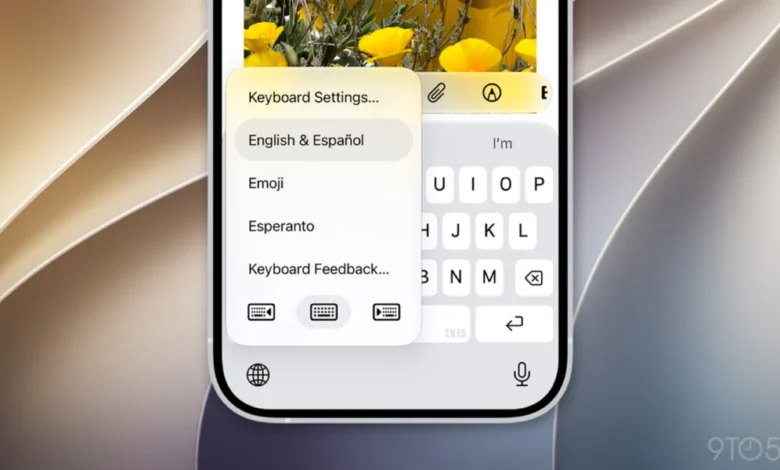
Apple has officially updated its comprehensive iOS and iPadOS Feature Availability documentation, marking a significant milestone in the company’s ongoing commitment to linguistic inclusivity and global market accessibility. The recent revision confirms that more than 30 new languages and regional variants have been successfully integrated into critical software infrastructure, including advanced QuickType keyboard intelligence, dictionary resources, the Visual Look Up recognition engine, and the "Activate with Siri" voice activation suite.
This expansive update bridges communication gaps for millions of users worldwide, ensuring that native speakers of underrepresented languages and regional dialects can interact with their Apple mobile devices more naturally and efficiently. As Apple continues to refine its ecosystem for a global audience, the strategic rollout of these localized features underscores the Cupertino-based tech giant’s focus on deep linguistic integration rather than surface-level translation.
Understanding the Architecture of Apple Feature Availability
To fully appreciate the scope of this update, it is essential to examine how Apple manages software feature distribution across its massive global user base. Apple maintains an intricate, meticulously updated directory known as the Feature Availability page. This centralized repository breaks down compatibility and regional support for nearly 200 distinct iOS and iPadOS features.
The scope of this documentation is vast, covering everything from foundational accessibility tools and Apple Pencil integrations to complex software frameworks like Calendar scheduling algorithms, Spotlight Search suggestions, and location-based reminders. Because regulatory frameworks, linguistic data availability, and regional server infrastructures vary significantly across borders, not every feature debuts globally at the same time. Instead, Apple utilizes a staged deployment model. Software updates introduce core frameworks, followed by targeted feature-availability updates—such as the one implemented today—which formally activate specific capabilities for newly certified languages and territories.
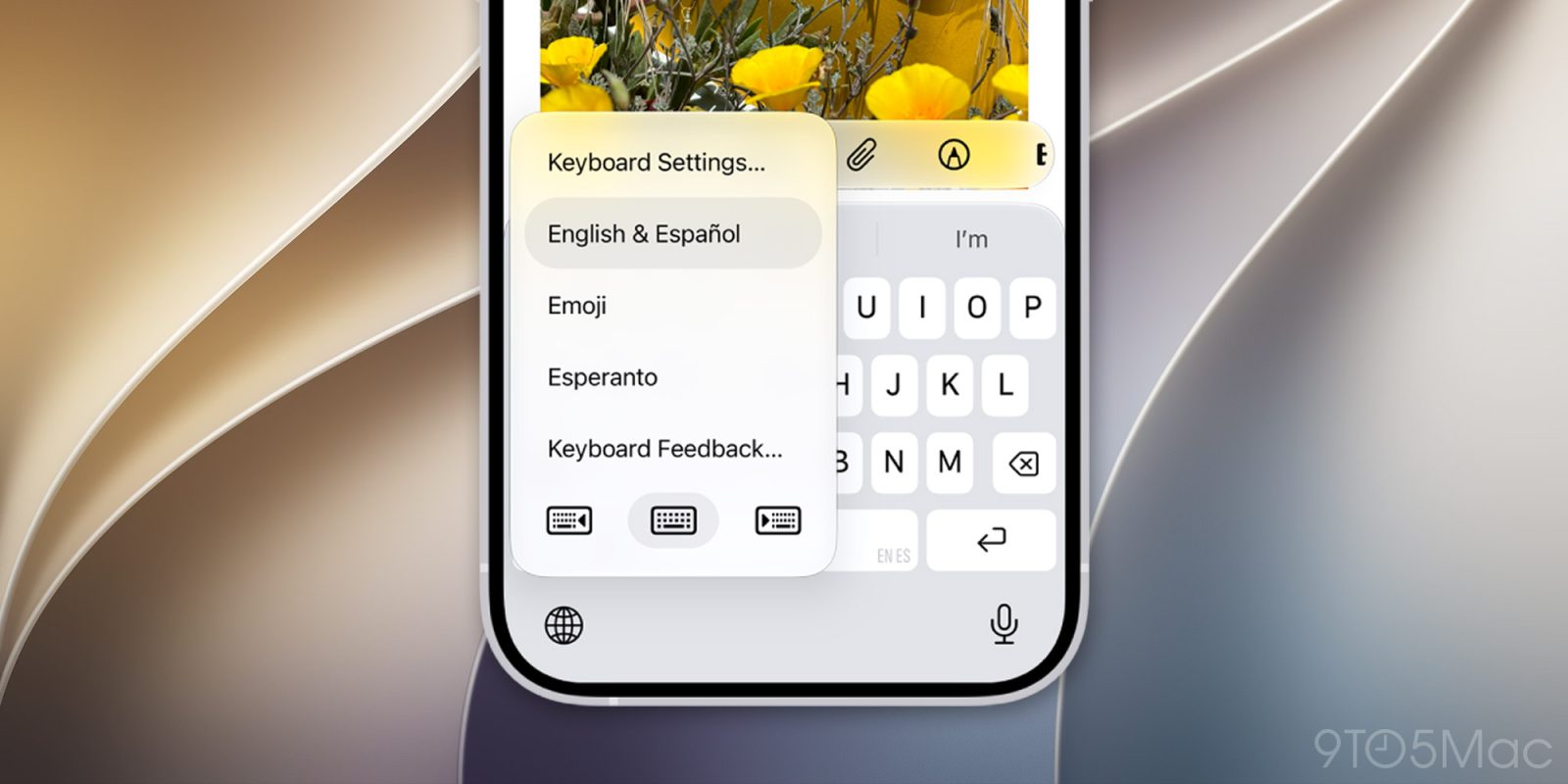
The latest update targets the foundational components of daily smartphone and tablet interaction. By incorporating over 30 new languages and variants into essential input and discovery tools, Apple is transforming how multilingual and regional users navigate their devices.
Deep Dive into the Expanded Feature Set
The integration spans several core pillars of the iOS and iPadOS 27 operating systems. Each component plays a vital role in user productivity, text composition, and multimodal interaction.
QuickType Keyboard Enhancements
The QuickType keyboard represents one of the most frequently utilized interfaces on any mobile device. With the iOS and iPadOS 27 update, Apple has vastly expanded the keyboard’s underlying computational linguistics engine.
- Language Support and Autocorrection: Typing accuracy relies heavily on robust dictionaries and predictive algorithms. The newly supported languages and regional variants now benefit from native autocorrection routines, drastically reducing the friction associated with typing in languages that lack standardized digital support.
- Predictive Typing and Inline Predictions: Predictive text algorithms analyze typing cadence and contextual syntax to anticipate the user’s next word. The expansion brings sophisticated inline predictions to dozens of new linguistic markets, allowing users to compose messages and documents with significantly fewer keystrokes.
- Multilingual Typing: In an increasingly interconnected world, bilingual and multilingual communication is standard practice. The updated QuickType infrastructure now supports seamless multilingual typing across an expanded roster of language pairs, eliminating the need to manually switch keyboard layouts mid-sentence.
- QuickPath Swiping: Gesture-based typing, or QuickPath, enables users to slide their fingers continuously across the virtual keyboard to form words. This tactile input method has been extended to several new languages, making one-handed typing faster and more fluid for a broader global demographic.
Lexical Expansion: Dictionary and Thesaurus
Comprehension and vocabulary enrichment are vital aspects of digital literacy. Apple has bolstered its native Dictionary framework within iOS and iPadOS 27. The updates provide comprehensive word definitions, etymologies, and contextual usage guidelines for newly supported languages. Furthermore, the Thesaurus component has been expanded, empowering writers, students, and professionals to explore synonyms and semantic alternatives within their native or regional tongues.
Multimodal Discovery via Visual Look Up
Introduced several iterations ago, Visual Look Up has evolved into an indispensable tool for identifying objects, landmarks, flora, fauna, and artwork directly within user-captured photographs and screenshots. By cross-referencing on-device machine learning models with vast knowledge bases, Visual Look Up provides contextual information instantly. The latest language rollout ensures that descriptions, search results, and knowledge graph queries associated with Visual Look Up are accessible to users in their preferred local languages, greatly enhancing the utility of on-device computer vision.

Voice Interaction and Accessibility: Activate with Siri
Voice assistants rely on acoustic modeling, phoneme recognition, and natural language understanding (NLU) to process user intent accurately. The "Activate with Siri" feature—which allows hands-free invocation of Apple’s digital assistant—has been extended to encompass additional languages and regional dialects.
Voice recognition technology is notoriously sensitive to accents, colloquialisms, and regional phrasing. By expanding the linguistic parameters of "Activate with Siri," Apple is improving the accuracy and responsiveness of its voice interface for communities that were previously underserved or forced to rely on secondary, dominant languages for voice commands.
The Chronology of Apple’s Localization Strategy
Apple’s journey toward comprehensive global localization spans more than a decade, evolving alongside the sophistication of its proprietary silicon and machine learning frameworks.
During the early years of the iOS ecosystem, language support was largely restricted to major international languages such as English, Spanish, French, German, Japanese, and Simplified Chinese. However, as iPhone and iPad adoption expanded into emerging markets across Southeast Asia, the Middle East, Latin America, and Eastern Europe, consumer demand for native-language support intensified.
The integration of Apple Neural Engine (ANE) hardware in recent years marked a major turning point. By shifting heavy computational tasks—such as voice recognition, predictive typing, and image processing—directly to on-device hardware rather than relying solely on cloud servers, Apple unlocked the ability to process complex linguistic nuances locally. This hardware evolution laid the groundwork for the massive feature availability updates seen in recent operating system cycles, culminating in today’s sweeping expansion under iOS and iPadOS 27.

Industry Implications and Market Analysis
From a strategic standpoint, Apple’s continuous investment in localized software infrastructure serves multiple crucial functions:
- Market Penetration and User Acquisition: In saturated smartphone markets, growth is increasingly driven by capturing market share from competitors through ecosystem stickiness and localized superior user experience. By offering deep, native support for regional dialects and lesser-spoken languages, Apple removes a significant adoption barrier for consumers in emerging economies.
- Advancement in On-Device AI and Machine Learning: Expanding language support is not merely a translation exercise; it requires rigorous data collection, algorithmic training, and cultural contextualization. The successful rollout of these features demonstrates the scalability of Apple’s machine learning pipelines, proving that the company can deploy complex AI-driven tools globally without compromising on privacy or performance.
- Accessibility as a Standard: Apple has long positioned accessibility as a core company pillar. Extending sophisticated text prediction, voice activation, and visual identification to a broader array of languages aligns with the philosophy that technology should be universally usable, regardless of geographic origin or native tongue.
Future Outlook and Next Steps for Users
As the rollout of iOS and iPadOS 27 continues to mature, users wishing to take advantage of these newly supported languages and features should ensure their devices are running the latest software builds. Language and regional settings can be managed directly through the iOS Settings application under General > Language & Region, where users can download necessary dictionary files, keyboard layouts, and voice recognition assets.
Apple’s ongoing refinement of its Feature Availability documentation ensures transparency, allowing developers, enterprise customers, and everyday consumers to track precisely which capabilities are live in their respective territories. As global communication continues to evolve in the digital age, Apple’s systematic expansion of linguistic support sets a rigorous standard for software localization across the consumer electronics industry.