Motorola Signature 27 Hands-on Reveals Revolutionary Tandem OLED Display and Unprecedented Brightness Ahead of Official Launch

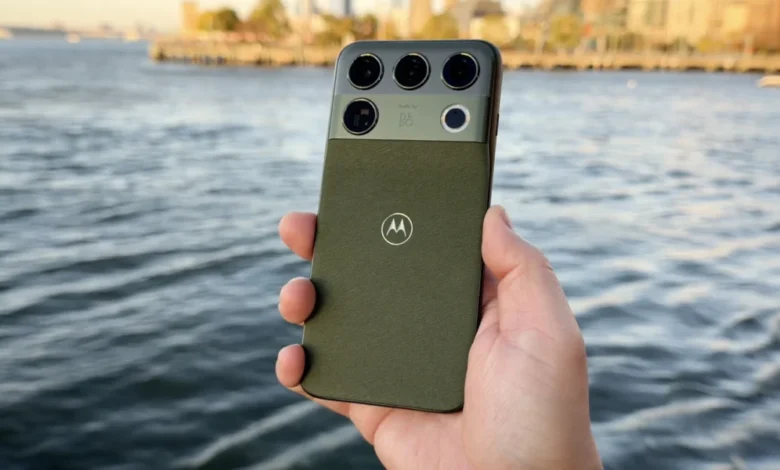
The mobile technology landscape is bracing for a significant shift as Motorola prepares to unveil its latest flagship, the Signature 27. With a scheduled launch date of November 5, anticipation has reached a fever pitch following an exclusive hands-on preview by tech analyst Danny Winget. The video provides the most comprehensive look to date at the device’s hardware, confirming rumors of a display technology that could redefine industry standards for mobile screen performance.
A New Standard in Visual Fidelity: The Extreme AMOLED Duo
The centerpiece of the Signature 27 is undoubtedly its "Extreme AMOLED Duo" display. Utilizing advanced Tandem OLED technology, the device signals a departure from traditional single-layer OLED panels. Tandem OLED architecture operates by stacking multiple emissive layers on top of one another. This configuration is engineered to provide superior contrast, improved longevity, and, most notably, a massive increase in peak brightness.
While Tandem OLED has previously appeared in high-end computing devices—most notably in the recently released "PROLED" MacBook Pro—its implementation in a handheld smartphone is a strategic move by Motorola to capture the premium market segment. By stacking these diodes, Motorola is reportedly able to achieve a staggering peak brightness of 12,000 nits. To put this figure into perspective, most current high-end flagships struggle to reach between 3,000 and 5,000 nits of peak brightness. If the 12,000-nit specification holds true under real-world testing, the Signature 27 will offer unparalleled visibility in direct sunlight and HDR performance that dwarfs its closest competitors.

Chronology of the Development Cycle
The road to the Signature 27’s release has been marked by a series of strategic leaks and calculated teases that have kept the tech community engaged throughout the latter half of 2026.
- September 2026: Initial industry whispers began regarding a "next-generation" Motorola device focused on display innovation.
- October 15, 2026: Regulatory filings hinted at a device with an unusually robust cooling architecture, suggesting high-performance internal components.
- October 28, 2026: The official launch date was confirmed for November 5, 2026, via Motorola’s social media channels.
- October 30, 2026: The Danny Winget hands-on video provided the first visual confirmation of the device’s physical design, including the textured rear chassis and curved glass display edges.
This rapid-fire rollout follows a broader trend in the smartphone industry, where manufacturers are increasingly relying on high-profile influencers and tech creators to build momentum in the weeks leading up to product keynotes.
Hardware Design and Thermal Management
Beyond the display, the physical construction of the Motorola Signature 27 demonstrates a focus on ergonomics and tactile feedback. Hardware shots reveal two distinct color variants, both featuring a sophisticated textured back panel. This design choice serves a dual purpose: it offers a unique aesthetic profile while providing a more secure grip, a common point of contention for users of large-format smartphones.
Internally, the device appears to prioritize thermal efficiency. The hands-on preview confirms the inclusion of a "40% larger" vapor chamber compared to previous iterations. While the manufacturer has not provided a specific baseline for this comparison, the enlargement of the cooling system strongly suggests that the device will utilize a high-performance chipset capable of sustained heavy workloads—such as high-fidelity mobile gaming or 8K video rendering—without succumbing to thermal throttling.

While battery capacity remains officially undisclosed, the inclusion of a "sizable" power cell, coupled with the efficiency gains inherent in Tandem OLED technology, suggests that Motorola is aiming for a two-day usage profile. This balance between raw power and power efficiency is a critical hurdle for flagship manufacturers, and Motorola appears to be addressing it through a combination of hardware architecture and intelligent power management.
The Significance of Tandem OLED in Mobile
The move to Tandem OLED is not merely a marketing endeavor; it represents a fundamental change in how smartphone manufacturers are approaching the "display wars." Historically, the limitation of OLED panels has been the degradation of organic materials under high-current operation, which is required to achieve high brightness.
By distributing the light load across multiple layers, Tandem OLED allows for higher peak brightness without accelerating the burn-in process or prematurely exhausting the lifespan of the pixels. For the end user, this means a screen that is not only brighter but also more durable over the long term. Motorola’s investment in this technology positions the Signature 27 as a direct competitor to ultra-premium devices like the Honor Magic 6 RSR and other high-end niche market entries that prioritize cutting-edge screen hardware.
Market Implications and Future Outlook
The release of the Signature 27 on November 5 is poised to disrupt the year-end flagship market. By focusing on display excellence and thermal management, Motorola is targeting power users and creative professionals who demand desktop-class performance in a portable form factor.

Industry analysts suggest that the "12,000 nits" claim, while impressive, will face intense scrutiny upon the device’s release. If the display performs as advertised, it could set a new baseline for what consumers expect from a premium smartphone. However, the true test will lie in the device’s software optimization and camera performance—two areas that remain the primary battlegrounds for smartphone dominance.
The broader implications for the smartphone industry are significant. Should the Signature 27 prove successful, it will likely accelerate the adoption of Tandem OLED technology across other manufacturers’ product lines in 2027. This would further drive down costs and improve accessibility for this display technology, ultimately benefiting the consumer by making high-brightness, high-durability screens a standard feature rather than an exclusive privilege of ultra-premium devices.
Conclusion: Preparing for November 5
As the November 5 launch date approaches, the excitement surrounding the Signature 27 is justified by the technical specifications confirmed in recent weeks. By combining a revolutionary display, a redesigned thermal cooling system, and a refined industrial design, Motorola has signaled its intent to reclaim a significant portion of the flagship market.
While the technical specs—the 12,000-nit display and the enhanced vapor chamber—are the primary drivers of current interest, the final verdict will depend on how these components integrate into the day-to-day user experience. With the official event just days away, all eyes are on Motorola to see if the Signature 27 can translate these ambitious hardware specifications into a cohesive and industry-leading product. For enthusiasts and casual users alike, the Signature 27 represents a compelling glimpse into the near future of mobile technology, where the barriers between professional display performance and mobile convenience continue to blur. As we await the official unveiling, one thing remains clear: Motorola is not just participating in the flagship race; they are attempting to change the rules of the competition entirely.