The global e-commerce landscape is defined by a profound regulatory and operational schism between the European Union and the United States, particularly regarding the protocols for product returns. For digital merchants operating on a global scale, understanding these differences is not merely a matter of customer service but a fundamental requirement for legal compliance and financial viability. While the European Union relies on a centralized, statutory framework that prioritizes consumer protection through mandated rights, the United States operates under a decentralized, market-driven model where individual retailers hold the authority to dictate terms. This divergence creates two distinct environments for reverse logistics, consumer expectations, and corporate strategy.
The European Union Statutory Framework and the Right of Withdrawal
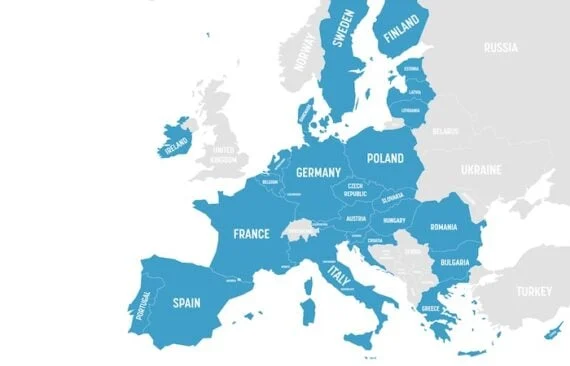
In the European Union, the "Right of Withdrawal" serves as the cornerstone of consumer protection in digital commerce. Codified primarily under the Consumer Rights Directive (2011/83/EU), this regulation ensures that consumers across all 27 member states have a minimum of 14 days to cancel an online purchase and return the goods without providing any justification. This "cooling-off period" was designed to harmonize the internal market, ensuring that a consumer in Germany enjoys the same fundamental protections when buying from a merchant in Italy or Estonia.
The 14-day window begins the moment the consumer takes physical possession of the goods. During this period, the consumer has the right to inspect the product as they would in a physical retail store. However, the directive is nuanced; it distinguishes between a simple inspection and "excessive use." If a consumer handles a product beyond what is necessary to establish its nature, characteristics, and functioning, the merchant is legally entitled to reduce the refund amount to account for the diminished value.
There are, however, critical exceptions to this statutory right. Items that are personalized (such as custom-engraved jewelry), perishable goods (like fresh food), or sealed items that are unsuitable for return due to health protection or hygiene reasons (once unsealed) are generally exempt. This legal structure creates a predictable, albeit rigid, environment for businesses. In the E.U., the cost of doing business includes the assumption that a specific percentage of inventory will be in transit back to the warehouse within a fortnight of delivery.
The United States Market-Driven Approach
In stark contrast, the United States lacks a federal mandate requiring retailers to accept returns or offer refunds for online purchases. While the Federal Trade Commission (FTC) oversees general consumer protection and ensures that businesses do not engage in deceptive practices, it does not dictate the duration or conditions of a return policy. Consequently, the "rules of the game" in the U.S. are set by the merchants themselves, influenced heavily by competitive pressures and the desire to build brand loyalty.
This freedom allows for a wide spectrum of policies. Some retailers, particularly in the high-end luxury or discount sectors, may enforce "final sale" policies where no returns are permitted. Conversely, major players like Amazon, Nordstrom, and Zappos have historically used ultra-generous return policies—sometimes extending to 90 days or even a full year—as a marketing tool to lower the barrier to purchase. In the U.S., the return policy is a lever for conversion rather than a legal obligation.
While federal law is silent, some state-level regulations provide a baseline for transparency. For instance, in states like California and New York, if a retailer does not have a clearly posted return policy, they may be legally required to accept returns for a full refund within a specific timeframe (often 20 to 30 days). However, as long as the policy is clearly disclosed to the consumer at the point of sale, the merchant generally retains total control over the terms.
Comparative Data and the Economic Reality of Returns
The financial impact of these differing systems is reflected in recent industry data. According to the National Retail Federation (NRF), U.S. online return rates have reached historic highs. In October 2025, the NRF estimated that buyers would return approximately 19.3% of U.S. online sales over the course of the year. This high volume is driven in part by "bracketing"—the consumer habit of buying the same item in multiple sizes or colors with the intent of returning most of them. In the U.S., where free shipping and free returns are often viewed as a standard entitlement, this behavior has become deeply ingrained in the shopping culture.
In the European Union, the data suggests a slightly lower overall return rate, though it is highly fragmented by geography. Statista reported that E.U. customers returned roughly 7% of overall e-commerce revenue in 2024. However, this average masks significant regional variations. Germany stands out as a high-return market, with roughly 55% of online shoppers returning at least one product annually. Industry analysts attribute this to the historical "invoice" payment culture in Germany, where consumers often receive goods before paying, encouraging a "try-before-you-buy" mentality that mirrors the U.S. bracketing trend.
The economic burden of these returns is substantial. For a U.S. merchant, a return can cost between $20 and $40 when accounting for shipping, processing, and the potential loss of inventory value. In the E.U., the mandatory 14-day refund window places additional pressure on cash flow. Under the Consumer Rights Directive, merchants must issue a refund within 14 days of being notified of the consumer’s decision to withdraw. While they can withhold the payment until the goods are received or proof of dispatch is provided, the rapid turnaround required by law necessitates highly efficient financial and logistical workflows.

Chronology of Regulatory Evolution
The current state of return policies is the result of decades of legislative and market evolution.
- 2011: The E.U. adopts the Consumer Rights Directive (2011/83/EU), standardizing the 14-day withdrawal period across the bloc and replacing a patchwork of national laws.
- 2015-2018: Major U.S. retailers begin a "returns arms race," with companies like Amazon expanding their "Prime" return privileges, forcing smaller competitors to offer free return shipping to remain relevant.
- 2019: The E.U. introduces the "Omnibus Directive" (Directive (EU) 2019/2161), also known as the Enforcement and Modernisation Directive. This update increased penalties for non-compliance with return rules and introduced new transparency requirements for online marketplaces.
- 2022-2024: Post-pandemic, U.S. retailers begin to pull back on "free returns." Companies like Zara and H&M start charging return fees in the U.S. to offset rising logistics costs, marking a shift from pure growth to a focus on profitability.
- 2025: The NRF highlights that return fraud and "wardrobing" (buying an item to wear once and then returning it) have become multi-billion dollar problems in the U.S., leading to more sophisticated AI-driven return authorization systems.
Shipping Costs and Reverse Logistics Responsibilities
The allocation of shipping costs is another area of significant divergence. In the European Union, the default legal position is that the merchant must reimburse the original delivery cost if the consumer exercises their right of withdrawal. However, the merchant is not required to pay for the return shipping—provided they clearly informed the consumer of this responsibility before the purchase. If the merchant fails to provide this disclosure, they become legally liable for the return shipping costs by default.
In the United States, the allocation of shipping costs is entirely at the merchant’s discretion. There is no legal requirement to refund the original shipping fee or to provide a free return label. However, the "Amazon Effect" has created a market where many consumers expect free returns. As a result, U.S. merchants often absorb these costs as a "cost of acquisition," even though they are not legally bound to do so.
Furthermore, U.S. merchants have the flexibility to charge "restocking fees," which can range from 10% to 25% of the item’s price. This is common in the electronics and furniture sectors to discourage frivolous returns and cover the costs of inspecting and repackaging open-box items. In the E.U., such fees are generally prohibited if the consumer is exercising their statutory right of withdrawal, as the law mandates a full refund of the purchase price (subject to the "diminished value" clause).
Broader Impact and Environmental Implications
The implications of these return policies extend beyond the balance sheet to environmental sustainability. The high volume of returns in both regions contributes significantly to carbon emissions and landfill waste. In the U.S., it is estimated that billions of pounds of returned goods end up in landfills every year because the cost of inspecting and restocking them exceeds their resale value.
In response, the European Union is increasingly integrating return policies into its broader "Green Deal" and circular economy initiatives. Recent discussions in the European Parliament have explored banning the destruction of unsold or returned textiles and electronic goods, forcing merchants to find more sustainable ways to manage reverse logistics.
In the U.S., the response has been more market-led. Startups focusing on "returnless refunds" have emerged, using AI to determine if a product is worth shipping back. If the cost of return logistics exceeds the item’s value, the consumer is told to keep or donate the item while still receiving a refund. This reduces the carbon footprint of a return but presents new challenges regarding fraud and consumer behavior.
Strategic Imperatives for Global Expansion
For merchants planning to expand across the Atlantic, a "one-size-fits-all" return policy is a recipe for failure. In the E.U., the priority must be legal precision and disclosure. Merchants must ensure their terms and conditions are fully compliant with the Consumer Rights Directive, as failure to disclose the 14-day window can result in that window being legally extended to a full year. Furthermore, E.U. operations require a robust logistics network capable of processing refunds within the strict 14-day statutory deadline to avoid penalties and consumer complaints.
In the U.S. market, the priority is competitive optimization. Merchants should not feel compelled to offer the most generous policy possible if it undermines their margins. Instead, they should benchmark their policies against direct competitors and use data analytics to identify high-risk "serial returners." The flexibility of the U.S. system allows merchants to experiment with tiered return policies—for example, offering free returns for loyalty program members while charging a fee for guest checkouts.
Ultimately, the divide between the E.U. and the U.S. illustrates two different philosophies of commerce. The E.U. views the right to return as a fundamental consumer right that must be protected by the state to ensure a fair and unified market. The U.S. views the return policy as a private contract between a buyer and a seller, governed by the invisible hand of the market. Success in the global e-commerce arena requires the ability to navigate both of these philosophies with equal proficiency.