Google Maps Integrates Generative AI to Revolutionize Local Business Discovery and Consumer Search Behavior

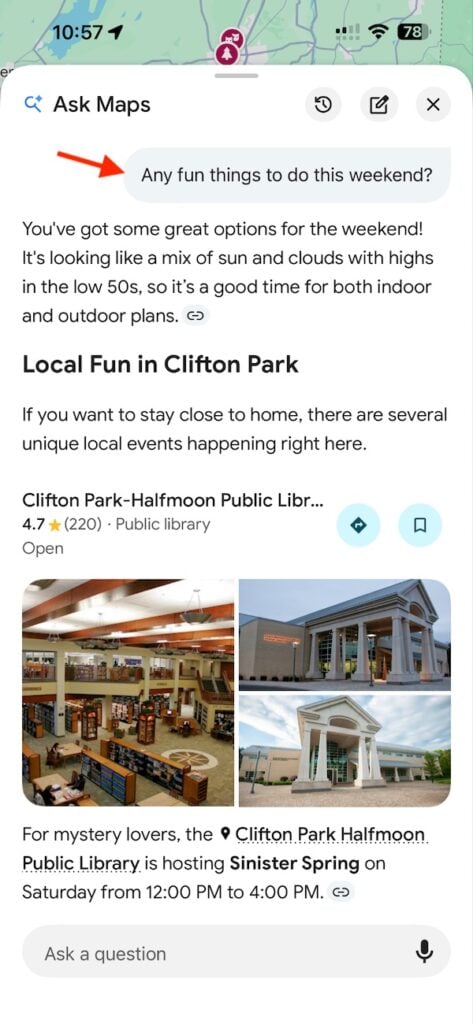
The landscape of local commerce is undergoing a fundamental transformation as Google integrates advanced generative artificial intelligence into its Maps platform, introducing a conversational interface that shifts the paradigm from traditional keyword-based searches to complex, intent-driven inquiries. This new feature, frequently referred to as "Ask Maps," utilizes Google’s proprietary Large Language Models (LLMs), including the Gemini series, to analyze billions of data points—ranging from business descriptions and user reviews to real-time event listings and atmospheric photos—to provide users with curated, context-aware recommendations. For local businesses, this evolution represents a critical shift in how they must manage their digital presence to remain visible in an era where consumers no longer simply search for "coffee shops" but instead ask for "a quiet place to work with outdoor seating and high-quality espresso."
The Evolution of Local Search: From Directories to AI Assistants
To understand the significance of the "Ask Maps" rollout, it is essential to view it within the broader chronology of Google’s development. Since its inception in 2005, Google Maps has evolved from a basic digital cartography tool into a comprehensive local discovery engine. The introduction of the Google Business Profile (formerly Google My Business) in 2014 provided the foundational data layer that allowed the platform to move beyond mere navigation. Over the last decade, Google has incrementally added features such as "Popular Times," "Live View" augmented reality, and "Immersive View," all aimed at providing a more detailed preview of the physical world.
The integration of generative AI marks the beginning of a third era for the platform. While the second era was defined by "near me" searches—where proximity was the primary ranking factor—the third era is defined by "contextual relevance." By processing the nuanced language used in consumer queries, Google Maps can now act as a digital concierge. This capability is particularly impactful for "low-intent" queries, where a consumer may not have a specific business in mind but is seeking a specific experience or solution. For example, a user asking for "places to take a toddler on a rainy afternoon" requires the AI to synthesize information about indoor facilities, age-appropriateness, and current weather conditions, rather than just returning a list of nearby parks.
The Mechanics of "Ask Maps": How Information is Synthesized
The "Ask Maps" feature does not operate in a vacuum; it relies on a sophisticated "knowledge graph" that connects various entities across the web. When a user submits a prompt, the AI scans Google’s vast index of local information to identify businesses that match the specific criteria. This process involves three primary data streams:
- Direct Business Contributions: Information provided via the Google Business Profile, including categories, attributes (e.g., "women-owned," "wheelchair accessible"), and official updates.
- User-Generated Content (UGC): The AI parses millions of reviews and photo captions to understand the "vibe" or specific offerings of a location that may not be explicitly listed in the official description.
- Third-Party and Website Data: The AI crawls the business’s official website and third-party directories to find granular details such as menu prices, specific product materials, and event schedules.
By triangulating these sources, the AI can provide high-confidence answers. If a user asks for "shops selling handmade ceramic mugs," the AI might identify a local boutique because a reviewer mentioned "beautiful mugs" three months ago and the business’s website lists "ceramics" in its inventory.

Strategic Optimization for the AI-Driven Era
For local merchants, appearing in these AI-generated responses requires a more holistic approach to Search Engine Optimization (SEO). The traditional strategy of "keyword stuffing" is increasingly obsolete, replaced by a need for "entity-based" information density.
Enhancing the Google Business Profile (GBP)
The Google Business Profile remains the single most important asset for local visibility. However, merchants must now move beyond the basics. Comprehensive profiles that include updated hours of operation, precise location data, and a wide array of service attributes are more likely to be selected by the AI. The "Updates" feature has become a vital tool for communicating time-sensitive information. By posting about weekly sales, workshops, or seasonal product launches, businesses provide the AI with fresh "signals" that the establishment is active and relevant to current queries.
Website Granularity and Structured Data
As the AI crawls business websites to answer specific consumer questions, the depth of information provided on-site becomes a competitive advantage. Standard product descriptions are no longer sufficient. To capture AI-driven traffic, businesses should provide extensive details including:
- Technical Specifications: Materials, dimensions, and origins of products.
- Use Cases: Explanations of how a product or service solves a specific problem.
- Pricing and Availability: Clear, structured information that can be easily parsed.
- Trust Signals: Detailed warranties, return policies, and authenticated testimonials.
Furthermore, the use of Schema.org markup (structured data) is essential. By labeling data in a format that search engines can easily digest, businesses ensure that their "LocalBusiness," "Event," and "Product" entities are correctly interpreted by the AI.
The Role of Local Events and Community Engagement
A significant portion of AI queries on Maps revolves around activities and "things to do." This presents a unique opportunity for businesses that may not traditionally view themselves as "event spaces." By hosting workshops, product demonstrations, or seasonal promotions, a retail store can transform itself into an "experience" that the AI can recommend.
Marketing these events across multiple platforms is crucial. Beyond Google Business Profile updates, businesses should leverage local event directories, social media platforms, and community calendars. When an event is mentioned across various reputable sites, the AI’s confidence in the event’s legitimacy increases, making it more likely to feature the business in response to a "fun things to do this weekend" prompt.
Supporting Data and Market Impact
Industry data highlights the urgency of adapting to these changes. According to recent search behavior studies, approximately 46% of all Google searches have a local intent. Furthermore, Google’s own data suggests that "near me" searches have evolved into more specific "can I buy" or "where to find" queries, which have seen a 100% year-over-year growth in some sectors.
Market analysts suggest that the integration of AI into Maps could potentially reduce the "discovery gap" for small businesses. Historically, mass-market brands with massive advertising budgets dominated top-of-page results. However, because generative AI prioritizes specific relevance over sheer domain authority, a small, specialized local shop can now outrank a national chain if its offerings more precisely match a user’s complex query.
Industry Reactions and Expert Analysis
The SEO community has reacted with a mix of optimism and caution. "We are moving away from a world of blue links and toward a world of answers," says one digital marketing strategist. "For the local business owner, this means your digital presence must be as detailed and welcoming as your physical storefront."
However, some analysts point to the risks of "hallucinations"—instances where the AI might misinterpret a review or provide outdated information. This places a new burden on business owners to conduct regular "digital audits" to ensure that the information circulating about their brand is accurate. There is also the ongoing discussion regarding "zero-click" searches, where users get the information they need directly from the Maps interface without ever clicking through to the business’s website. While this may reduce website traffic, proponents argue it increases the "quality" of the lead, as the person arriving at the store is already highly informed.
Implications for the Future of Local Commerce
The rollout of "Ask Maps" is not merely a feature update; it is a signal of the future of the "phygital" world—the intersection of physical locations and digital information. As AI becomes more integrated into wearable technology and automotive systems, the reliance on conversational local search will only increase.
For local businesses, the message is clear: visibility in the age of AI is earned through data richness. By maintaining a meticulous Google Business Profile, providing deep context on their websites, and actively engaging with the local community through events, small merchants can leverage "Ask Maps" to compete effectively with retail giants. The democratization of discovery through AI offers a level playing field, but only for those who are willing to adapt their digital strategy to meet the sophisticated demands of the modern, AI-assisted consumer. This shift marks a move toward a more intuitive, helpful, and localized internet, where the right business finds the right customer at exactly the right moment.