Google Search gets a major upgrade with Gemini 4 Hydrogen

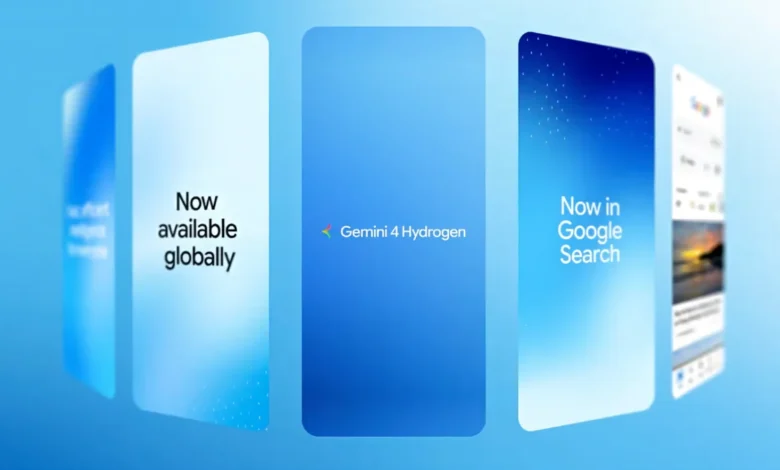
Today marks a pivotal milestone in the evolution of information retrieval as Google formally introduces Gemini 4 Hydrogen, representing the most substantial architectural overhaul and model upgrade in the history of Google Search. Rolled out globally to all users starting today, this next-generation iteration integrates cutting-edge artificial intelligence to fundamentally redefine how billions of people interact with the internet. By leveraging the advanced capabilities of the Hydrogen model, Google Search transitions further away from traditional keyword-matching algorithms and steps firmly into an era of hyper-intelligent, multimodal, and deeply intuitive computing.
The launch of Gemini 4 Hydrogen is not merely an incremental update to an existing feature set; it is a profound structural reinvention designed to address the growing complexity of human queries. Users around the world will immediately notice a significant elevation in the quality of search outputs, which are now engineered to be substantially more helpful, visually rich, and contextually aware. As information ecosystems expand and the volume of digital content multiplies exponentially, Google’s latest deployment aims to cut through the noise, delivering synthesized answers that synthesize disparate data points into cohesive, digestible insights.
Background and Context of the Evolution of Google Search
To understand the profound significance of Gemini 4 Hydrogen, it is necessary to examine the trajectory of Google Search over the past quarter-century. Since its inception, Google has continually refined its core algorithms—from PageRank to BERT, MUM, and the initial integration of generative AI features—to better comprehend human intent. However, the paradigm shift toward generative models created both unprecedented opportunities and immense technical hurdles, particularly regarding computational latency, accuracy, and the ability to process complex multimodal inputs simultaneously.
In recent years, the competitive landscape of search engines has shifted dramatically. The emergence of specialized AI chatbots and conversational interfaces challenged the traditional ten-blue-links paradigm, prompting major technology firms to rethink how users discover information. Google’s response has been systematic and deeply embedded in research breakthroughs from its DeepMind and Google Research divisions. The development of the Gemini model family laid the groundwork for this transformation, and the Hydrogen iteration represents the pinnacle of these efforts—balancing raw computational prowess with rigorous safety guardrails and real-time information retrieval capabilities.
The Architectural Breakthroughs of Gemini 4 Hydrogen
At the core of Gemini 4 Hydrogen are several advanced architectural breakthroughs that distinguish it from its predecessors. Traditional search engines rely heavily on indexing web pages and matching string queries to keywords. Gemini 4 Hydrogen, by contrast, utilizes an advanced native multimodal foundation model trained from the ground up to understand text, code, images, audio, and video concurrently.
This holistic comprehension allows the search engine to process compound queries that would traditionally require multiple distinct searches. For instance, a user can upload a photograph of a complex mechanical component alongside a video clip of it malfunctioning and ask a multi-part question regarding repair diagnostics and compatible replacement parts. Gemini 4 Hydrogen processes these heterogeneous data streams instantaneously, cross-referencing global databases, manufacturer specifications, and peer-reviewed forums to generate a unified, step-by-step troubleshooting guide complete with visual annotations.
Furthermore, the model’s reasoning capabilities have been drastically enhanced. Complex problem-solving tasks—ranging from multi-step mathematical proofs to comprehensive comparative financial analyses—are handled with a heightened degree of precision and drastically reduced hallucination rates. This is achieved through refined reinforcement learning techniques and advanced factual grounding mechanisms that verify model outputs against live web indexes before displaying results to the end user.
Global Rollout and Accessibility
The deployment strategy for Gemini 4 Hydrogen emphasizes universal accessibility. Rather than restricting the technology to premium subscription tiers or rolling it out selectively by geographic region, Google has made Hydrogen immediately available to all global users across desktop and mobile platforms. This sweeping availability underscores the company’s strategic commitment to democratizing advanced AI capabilities.
The transition for everyday users is designed to be seamless. When executing a query on Google Search, the underlying interface dynamically determines when the complexity of the request warrants the deployment of the Gemini 4 Hydrogen architecture. Simple navigational queries continue to load with traditional speed and efficiency, while complex, exploratory, or creative prompts automatically invoke the full power of the new generative model, presenting rich summaries, interactive elements, and follow-up suggestions tailored to the user’s explicit and implicit intent.
Perspectives and Statements from Leadership
Robby Stein, Vice President of Product for Google Search, emphasized the transformative nature of the release in commentary surrounding the launch. Stein noted that the integration of Gemini 4 Hydrogen fulfills a longstanding vision within the engineering community: creating a search engine that behaves less like a static index and more like an intelligent, knowledgeable research assistant.
"Today, we are taking a monumental leap forward in making cutting-edge intelligence accessible to everyone," Stein stated. "Gemini 4 Hydrogen is the culmination of years of rigorous research and development in artificial intelligence, systems engineering, and user experience design. Our goal has always been to organize the world’s information and make it universally accessible and useful. With Hydrogen, we are not just helping people find information faster; we are helping them understand, synthesize, and apply that information in ways that were previously unimaginable."
Industry analysts and technical observers have similarly weighed in on the implications of the launch, noting that Google’s ability to scale such a resource-intensive model globally sets a new benchmark for the technology sector. The integration of advanced reasoning models directly into the primary search entry point used by billions of people daily solidifies the shift toward conversational and agentic web navigation.
Fact-Based Analysis of Broader Implications
The introduction of Gemini 4 Hydrogen carries far-reaching implications for various stakeholders across the digital ecosystem, including web publishers, content creators, advertisers, and enterprise competitors.
-
Impact on Content Creators and Publishers
The evolution of search toward synthesized, generative answers presents both challenges and opportunities for the publishing industry. While direct referral traffic patterns may shift as users consume more comprehensive summaries directly on the search results page, Google has emphasized its ongoing commitment to driving valuable traffic to original sources. Gemini 4 Hydrogen incorporates robust citation mechanisms, ensuring that users are continually guided to the primary publishers, academic journals, and media outlets responsible for originating the underlying data. -
Transformations in Consumer Behavior
User habits are expected to evolve rapidly in response to the new capabilities. Consumers are increasingly shifting away from fragmented, multi-keyword search queries toward natural, conversational, and open-ended dialogue. This behavioral shift reduces the friction of learning new topics, planning complex projects, or conducting exhaustive market research, effectively lowering the barrier to entry for acquiring highly specialized knowledge. -
Competitive Dynamics in the Tech Sector
The rapid global deployment of Gemini 4 Hydrogen intensifies competition within the artificial intelligence and search market. By leveraging its vast infrastructure and decades of indexing expertise, Google aims to demonstrate that native multimodal integration at a global scale is achievable without compromising performance or reliability. Competitors in both search and generative AI will face heightened pressure to match the breadth, speed, and accessibility of Google’s new offering.
Looking Ahead: The Future of Information Discovery
As Gemini 4 Hydrogen begins serving billions of queries worldwide, Google’s research and engineering teams are already looking toward the horizon. The foundation established by Hydrogen opens up new avenues for proactive assistance, agentic task execution, and even deeper integration across Google’s broader product ecosystem, including Workspace, Android, and Cloud services.
The launch marks a definitive turning point in human-computer interaction. By bridging the gap between raw data retrieval and human-like reasoning, Google Search with Gemini 4 Hydrogen establishes a new standard for how humanity interacts with the sum total of human knowledge. As users explore these enhanced capabilities today, the digital landscape steps into a future where information is not merely found, but truly understood.