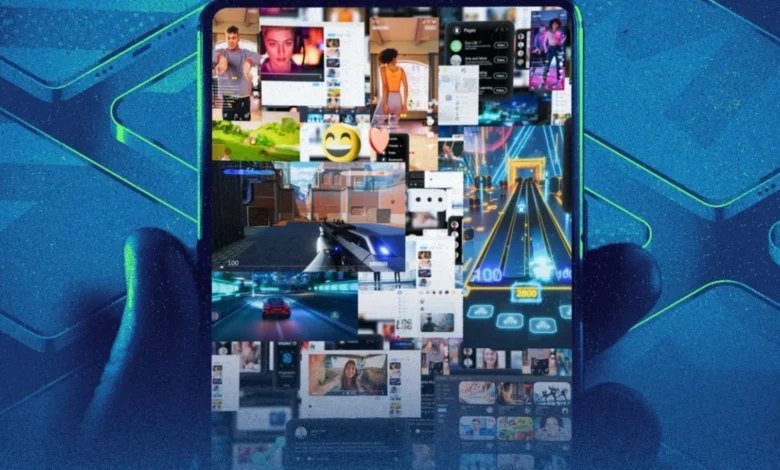
Forty-five minutes on TikTok can pass in the blink of an eye, yet two minutes watching a video at standard playback speed often feels like an eternity. This widening chasm between our desire for high-speed stimulation and our dwindling patience for sustained narrative is a hallmark of the current digital age. As we oscillate between Instagram Reels, persistent smartphone usage in theaters, and the compulsion to skip to the "best part" of a song, our relationship with media has undergone a profound transformation. In Japan, this phenomenon has been distilled into a singular, cutting term: "dopagaki."
Derived from a combination of "dopamine" and "gaki"—a derogatory term for a child or a "brat"—the word describes a generation that demands a non-stop, high-intensity flow of content. While the term may evoke comparisons to the American "iPad kid" archetype, its evolution and usage offer a more nuanced look at how modern society consumes digital media. It is no longer just a critique of young people; it has become a self-aware badge of honor for a population caught in the web of algorithmic design.
The Genesis of a Cultural Term
The origins of "dopagaki" are grounded in the rapidly shifting landscape of Japanese pop culture. In December 2024, a user on the social media platform X (formerly Twitter) sparked a broader conversation by applying the phrase "dopamin chudoku no gaki" (dopamine-addicted brat) to the structure of the track "Lilac," performed by the Japanese rock band Mrs. GREEN APPLE.
The observer noted that the song’s composition was engineered for instant gratification, featuring a rapid-fire sequence of catchy melodies and energetic transitions. There was, the user argued, almost no "breathing room" for the listener to settle into a musical idea before the next hook arrived. This critique resonated deeply with listeners who felt that music, much like social media feeds, was being optimized to keep dopamine receptors firing at a constant, unsustainable rate.
By mid-2026, the term had been shortened to the punchier "dopagaki" and had entered the lexicon of Japan’s youth culture. In June 2026, the Joshikosei Lab—a marketing research group specializing in the behaviors of Japanese high school girls—identified "dopagaki" as a top-trending expression. Their report highlighted that the term was increasingly used by students to describe their own habit of consuming TikTok or YouTube content while multitasking, such as while bathing or preparing for school.

Chronology of the Dopagaki Phenomenon
- December 2024: The phrase "dopamin chudoku no gaki" emerges on social media, used to criticize the high-stimulation structure of modern J-Pop songs.
- Early 2025: The term gains traction in digital circles, shifting from a niche critique of music to a broader comment on internet behavior.
- June 2026: The Joshikosei Lab identifies "dopagaki" as a top-seven trending slang term among Japanese high school girls, marking its transition into mainstream youth culture.
- October 2026: A survey of 94 high school girls finds that 16 percent cite "dopagaki" as their most-used slang, while 17 percent recognize it from social media exposure.
- November 2026: The term is widely recognized as a shorthand for the collective anxiety regarding digital attention spans and algorithmic dependency.
The Science and Structure of the "Dopamine Brat"
While "dopagaki" is a colloquialism rather than a medical diagnosis, it touches on valid psychological concepts. Dopamine is a neurotransmitter involved in reward-seeking behavior and motivation. When platforms like TikTok, Instagram, or YouTube utilize variable reward schedules—where the next video could be boring or hilarious—they exploit the brain’s desire for the "unexpected reward."
This has necessitated a fundamental shift in content creation. Creators are now coached to provide a "hook" within the first three seconds of a video. YouTube has introduced chapter markers to allow users to bypass "filler" content, and the rise of micro-dramas ensures that stories are told in high-velocity snippets. The environment is not just feeding the "dopagaki" behavior; it is actively constructing it.
According to data from the 2027 Global Overview Report by DataReportal, the average adult spends over 19 hours a week on social media and video platforms. This consistent exposure to high-paced, high-reward content recalibrates the user’s expectation of what "entertainment" should look like. When the real world fails to provide a new, interesting stimulus every few seconds, the user experiences a form of withdrawal, leading to the restlessness that defines the dopagaki experience.
Comparative Analysis: Japan vs. The West
The term "dopagaki" invites inevitable comparison to the American concept of the "iPad kid" or the "brainrot" phenomenon. However, the linguistic nuance is critical. An "iPad kid" is almost always an external label used by adults to judge children. "Brainrot" is a broader, often cynical critique of the decline in media quality.
"Dopagaki," conversely, occupies a space of self-reflection. When a teenager labels themselves a "dopagaki," they are acknowledging a loss of control with a sense of ironic detachment. It is a coping mechanism for the realization that their attention is no longer entirely their own.
Furthermore, while the "iPad kid" trope focuses on the age of the consumer, the term "dopagaki" is increasingly applied to adults. The professional in Tokyo scrolling during a commute, the student checking notifications during a lecture, and the parent watching TV with a smartphone in hand are all participants in this cycle. The fact that the term has moved from a critique of a song to a self-identifying label suggests that the "dopamine-addicted" behavior is no longer seen as an aberration, but as the default state of the modern human.

Institutional and Industry Reactions
To date, there has been no official response from the tech giants whose algorithms fuel this behavior. However, the rise of such terminology suggests a growing awareness among the public. In recent months, mental health advocates and digital wellness researchers in Japan have begun to use the term as a starting point for discussions on "digital detoxing" and the importance of "slow media."
Media analysts note that the popularity of the word indicates a shift in market power. As long as users continue to self-identify as "dopagaki," they are acknowledging the effectiveness of the current engagement-based economy. For advertisers and platforms, this is a signal that the demand for "snackable," high-intensity content remains at an all-time high.
Implications for Future Media Consumption
The emergence of "dopagaki" highlights a critical juncture in the history of human attention. If we are now at a point where we have a specific, viral term for our inability to remain focused, we are also at a point where we are ready to question the necessity of that inability.
The danger lies not in the consumption of short-form media, but in the erosion of the ability to engage with complex, slow-burn narratives. If the "dopagaki" culture continues to dictate the structure of music, film, and literature, we may find that our capacity for deep empathy, complex problem-solving, and sustained focus—all of which require time—begins to atrophy.
However, there is a countervailing trend. The very fact that this term has become a subject of intense social analysis suggests a growing fatigue. When a society begins to mock its own habits, it is often the first step toward changing them. Whether the "dopagaki" era ends with a return to longer, more deliberate forms of media or continues to accelerate toward an even faster, more fragmented future remains to be seen.
For now, the term stands as a testament to the digital age: a five-character Japanese word that perfectly encapsulates the discomfort of living in a world where the next hit of dopamine is always just one swipe away. As we move deeper into the late 2020s, the "dopagaki" label serves as a mirror—one that we are forced to look into every time we reach for our phones in the quiet moments of the day.