The Ultimate Guide to Social Video Metrics: What to Track, How to Measure, and Why They Matter for Business Growth


With digital advertising budgets facing closer scrutiny than ever before, social video has solidified its position as a dominant force in corporate media expenditure. Industry data indicates that approximately one of every five dollars spent on digital advertisements is allocated directly to social video campaigns. As enterprises funnel billions of dollars into platforms like TikTok, Instagram, YouTube, and LinkedIn, marketing departments are under mounting pressure to bridge the gap between creative execution and tangible business outcomes. Defending a video budget or justifying headcount requires more than aesthetically pleasing content; it demands a robust, data-driven framework that ties viewing behaviors to pipeline growth, brand reach, and revenue.

To navigate this landscape, digital strategists must look beyond vanity metrics and adopt comprehensive analytics models. Social video metrics encompass the quantitative measures detailing how video assets perform across various networks, tracking viewership volume, audience interactivity, and subsequent consumer actions. Evaluating these figures illuminates not only the macro performance of a digital campaign but also the nuanced psychological responses of target demographics.
Strategic Alignment: Matching Metrics to Corporate Objectives
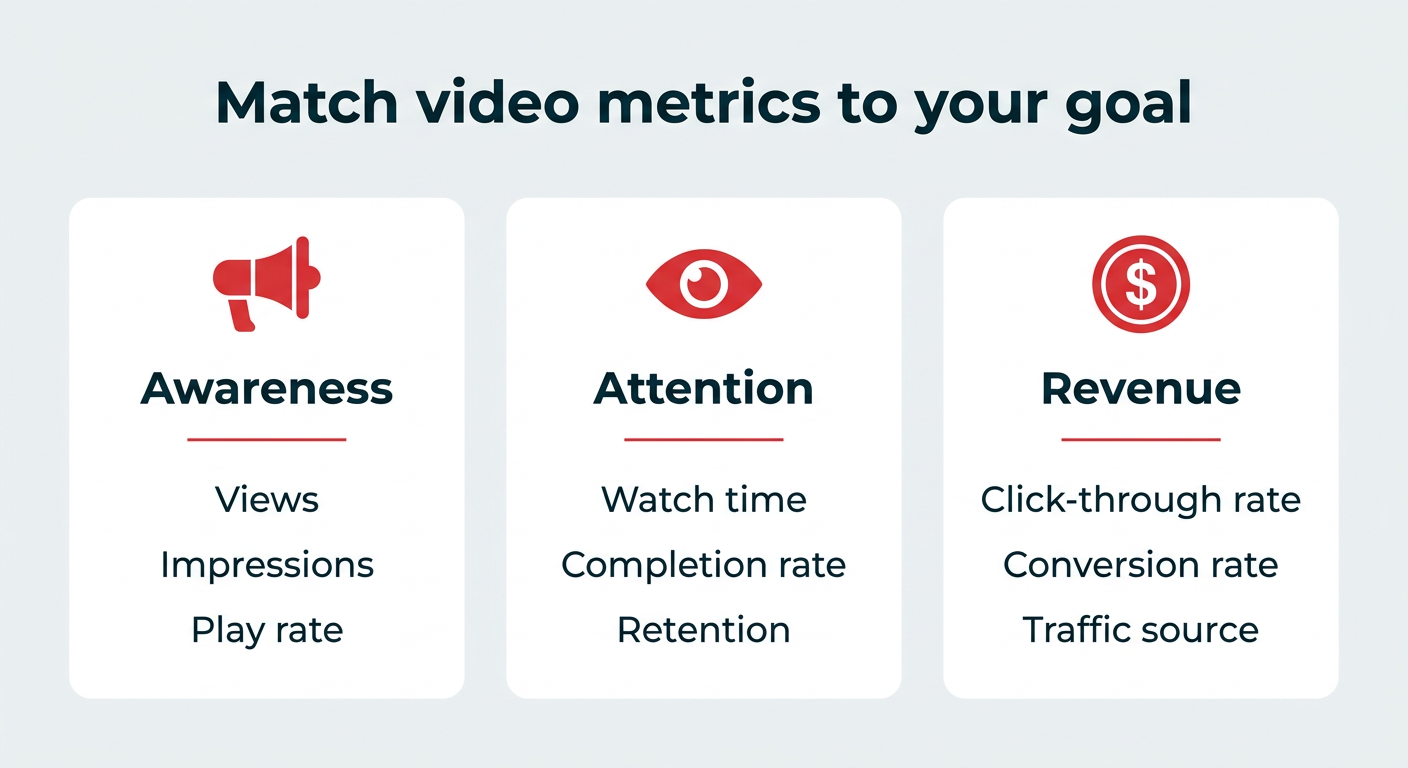
Establishing a successful video analytics protocol begins with aligning key performance indicators (KPIs) with specific organizational goals. A campaign designed to boost brand awareness requires a completely different analytical approach than an initiative focused on community-building or direct lead conversion. Industry experts advise selecting two or three core KPIs per campaign to prevent analysis paralysis and maintain strategic focus.

For brand awareness initiatives, primary indicators include total view counts, overall impressions, audience reach, and initial play rates. Conversely, campaigns centered on audience retention rely heavily on average watch time, drop-off analytics, and video completion rates. Conversion-driven campaigns prioritize click-through rates (CTR), downstream website traffic sources, and verified user actions. Community-building efforts measure success through user comments, direct shares, and saves, which indicate high content utility and long-term memorability.
The Eleven Essential Social Video Metrics
A comprehensive performance audit requires tracking eleven core metrics that collectively paint an accurate picture of content efficacy across multiple digital ecosystems.
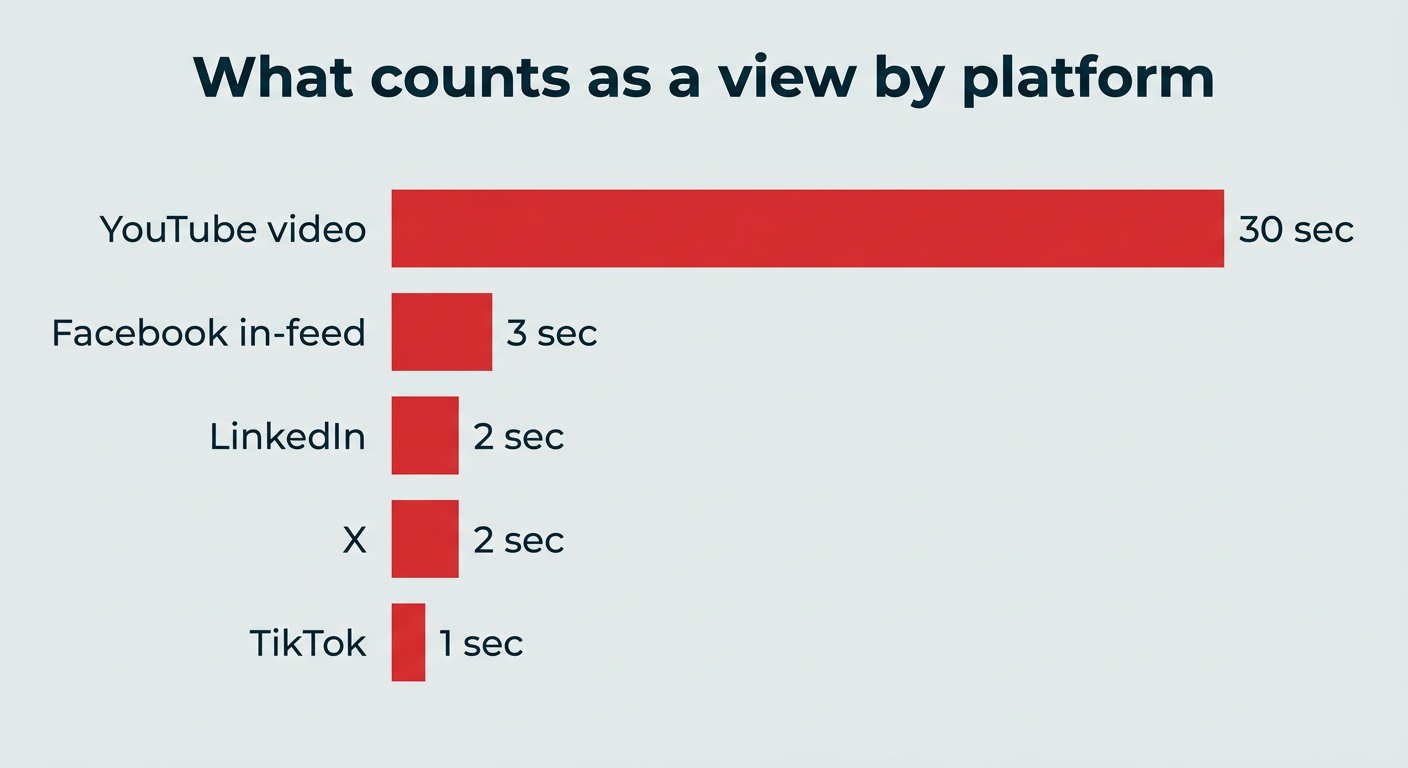
View count remains a foundational metric for establishing brand awareness and measuring algorithm favorability. However, interpretation requires platform-specific context. While YouTube defines a view as thirty seconds of watch time, Facebook and Instagram traditionally register a view upon playback initiation or after three seconds, and platforms like TikTok often count a view from the very first second. This variability necessitates a standardized internal method for cross-platform comparison.
Engagement rate measures the depth of audience interaction through likes, comments, shares, and saves. Industry leaders across major networks consistently emphasize that high engagement signals strong content resonance. Benchmarking these rates against industry averages helps organizations evaluate their relative standing against competitors.
Average watch time provides clear insights into content quality and audience interest. A sharp drop-off in the opening seconds typically indicates a deficient hook, whereas extended watch times relative to video length suggest high viewer retention or intentional replays.
Closely related is the video completion rate, which calculates the percentage of viewers who watch an asset from start to finish. High completion rates send positive signals to platform algorithms, often resulting in broader organic distribution.

Play rate measures the ratio of video plays to total impressions. This metric assesses the strength of preliminary elements, such as thumbnails, headlines, and on-page placement, particularly in click-to-play environments like YouTube and corporate websites.
Click-through rate (CTR) evaluates the percentage of viewers who transition from passive consumers to active prospects by interacting with a call-to-action or embedded link. CTR is paramount for bottom-funnel assets, product launches, and direct response advertising.
Shares and saves represent advanced forms of engagement. Shares act as digital word-of-mouth marketing, extending organic reach significantly among peer networks. Saves indicate high content utility, signaling that a viewer intends to revisit a tutorial, template, or informational guide.
Traffic sources identify the origin of viewership—whether derived from organic search, algorithmic feeds, external shares, or profile visits. Understanding traffic provenance enables marketing teams to optimize keyword strategies, caption copy, and platform-specific distribution models.

Conversion rate quantifies downstream business impact by tracking the percentage of viewers who complete a desired action, such as downloading a resource, signing up for a newsletter, or purchasing a product. Advanced tracking utilizes platform pixels and UTM parameters to attribute offline or multi-session sales back to initial video interactions.
Finally, retention graphs and drop-off points offer granular diagnostic data. By pinpointing the exact second viewers abandon a video, producers can refine pacing, eliminate narrative drag, and structure future content for maximum psychological impact.

Cross-Platform Discrepancies and Reporting Challenges
One of the most persistent hurdles in digital marketing is reconciling metrics across disparate publishing channels. Because YouTube, Instagram, TikTok, LinkedIn, Facebook, and X each apply unique definitions to metrics like "views" and "completion," manual reporting often leads to distorted comparisons. For instance, LinkedIn evaluates video completion between 97 and 100 percent, whereas YouTube calculates average percentage viewed.
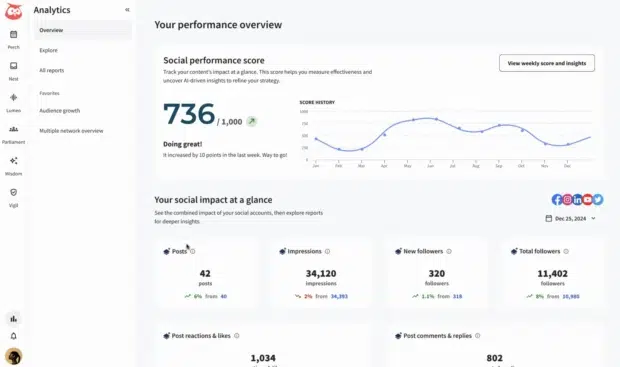
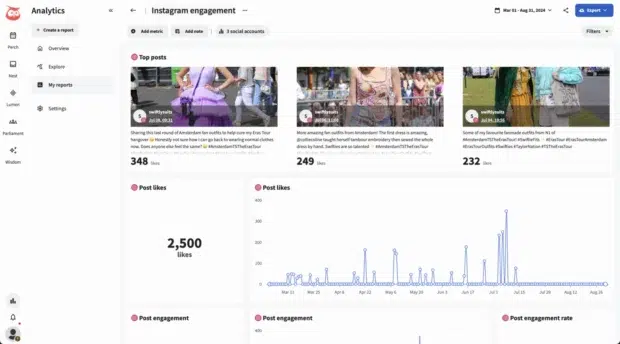
To overcome these analytical silos, enterprise marketing teams increasingly rely on centralized social media management platforms. Consolidating multi-channel data into a single dashboard allows analysts to monitor performance trends, generate executive-ready PDF reports, and benchmark campaign metrics without resorting to manual data entry across multiple native dashboards.

Industry Insights and Content Optimization Strategies
Optimizing social video performance requires a deep understanding of platform psychology and consumer behavior. Mariam Ordubadi, Head of Marketing at Aequilibrium, emphasizes that modern content must fight aggressively against the innate scroll reflex of digital consumers.
According to Ordubadi, the first three seconds of any video serve as prime digital real estate. Implementing structured hooks, such as the problem-solution framework, immediately establishes urgency and value without resorting to misleading clickbait. Furthermore, video duration must align with platform psychology. Short-form discovery formats on TikTok and Reels thrive under thirty seconds, whereas educational or B2B content on LinkedIn and YouTube can extend to several minutes, provided every second delivers substantive value.
Ordubadi also underscores the growing importance of loopability. Scripting videos with subtle narrative circles encourages viewers to watch content multiple times, driving up cumulative watch time and signaling algorithmic priority. Additionally, integrating AI-assisted tools for captioning, ideation, and multi-format repurposing allows marketing teams to scale production efficiently without compromising authenticity.
Calculating Video Return on Investment (ROI)
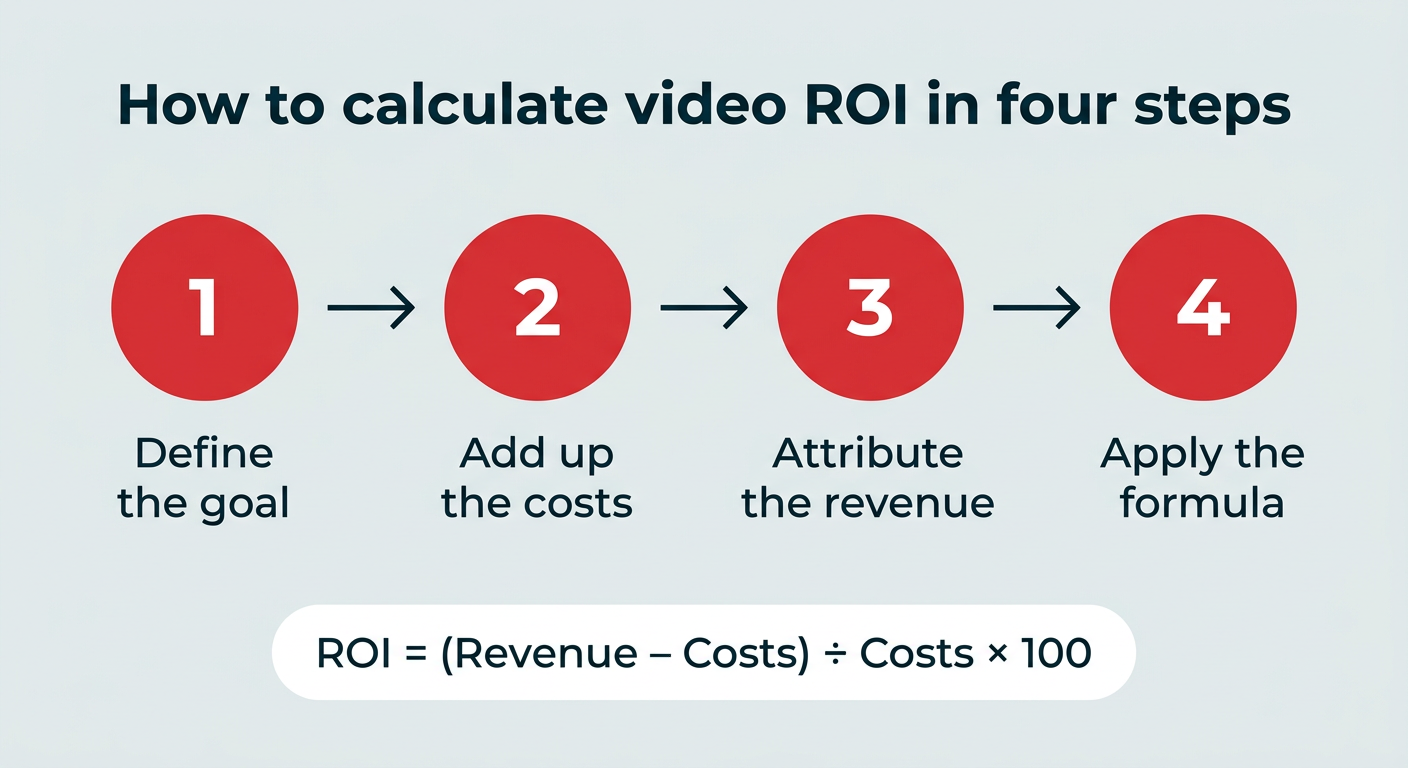
Quantifying the return on investment for video marketing remains a critical mandate for corporate leadership. Calculating video ROI requires a systematic four-step process: defining specific financial objectives, tracking all associated production and distribution costs, attributing downstream revenue using advanced analytics tools like UTM parameters and conversion APIs, and applying the standard financial formula.
To calculate ROI, organizations subtract total campaign costs from attributed revenue, divide the resulting net return by the total cost, and multiply by 100. While performance marketing videos lend themselves naturally to direct revenue attribution, top-of-funnel awareness campaigns should be evaluated using intermediate metrics such as cost-per-thousand impressions (CPM) and cost-per-engaged-viewer. Maintaining clear distinctions between brand-building and direct-response video assets ensures long-term reporting credibility among executive stakeholders.
Conclusion: Streamlining Measurement for Sustainable Growth
As the digital video ecosystem continues to mature, the volume of accessible data will only increase. The operational challenge for modern enterprises is no longer data scarcity, but rather data synthesis. By anchoring content strategies to well-defined business goals, tracking core performance indicators across unified dashboards, and continuously refining creative execution based on audience retention insights, organizations can transform video marketing from a speculative expense into a measurable, high-yielding revenue driver.