The Definitive 2026 Guide to Social Media Hiring: Strategies, Team Structures, and AI Integration

The landscape of corporate communications and digital marketing has undergone a fundamental transformation, establishing the 2026 social media team as a sophisticated blend of human creative intuition, strategic agility, and artificial intelligence-powered operational efficiency. Modern organizations no longer view social media merely as an outward-facing megaphone for brand awareness. Instead, it has evolved into a multi-dimensional ecosystem encompassing lead generation, customer care, brand reputation management, and real-time market research. Building a winning social media team in 2026 requires a rigorous understanding of structural scaling, precise role definitions, evolving salary benchmarks, and the integration of emerging technologies.

Analyzing Team Scale Across Corporate Stages
Determining the appropriate size and composition of a social media team depends on three critical variables: overall business maturity, specific commercial goals, and the complexity of the target audience. Industry benchmarks indicate that social media resourcing typically scales in direct proportion to a company’s operational footprint.

For early-stage startups, the standard configuration usually consists of one to two professionals. A lone generalist social media manager typically anchors these lean teams, occasionally supported by freelance graphic designers or short-form video editors to maintain a consistent digital presence. Mid-market scale-ups generally expand their headcount to three or five individuals. This tier introduces dedicated specialization, featuring a team lead coordinating distinct efforts in organic content production, paid social advertising, and community engagement.
Enterprise-level organizations operate on a significantly larger scale, deploying teams of six to twelve or more full-time employees. These complex operations are overseen by a senior leader who dictates global strategy, while regional, platform-specific, or functional specialists handle day-to-day execution. Enterprises frequently supplement these internal structures with specialized external marketing agencies to manage localized campaigns or rapid expansion into new international markets. Furthermore, these teams rarely operate in a vacuum. Their strategic objectives regularly intersect with broader departments, including content marketing, corporate public relations, growth marketing, and customer support.
Real-World Organizational Structures
Examining how successful modern enterprises structure their digital operations provides valuable blueprints for scaling organizations. Technology and AI solutions provider Covasant illustrates a lean, fast-growing startup model. Covasant divides its core social media responsibilities between two primary personnel who maintain an active footprint across professional networks like LinkedIn and X (formerly Twitter). Their content strategy balances major product announcements with corporate milestones, such as strategic mergers and sponsored hackathons, while actively recruiting data analytics personnel to bridge the social and marketing divisions.

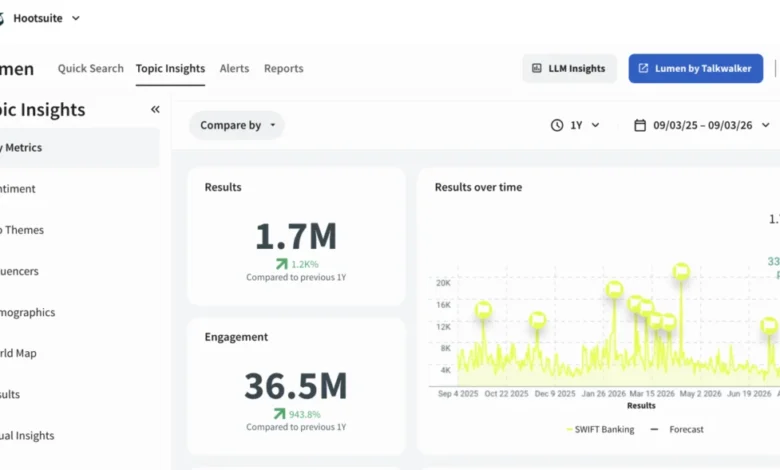
At Hootsuite, a mid-sized technology company environment, a four-person core team drives comprehensive multi-platform strategy and content production. This localized unit balances ideation, scheduling, publishing, and analytical tracking to maintain continuous audience engagement.
Meanwhile, established enterprise players like Appian demonstrate how large corporations divide labor between internal resources and external agency partnerships. Appian’s model cleanly separates paid advertising initiatives from organic community building, ensuring that messaging remains uniform across sponsored placements and organic feeds alike—a vital consideration for maintaining brand integrity as headcount grows.

Recognizing the Tipping Point for Expansion
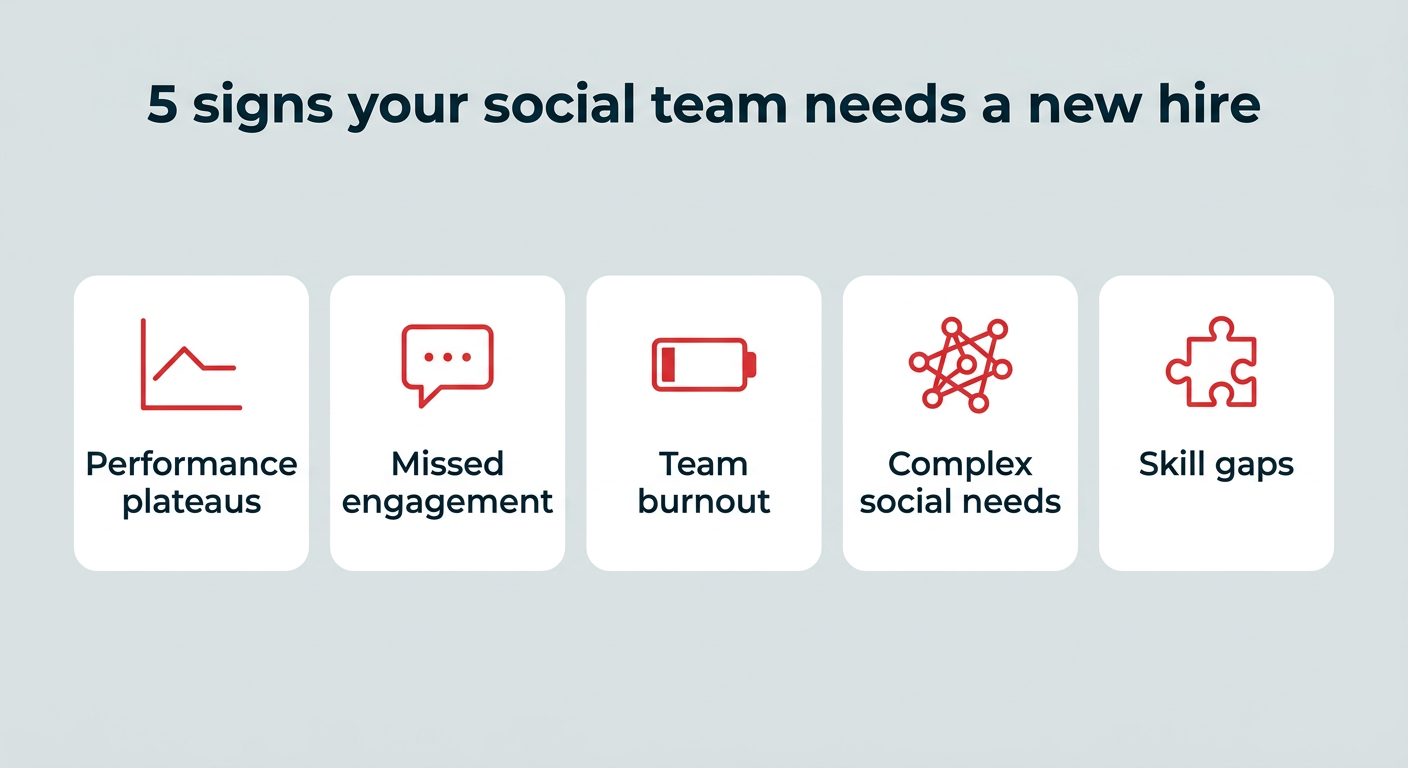
Knowing when to expand a social media team is a critical operational challenge. Leaders often face the dilemma of stagnant performance despite escalating workloads. According to industry experts, the primary indicators that a social strategy has outgrown its current resourcing include performance plateaus, missed engagement opportunities, acute team burnout, and glaring gaps in specialized competencies.
When the volume of incoming customer inquiries, direct messages, and industry conversations consistently exceeds a single employee’s capacity, organizational friction occurs. Social media management is inherently multi-disciplinary, encompassing content strategy, short-form video production, copywriting, data analytics, social listening, community management, and inbox support. When an individual contributor is stretched across these disparate functions, overall campaign quality invariably suffers. Consequently, businesses must evaluate hiring readiness not merely by company age or raw headcount, but by strategic inflection points. If entering a new vertical, launching a complex product line, or scaling paid customer acquisition requires competencies outside the current team’s skill set, expanding the department becomes an operational necessity.
Core Roles and Skill Requirements in 2026

Building an effective social media department starts with a foundational hire, typically a versatile social media manager who can navigate day-to-day execution alongside high-level planning. As organizations mature, specialized roles must be introduced to alleviate specific operational bottlenecks.
The social media manager oversees brand activity across platforms, handling scheduling, publishing, and foundational execution. When big-picture planning, audience segmentation, and deep market analysis take precedence over daily publishing, organizations look to a social media strategist to align channel activities with broader corporate objectives.

Content creation bottlenecks are best resolved by hiring dedicated content creators or video producers. With short-form video dominating consumer attention across platforms like TikTok, Instagram Reels, and YouTube Shorts, fluency in dynamic visual storytelling and copywriting is non-negotiable. Similarly, community managers safeguard brand reputation by actively monitoring digital sentiment, building external partnerships, and engaging with niche consumer groups through dedicated online spaces.
For organizations prioritizing rapid customer acquisition and revenue generation, a paid social specialist is an indispensable early hire. With United States social network advertising spending projected to exceed $121 billion, competition for attention in sponsored feeds requires advanced expertise in budget allocation, audience targeting, and campaign optimization.

Analytical rigor is supplied by the social analytics lead, an emerging role dedicated to interpreting complex streams of organic and paid performance data. Utilizing advanced social operating systems and integrated listening dashboards, these analytics professionals evaluate channel return on investment and attribute digital engagement directly to bottom-line business outcomes. Finally, customer care and social support specialists manage inbound consumer complaints and inquiries via dedicated social inboxes, protecting brand reputation and ensuring seamless cross-channel service delivery.
Salary Benchmarks and Compensation Transparency
Understanding prevailing market compensation is essential for attracting and retaining top-tier digital talent. While senior leadership roles fall under the broader umbrella of advertising, promotions, and marketing managers—where United States Bureau of Labor Statistics data indicates median annual wages exceeding $165,000—individual contributor salaries vary significantly based on specialization, geographic market, and company size.
Self-reported industry data highlights current baseline expectations for US-based digital roles. Social media managers command an average total compensation package of approximately $91,000 per year, with base pay typically ranging from $54,000 to $95,000. Social media strategists earn a comparable average of around $93,000 annually. More tactical roles, such as social media coordinators and content creators, sit near an average of $53,000, while specialized paid social experts and community managers average between $65,000 and $66,000. Marketing analytics leads, owing to their technical expertise, command higher averages near $115,000 per year.
Industry experts emphasize the critical importance of salary transparency during the recruitment process. Postings that obscure compensation ranges or mistakenly offer junior-level pay for senior-level responsibilities frequently suffer from extended vacancy periods and diminished candidate trust.
Evaluating In-House Talent Versus External Agencies
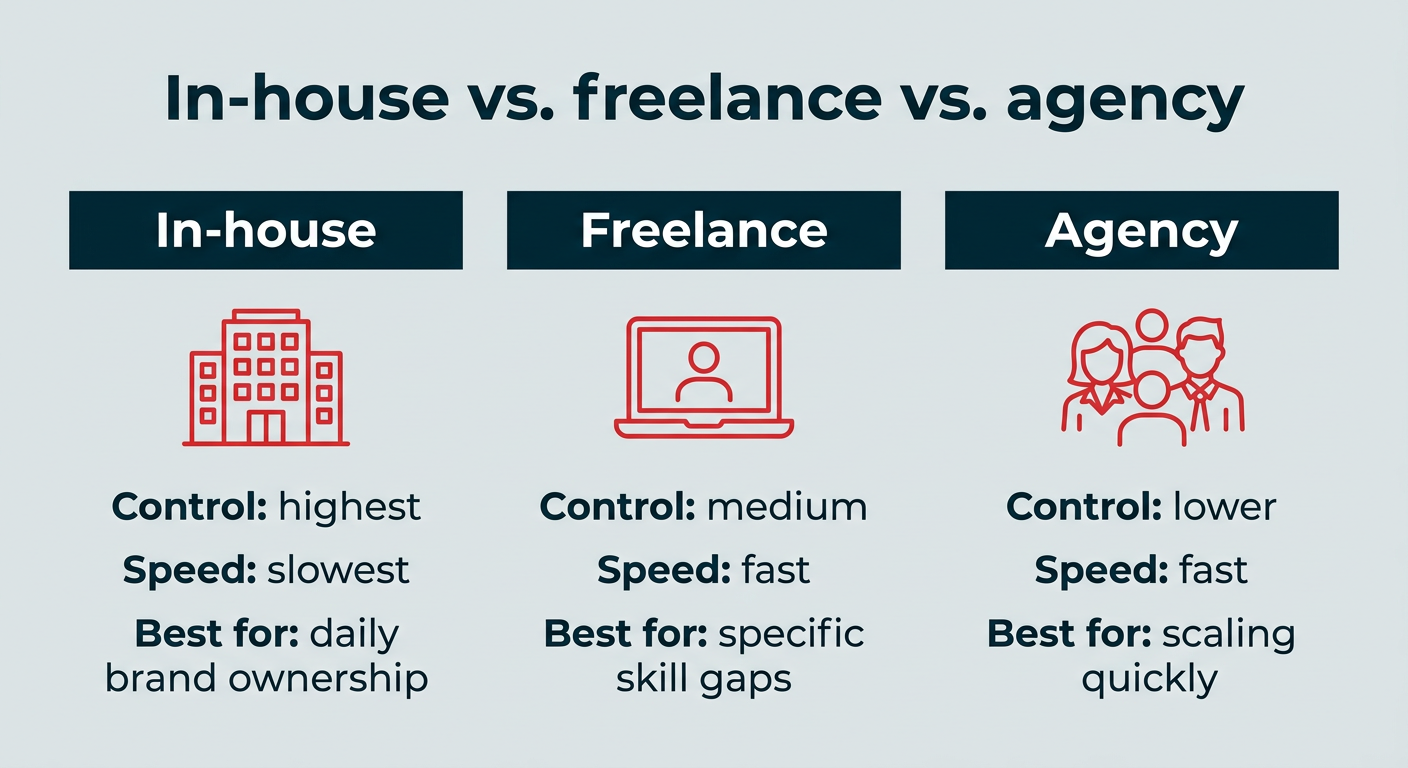
Organizations must carefully weigh the structural advantages of in-house hiring against the flexibility of freelancing and agency partnerships. In-house teams provide maximum brand control and are essential when social media functions as a core commercial channel requiring daily ownership and deep cultural alignment. Conversely, external agencies offer rapid scalability, making them ideal for launching new regional markets or executing large-scale paid acquisition blitzes with short notice. Freelancers bridge immediate capability gaps—such as specialized video editing or design spikes—without adding permanent headcount or long-term overhead.
Crafting Job Descriptions and Interview Strategies

Creating effective job descriptions requires absolute transparency regarding day-to-day responsibilities, necessary platform fluency, and measurable performance indicators. Hiring managers must avoid listing disparate competencies—such as graphic design, media buying, video production, and community moderation—as expectations for a single generalist, unless appropriate resourcing is provided.
Interview processes should focus on open-ended behavioral questions that reveal how a candidate approaches problem-solving, analyzes data, and responds to platform algorithm shifts. Reviewing a candidate’s portfolio of past campaigns—specifically examining the baseline metrics before implementation versus the final performance data—offers far greater insight than vanity metrics like personal follower counts. Furthermore, evaluating a candidate’s awareness of niche, high-performing accounts rather than just mainstream corporate giants demonstrates genuine industry research and creative acumen.
The Integration of Artificial Intelligence
Artificial intelligence has fundamentally reshaped the daily responsibilities of digital marketing professionals rather than replacing them. With AI-related job postings doubling over recent years, employers now view AI literacy as a baseline competency across every role on the social team. Modern practitioners utilize AI-powered tools to accelerate caption drafting variations, summarize extensive social listening datasets, and generate preliminary performance reports.
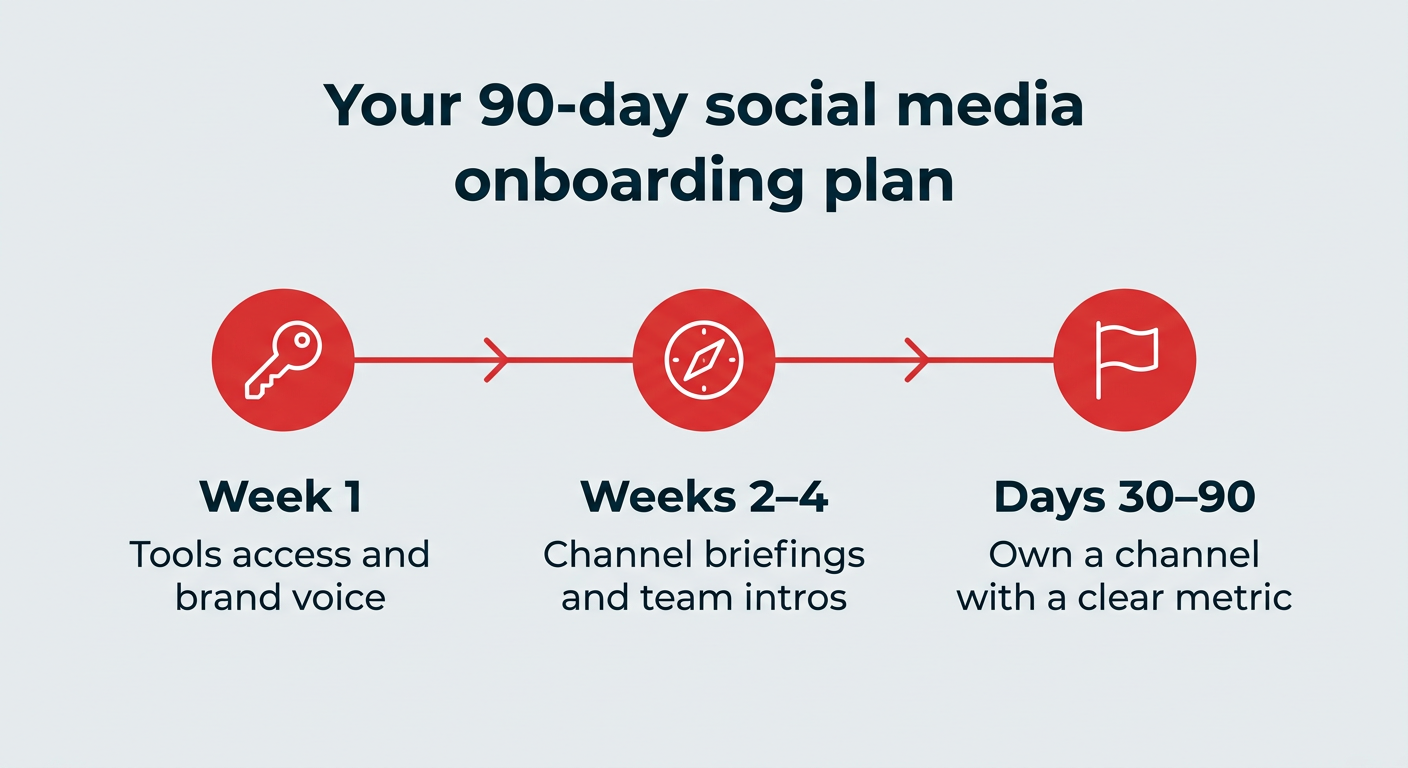
However, industry leaders stress that technical tooling cannot replace human judgment. Creative storytelling, nuanced community empathy, strategic intuition, and strict editorial oversight remain distinctly human responsibilities. Effective onboarding and continuous upskilling initiatives—prioritized by the vast majority of human resources professionals in 2026—ensure that internal teams stay ahead of rapid platform algorithm updates and technological advancements. By pairing talented professionals with governed, centralized operating systems, modern enterprises can successfully scale their digital presence, protect brand equity, and achieve measurable commercial success across an increasingly complex digital landscape.