Tag Apple Vision Pro
Apple Vision Pro: A Spatial Computing Revolution and its Implications
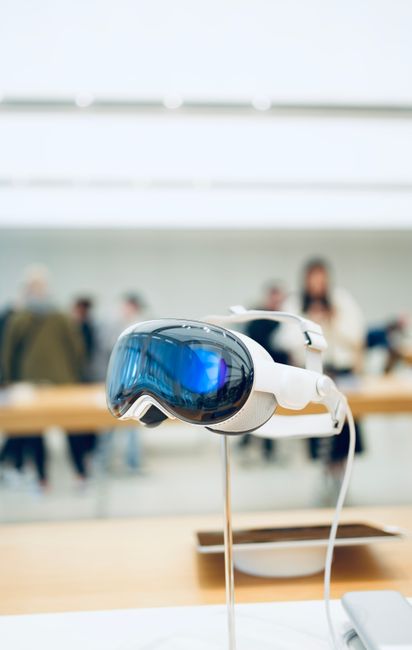
The Apple Vision Pro, introduced by Apple Inc., marks a significant departure from traditional computing paradigms, ushering in an era of "spatial computing." This groundbreaking device blends digital content with the physical world, allowing users to interact with applications and information in a three-dimensional, immersive environment. Unlike virtual reality (VR) headsets that entirely enclose the user in a digital world, or augmented reality (AR) glasses that merely overlay digital information onto the real world, the Vision Pro operates on a more sophisticated spectrum, offering a seamless integration of both. Its advanced display technology, intuitive eye and hand tracking, and powerful custom silicon are core to its promise of transforming how we work, play, and communicate. The device is a testament to Apple’s long-held vision of merging the digital and physical realms, a concept explored in various forms across their product ecosystem, but now realized with unprecedented fidelity and user experience. The underlying philosophy is to enhance human capabilities by making digital content an extension of our physical reality, accessible and controllable through natural gestures and gaze. This article will delve into the technical specifications, use cases, potential impact, and the broader ecosystem surrounding the Apple Vision Pro, providing a comprehensive overview for consumers, developers, and industry observers alike.
At its heart, the Apple Vision Pro is powered by a dual-chip architecture: the M2 chip, familiar from Apple’s Mac lineup, and the all-new R1 chip, specifically designed to process input from its numerous sensors with near-zero latency. The M2 chip handles general computation, while the R1 is dedicated to managing sensor data, including feeds from 12 cameras, five sensors, and six microphones. This intricate sensor array is crucial for the device’s spatial computing capabilities. The cameras capture the user’s environment in high fidelity, enabling the Vision Pro to create a precise 3D map of the surroundings. This map is then used to anchor digital content, making it appear as if it exists physically in the user’s space. The eye-tracking system, utilizing an array of micro-LEDs and infrared cameras, detects where the user is looking with remarkable accuracy, forming the primary input mechanism for selecting and interacting with digital elements. Hand tracking, achieved through a combination of infrared cameras and machine learning algorithms, translates natural hand gestures into precise commands. Users can tap their thumb and forefinger to select, flick their wrist to scroll, and perform a range of other intuitive actions without the need for external controllers. The display system is equally impressive, featuring two ultra-high-resolution displays, each packing more pixels than a 4K TV for every eye. This provides a visual experience that is both incredibly sharp and immersive, minimizing the screen-door effect often associated with VR/AR headsets. The external display, known as "EyeSight," projects a representation of the user’s eyes to people in their physical vicinity, fostering a sense of presence and connection, and signaling when the user is fully immersed or aware of their surroundings. This feature is a deliberate design choice aimed at mitigating the social isolation sometimes associated with immersive technologies. The device also boasts a sophisticated audio system, with spatial audio capabilities that adapt sound to the user’s environment, further enhancing the sense of immersion and presence.
The potential applications for the Apple Vision Pro span a wide range of industries and personal use cases. For productivity, the device promises to redefine the workspace. Imagine having multiple large, virtual monitors floating in your physical office, allowing for enhanced multitasking and a more organized workflow. Developers can interact with code and design interfaces in 3D, architects can walk through virtual building models on-site, and medical professionals can visualize complex anatomical structures in real-time. In education, the Vision Pro can bring historical events to life, allow students to dissect virtual frogs without the mess, or explore the solar system from their classroom. The entertainment sector is poised for a significant transformation. Immersive cinematic experiences, where the film environment surrounds the viewer, are a key selling point. Gaming can reach new levels of engagement, blurring the lines between the game world and the player’s reality. Social interactions can also be enhanced through FaceTime, which will allow users to appear as lifelike avatars in shared spatial environments, making remote communication feel more present and engaging. Beyond these core areas, the Vision Pro opens doors for new forms of creative expression, remote collaboration, and even therapeutic applications, such as exposure therapy in controlled virtual environments. The device is envisioned not merely as a consumer gadget but as a platform for innovation across numerous domains, driving new software and hardware development.
The development ecosystem for the Apple Vision Pro is a critical factor in its long-term success. Apple has developed a new operating system, visionOS, built upon the foundations of iOS, iPadOS, and macOS, ensuring familiarity for developers. The company has also released the Vision Pro SDK, providing developers with the tools, frameworks, and simulators necessary to create applications for the platform. This includes access to powerful graphics APIs, robust ARKit capabilities for spatial understanding, and frameworks for integrating with Apple’s existing services like iCloud, Apple Music, and the App Store. The emphasis on native applications, built from the ground up for spatial computing, is expected to lead to highly optimized and innovative experiences. Furthermore, Apple’s commitment to privacy and security is deeply integrated into visionOS. The device employs advanced on-device processing for sensitive data, such as biometric information and sensor feeds, minimizing the need to send this data to the cloud. This commitment is crucial for building user trust, especially with a device that is so intimately connected to the user’s environment and physical actions. The App Store, a proven model for content distribution on other Apple platforms, will serve as the primary marketplace for Vision Pro applications, offering a curated selection and a familiar purchasing experience for users. The success of this ecosystem will depend heavily on the developer community’s adoption and their ability to leverage the unique capabilities of the Vision Pro to create compelling and valuable applications.
The economic and societal implications of the Apple Vision Pro are far-reaching and warrant careful consideration. From an economic perspective, the device has the potential to create entirely new markets for hardware, software, and services. The development of spatial computing applications will drive demand for skilled developers, designers, and content creators. Industries that adopt the Vision Pro for productivity and training could see significant gains in efficiency and innovation, leading to economic growth. However, the initial high price point of the Vision Pro positions it as a premium device, potentially creating a digital divide between those who can afford it and those who cannot. As with previous Apple product launches, there is an expectation that prices will decrease and accessibility will increase over time. Societally, the widespread adoption of spatial computing could fundamentally alter how we interact with technology and each other. The potential for increased immersion in digital environments raises questions about digital well-being, addiction, and the blurring of lines between the real and virtual worlds. Concerns about privacy and data security will also be paramount, given the device’s ability to capture detailed information about the user’s surroundings and personal interactions. Apple’s efforts to address these concerns through privacy-focused design and transparent data policies will be crucial in shaping public perception and trust. The long-term impact will depend on how the technology evolves, how society adapts to its integration, and the ethical considerations that guide its development and deployment.
Looking ahead, the evolution of the Apple Vision Pro is likely to be iterative, with future generations incorporating advancements in display technology, processing power, battery life, and form factor. The current model, while groundbreaking, is just the first step in what Apple envisions as a long-term spatial computing journey. As the technology matures and becomes more affordable, its adoption is expected to broaden, impacting a wider segment of the population. The development of more lightweight, comfortable, and aesthetically pleasing designs will be critical for everyday use. Further integration with other Apple devices and services will create a more seamless and interconnected ecosystem. The long-term vision is for spatial computing to become an integral part of our daily lives, enhancing productivity, creativity, and communication in ways that are currently difficult to fully comprehend. The challenge for Apple and the broader tech industry will be to navigate the ethical considerations and societal impacts of this powerful new technology responsibly, ensuring that it augments human potential rather than diminishes it. The Apple Vision Pro represents a bold leap into the future of computing, and its journey promises to be one of the most significant technological narratives of the coming decade. The ongoing discourse around its capabilities, applications, and implications will continue to shape its trajectory and its eventual place in the pantheon of transformative technologies. The foundational work laid by the Vision Pro is expected to inspire a wave of innovation across the entire tech landscape, accelerating the development and adoption of spatial computing.


