Google Transforms Trip Planning With New AI Mode Features for Flight Tracking and Hotel Bookings

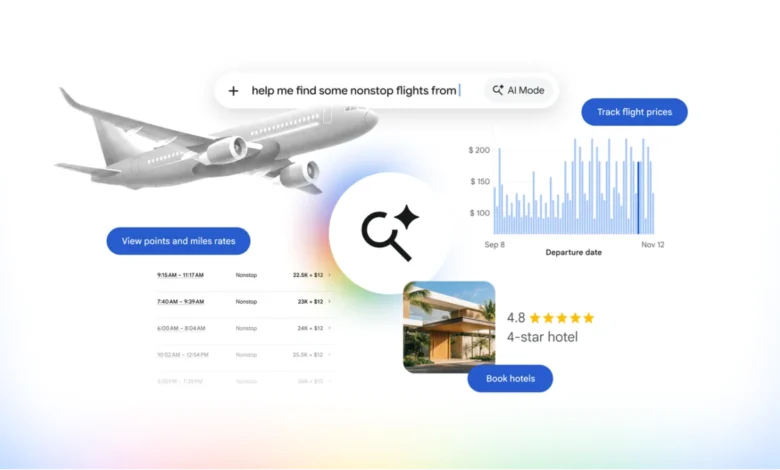
Planning a trip has traditionally involved navigating a fragmented digital landscape, requiring travelers to jump across multiple browser tabs, compare hundreds of flight options manually, and cross-reference rewards programs to secure the best value. To streamline this complex process, Google has announced a significant expansion of its AI Mode within Search, introducing three new capabilities designed to unify travel planning, price monitoring, and direct booking into a single, conversational interface. Unveiled by James Byers, Group Product Manager for Search, these latest upgrades allow users to track flight costs seamlessly, calculate travel expenses using loyalty points and miles, and complete hotel reservations directly through the chat interface. By integrating these tools, the technology giant aims to reduce the friction historically associated with vacation planning, offering a more cohesive, agentic experience that brings the entire journey from ideation to checkout into one ecosystem.
The evolution of Google Search into a transactional, AI-driven planning assistant represents a broader industry trend toward conversational commerce. Over the past several years, search engines have evolved far beyond traditional blue links, incorporating structured data, maps, and real-time aggregation. The introduction of AI Mode builds upon foundational travel tools like Google Flights and Google Hotels, bridging the gap between passive research and active execution. According to industry data, the average leisure traveler visits dozens of websites before finalizing an itinerary. By consolidating flight comparisons, rewards redemption options, and secure payment processing into AI Mode, Google is positioning its search platform as an indispensable command center for modern travel, competing directly with dedicated online travel agencies (OTAs) and legacy booking platforms.
At the core of the new feature set is the integration of Google Flights’ popular price-tracking mechanism directly into conversational AI chats. Previously, users had to navigate to a dedicated flight search page to set up price alerts. Now, travelers can interact with AI Mode naturally, describing their destination, preferred dates, and travel constraints. The system instantly generates options pulled from a vast network of more than 300 partner airlines and global travel sites. If a user wishes to monitor pricing fluctuations over time rather than booking immediately, they can issue a simple conversational command, such as requesting the AI to track those specific flight prices. Once confirmed, the system automatically dispatches email notifications whenever price variations occur for the targeted route and dates, ensuring travelers can capitalize on sudden fare drops. This automated price-tracking functionality is rolling out immediately to users across more than 180 countries and territories.
In addition to monitoring cash fares, the updated AI Mode addresses a major pain point for frequent flyers: the complex math required to maximize loyalty points and miles. Redeeming rewards has historically demanded visits to individual airline and hotel loyalty portals to check seat availability and dynamic pricing charts. Google’s upgraded search assistant now allows users to query flight and hotel costs expressed directly in points or miles. By stating a specific frequent flyer program or hotel rewards balance—such as requesting nonstop options using American Airlines miles—travelers receive immediate insights based on real-time partner data. When an ideal rewards redemption is identified, the system provides direct pathways to complete the transaction on the partner’s platform.
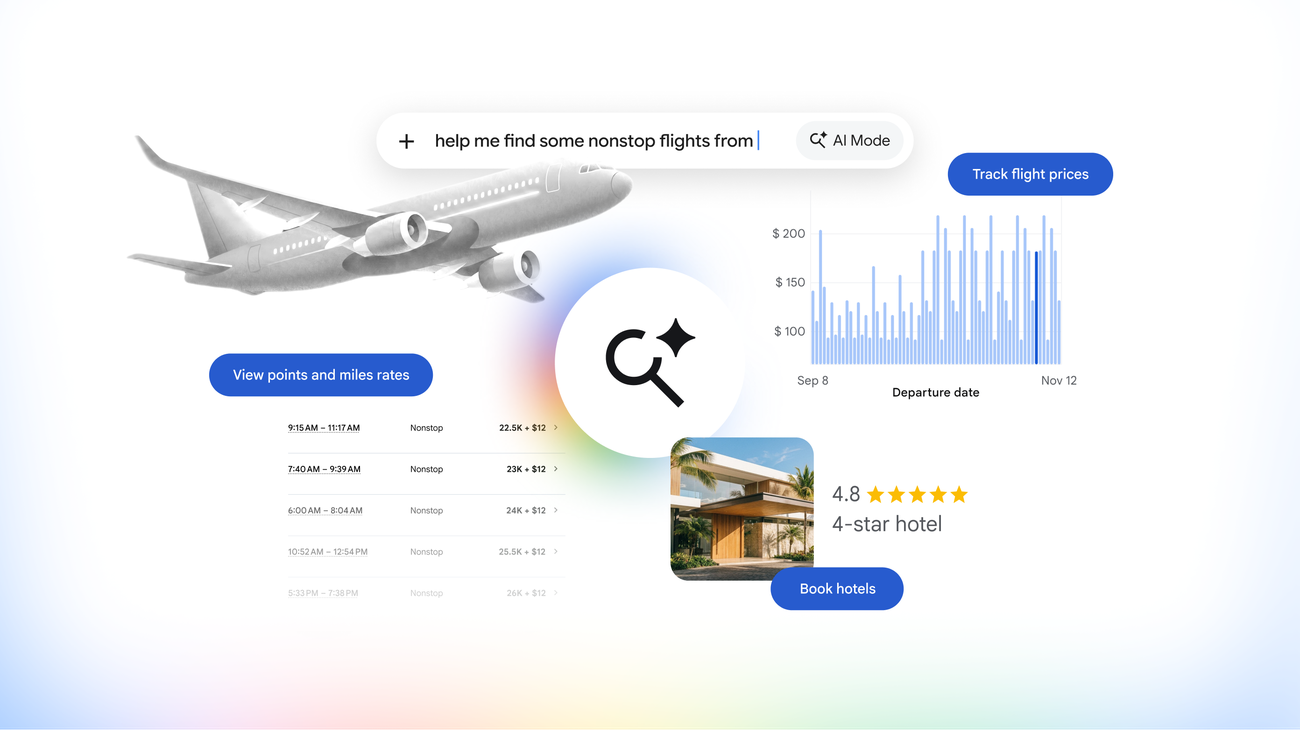
This rewards-integration capability is launching with immediate, global availability, supported initially by major loyalty ecosystems including Alaska Airlines, Hawaiian Airlines, American Airlines, Choice Hotels International, Hilton, and Wyndham Hotels & Resorts. Furthermore, Google has confirmed that the ecosystem will expand rapidly in the coming weeks to incorporate additional global brands such as Accor, Flying Blue, Hyatt, LATAM Airlines, and the Lufthansa Group. This broad coalition of launch partners signals a strong industry alignment, as travel providers increasingly recognize the value of meeting digitally savvy consumers directly within conversational discovery channels rather than relying solely on proprietary apps.
Beyond flights and rewards, the new AI Mode capabilities extend to comprehensive hotel discovery and direct reservation processing. When users search for accommodations, the system presents a rich, visual list of options augmented by authentic guest reviews and side-by-side comparative metrics. Once an ideal hotel is selected, travelers can execute the reservation directly within the chat interface by choosing the Continue on Google option. Powered by secure payment processing through Google Pay, the system facilitates room selection, policy reviews, and final checkout in just a few taps. Google clarifies that while the interface is unified, the underlying merchant of record remains the hotel chain or participating online travel agency, ensuring that customer service, cancellations, and loyalty benefits continue to be managed directly by the hospitality provider.
The hotel booking functionality has begun rolling out initially in the United States for English-language queries, with a broader rollout slated over the coming weeks. The launch features a robust roster of heavy-hitting hospitality and OTA partners, including Booking.com, Choice Hotels International, Expedia, Hilton, Hotels.com, IHG Hotels & Resorts, Marriott International, Priceline, Trip.com, and Wyndham Hotels & Resorts. By partnering with these dominant industry players, Google ensures that users have access to competitive inventory and trusted fulfillment mechanisms, minimizing hesitation around security and reservation reliability.
Industry analysts note that these upgrades signify a profound shift in how consumers interact with the web. By transforming search engines from informational directories into transactional concierges, tech companies are redefining digital convenience. However, this evolution also raises important considerations regarding market dynamics and competition. As search engines increasingly capture the entire journey—from initial inspiration to the final financial transaction—concerns regarding platform dominance and the visibility of independent travel providers will likely remain a topic of discussion among regulators and industry competitors. Nevertheless, for the everyday consumer, the ability to manage complex logistics through a single, continuous conversation promises to eliminate much of the traditional stress associated with organizing global travel. As these features continue their global deployment, they establish a new benchmark for what users can expect from intelligent search assistants in their daily lives.