With the official release of macOS 27, codenamed Golden Gate, Apple has quietly reintroduced a utility that many power users and hardware enthusiasts have been clamoring for since 2021: a native, verifiable method to determine the specific manufacture date of a Mac. This feature, tucked away within the system’s regulatory documentation, marks a significant shift in Apple’s transparency regarding hardware provenance, effectively restoring a capability that vanished when the company transitioned to randomized serial numbers.
The Return of Hardware Traceability
For years, the Apple community relied on the industry-standard practice of decoding serial numbers to ascertain when and where a device was manufactured. By examining the alphanumeric string provided in the "About This Mac" section, users could determine the production week and factory of origin. However, this diagnostic window was closed in May 2021, when Apple implemented a new randomized serial number format. The shift was primarily a security and supply chain move, designed to prevent the proliferation of counterfeit devices and to obscure production volumes from market analysts.
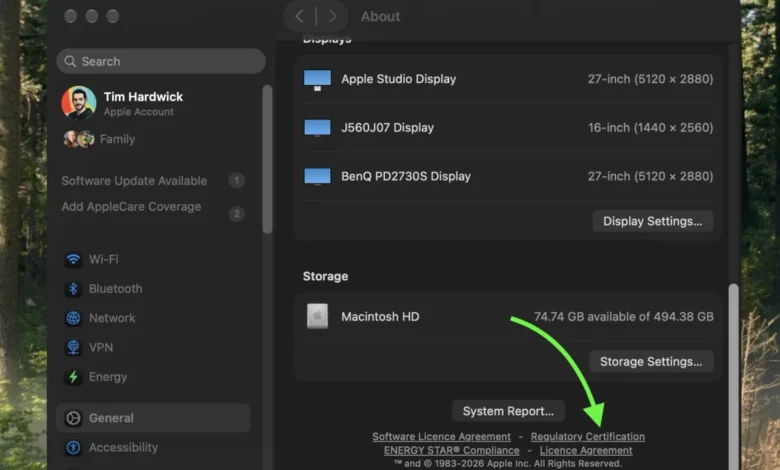
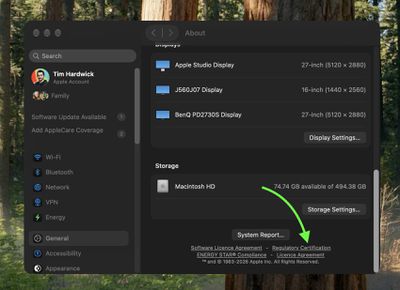
While the randomization strategy succeeded in its security goals, it left a vacuum for consumers looking to verify the age of their hardware—particularly those purchasing refurbished units or third-party resale devices. macOS 27 Golden Gate silently addresses this by including a "Date of Manufacture" field within the Regulatory Certification menu. To access this information, users can navigate to System Settings, select General, click About, and then choose "Regulatory Certification" under the System Report button. At the bottom of the resulting certificate, the production date is now explicitly stated.
A Chronology of Apple’s Serial Number Evolution
To understand the significance of this development, one must examine the timeline of Apple’s hardware identification policies:
- Pre-2021: Apple utilized a predictable serial number format where characters 4 and 5 represented the year and week of manufacture. This was the gold standard for verifying hardware age.
- May 2021: Apple officially transitioned to randomized serial numbers for all new products, beginning with the purple iPhone 12. This change effectively bricked the utility of third-party "serial number decoders."
- 2021–2026: A five-year period of opacity ensued. During this time, users had no native way to determine if their Mac was produced at the beginning or the end of a specific hardware cycle, often leading to confusion regarding warranty coverage and component longevity.
- June 2026: During the Worldwide Developers Conference (WWDC), the first developer betas of macOS 27 were released. Eagle-eyed testers discovered the regulatory certification updates, though they remained undocumented in Apple’s official release notes.
- September 2026: With the public launch of macOS 27 Golden Gate, this feature is now available to the general user base.
Technical Nuances and Community Discovery
The discovery of this feature is largely credited to community members on the MacRumors forums, specifically a user identified as "pdfu," who highlighted the presence of the data during the beta testing cycle. The inclusion of this field has sparked a broader technical discussion regarding exactly what "manufacture date" signifies in the context of modern Apple manufacturing.
Initial observations suggest that the date displayed on the certificate is not necessarily tied to the final assembly of the chassis. Instead, evidence indicates that the date is tied to the logic board—the primary motherboard of the machine. One forum participant reported that after a logic board replacement at an Apple Authorized Service Provider, the manufacture date on their certificate updated to reflect the date of the new component rather than the original machine. This suggests that the manufacture date is likely etched into the firmware of the logic board during the manufacturing process, making it a reliable indicator of component age rather than the retail box-opening date.
Broader Implications for the Secondary Market
The reintroduction of this data point carries significant implications for the secondary hardware market. In an era where Apple silicon Macs are increasingly modular yet highly integrated, the ability to confirm the age of the logic board—the most expensive and critical component—provides buyers and sellers with a higher degree of confidence.
For individuals purchasing used devices, this feature acts as a verification layer against misleading listings. If a seller claims a machine is "like new" but the Regulatory Certification displays a manufacture date from several years prior, the buyer can make a more informed decision. Furthermore, it assists Apple’s own service technicians in identifying the age of components during diagnostic procedures, potentially streamlining the repair and warranty-check process.
Analytical Perspective: Why Now?
Industry analysts suggest that Apple’s decision to include this information may be a response to increasing "Right to Repair" legislative pressures and environmental transparency requirements. As global regulations—particularly those in the European Union—begin to mandate more detailed product lifecycle documentation, providing a digital paper trail for hardware components is becoming a necessity rather than an optional transparency measure.
By embedding this information in the "Regulatory Certification" section, Apple keeps the data accessible for compliance purposes while keeping it distinct from the core user interface. It is a classic Apple approach: providing the necessary technical data to satisfy regulatory requirements and power users, while maintaining the clean, simplified user experience that defines the macOS interface.
The Context of the macOS 27 Rollout
The inclusion of the manufacture date is one of many "under the hood" refinements in macOS 27. The operating system, which launched alongside the latest wave of hardware, is widely considered the most significant software update of the year. Beyond the regulatory tweaks, the OS features a fundamental overhaul of the Siri architecture.
Code analysis by researchers has revealed that Apple has engineered the new Siri to be modular, allowing for "Model Delegation." This means that users are not necessarily locked into Apple’s proprietary LLM; rather, the system is designed to allow third-party AI models—such as ChatGPT or Claude—to function as deep-level extensions. This move toward interoperability, coupled with the granular hardware transparency of the new manufacture date feature, suggests a broader strategy to make Apple hardware and software more open and verifiable for the professional and developer community.
Conclusion: A Quiet Win for Users
While the "Date of Manufacture" feature may not be the primary marketing pillar for macOS 27, its impact on the longevity and transparency of the Mac ecosystem is substantial. It represents a rare instance of Apple walking back a policy of obfuscation in favor of user utility. For the average consumer, it is a simple, effective tool for tracking the age of their investment. For the hardware enthusiast, it is a long-awaited return to transparency that validates the history of their machine.
As users continue to upgrade to macOS 27, the availability of this data will likely become a standard step in hardware assessment. Whether or not Apple intends to expand this to other platforms, such as iPadOS or visionOS, remains to be seen. However, for the Mac community, the Golden Gate update provides a welcomed resolution to a five-year mystery, proving that even as hardware becomes more complex and integrated, the need for clear, verifiable provenance remains a top priority for the Apple user base.