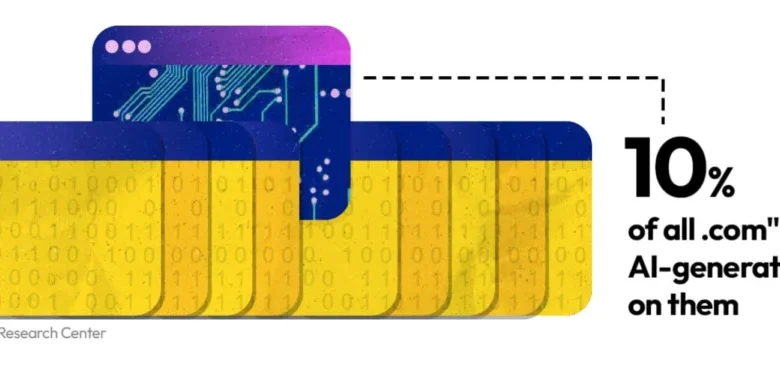
The digital landscape has undergone a seismic shift in recent years, transforming from a space defined by human-authored content into a battleground where artificial intelligence, sophisticated automation, and malicious intent intersect. With approximately one-third of all recent web content now generated by AI models and nearly 10 percent of commercial websites displaying clear markers of machine-generated influence, the barrier to entry for bad actors has plummeted. As traditional verification methods falter under the weight of hyper-realistic deepfakes and automated "pink slime" journalism, the burden of truth-seeking has fallen squarely on the shoulders of the end user.
The Proliferation of Synthetic Deception
The democratization of generative AI has fundamentally altered the threat model for the average internet user. In the past, the creation of convincing misinformation campaigns required the resources of nation-states or well-funded criminal syndicates. Today, the "Wild West" of open-source AI models allows virtually anyone to generate high-fidelity spoof websites, automated social media bot networks, and deceptive advertisements with minimal technical expertise.
According to industry analysts, this shift is exacerbated by a noted decline in platform moderation. As social media companies streamline their workforce and rely more heavily on algorithmic policing, the cracks in the system have widened. Bad actors are exploiting these gaps by utilizing "scam kits"—affordable, off-the-shelf software packages that automate everything from the creation of phishing landing pages to the management of "human-like" engagement on platforms like X, TikTok, and Instagram.

A Chronology of Evolving Threats
The evolution of online deception has moved through distinct phases over the last decade. In the mid-2010s, the primary concern for users was "typosquatting," where bad actors registered domains with minor misspellings of popular sites, such as "abcnews.com.co." These sites relied on user carelessness to harvest credentials or peddle sensationalist propaganda.
By the early 2020s, the rise of influencer culture brought about a new category of fraud: the impersonation account. Attackers would clone the profile photos, bios, and aesthetic styles of high-profile creators to run crypto-scams or affiliate fraud. The current era, however, is defined by the integration of large language models (LLMs) and deepfake technology. We have moved from simple URL spoofing to the creation of entire, AI-generated news organizations—often termed "pink slime" sites—that mimic the layout, tone, and editorial cadence of legitimate local newspapers. These sites are designed to bypass traditional spam filters by producing high-volume, generic content that appears credible at first glance.
Data-Driven Reality: The Scale of the Problem
The scale of this issue is corroborated by recent findings from the Pew Research Center, which indicate that the saturation of AI-generated content is no longer a fringe phenomenon. The implications for public discourse are significant. When 10 percent of ".com" domains contain AI fingerprints, the risk of "information drift"—the gradual degradation of factual accuracy as AI models train on their own synthetic output—becomes a critical concern for data integrity.
Security researchers at firms like Arkstone Defense and Riskified have noted that traditional indicators of a scam—such as poor grammar, pixelated images, or broken links—are becoming relics of the past. Modern AI tools can "clean" content, ensuring that a fraudulent website looks as polished and professional as a Fortune 500 company portal. This creates a psychological environment where users are forced to question every digital interaction, leading to a phenomenon known as "truth decay."

The Anatomy of a Modern Scam
Modern digital fraud is characterized by three primary vectors:
- The Hijacked Credibility Vector: Scammers impersonate established organizations or verified public figures to gain immediate trust, often utilizing hacked accounts to bypass initial suspicion.
- The Urgency Vector: Utilizing the "attention economy," these threats are designed to trigger emotional responses, such as rage or panic, forcing the user to act before they have the opportunity to verify the source.
- The Off-Platform Migration: A hallmark of modern social media scams is the drive to move the user away from a moderated environment. By encouraging users to click links leading to Telegram groups, private Discord servers, or unregulated third-party websites, attackers effectively remove the victim from the protective oversight of the original platform.
Standardized Verification Protocols for the Modern Era
Given that visual cues are no longer sufficient, experts recommend adopting a multi-layered verification strategy. This involves moving beyond the "padlock icon" in the browser bar, which only confirms that the connection is encrypted—not that the entity on the other end is who they claim to be.
The SIFT Method
Developed for academic and media literacy, the SIFT method remains the gold standard for quick verification:
- Stop: When you feel a strong emotional reaction, pause. This is a primary indicator of a potential influence campaign.
- Investigate the source: Do not rely on the account’s name or verification badge alone. Use lateral reading—open a new tab and search for the source’s reputation across multiple independent outlets.
- Find better coverage: If a story is true, it will be reported by multiple reputable sources. If it only appears on one unknown site, treat it with extreme skepticism.
- Trace claims to the original context: Click through to the primary source or raw data, rather than relying on a summary or a screenshot provided by the account.
The Zoning Approach
The News Literacy Project advocates for "zoning" content based on its intent. Users should ask themselves: Is this content designed to inform, persuade, or sell? By categorizing information into these distinct zones, users can better calibrate their critical thinking. A piece of content intended to sell a product requires a different standard of evidence than a piece of content intended to inform the public on a policy matter.

Institutional and Regulatory Responses
While individual vigilance is necessary, there is a growing consensus that the responsibility cannot lie solely with the user. Regulatory bodies are beginning to discuss the need for "digital watermarking" and provenance standards, which would allow browsers to verify the origin of an image or article through cryptographic signatures.
However, implementation remains slow. In the absence of global standards, the burden remains on the consumer to employ "zero-trust" practices. This includes utilizing browser extensions that scan for known malicious domains, maintaining updated antivirus software, and avoiding the temptation to engage with "rage-bait" content that encourages rapid, uncritical sharing.
Implications for the Future of Digital Literacy
The emergence of AI-powered deception represents a fundamental challenge to the democratic exchange of information. If a significant percentage of the digital ecosystem is intentionally designed to deceive, the risk of social fragmentation increases. The "Wild West" environment described by security experts necessitates a new form of digital hygiene.
We must shift away from the assumption that the internet is a neutral or inherently reliable medium. Instead, we must treat it as a high-risk environment where the burden of proof rests with the publisher, not the reader. As we move further into this decade, the ability to discern the authentic from the synthetic will likely become one of the most essential skills in the modern workforce and daily life. The goal is not to abandon the internet, but to navigate it with the understanding that every click, share, and interaction is a decision that must be weighed against the reality of a world where truth can be manufactured in seconds.