The landscape of generative artificial intelligence shifted significantly in late 2026 as Anthropic, the developer behind the Claude suite, announced the full consolidation of its diverse toolset into a singular, cohesive interface. Effective October 2026, the formerly distinct environments of Claude Chat, Claude Cowork, Artifacts, and Design have been merged into a unified user experience. This strategic pivot aims to eliminate the friction associated with switching between specialized AI tools, allowing the model to intelligently determine the optimal utility—be it coding, document analysis, or creative design—based on the user’s specific query. Central to this new ecosystem are "Claude Skills," a robust feature set that allows users to create reusable, instruction-based workflows that function seamlessly across the entire platform.

The Chronology of Consolidation
The evolution toward a unified interface began as a response to user feedback regarding the complexity of navigating fragmented AI services. Throughout 2025 and early 2026, enterprise users frequently noted that the necessity to toggle between Claude Chat for conversational tasks and Claude Cowork for desktop-based automation created a disjointed workflow.
By September 2026, Anthropic confirmed the roadmap for a "unified experience," which began rolling out to Pro and Max subscribers. This transition was designed to ensure that projects, connectors, and tasks could migrate without data loss. The update represents a maturation of the agentic AI market, moving away from "siloed" applications toward integrated workspaces that act more like digital collaborators than static chatbots. Following the initial rollout to desktop and mobile users, the company confirmed plans to extend these capabilities to free-tier users and enterprise teams, signaling a broad democratization of sophisticated automation tools.

Defining Claude Skills in a Unified Ecosystem
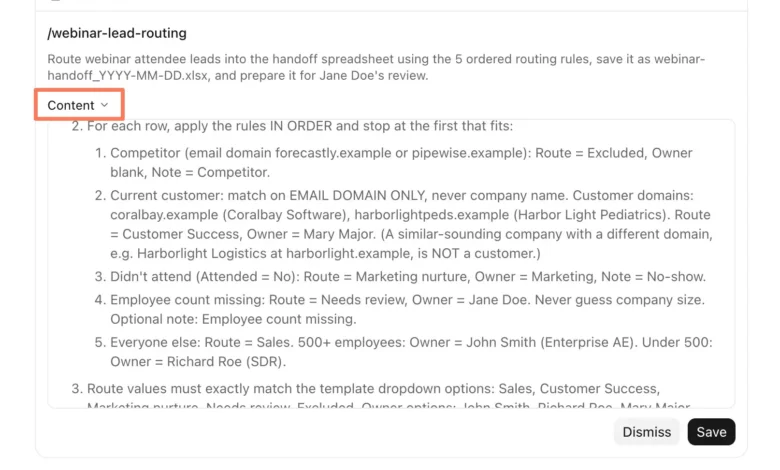
A Claude Skill is essentially an encapsulated set of instructions, templates, and scripts that the AI loads only when the task requires them. By utilizing a process known as "progressive disclosure," Claude avoids the performance degradation associated with loading massive instruction sets. Instead, the model invokes specific skills on demand, keeping the system efficient and responsive.
Technically, a skill functions as a digital Standard Operating Procedure (SOP). Unlike a standard prompt that a user might copy and paste repeatedly, a skill can be stored, shared, and version-controlled. It allows the model to interact with internal documentation, read and write files directly to local directories, and coordinate sub-agents to execute multi-step processes. For instance, a user can transition from a complex data-triaging task to a creative design brief without manually resetting the context, as the platform automatically swaps the relevant skill sets based on the user’s intent.

Operational Benefits and Productivity Metrics
Internal data from early adopters suggests that the implementation of skill-based workflows can reduce the time spent on repetitive administrative tasks by up to 40%. By automating the "how" of a process—such as formatting a weekly performance report or reconciling lead data—employees are freed to focus on the "why."
The "Record a Skill" feature, currently available on Mac desktop environments, has emerged as a primary catalyst for this shift. By recording a screen-capture walkthrough of a workflow, the user provides the AI with both visual and verbal context. The model then synthesizes this data into a formal, executable skill. This capability lowers the barrier to entry for non-technical staff who may possess deep domain knowledge but lack the coding skills to build traditional automation scripts.

Comparative Analysis: Skills, Projects, and Memory
Understanding the taxonomy of Claude’s features is critical for efficient usage. Industry analysts often distinguish between these elements by using the "workshop" analogy:
- Projects serve as the physical workshop, providing the broader container for all related documents and long-term context.
- Skills are the specialized tools kept in that workshop, retrieved only when a specific task requires them.
- Instructions represent the global safety and operational guidelines applied to the model’s behavior across all interactions.
- Memory stores persistent facts about the user or organization, ensuring that the model does not require redundant explanations for recurring preferences.
When these four pillars are combined, they create an environment where the AI possesses both the long-term knowledge of a veteran employee and the specialized toolset of a subject matter expert.

Security and Data Governance
The integration of desktop-level access—specifically the ability for Claude to read and write files—has necessitated rigorous security protocols. Anthropic has emphasized that the "Record a Skill" function and general file access should be approached with extreme caution. The primary risk involves the accidental inclusion of sensitive information, such as PII (Personally Identifiable Information) or internal credentials, during the recording process.
To mitigate these risks, organizations are encouraged to adopt "sandbox" testing. This involves building and testing skills using dummy data before applying them to live production files. Furthermore, the platform includes a permission-based architecture; when a user grants Claude access to a folder, they are essentially providing a defined perimeter. Users are advised to avoid pointing the AI at root directories and instead create dedicated, task-specific folders to maintain a "principle of least privilege" posture.

The Role of Connectors: Bridging AI and CRM
While skills provide the procedural instructions, they often lack access to real-time external data. To solve this, the integration of Model Context Protocol (MCP) connectors, such as the official HubSpot connector, has become vital.
The HubSpot connector allows Claude to perform read and write operations directly within a CRM, enabling workflows that were previously impossible. For example, a "Pre-call Briefing" skill can now pull recent engagement history, open deal statuses, and contact notes to synthesize a personalized summary. Because this interaction is governed by OAuth permissions, the AI can only access data authorized by the user’s existing credentials. Crucially, Anthropic has stated that information shared through these connectors is not used to train its base models, addressing the primary concern of enterprise data leakage.

Broader Implications for the Future of Work
The merger of these tools suggests a future where the distinction between "using an app" and "talking to an AI" effectively disappears. As these models become more adept at executing multi-step workflows across diverse software environments, the role of the knowledge worker is expected to evolve from an "operator" to an "orchestrator."
This transition is not without challenges. It requires a fundamental shift in how teams document their processes. If a process is poorly defined, the AI will execute it poorly. Consequently, the adoption of Claude Skills is likely to force organizations to codify their operational knowledge more clearly. Those who successfully document their workflows into modular, reusable skills will likely see a significant competitive advantage in terms of operational speed and accuracy.

Practical Implementation Strategies
For teams looking to integrate these features, the recommended path is incremental. The most effective strategy is to identify a singular, high-frequency, low-complexity task. By automating the triage of support tickets or the formatting of monthly financial summaries, teams can establish a baseline for AI reliability.
As trust in the model’s execution grows, users can move toward more complex integrations, such as connecting the AI to internal databases or project management tools. The key, according to industry experts, is to avoid the temptation of "automation bloat"—the practice of creating too many poorly tested skills that eventually clutter the interface and reduce overall efficiency.

In summary, the unification of Claude’s capabilities into a single, skill-driven experience marks a definitive step toward the maturity of generative AI. By moving beyond simple text generation into the realm of autonomous, context-aware, and tool-connected workflows, Anthropic is positioning its platform to become a central operating system for modern professional tasks. The success of this transition, however, remains contingent on the user’s ability to maintain clear data hygiene, implement rigorous security standards, and maintain a disciplined approach to building and sharing these new digital assets.