The global e-commerce sector is currently navigating a period of profound transformation, driven by rapid technological advancements and a fundamental shift in consumer psychology. As digital saturation reaches unprecedented levels, the traditional methods of reaching audiences are being replaced by more nuanced, data-driven, and ethically conscious strategies. Marketing is no longer a static discipline focused solely on visibility; it has evolved into a complex ecosystem where social interaction, technological integration, and corporate responsibility intersect. According to recent industry data, global e-commerce sales are projected to surpass $6.3 trillion in 2024, a figure that underscores the necessity for brands to adapt to emerging trends or risk obsolescence in an increasingly competitive marketplace.
The evolution of these trends is largely dictated by the changing consumption patterns of target markets. Consumers are increasingly demanding transparency, speed, and relevance, forcing brands to invest more heavily in both organic and paid strategies. This shift requires a sophisticated understanding of cross-channel marketing, where the objective is to engage the consumer at the precise moment of intent, using the specific channel they prefer. As we move further into the decade, five key pillars have emerged as the defining forces of modern marketing: Responsible Artificial Intelligence, Sustainability, Conversational Search, Short-form Content, and Hyper-personalization.
The Rise of Responsible Artificial Intelligence
Artificial Intelligence (AI) has transitioned from a futuristic concept to the foundational engine of digital marketing. However, 2024 marks a shift from the mere adoption of AI to the implementation of "Responsible AI." This evolution comes in response to growing concerns regarding data privacy, algorithmic bias, and the "black box" nature of automated decision-making. Responsible AI refers to a framework of ethical, transparent, and socially accountable use of technology.
The background of this trend lies in the global regulatory environment. With the implementation of the General Data Protection Regulation (GDPR) in Europe and the California Consumer Privacy Act (CCPA) in the United States, brands are under immense pressure to ensure that their AI models are compliant and ethical. Industry analysts suggest that by 2025, 75% of large enterprises will hire AI ethics specialists to oversee their marketing algorithms.
Responsible AI involves several core practices:
- Transparency: Brands are moving toward "Explainable AI" (XAI), where the logic behind a recommendation or a targeted ad can be understood and audited.
- Bias Mitigation: Companies are actively auditing their datasets to ensure that AI does not perpetuate social or racial biases in its targeting.
- Human-in-the-Loop: While automation handles the scale, human oversight remains critical to ensure that marketing messages maintain brand voice and ethical standards.
The implication of this trend is a rebuild of consumer trust. As deepfakes and AI-generated misinformation become more prevalent, brands that can prove their AI usage is responsible will gain a significant competitive advantage.
Sustainability as a Core Brand Strategy
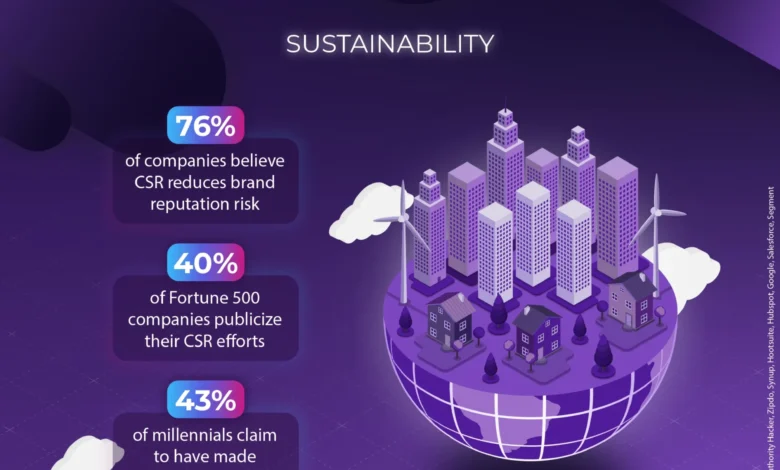
In the modern e-commerce era, sustainability has moved from the periphery of Corporate Social Responsibility (CSR) to the center of digital marketing strategy. Integrating sustainability is no longer an option but a crucial component of brand longevity. Consumers, particularly Gen Z and Millennials, are increasingly making purchasing decisions based on a brand’s environmental footprint and social values.

Communicating Ethical Practices
Digital channels such as social media, company blogs, and interactive video are now used to showcase eco-friendly product lifecycles. Rather than just selling a product, brands are telling the story of its origin. This includes highlighting sustainable sourcing, carbon-neutral shipping, and plastic-free packaging.
Technology for Traceability
A significant development in this area is the use of blockchain technology to provide "radical transparency." Blockchain allows consumers to track the journey of a product from the raw material stage to the final delivery. This level of traceability builds immense credibility and combats "greenwashing"—the practice of making misleading environmental claims.
The Circular Economy and Re-commerce
The rise of "re-commerce" (the sale of pre-owned goods) is another facet of the sustainability trend. Major retailers are now integrating trade-in programs and second-hand marketplaces into their primary digital storefronts. This not only appeals to eco-conscious consumers but also creates a new revenue stream in an inflationary economy.
The Shift Toward Conversational and Semantic Search
The way consumers look for information is undergoing its most significant change since the inception of the search engine. Intuitive and conversational searches are replacing traditional keyword-based queries. This shift is driven by the ubiquity of smart assistants—such as Siri, Alexa, and Google Assistant—and the integration of Large Language Models (LLMs) into search engines.

Voice Search and Natural Language
Voice search allows users to interact with the internet as they would with a human. Instead of typing "waterproof hiking boots," a user might ask, "What are the best waterproof hiking boots for a trip to the Pacific Northwest in October?" This requires marketers to pivot from keyword optimization to "Answer Engine Optimization" (AEO). Content must now be structured to answer specific questions and address the context of the query.
Semantic Search and Contextual Understanding
AI-driven assistants are becoming sophisticated enough to understand intent and context. They can anticipate user needs based on past behavior and current location. For marketers, this means that content must be high-quality and semantically rich. The focus is on "topics" rather than "keywords," ensuring that the brand is seen as an authority in a specific niche.
Short-Form Content and Immersive Media
The "attention economy" is the primary battlefield for modern marketers. With the average human attention span reportedly decreasing, short-form video content has emerged as the most effective tool for capturing interest and driving engagement.
The Dominance of "Snackable" Video
Platforms like TikTok, Instagram Reels, and YouTube Shorts have redefined content consumption. These platforms favor "snackable" content—videos ranging from 15 to 60 seconds that are high-energy, authentic, and often community-driven. Brands are moving away from high-production advertisements toward raw, "behind-the-scenes" content that feels more relatable to the viewer. Statistics show that short-form video has the highest Return on Investment (ROI) of any social media marketing strategy in 2024.

Augmented and Virtual Reality (AR/VR)
Beyond short videos, immersive content is bridging the gap between digital and physical shopping. Augmented Reality (AR) allows consumers to "try on" products or see how furniture looks in their homes via their smartphone cameras. This interactive experience significantly reduces return rates—a major cost for e-commerce businesses—and increases consumer confidence.
Hyper-Personalization Through Data Science
While personalization has been a marketing buzzword for years, we have now entered the era of "hyper-personalization." This strategy goes beyond addressing a customer by name in an email; it involves creating a unique, individualized experience for every user across every touchpoint.
Predictive Modeling and Machine Learning
Hyper-personalization relies on AI and machine learning to analyze vast amounts of data in real-time. This includes browsing history, purchase frequency, time spent on specific pages, and even geographical data. By using predictive modeling, brands can anticipate what a customer wants before the customer even searches for it.
The End of Third-Party Cookies
The transition to hyper-personalization is happening alongside the "cookieless future." As Google and other tech giants phase out third-party cookies, brands are shifting their focus to "first-party data"—information collected directly from their own customers. This has led to the rise of sophisticated Customer Data Platforms (CDPs) that centralize data to create a 360-degree view of the consumer.

Chronology of the Marketing Transformation (2020–2024)
To understand the current state of marketing, it is essential to look at the timeline of events that led to these trends:
- 2020-2021: The global pandemic accelerates e-commerce adoption by five years in a single year. Brands scramble to establish digital presences, leading to an explosion in online ad spend.
- 2022: Apple’s App Tracking Transparency (ATT) framework disrupts the advertising industry, making it harder for brands to track users across apps. The focus shifts to first-party data and retention.
- 2023: The "Generative AI Summer" begins with the mass adoption of tools like ChatGPT. Marketers begin experimenting with AI-generated copy and images, leading to initial concerns about ethics and quality.
- 2024: The industry matures into the "Responsible AI" and "Hyper-personalization" phase. Sustainability becomes a financial metric as much as a marketing one, driven by new ESG (Environmental, Social, and Governance) reporting requirements.
Impact and Implications for the Future
The convergence of these trends suggests a future where marketing is more integrated, ethical, and invisible. The brands that will thrive are those that view technology not just as a tool for efficiency, but as a medium for building deeper human connections.
The financial implications are clear: investments in marketing technology (MarTech) are expected to account for more than 30% of total marketing budgets by 2025. However, the human element remains irreplaceable. As AI takes over the technical execution of campaigns, the value of creative storytelling and ethical brand positioning will only increase.
In conclusion, the marketing landscape of 2024 is defined by a balance between high-tech capabilities and high-touch ethics. By embracing responsible AI, prioritizing sustainability, mastering conversational search, leveraging short-form content, and doubling down on hyper-personalization, e-commerce businesses can navigate the complexities of the modern market and build lasting loyalty with the 21st-century consumer.
Related posts: