YouTube Q3 2026 Financial Results Reveal Slower Ad Growth Alongside Surging Subscriptions and Connected TV Dominance

Alphabet’s third-quarter earnings report for 2026 highlights a complex yet resilient financial and operational landscape for YouTube, marked by moderating advertising growth balanced by robust gains in subscriptions, e-commerce integration, connected television (CTV) viewership, and the integration of generative artificial intelligence. While YouTube’s ad revenue growth experienced a minor deceleration compared to previous quarters, the platform continues to cement its status as a multifaceted digital media powerhouse. The financial disclosures point to structural shifts in how audiences consume video content, how small- and medium-sized businesses (SMBs) allocate their digital marketing budgets, and how creators leverage new monetization avenues such as affiliate commerce and advanced production tools.
Main Facts and Financial Performance
According to Alphabet’s official Q3 2026 financial release, YouTube generated $11.2 billion in advertising revenue for the quarter. This figure represents a 9% year-over-year increase, reflecting a slight slowdown when compared to the 13% growth rate reported during the second quarter of 2026. Despite the moderated pace of ad expansion, YouTube remains a primary growth engine for Alphabet, bolstered by diversification into subscription models, connected television monetization, and strategic retail partnerships.
Concurrently, YouTube’s subscription ecosystem has expanded significantly. The platform’s contribution helped drive an 11% year-over-year increase in Google’s overall subscription, platform, and device revenue categories. Driven primarily by YouTube Music and YouTube Premium, the combined subscriber count for these paid services has officially surpassed 150 million globally. This milestone represents a substantial 50% expansion from the 100 million subscriber threshold that YouTube achieved in early 2024. Industry analysts attribute this rapid scaling to aggressive bundling strategies, geographic expansion, and the shifting preferences of modern media consumers who increasingly view ad-free viewing and high-fidelity music streaming as essential digital utilities.
Chronology and Growth Trajectory of YouTube Subscriptions
The path to 150 million subscribers has been characterized by steady, strategic growth across multiple device ecosystems. In early 2024, YouTube publicly celebrated reaching its first major subscription milestone of 100 million paying users for its Music and Premium offerings. Over the subsequent two years, the platform focused heavily on converting free-tier viewers into paid subscribers by targeting specific high-engagement demographics.
A critical inflection point in this timeline occurred during Alphabet’s second-quarter earnings call in July 2026. Executives noted a marked surge in Premium sign-ups originating from connected TV (CTV) viewers. As linear cable television continues to lose market share to streaming alternatives, households are increasingly utilizing YouTube on living room displays. This behavioral shift not only drives ad impressions on the platform’s largest screens but also accelerates conversions to paid tiers as families seek uninterrupted viewing experiences on their home entertainment systems.
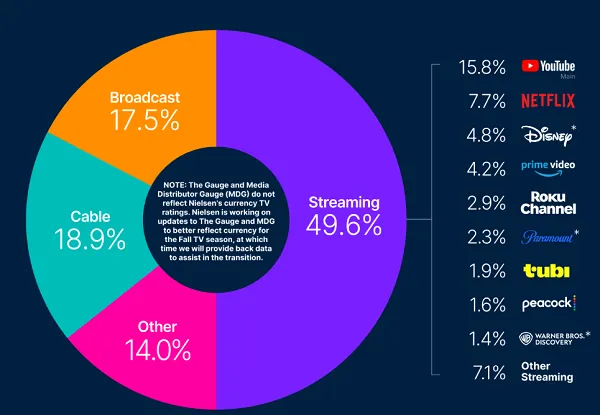
By August 2026, empirical data from Nielsen’s widely cited monthly media consumption report, The Gauge, officially positioned YouTube as the top streaming platform in the United States. This designation underscored YouTube’s transformation from a user-generated clip repository into a dominant, default television network for American households, setting the stage for the strong subscription and connected TV metrics reported at the close of the third quarter.
Connected TV, Living Room Dominance, and Advertising Dynamics
During the accompanying Q3 2026 earnings call, Google Chief Business Officer Philipp Schindler emphasized the growing financial importance of the Living Room—YouTube’s connected TV interface. Schindler revealed that the Living Room experience has evolved into a major revenue driver, accounting for more than one-third of YouTube’s total quarterly advertising revenue.
This metric illustrates a fundamental paradigm shift in digital advertising. Brands that traditionally allocated linear television budgets to broadcast and cable networks are redirecting those funds to YouTube’s CTV inventory, where they can achieve comparable reach paired with advanced digital targeting capabilities. Furthermore, Schindler highlighted continued strength in adoption rates among small- and medium-sized businesses (SMBs) utilizing Google’s Demand Gen advertising products, indicating that YouTube’s ad ecosystem remains attractive to advertisers of all scales despite the macroeconomic headwinds that typically influence marketing spend.
Creator Economy, E-Commerce Integration, and the Amazon Partnership

Beyond advertising and subscriptions, YouTube’s economic footprint relies heavily on its vast creator network. Schindler confirmed during the earnings briefing that the YouTube Partner Program now encompasses more than three million active creators globally. To enhance the financial viability of these creators, YouTube has systematically introduced new e-commerce and affiliate monetization tools.
The platform’s e-commerce momentum is particularly pronounced, with more than 1.3 million channels currently enrolled in YouTube’s shopping program. This infrastructural foundation was significantly reinforced by a major announcement regarding a strategic affiliate partnership with retail giant Amazon. Under this initiative, U.S.-based creators are granted the ability to seamlessly tag Amazon products directly within their long-form videos, Shorts, and livestreams.
This collaboration bridges the gap between content creation and direct consumer transactions, allowing creators to earn commissions while providing viewers with frictionless purchasing pathways. Analysts view this move as a direct challenge to social commerce competitors like TikTok and Instagram, positioning YouTube as a premier destination for product discovery and transactional social media.
Generative Artificial Intelligence and Creative Tool Integration
Artificial intelligence has become a core pillar of YouTube’s product development strategy, aimed at both optimizing advertising performance and lowering the technical barriers to content creation. Alphabet executives underscored that AI-driven enhancements are directly influencing user engagement and creative output across the platform.
Schindler noted the sheer volume of content flowing through the platform, stating that users upload more than 20 million videos every day. To manage and enhance this influx, YouTube has deployed a suite of generative AI tools integrated directly into YouTube Studio, alongside conversational editing assistants designed for Shorts and the standalone YouTube Create application.
This technological rollout began earlier in the year. In March 2026, YouTube launched an AI-powered "reimagine" feature for Shorts, allowing viewers to generate alternative video variations inspired by another creator’s original clip. This was followed by testing phases for an "Extend with AI" capability, which empowers creators to automatically generate alternative endings for their short-form videos.
These incremental rollouts are demonstrably shifting user behavior. Last week, YouTube published internal data indicating that 61% of content creators who posted videos on the application over the preceding 12 months expressed keen interest in utilizing AI tools to seamlessly insert themselves into video content or otherwise alter their productions.
Broader Impact and Market Implications
The Q3 2026 financial and operational disclosures from Alphabet present a comprehensive picture of a mature technology platform successfully navigating market maturation. While the deceleration of advertising revenue growth from 13% in Q2 to 9% in Q3 suggests that the core digital ad market is facing normal cyclical adjustments, YouTube’s strategic diversification cushions the impact.
The robust scaling of YouTube Music and Premium to 150 million subscribers demonstrates that consumers are willing to pay for premium digital experiences, reducing the platform’s absolute reliance on advertising cycles. Simultaneously, the dominance of the Living Room connected TV experience validates YouTube’s long-term bet on bridging the gap between digital video and traditional living room entertainment—a thesis reinforced by Nielsen’s market data.
Furthermore, the integration of retail commerce through the Amazon partnership and the aggressive adoption of generative AI tools signal a future where YouTube functions simultaneously as an entertainment network, a search engine, an e-commerce marketplace, and a creative studio. While challenges remain—particularly regarding content moderation and the industry-wide influx of low-quality automated media, often referred to as "AI slop"—YouTube’s current data indicates that its targeted, utility-driven implementation of artificial intelligence is successfully resonating with both creators and audiences. As the platform moves toward the final quarter of the year, its ability to harmonize ad sales, subscription growth, and creator monetization will remain a vital barometer for the broader digital media economy.