Jennifer Hudson’s Anthem Performance at World Cup Final Ignites Debate on Host Nation Protocol and FIFA’s U.S. Market Strategy

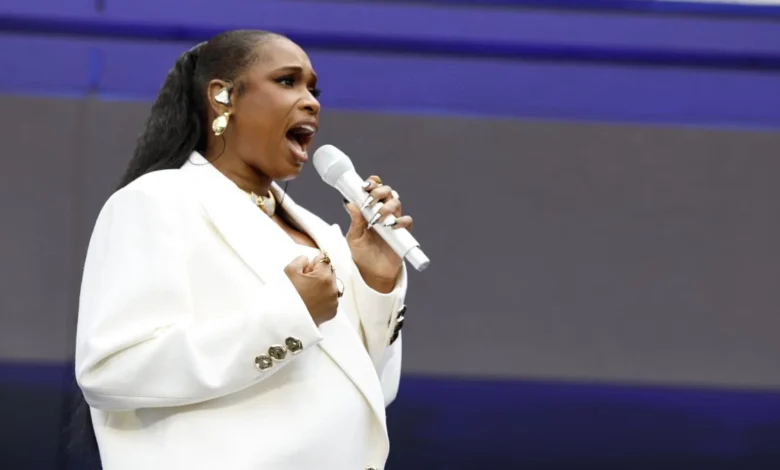
Despite the U.S. Men’s National Team not reaching the final stages of the FIFA World Cup, "The Star-Spangled Banner" is set to resonate through the New York New Jersey Stadium, more commonly known as MetLife Stadium, before the championship match. On July 14, FIFA officially announced that Grammy-winning artist and acclaimed talk show host Jennifer Hudson would deliver a "special rendition" of the American national anthem ahead of the World Cup final on Sunday, July 19. This revelation immediately sparked a wave of confusion and debate among global soccer fans: why would the U.S. anthem be performed at a game where the United States is not competing?
The decision, FIFA clarified, is less about the competing nations – Spain and Argentina – and more about the geographic location of the pinnacle event. As the final match of the expanded 48-team tournament is being held on American soil, Hudson’s performance is positioned as a tribute to the host nation, forming a part of the elaborate pre-game festivities. This event, scheduled for 1:30 p.m. ET, 90 minutes prior to the 3 p.m. ET kickoff, is designed to celebrate the tournament’s journey across its three host countries: Canada, Mexico, and the United States.
The Rationale Behind the Performance and Public Reaction
Jennifer Hudson’s performance of "The Star-Spangled Banner" is slated as a distinct segment within FIFA’s pre-game ceremony. This ceremony, separate from the traditional pre-match protocol, aims to acknowledge the contributions of the host nations for the monumental 2026 tournament. In this context, the U.S. anthem is presented as a symbolic gesture, representing the country hosting the final. Following Hudson’s performance, the customary international soccer protocol will resume, with both Spain and Argentina having their respective national anthems played before the first whistle.
However, this explanation has not entirely quelled the disquiet among segments of the global soccer community. Given that the United States is co-hosting the tournament with Canada and Mexico, many fans have questioned the apparent exclusivity of the U.S. anthem. Social media platforms quickly became a forum for these discussions, with users expressing sentiments ranging from bewilderment to outright criticism. Common refrains included queries about why the national anthems of Canada and Mexico would not also be performed if the rationale was to honor host nations, particularly since the tournament structure emphasizes shared hosting duties. Critics argue that this singular focus on the U.S. anthem, while understandable from a commercial standpoint, overlooks the spirit of collaborative hosting.
A Look at World Cup Ceremonies: Evolution and Precedent
World Cup ceremonies have evolved significantly over the decades, transforming from relatively simple affairs into elaborate, globally televised spectacles. Traditionally, pre-match ceremonies for the final involve the entrance of the teams, the playing of the competing nations’ anthems, and a brief presentation of the trophy. However, recent tournaments, and particularly this edition, have seen an increased integration of entertainment elements aimed at a broader, non-traditional soccer audience.
While rare, the performance of the host nation’s anthem at a final not featuring their team is not entirely unprecedented. The U.S. last hosted the men’s World Cup in 1994. During the closing ceremony before the final match between Brazil and Italy at the Rose Bowl in Pasadena, California, renowned saxophonist Kenny G performed "The Star-Spangled Banner." This historical parallel provides a precedent for FIFA’s current decision, suggesting a continuity in acknowledging the host nation, especially when that nation is the United States, a key market for the sport’s growth.
The 1994 tournament was itself a landmark event, marking a significant push by FIFA to cultivate soccer in the U.S. It laid the groundwork for the establishment of Major League Soccer (MLS) and significantly boosted the sport’s profile. The inclusion of the U.S. anthem then, as now, can be seen as part of a larger strategy to engage the local audience and underscore the host country’s role in delivering the tournament.
The Grand Spectacle: Beyond the Anthem
Jennifer Hudson’s performance is merely one component of an extensive entertainment lineup planned for the final. The pre-game event is set to be a star-studded affair, headlined by rapper Post Malone. Other notable artists scheduled to perform include Robbie Williams, Nicole Scherzinger, and Laura Pausini. Additionally, popular streamer IShowSpeed is listed among the participants, reflecting FIFA’s conscious effort to tap into diverse demographics and online youth culture. Further adding to the allure, Hollywood icon Tom Cruise is slated to make a "special appearance," though the specifics of his involvement remain under wraps.
The most significant departure from traditional World Cup protocol, and a major point of contention among purists, is the introduction of an unprecedented World Cup halftime show. This 11-minute performance, curated by Coldplay frontman Chris Martin, will feature an eclectic mix of global superstars including Madonna, Shakira, BTS, and Justin Bieber. The lineup also includes Burna Boy, conductor Gustavo Dudamel, the PS22 Chorus featuring Coldplay, and beloved characters from Sesame Street and The Muppets. This elaborate production is not just for entertainment; it supports the FIFA Global Citizen Education Fund, an initiative dedicated to expanding access to education and soccer programs for children worldwide.
"Americanization" of the World Cup and Fan Criticism
The introduction of a full-fledged halftime show, akin to those seen in American sports leagues like the NFL’s Super Bowl, has drawn sharp criticism from many traditional soccer fans. These critics view it as a deliberate attempt to "Americanize" the World Cup, fundamentally altering its unique cultural identity by importing elements from U.S. sports entertainment. The sentiment is that such extended breaks and entertainment segments disrupt the flow and purity of the game, prioritizing commercial spectacle over sporting integrity.
This criticism is not new to the current tournament. FIFA has already faced complaints regarding entertainment-heavy opening ceremonies and the controversial "hydration breaks" introduced during matches. While ostensibly for player welfare in hot conditions, some viewers and pundits have speculated that these breaks are strategically utilized to create additional television advertising opportunities, further commercializing the sport. These perceived intrusions into the game’s rhythm have fueled concerns about the erosion of traditional soccer culture in pursuit of broader commercial appeal.
FIFA’s Commercial Imperative: The American Market
The extensive entertainment roster and the focus on the U.S. anthem become clearer when viewed through the lens of FIFA’s overarching commercial strategy. The global governing body of football anticipates generating a record $13 billion during the current World Cup cycle, a significant portion of which is expected to come from the burgeoning North American market. There is immense financial incentive for FIFA to maximize engagement with American viewers, including those who do not typically follow soccer.
Evidence suggests this strategy is yielding results. Fox’s group-stage broadcasts of the tournament averaged over 5 million viewers, nearly doubling the audience for the same stage in 2022. Furthermore, matches involving the U.S. team attracted substantially larger Spanish-language audiences on Telemundo and Peacock compared to the previous World Cup, underscoring the diverse and growing interest in soccer across the U.S.
The United States represents a colossal untapped market for FIFA. Unlike many parts of the world where soccer is the undisputed national sport, the U.S. has a crowded sports landscape dominated by American football, basketball, and baseball. For FIFA, making inroads here means securing long-term revenue streams, expanding its global footprint, and cementing soccer’s status as a premier sport. The elaborate pre-game and halftime shows, along with symbolic gestures like the anthem performance, are meticulously calculated moves to capture the attention of this crucial demographic. They are designed to create a "must-watch" event that transcends traditional soccer fandom, appealing to a broader entertainment-seeking audience accustomed to high-production value events.
The 2026 World Cup: A New Era of Global Hosting
The upcoming 2026 World Cup, which will be jointly hosted by the United States, Canada, and Mexico, marks a historic departure from single-nation hosting. This unprecedented three-nation model will see 104 matches played across 16 cities in North America, making it the largest World Cup in history. The scale of this undertaking inherently presents new challenges and opportunities for FIFA in terms of logistics, cultural integration, and commercialization.
The decision to feature the U.S. anthem prominently at the final, despite the shared hosting duties, could be seen as a strategic test case for how FIFA intends to navigate multi-host tournaments. While some argue it’s an oversight to exclude Canadian and Mexican anthems from such a prominent moment, others might view it as FIFA leveraging the biggest market to maximize global viewership and revenue for the grand finale. The final, being held in the heart of the New York metropolitan area, a global media and financial hub, inherently carries a significant weight for FIFA’s commercial ambitions.
The broader implications of these entertainment-driven strategies extend to the future identity of the World Cup. As FIFA seeks to balance its traditional appeal to soccer purists with the need to attract new, diverse audiences and secure massive revenue, the tournament’s character may continue to evolve. This shift raises questions about how future host nations, particularly those in less commercially dominant regions, will be represented and how the essence of the "beautiful game" will be preserved amidst increasing commercial pressures.
Watching the World Cup Final and Ceremonies
For fans eager to witness the culmination of the tournament and the accompanying spectacle, the World Cup final between Spain and Argentina will take place on Sunday, July 19, at New York New Jersey Stadium in East Rutherford, New Jersey.
The closing ceremony, featuring Jennifer Hudson’s performance and the other celebrity acts, is scheduled to commence at 1:30 p.m. ET. Kickoff for the match itself is set for 3 p.m. ET.
English-language coverage of the event will be broadcast on Fox, with streaming available through Fox One and the Fox Sports app. Spanish-language coverage will be provided by Telemundo and Peacock, with Peacock confirming live streaming of all 104 matches, including the final, in Spanish. The accessibility across multiple platforms underscores FIFA’s commitment to reaching the widest possible audience in the crucial North American market.
In this context, Jennifer Hudson’s performance of "The Star-Spangled Banner" transcends a simple patriotic gesture. It becomes a highly visible component of FIFA’s meticulously crafted strategy to cement soccer’s place in the American sporting landscape, leveraging the spectacle to attract new fans and unlock unprecedented commercial value. The American team may be out of the tournament, but the American audience, and the immense financial potential it represents, are undeniably central to the game FIFA is playing.