The Illusion of Normalcy: How Modern Cyber Threats Exploit Everyday Trust and Artificial Intelligence

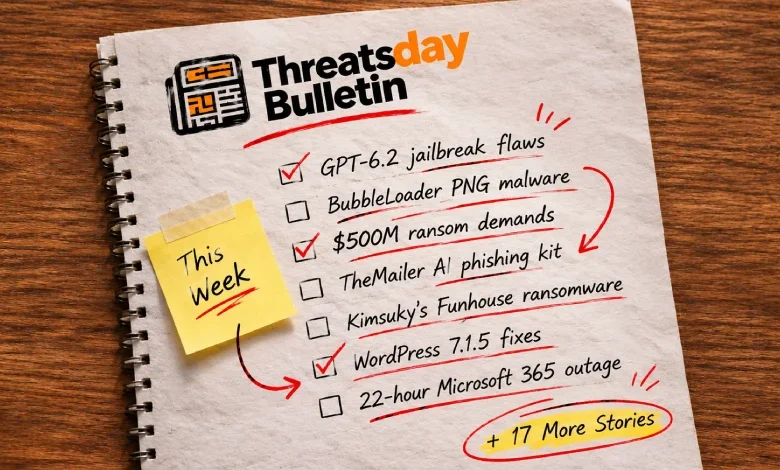
The digital threat landscape continues to evolve in sophistication, increasingly weaponizing the mundane elements of daily online activity to compromise corporate and personal security. According to recent threat intelligence reports analyzed throughout this week, cybercriminals are shifting their focus away from obvious, high-tech intrusions and toward the subtle manipulation of routine digital interactions. Whether through fraudulent job offers, routine service outage notifications, or familiar application interfaces, modern threat actors find that the path of least resistance relies on blending in rather than standing out.
This strategic pivot highlights a fundamental vulnerability in both human psychology and modern enterprise infrastructure: the assumption of safety in familiarity. Security analysts emphasize that when a communication mimics expected workflows—such as human resources onboarding documentation or IT infrastructure alerts—the cognitive friction required to trigger skepticism is significantly reduced. This week’s developments underscore a broader, more systemic challenge for cybersecurity professionals as they grapple with attacks that leverage ordinary things to execute extraordinary breaches, steal sensitive data, spread sophisticated malware, and harvest unauthorized access credentials.
The Integration of Artificial Intelligence into the Cybercriminal Playbook
Beyond the reliance on social engineering through familiar scenarios, the operational mechanics of cyberattacks are undergoing a profound transformation driven by artificial intelligence. Threat intelligence researchers have observed a marked increase in the weaponization of generative AI and machine learning models by malicious actors, significantly lowering the barrier to entry for complex operations while amplifying their scale and precision.
One of the most concerning developments involves the management and monetization of stolen enterprise data. Historically, exfiltrated databases and corporate records presented significant logistical challenges for cybercriminals, requiring manual sorting, filtering, and valuation to find high-value targets. Today, threat actors are deploying AI-driven search capabilities that index stolen data repositories with the efficiency of modern e-commerce search engines. This allows malicious actors to query vast amounts of proprietary information, intellectual property, and personally identifiable information (PII) as easily as browsing a shopping catalog, accelerating the monetization phase of a cyberattack.
Furthermore, AI is radically altering the efficacy of phishing campaigns. Adversaries are no longer reliant on poorly translated, obviously fraudulent emails laden with grammatical errors. Instead, they utilize large language models to iteratively test, refine, and rewrite phishing templates against simulated security filters. These AI-optimized social engineering payloads are dynamically tailored to specific organizational structures, mimicking the exact tone, terminology, and stylistic nuances of internal corporate communications.
Ironically, while malicious actors successfully exploit AI to bypass security controls, cybersecurity researchers continue to uncover fundamental safety gaps and architectural vulnerabilities within powerful artificial intelligence systems themselves. These dual-use dilemmas demonstrate that the rapid deployment of AI technologies across both defensive and offensive domains has outpaced the establishment of comprehensive governance and hardening standards.
The Persistence of Legacy Vulnerabilities and Systemic Blind Spots
Even as artificial intelligence and novel social engineering tactics dominate industry headlines, the cybersecurity community warns that foundational vulnerabilities remain largely unaddressed. The threat landscape is characterized not only by cutting-edge innovations but also by the stubborn persistence of legacy security failures that continue to plague organizations of all sizes.
Third-party vendor risk remains a primary vector for catastrophic enterprise breaches. As organizations increasingly outsource specialized functions to cloud providers, software-as-a-service (SaaS) vendors, and external contractors, the digital supply chain expands exponentially. Attackers routinely target the weakest links in this interconnected ecosystem, executing supply chain compromises that grant them stealthy, long-term access to downstream enterprise networks. In many instances, these breaches persist undetected for years, allowing malicious actors to conduct prolonged espionage, map internal infrastructures, and exfiltrate sensitive data without triggering standard security alerts.
Simultaneously, ransomware operations continue to evolve, transitioning from blunt-force encryption attacks to multi-extortion campaigns that combine operational disruption with the threat of public data exposure. Compounding these challenges is the perpetual lag in patch management. Despite the availability of security fixes and software updates issued by vendors, organizations frequently struggle to inventory assets and deploy patches rapidly enough to outpace active exploitation campaigns by sophisticated threat groups.
A Chronology of Evolving Threat Vectors
To understand the trajectory of modern cybersecurity incidents, industry analysts trace a clear evolution in how attacks are conceptualized and executed over typical reporting cycles:
Phase One: Reconnaissance and Preparation
Threat actors conduct extensive open-source intelligence (OSINT) gathering, mapping corporate hierarchies, identifying third-party software dependencies, and leveraging AI models to draft targeted social engineering lures tailored to specific industry verticals.
Phase Two: Initial Access via Familiar Interfaces
Rather than deploying noisy malware payloads directly, attackers initiate breaches using trusted pathways. This includes compromised valid credentials obtained via infostealer malware, deceptive job offers targeting technology professionals on recruitment platforms, or notifications mimicking routine IT service disruptions.
Phase Three: Lateral Movement and Persistence
Once inside a network, adversaries prioritize stealth. They leverage legitimate administrative tools (often referred to as "living off the land" techniques) to move laterally through the enterprise, establishing redundant access channels and integrating into third-party vendor relationships to evade detection.
Phase Four: Data Exfiltration and Monetization
Using advanced AI-indexed search tools, threat actors rapidly identify and catalog high-value data assets, intellectual property, and financial records. This data is then leveraged for extortion, sold on illicit underground forums, or utilized in secondary targeted attacks.
Phase Five: Disruption and Extortion
In cases involving ransomware or destructive payloads, adversaries execute the final phase of their operation, locking critical infrastructure and demanding substantial financial remuneration while applying public pressure through dedicated leak sites.
Expert Analysis: Implications for Enterprise Defense
Security researchers and industry analysts stress that the merging of clever social engineering with painfully simple administrative oversights creates a complex threat matrix that traditional perimeter-defense models can no longer adequately address. The prevailing consensus among incident responders is that organizations must transition from a posture of absolute trust to one of continuous verification, often encapsulated by Zero Trust Architecture (ZTA) principles.
The implications for enterprise security teams are multifaceted. First, employee security awareness training must evolve beyond basic phishing recognition. Because modern attacks utilize highly contextualized, AI-generated communications that mimic legitimate business processes, training programs must incorporate behavioral observation and advanced threat simulation that reflect current adversary tactics.
Second, third-party risk management (TPRM) requires rigorous, ongoing auditing rather than periodic, point-in-time compliance assessments. Organizations must maintain exhaustive inventories of their digital supply chains and enforce strict identity and access management (IAM) controls, including mandatory phishing-resistant multi-factor authentication (MFA) across all internal and external vendor touchpoints.
Finally, security operations centers (SOCs) must increasingly rely on behavioral analytics and automated threat hunting. Because attackers deliberately blend in with normal administrative traffic and utilize trusted tools, static signature-based detection mechanisms are insufficient. Identifying subtle anomalies—such as unusual data querying patterns or unexpected lateral movement via legitimate service accounts—remains the most effective strategy for intercepting threats before they culminate in full-scale operational disruption.
Looking Ahead: The Burdens of the Everyday
As the cybersecurity industry reflects on the cumulative trends of recent weeks, the overarching lesson is that major security incidents rarely stem from Hollywood-style cyber warfare; rather, they originate from the small, overlooked details of everyday digital operations. The convergence of artificial intelligence, sophisticated social engineering, and persistent third-party vulnerabilities ensures that the threat landscape will remain highly dynamic.
Cybersecurity professionals and enterprise leaders are advised to maintain vigilance not only over high-profile technological breakthroughs but also over the mundane, unglamorous aspects of administrative hygiene. Patch management, credential hygiene, continuous third-party oversight, and rigorous employee skepticism regarding routine digital communications remain the bedrock of resilient defense strategies. In an era where attackers continuously weaponize normalcy, mastering the security of the ordinary is the ultimate imperative for safeguarding the digital enterprise.
Related posts: