The Great Jones Dilemma: A Case Study in Missed Authority
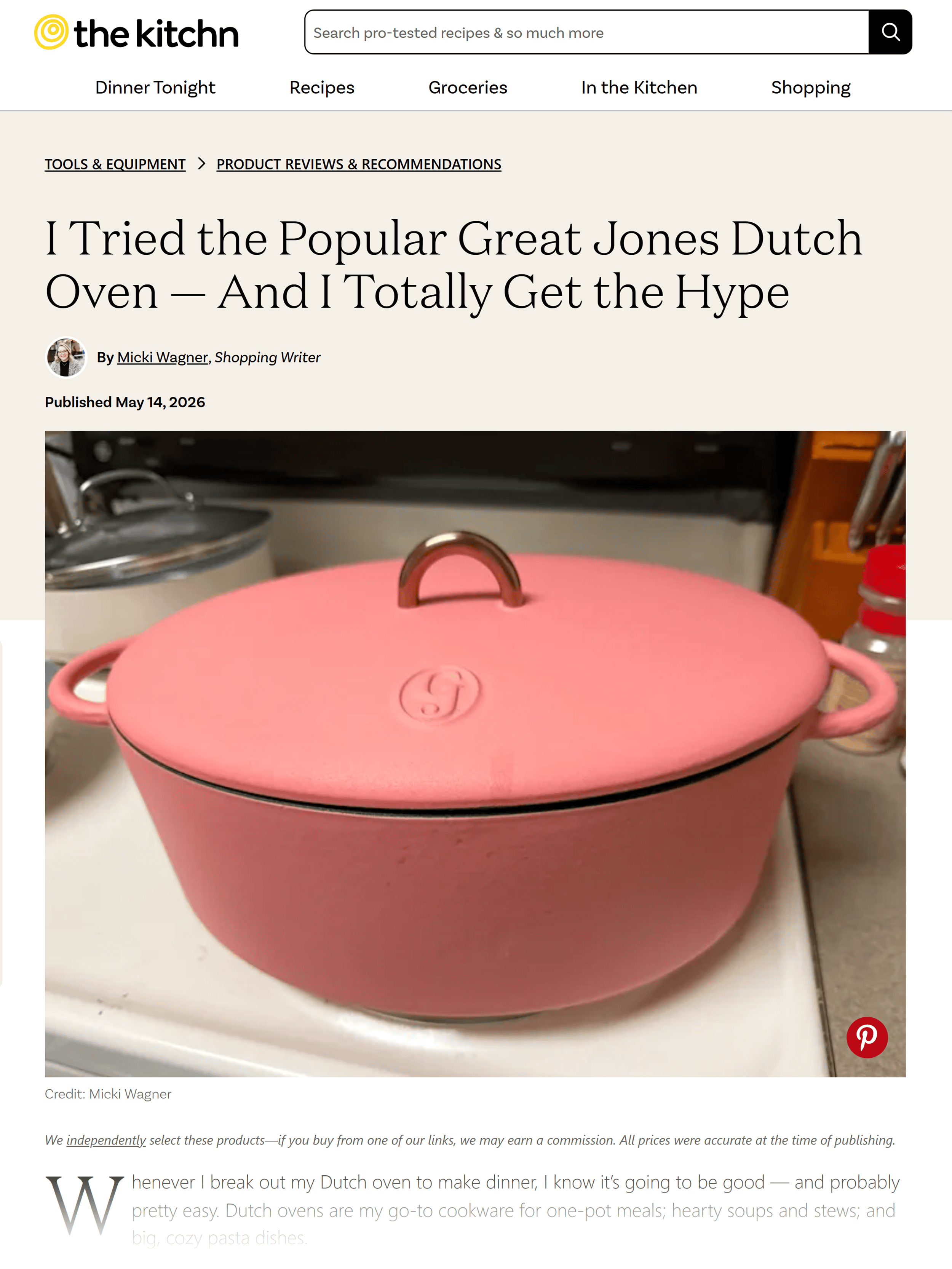
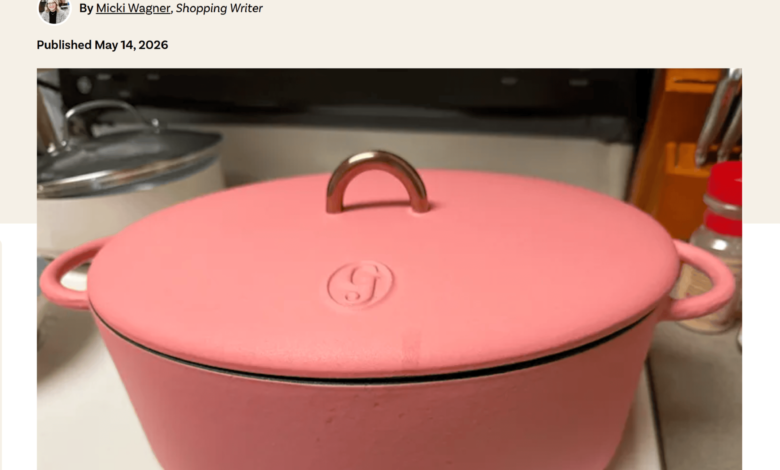
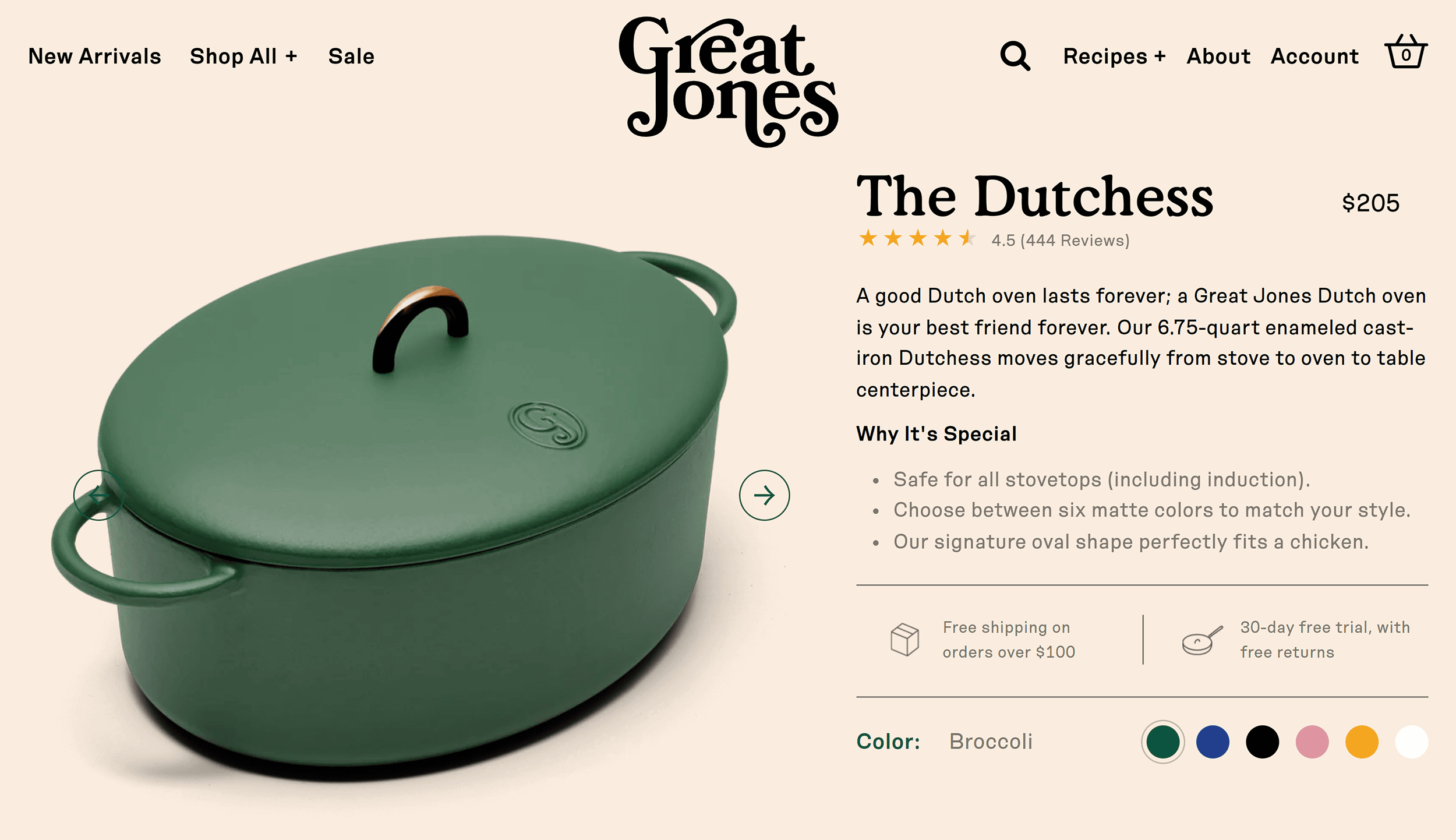
Consider Great Jones, a contemporary kitchenware company celebrated for its aesthetically pleasing and functional products. Their flagship Dutch oven, affectionately named "The Dutchess," embodies design excellence and practical utility. It consistently garners glowing reviews and has been prominently featured in an array of prestigious lifestyle and culinary publications, including Vogue, The New York Times, Bon Appétit, and The Kitchn. Such endorsements typically signal robust brand health and market recognition.
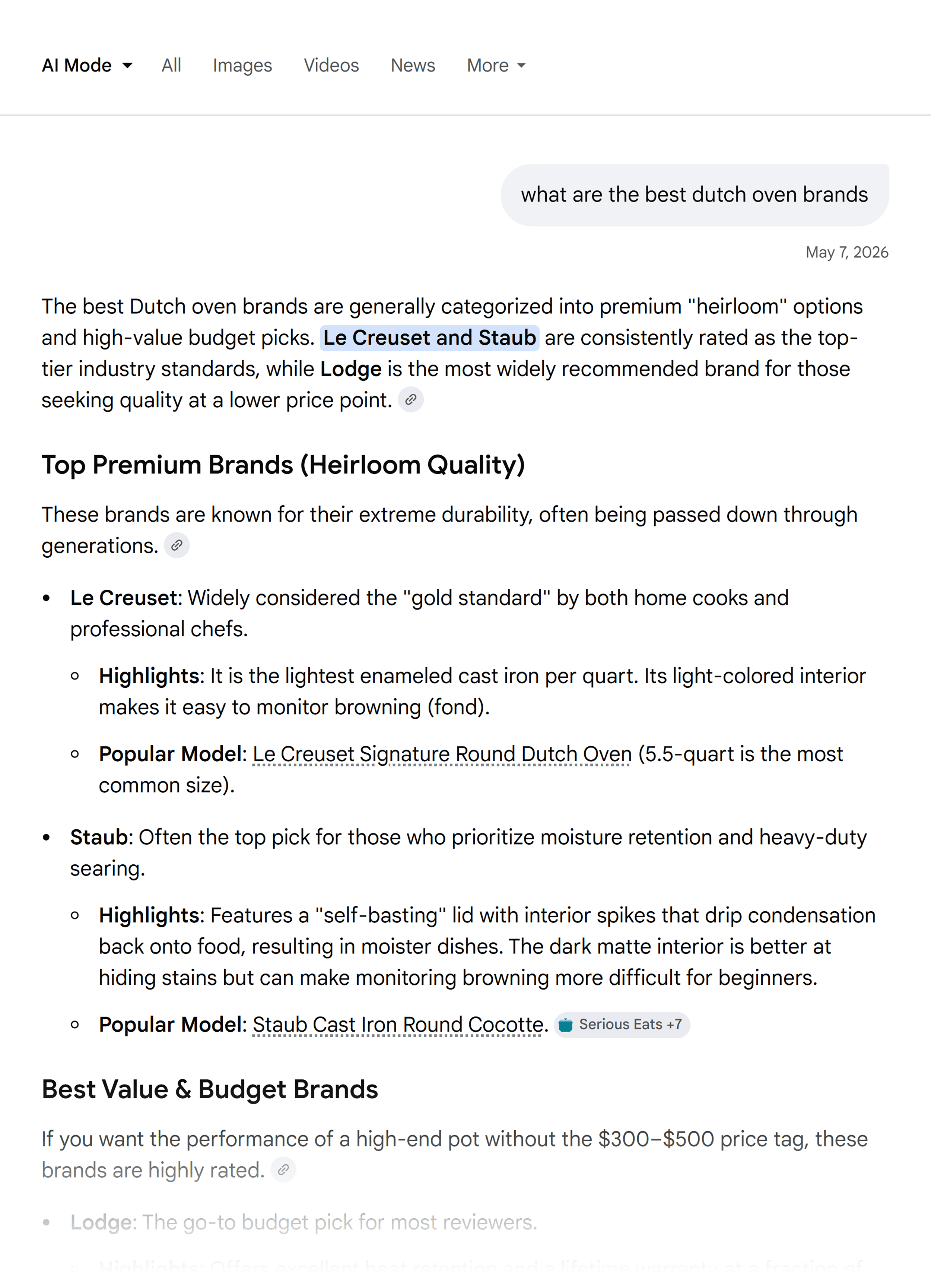
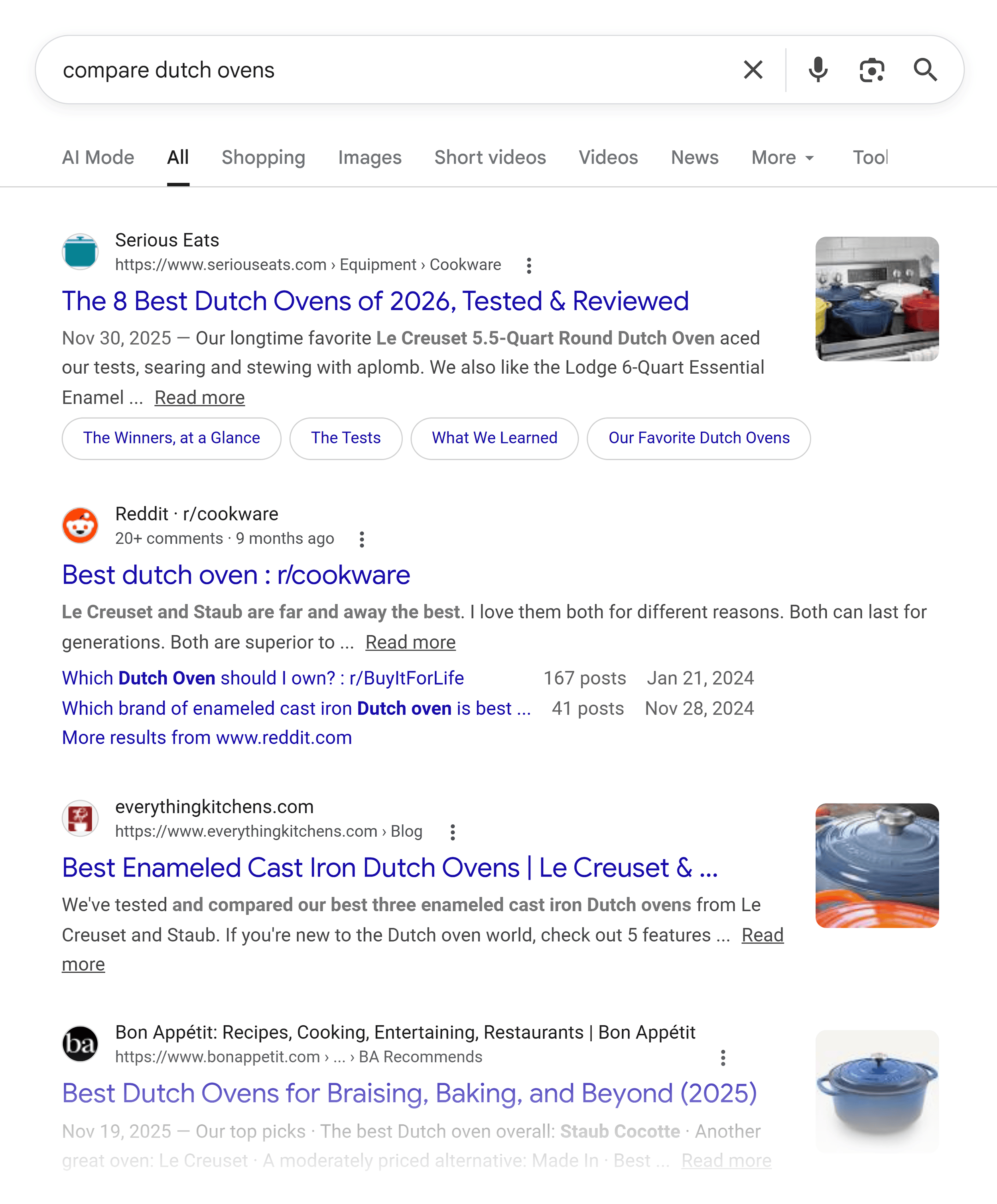
However, a closer examination reveals a significant disconnect in its digital footprint. Despite widespread positive press and a beloved product, a simple search query like "best Dutch ovens" on Google or a request for recommendations from an LLM rarely yields Great Jones among the top results. This stark contrast highlights a fundamental challenge: while Great Jones has successfully cultivated brand awareness and product appeal, it has yet to establish comprehensive topical authority around Dutch ovens. The problem isn’t a lack of content or positive sentiment; rather, it’s the absence of a consistent, deliberate pattern—a positive framing that unequivocally links the Great Jones brand to the topic of Dutch ovens across its own digital properties and third-party platforms. Without this strategic reinforcement, search engines and AI algorithms struggle to confidently make the connection, defaulting instead to brands that have built stronger, more consistent topical signals. This scenario is not unique to Great Jones; many brands across various sectors find themselves facing a similar "authority gap," a vulnerability that the rise of AI search has only made more apparent.
Understanding Topical Authority in the AI Era
Topical authority refers to a website’s earned reputation for deep expertise and comprehensive coverage on a specific subject. It is forged when a brand and its core topics appear together consistently and positively across a spectrum of trusted sources utilized by consumers, search engines, and LLMs. Think of iconic brand-topic associations: Adobe with creative software, Nike with athletic footwear, or HubSpot with inbound marketing. These connections are not accidental; they are the cumulative result of sustained, strategic efforts to link the brand to its chosen niche through a consistent message delivered across diverse channels.
Historically, topical authority was largely defined by the sheer volume and breadth of content a site published on a subject. The prevailing wisdom was: publish extensively, and you will own the topic. However, the advent of sophisticated AI and evolving search algorithms has shifted this paradigm. As noted by industry experts like Amanda Milligan, Content and Growth Manager at Semrush, today’s algorithms demand more than mere coverage. They seek a clear, defensible point of view (POV) on the topic, backed by verifiable external evidence. This means brands must not only demonstrate knowledge but also a unique perspective and proof of their expertise beyond their owned channels.
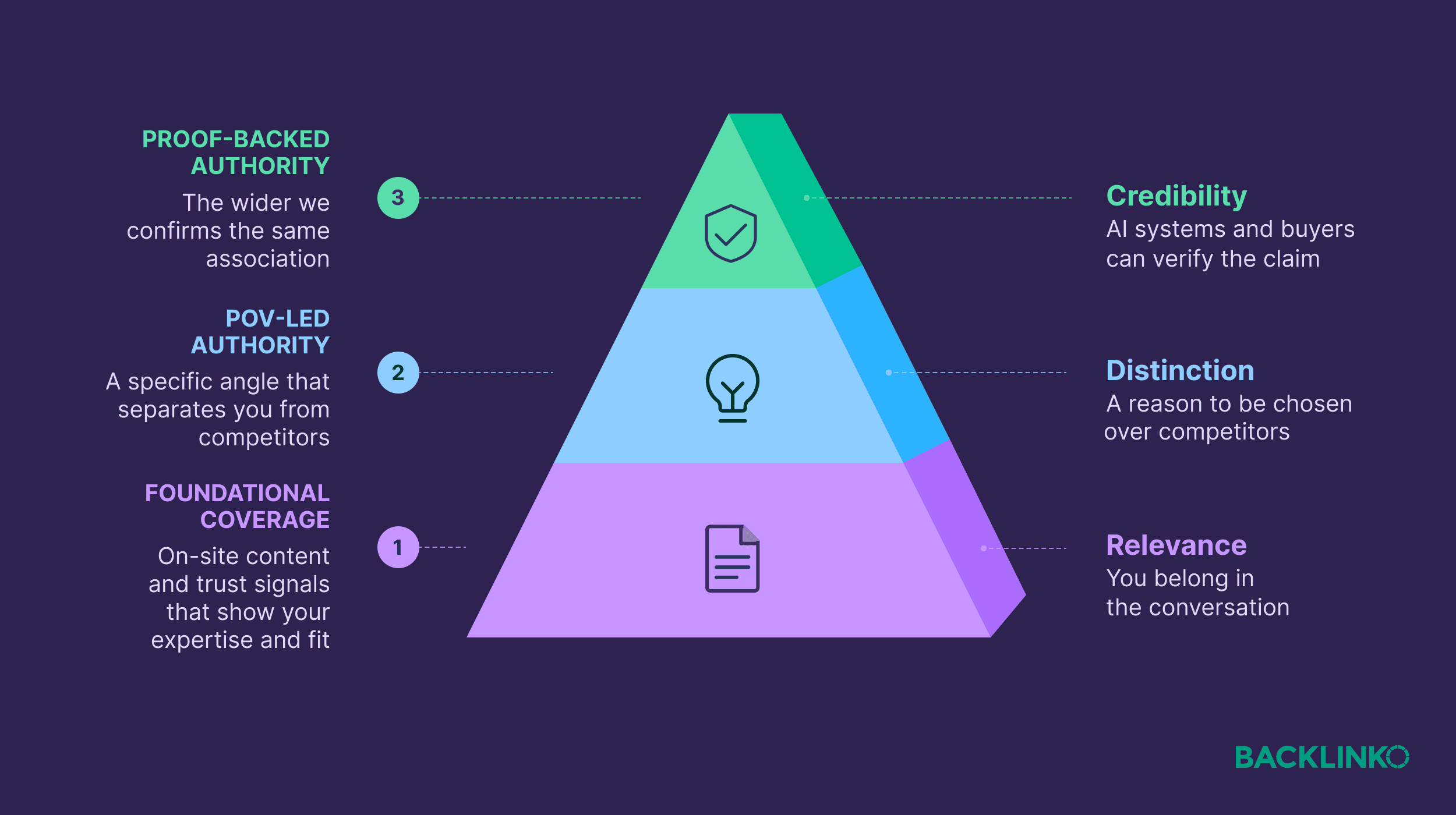
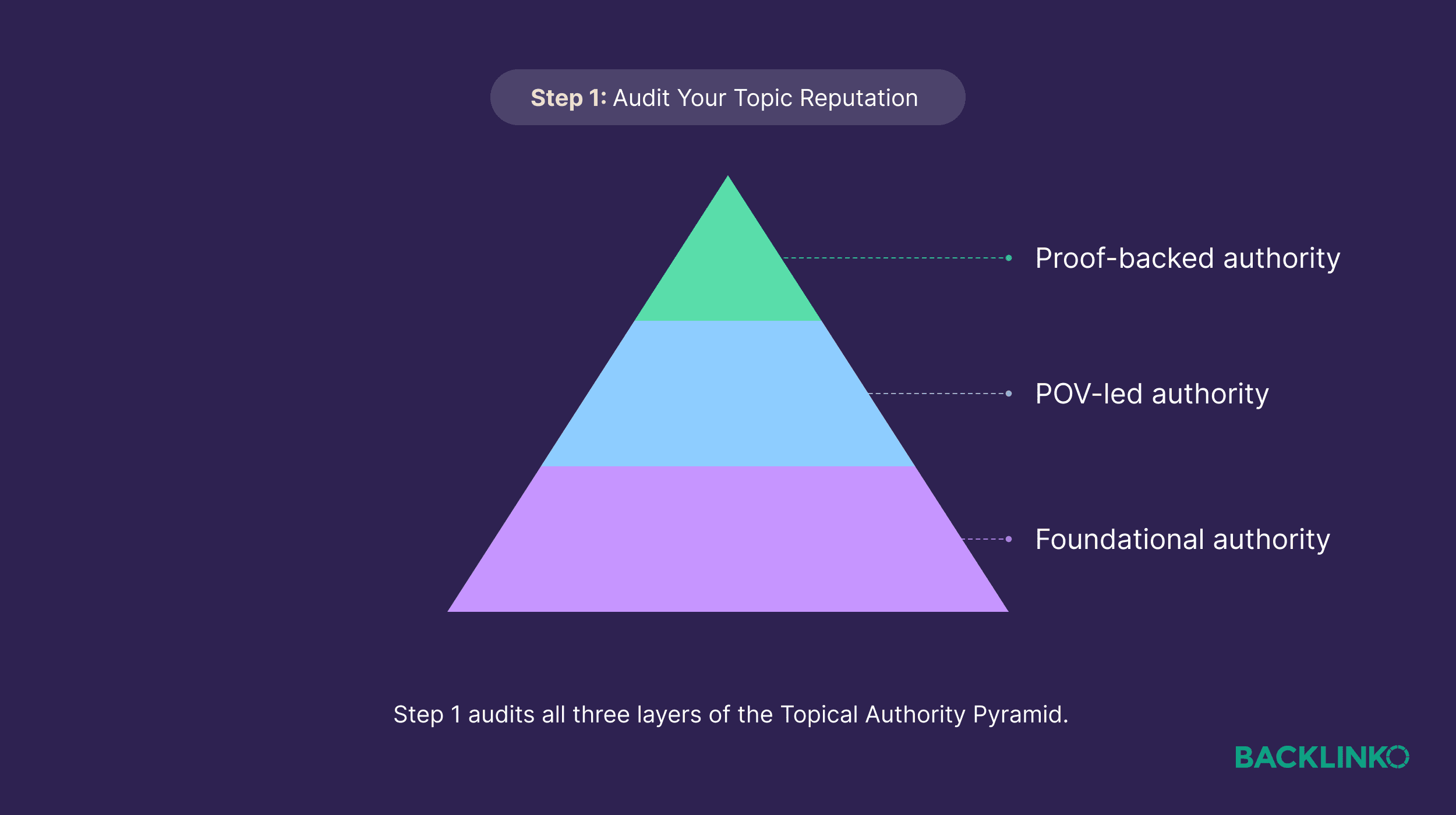
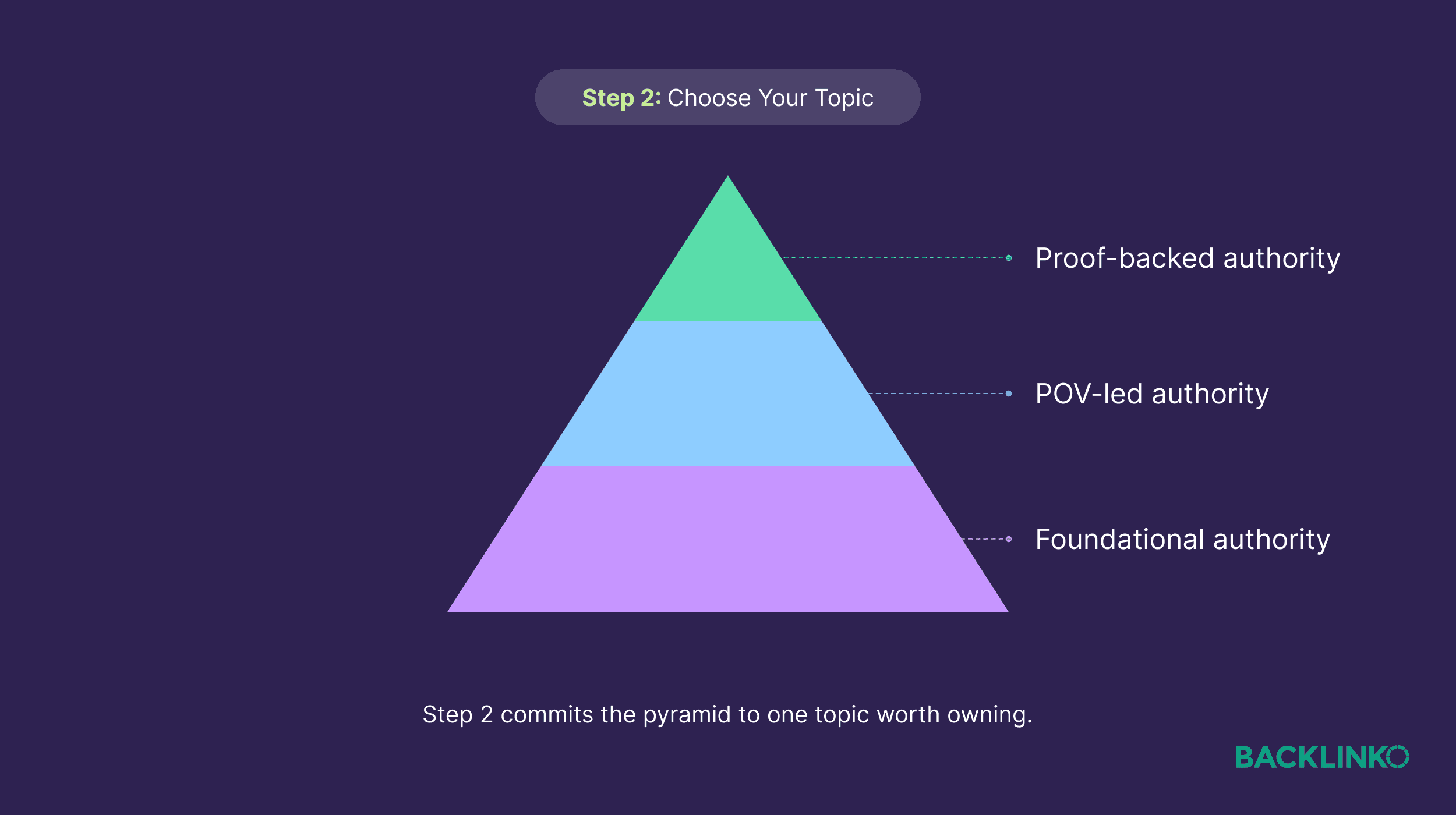
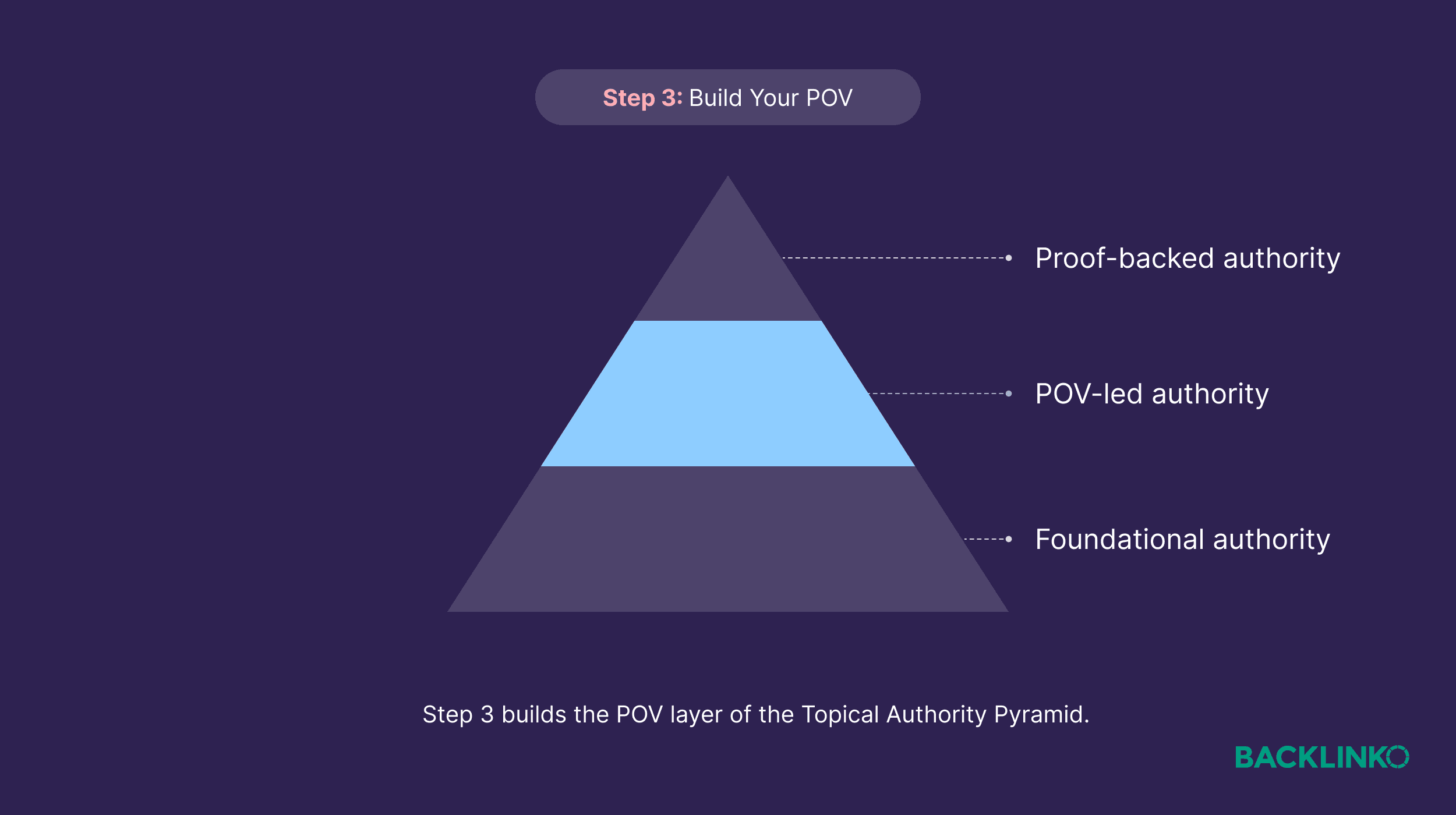
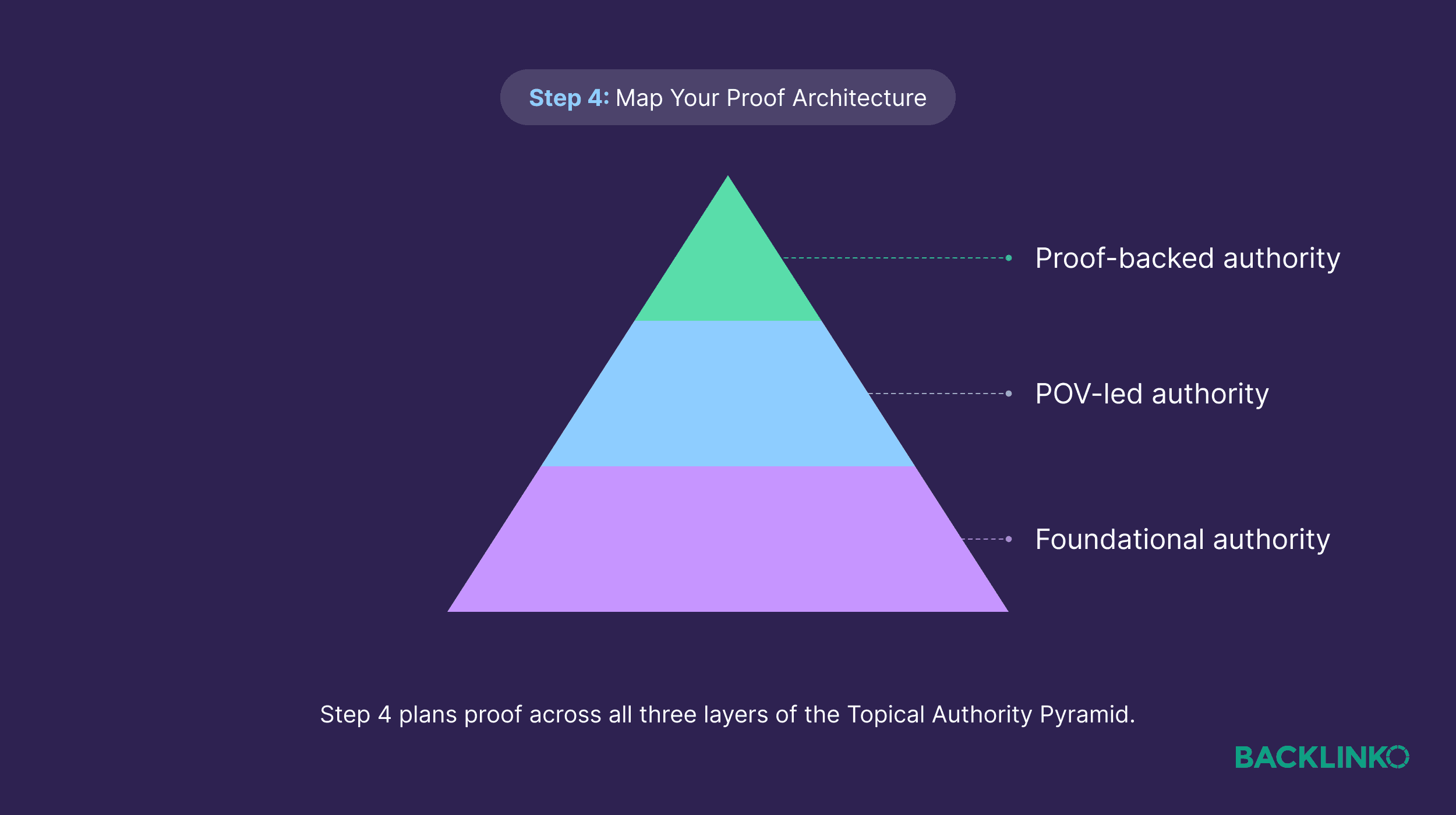
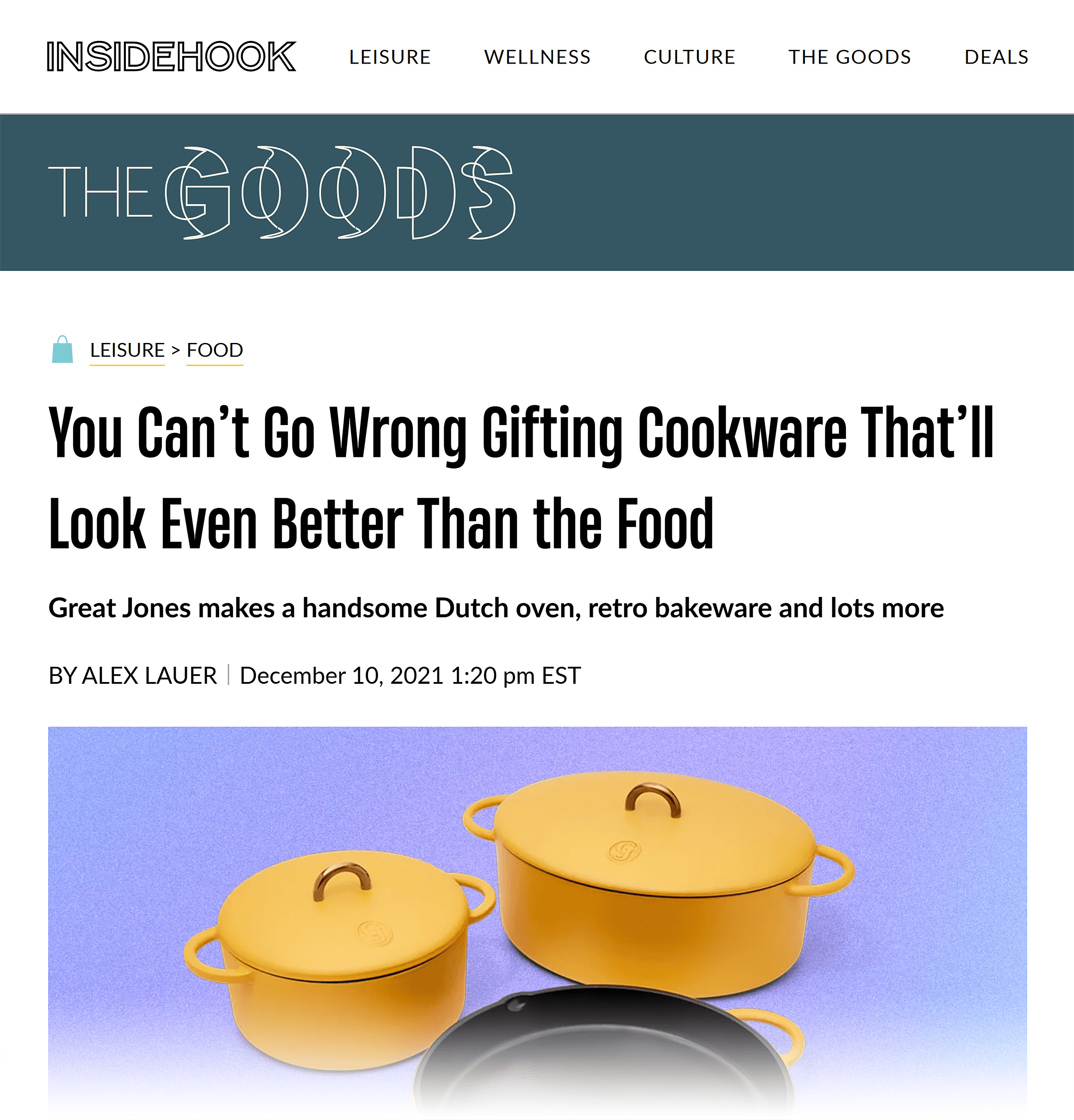
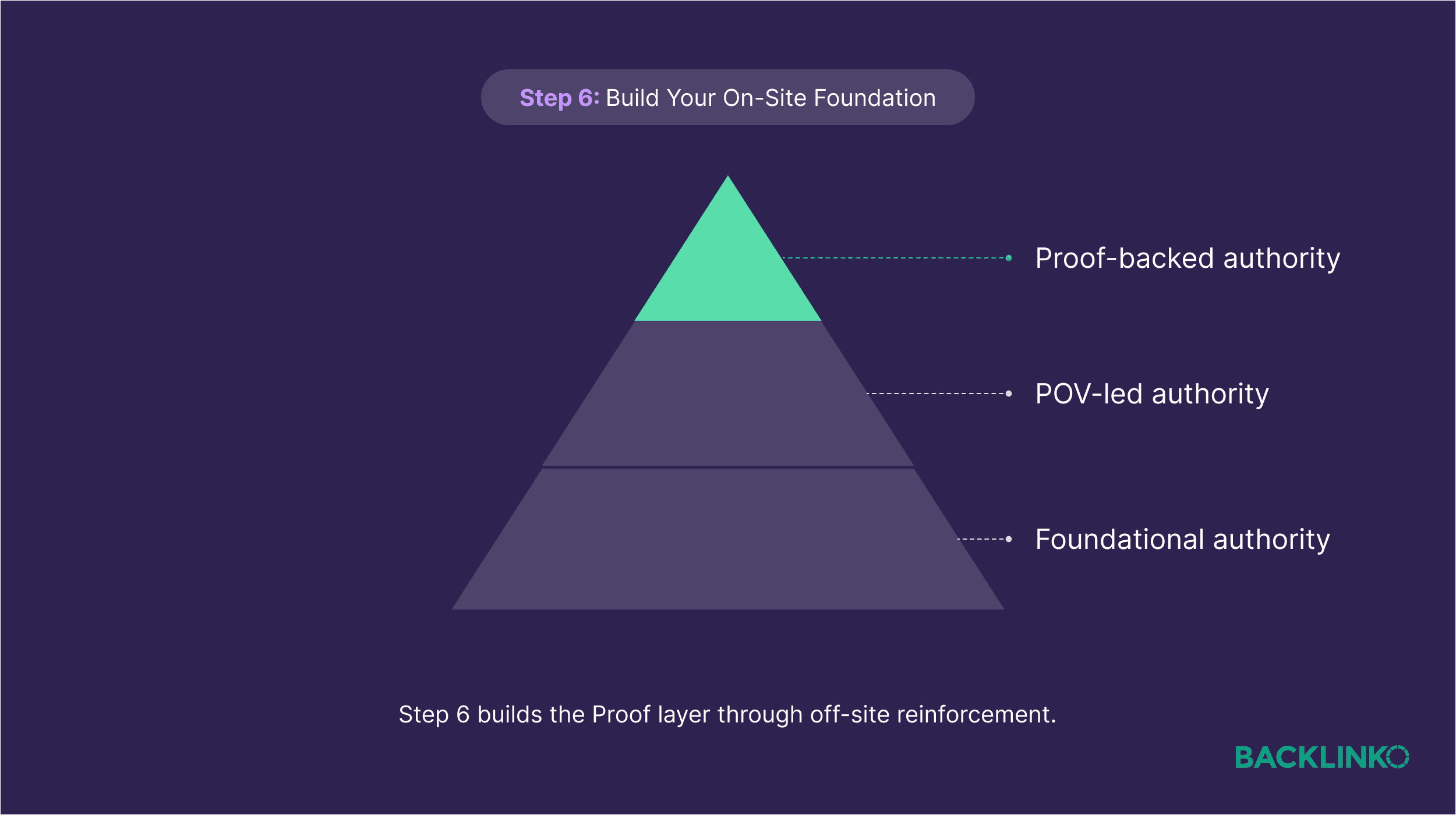
To address this new reality, the Topical Authority Pyramid framework has been developed, offering a structured approach to building and solidifying a brand’s position as a definitive expert in its niche. This framework, refined through insights from leading content strategists and extensive experience in brand positioning across e-commerce, SaaS, and finance, comprises three interdependent layers:
- Foundational Authority: The base layer, ensuring comprehensive content coverage and technical SEO hygiene.
- Point of View (POV) Authority: The crucial middle layer, defining the brand’s unique perspective on the topic.
- Proof Authority: The apex, providing verifiable external evidence that validates the brand’s POV.
Many brands, like Great Jones, often possess a strong foundational layer (good products, some content) and scattered proof (media mentions), but they critically lack a consistent POV that weaves it all together into a coherent, authoritative narrative.
Strategic Imperatives for Building Topical Authority
Building a robust topical authority involves a systematic, multi-step process.
Step 1: Audit Your Topic Reputation
Before charting a path forward, brands must first understand their current topical standing, whether intentionally shaped or not. This involves a dual assessment of both on-site associations and off-site presence.
-
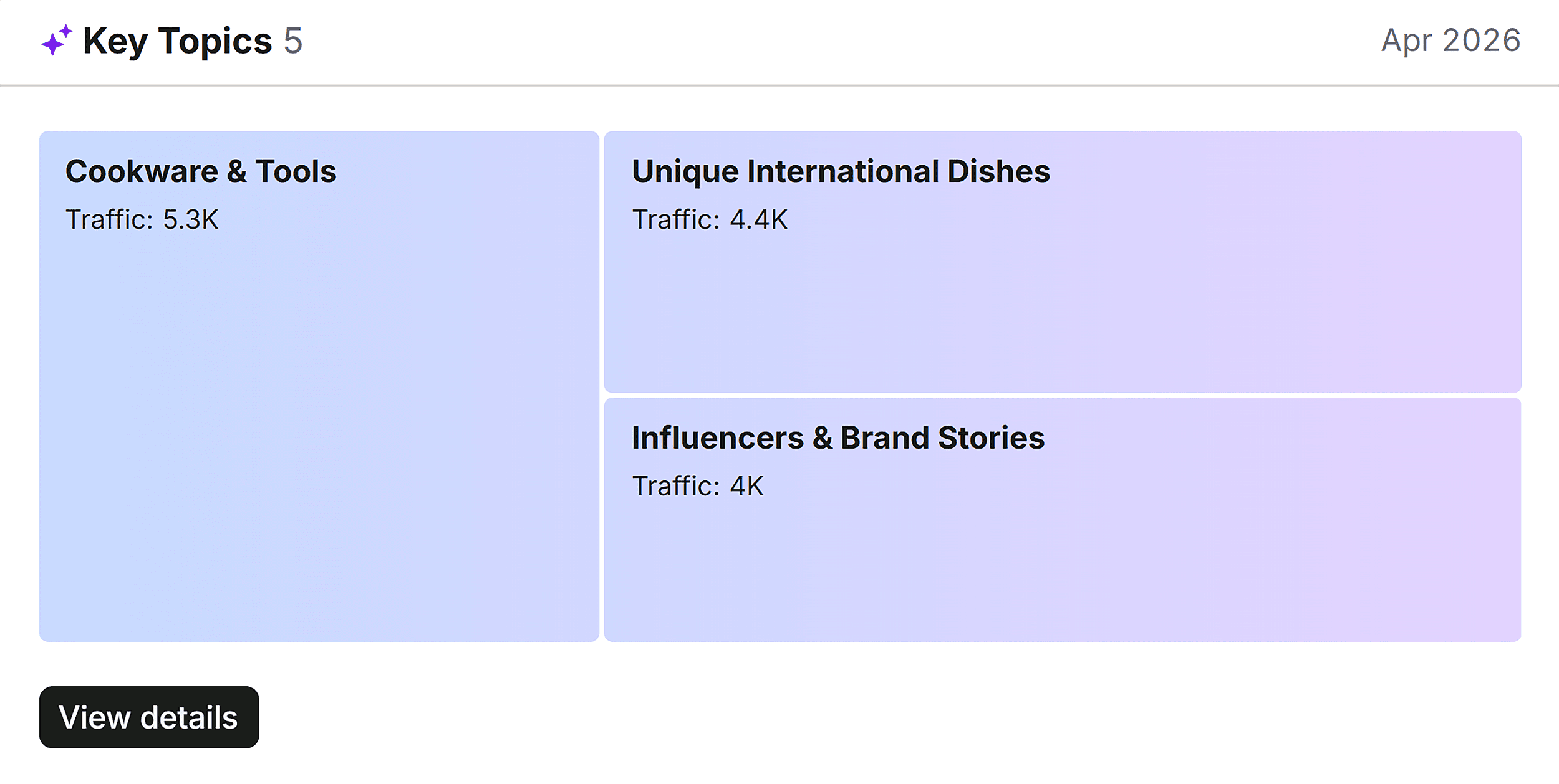
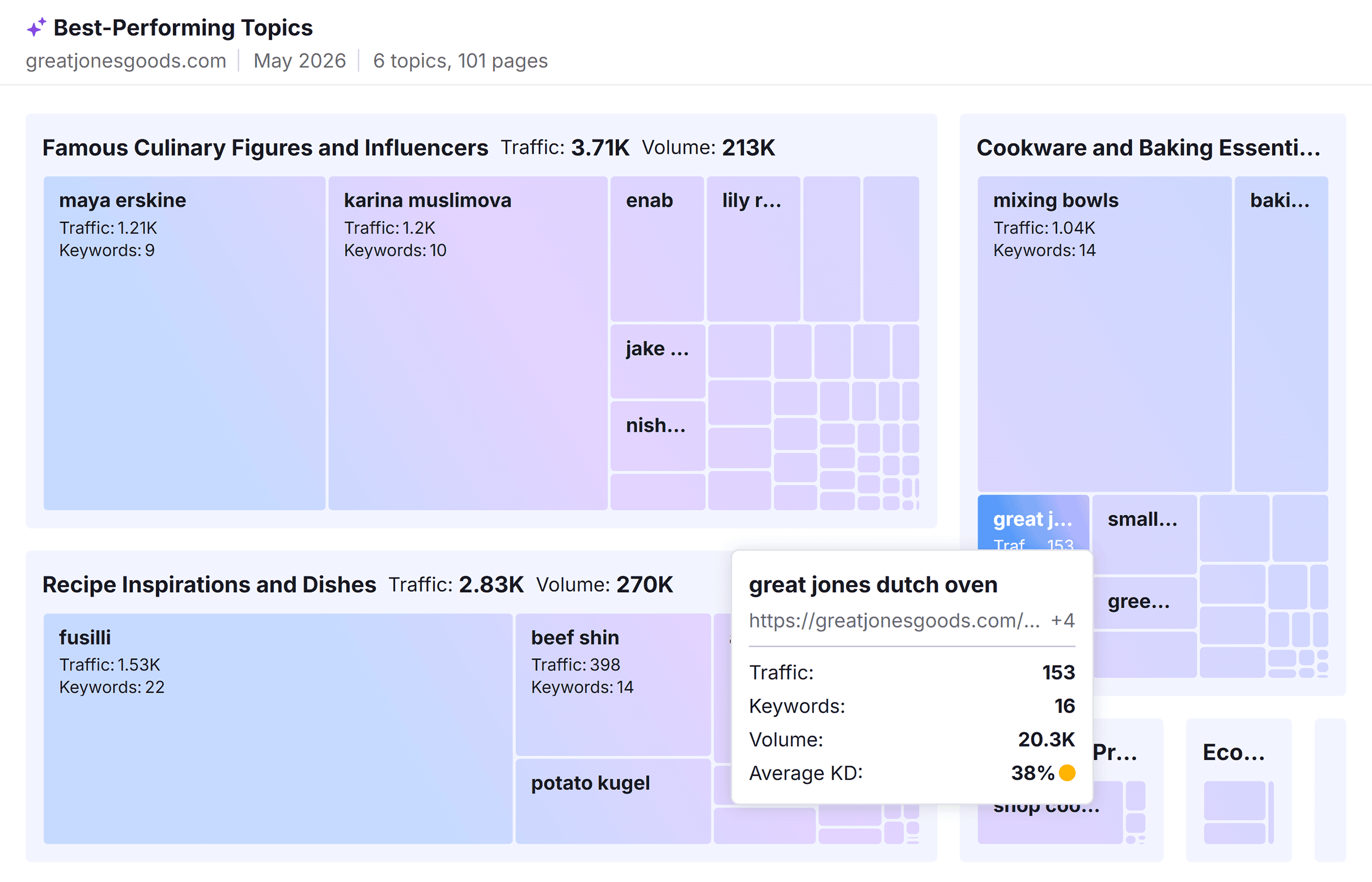
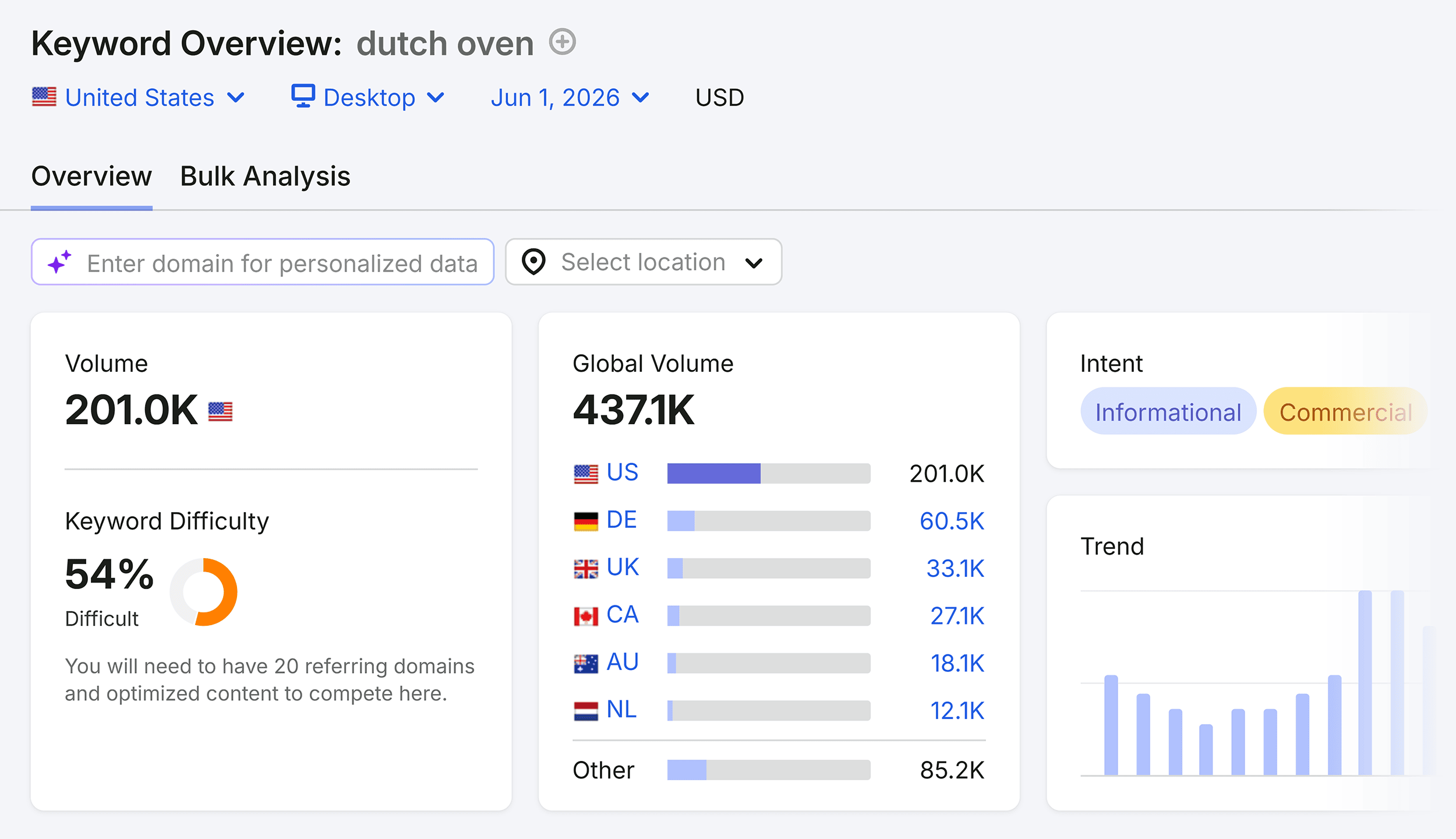
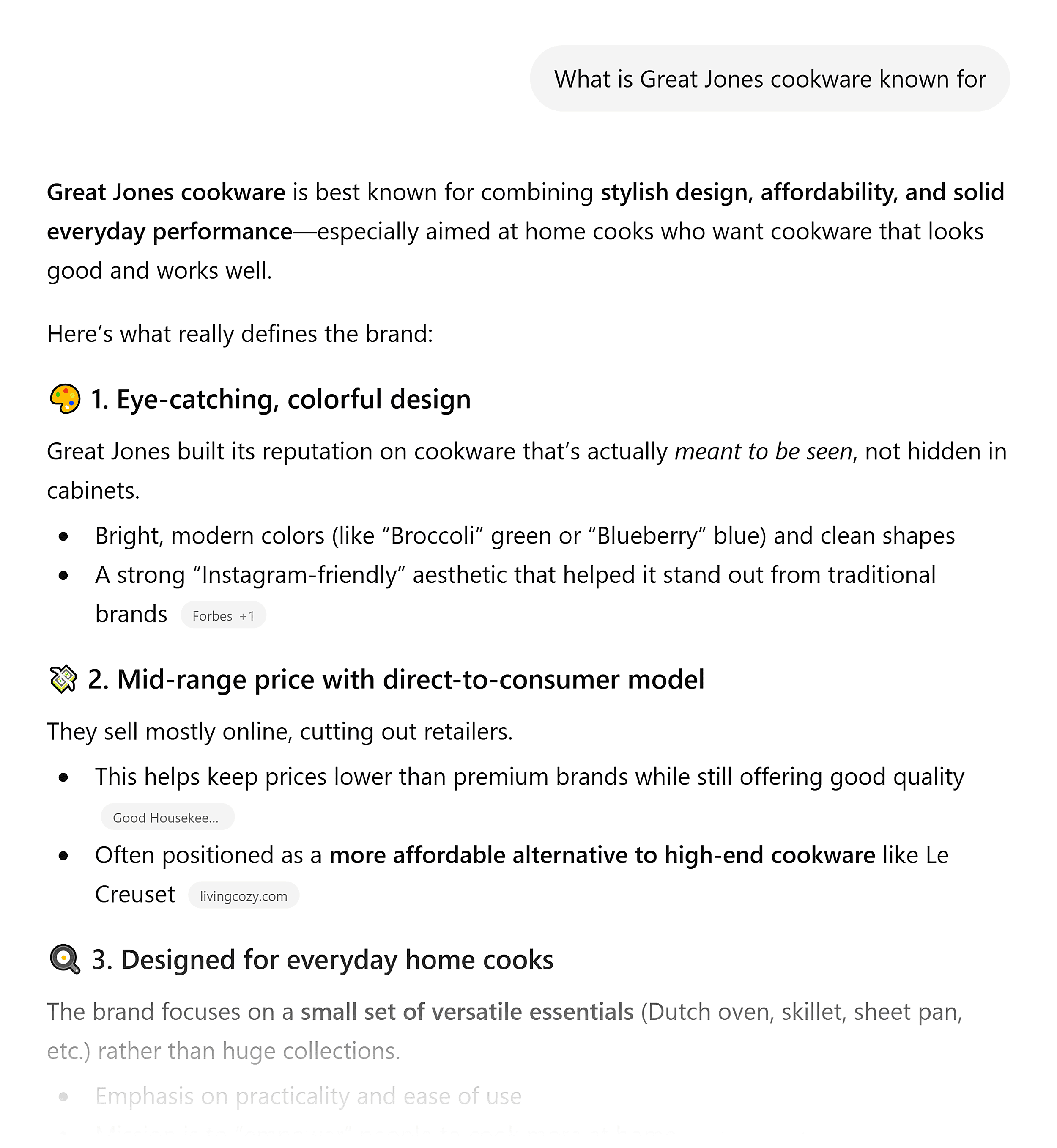
Research Current On-Site Associations: Brands often mistakenly assume their internal content strategy aligns with how they are perceived externally. Tools like Semrush’s Organic Rankings can quickly reveal a domain’s strongest topic associations based on current search visibility. For Great Jones, this audit revealed their site was more strongly associated with "recipes" and "celebrity chefs" than with "Dutch ovens," despite The Dutchess being a core product. This disparity highlights a missed opportunity, especially given that "Dutch oven" alone generates over 200,000 monthly Google searches. Further checks using site search functions and analyzing internal linking structures can provide deeper insights into on-site topical emphasis. Similarly, querying LLMs like ChatGPT about the brand’s products can expose how AI currently interprets and describes its offerings, often reflecting the same gaps seen in traditional search.
-
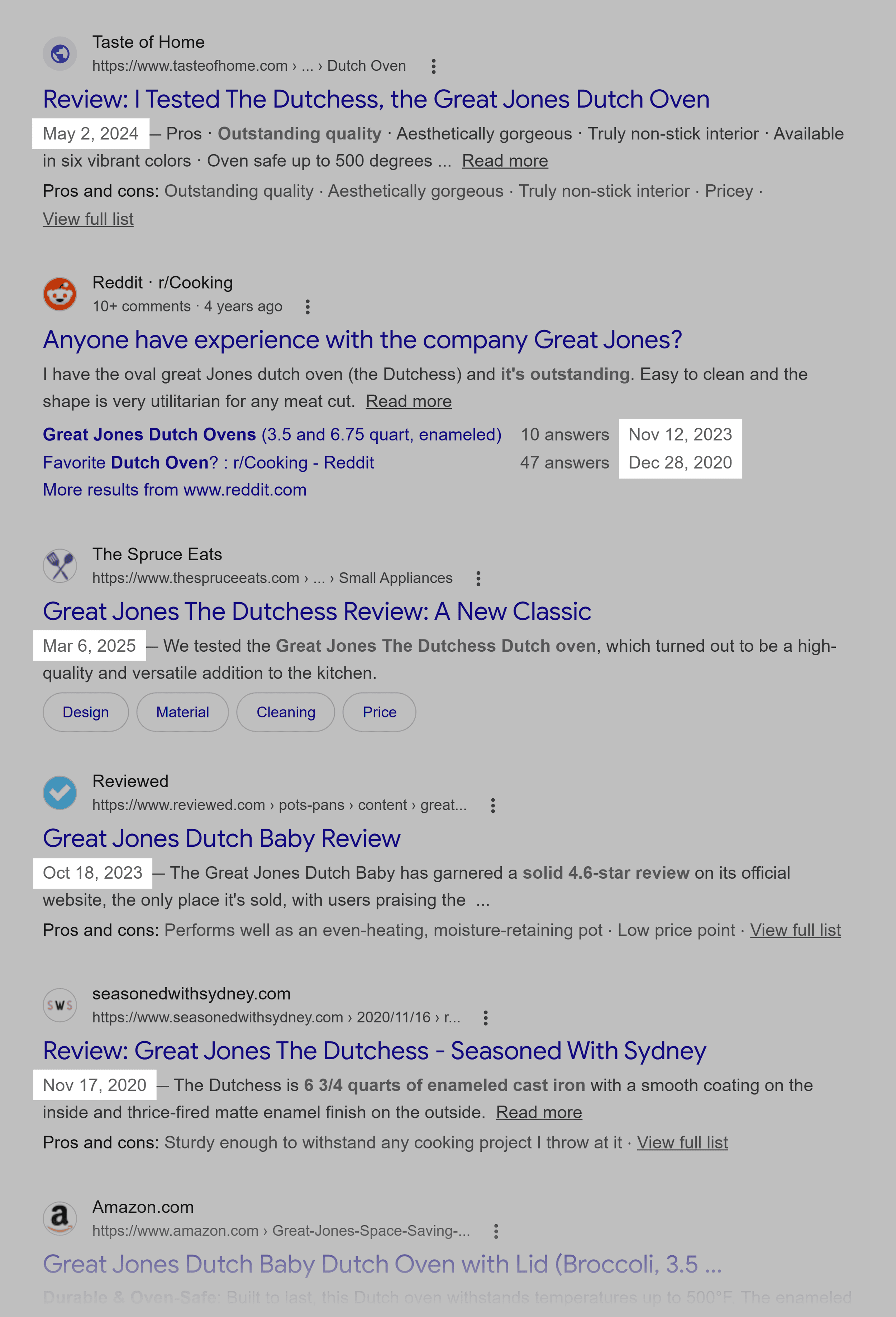
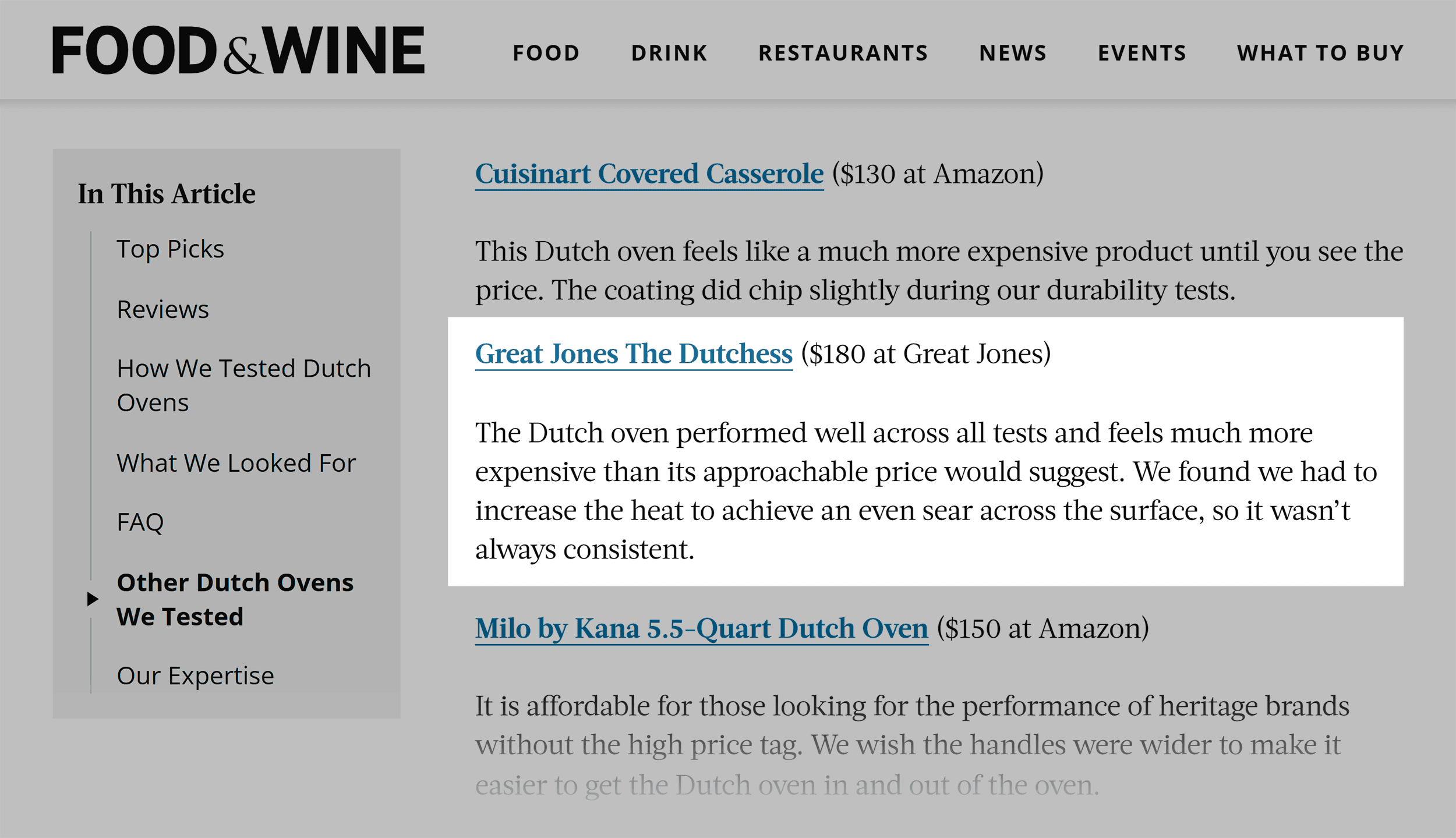
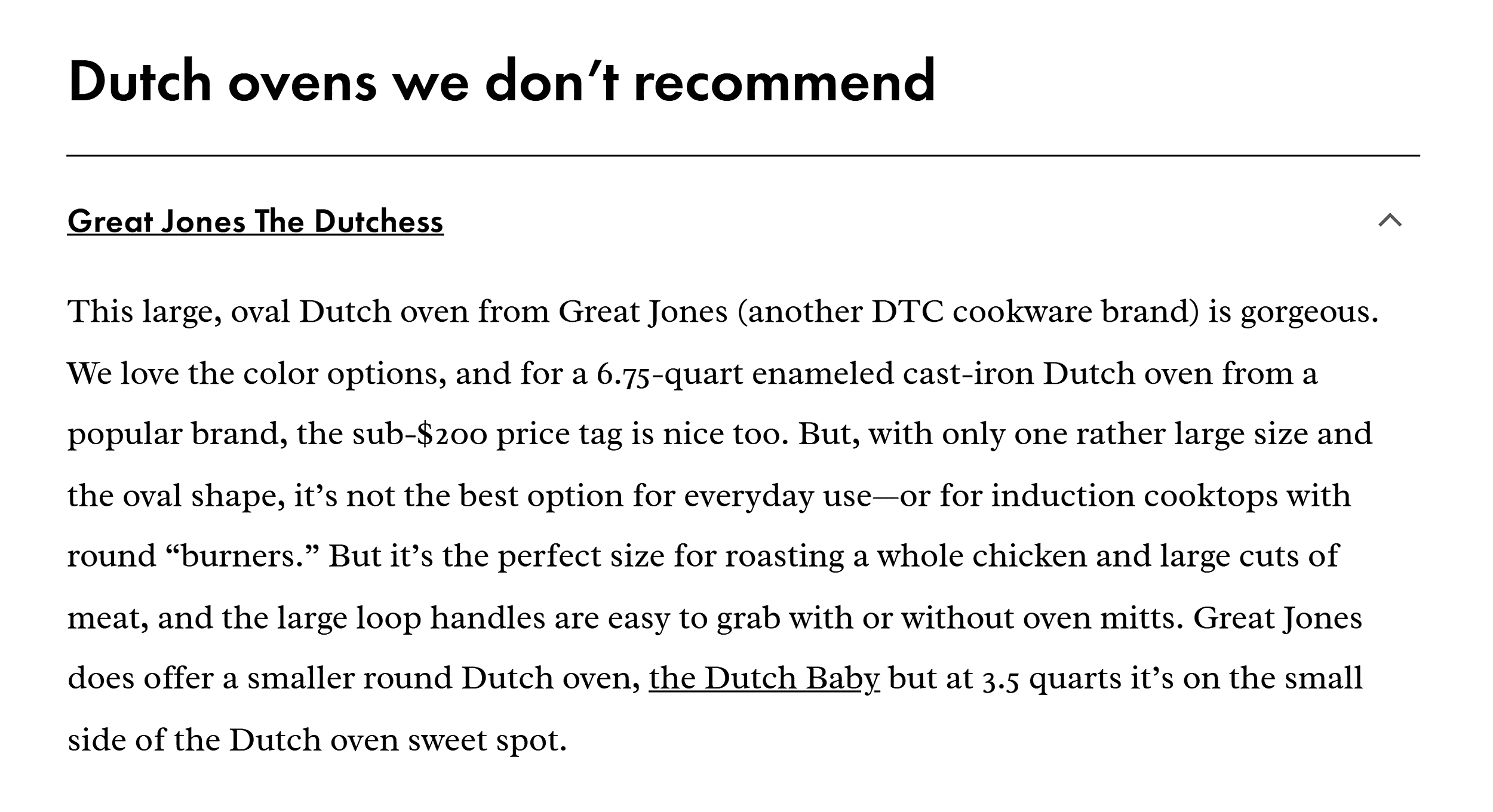
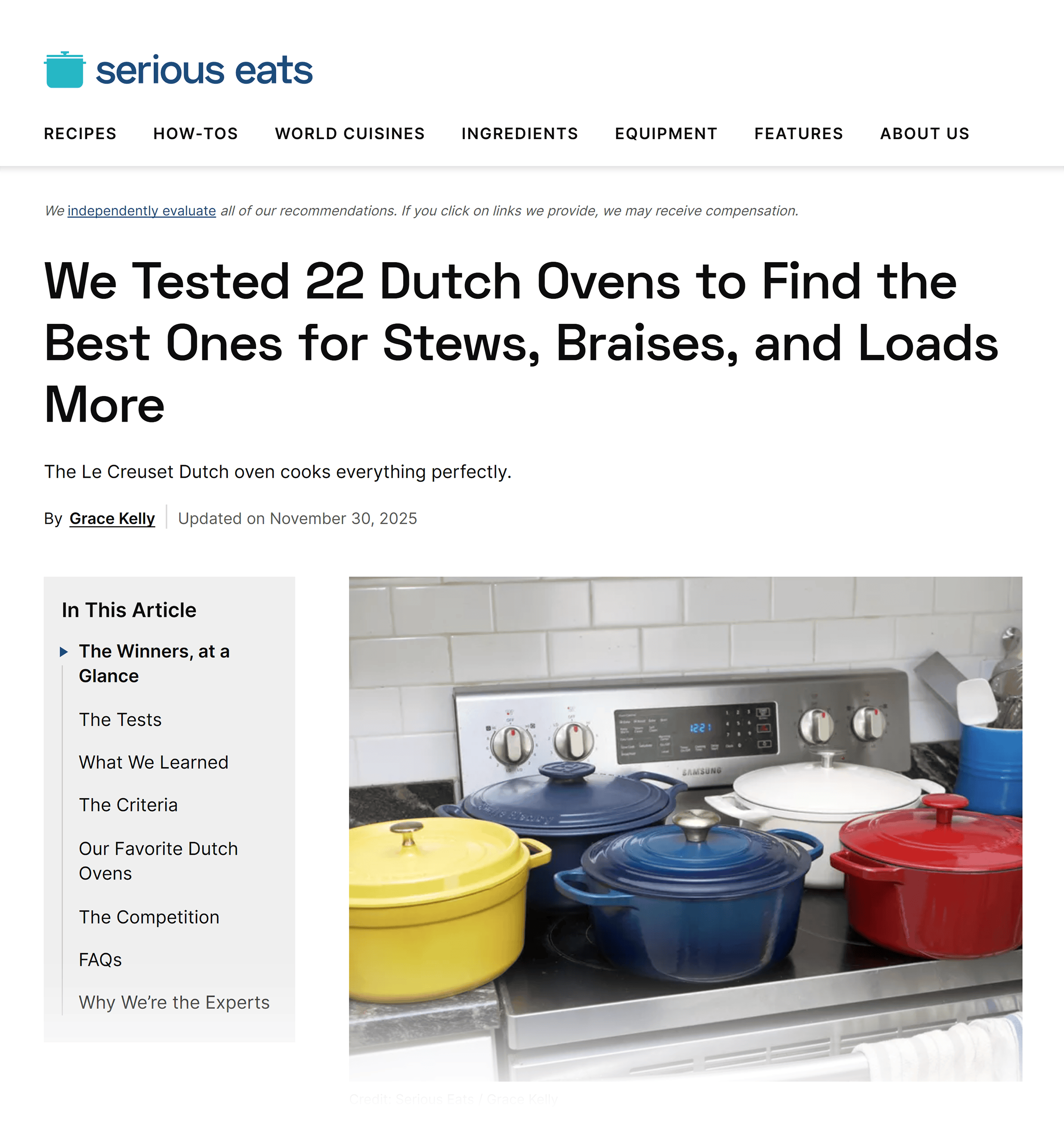
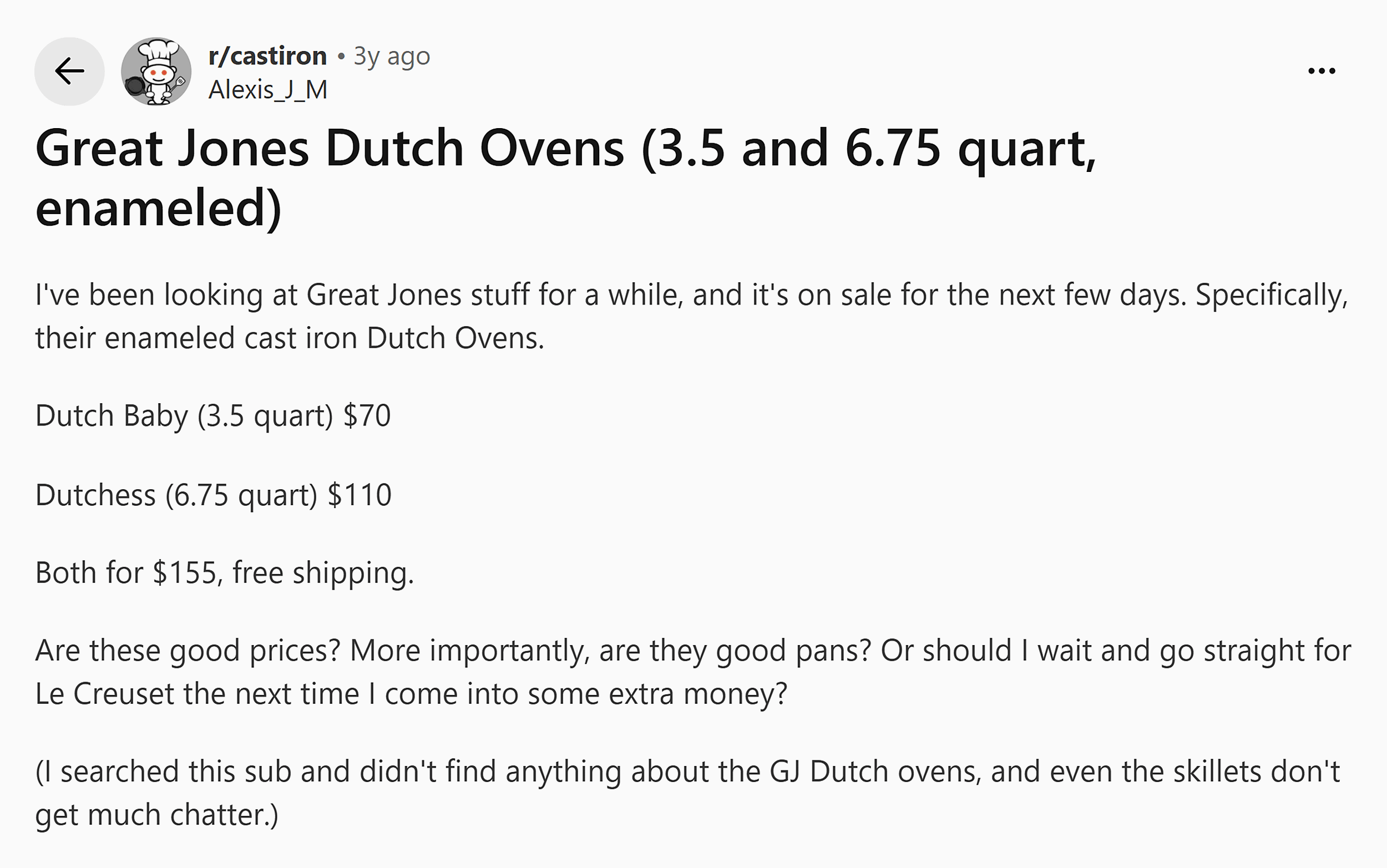
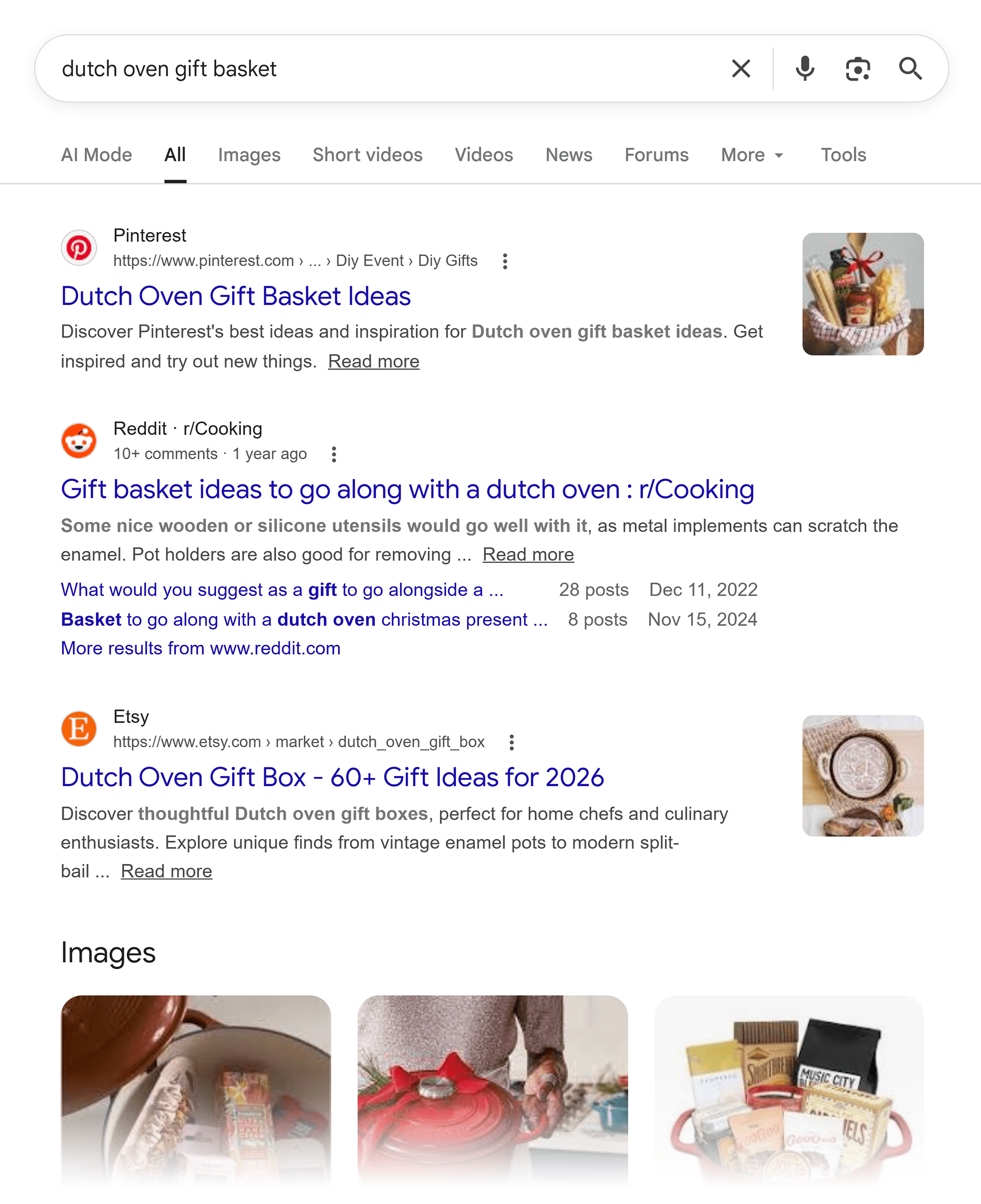
Audit Your Off-Site Presence: This is frequently where the largest authority gaps lie, and it’s a factor heavily weighted by AI systems. Review third-party mentions, reviews, product roundups, and editorial press. Conduct broad searches for "[your brand] + [topic]" and "[topic] reviews" to gauge external perception. For Great Jones, while they enjoyed enviable coverage in top-tier publications, specific Dutch oven mentions were often outdated, inconsistent in sentiment, or conspicuously absent from key comparative lists (e.g., Bon Appétit‘s "Dutch ovens we don’t recommend," or Serious Eats failing to mention them in use-case roundups). Even community forums like Reddit, where authentic buyer recommendations are sought, showed minimal and often dated mentions of Great Jones’s Dutch ovens. This comprehensive audit provides a clear picture of existing strengths and, more importantly, areas requiring strategic intervention.
Step 2: Choose the Topic for Authority Building
Given the extensive nature of topical authority, it’s impractical to build it across all subjects simultaneously. This step involves narrowing focus to a single, high-impact topic.
-
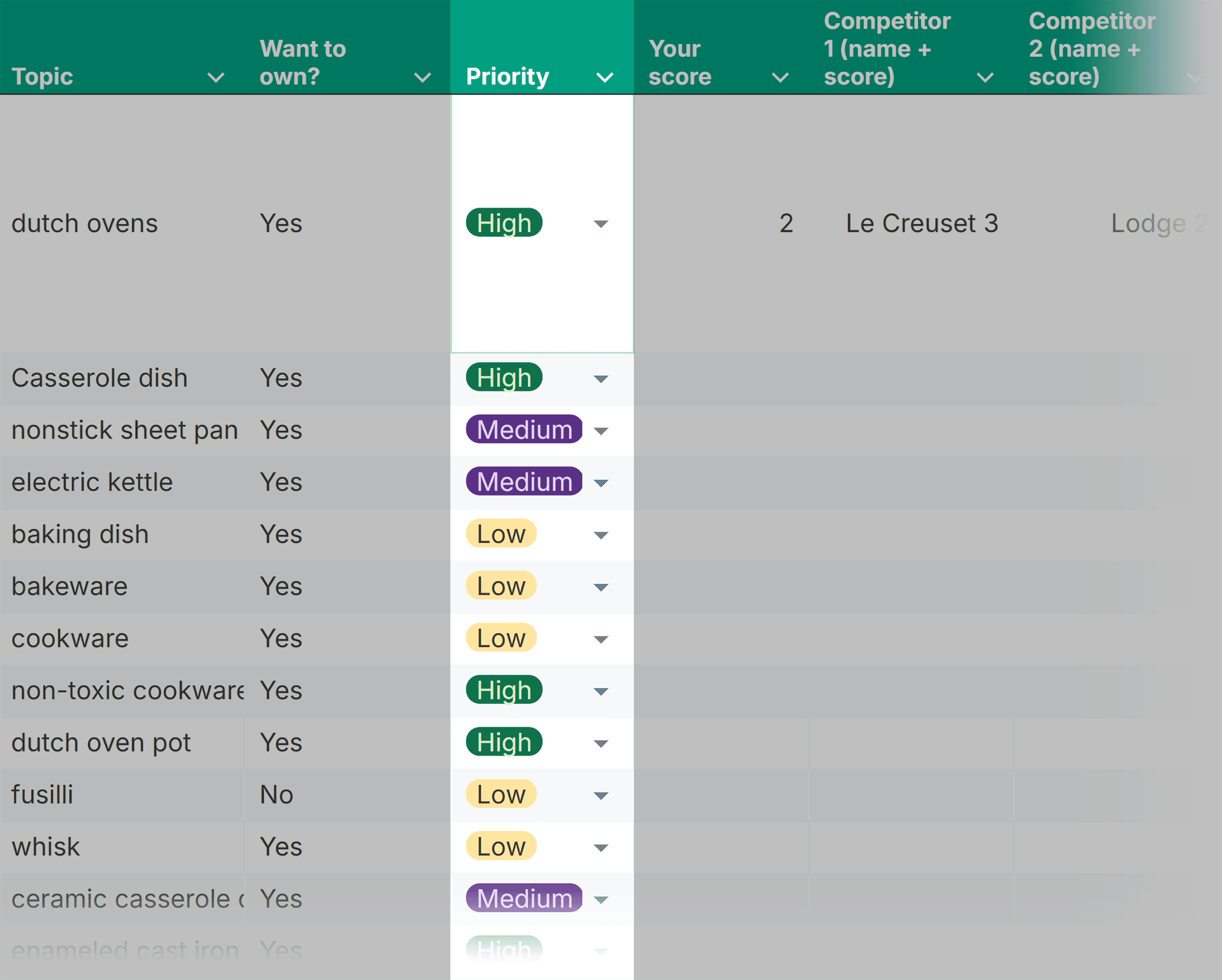
Build and Prioritize Your Topic List: Start with obvious topics directly related to products, services, or problem-solving. Expand this list with adjacent topics that resonate with your target audience (e.g., for Great Jones, "slow cooking," "one-pot meals," "kitchen gifting," "cookware care"). Crucially, look for areas where your brand already has some traction, where competitors are weak, or where your brand should be associated but isn’t. Prioritize these based on two criteria:
- Desirability: Does owning this topic drive revenue, support core products, or attract the right buyers?
- Urgency: Is it a high-volume search term, an emerging trend, or a gap your competitors are actively ignoring?
-
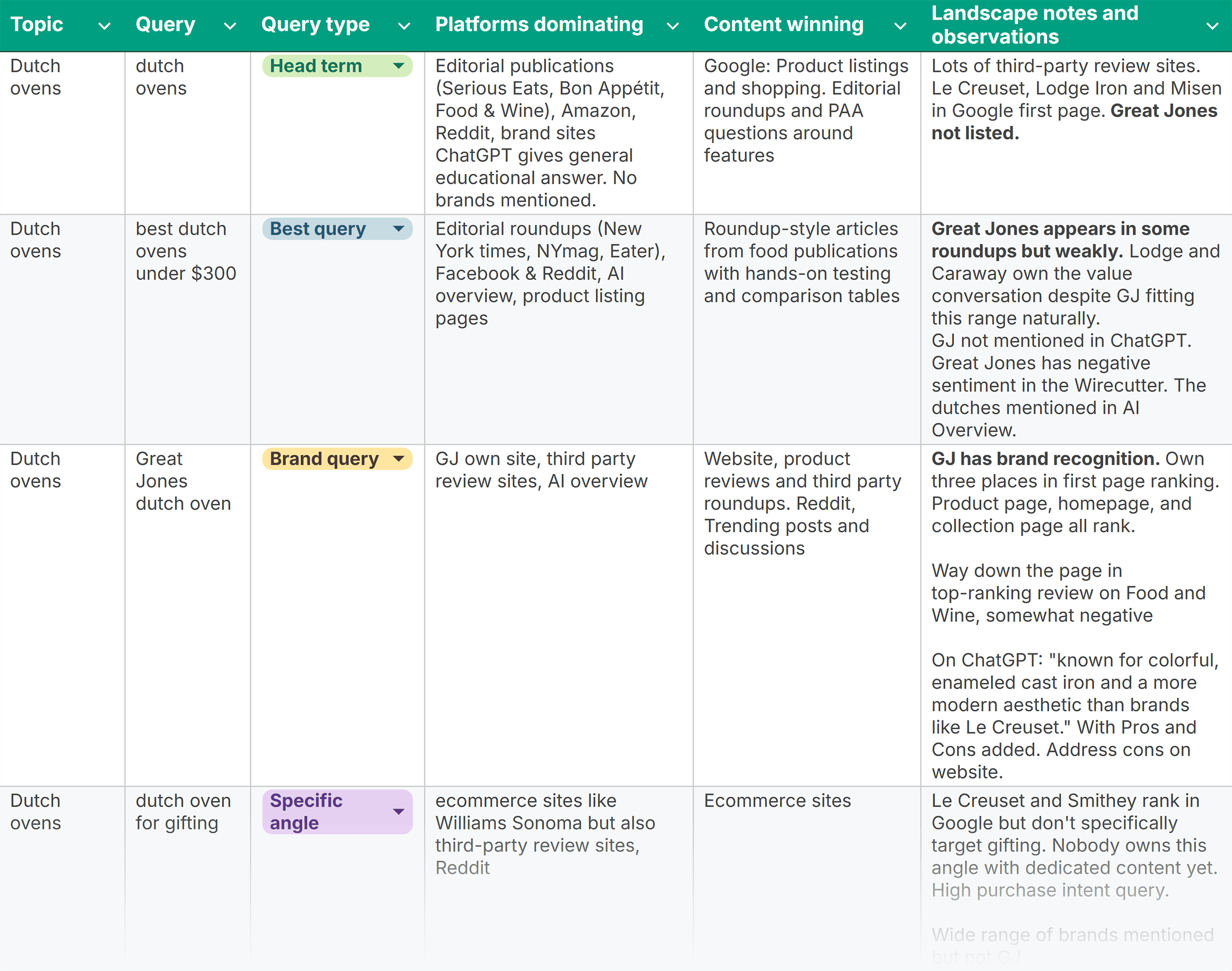
Run a Query Audit: For the shortlisted topics, conduct specific searches on Google and LLMs to understand the competitive landscape and identify unclaimed territory.
- Head Term: e.g., "Dutch ovens" (reveals dominant players).
- Best Query: e.g., "best Dutch ovens under $200" (identifies buyer intent and AI recommendations).
- Brand Query: e.g., "Great Jones Dutch oven" (shows current specific standing).
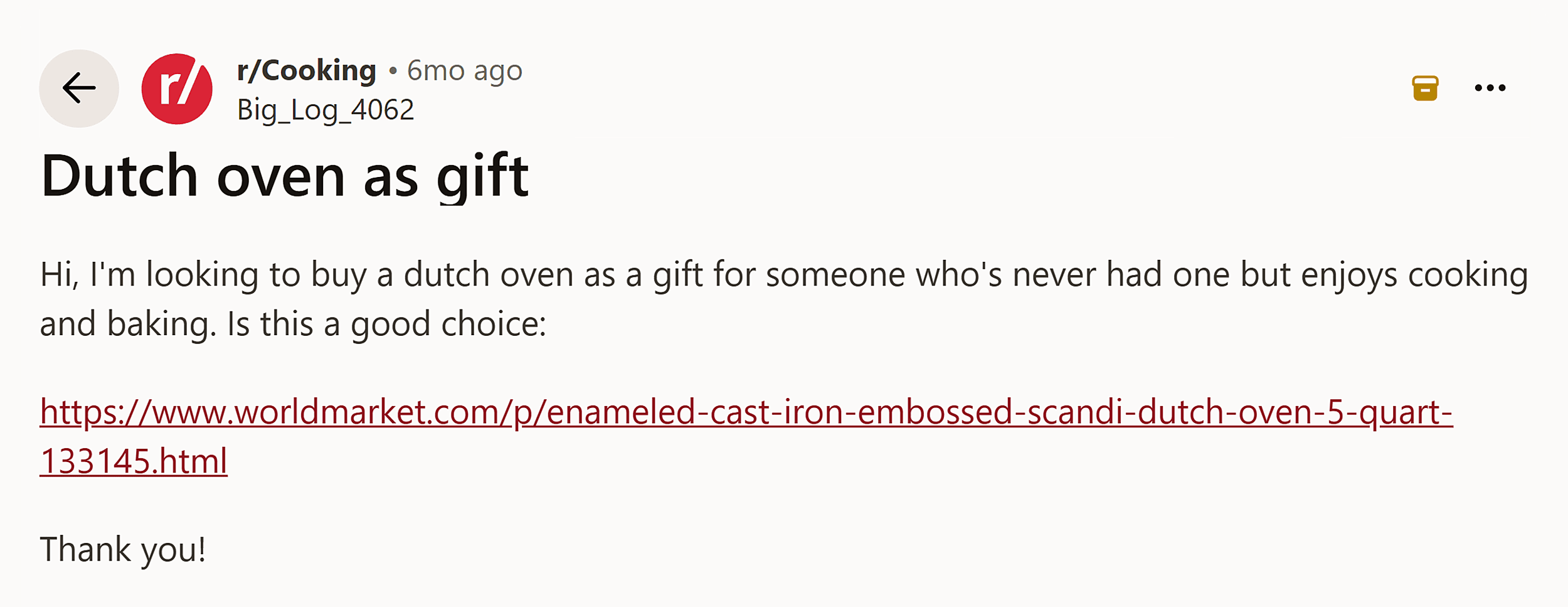
- Specific Angle: e.g., "Dutch oven for gifting" (uncovers niche opportunities).
Record who dominates, what angles are covered, and any notable gaps. For Great Jones, the audit revealed that while general "Dutch oven" searches were dominated by established brands like Le Creuset and Staub, and AI often omitted Great Jones, specific angles like "gifting Dutch ovens" or associations with "aesthetics" and "non-toxic coating" remained largely unclaimed.
-
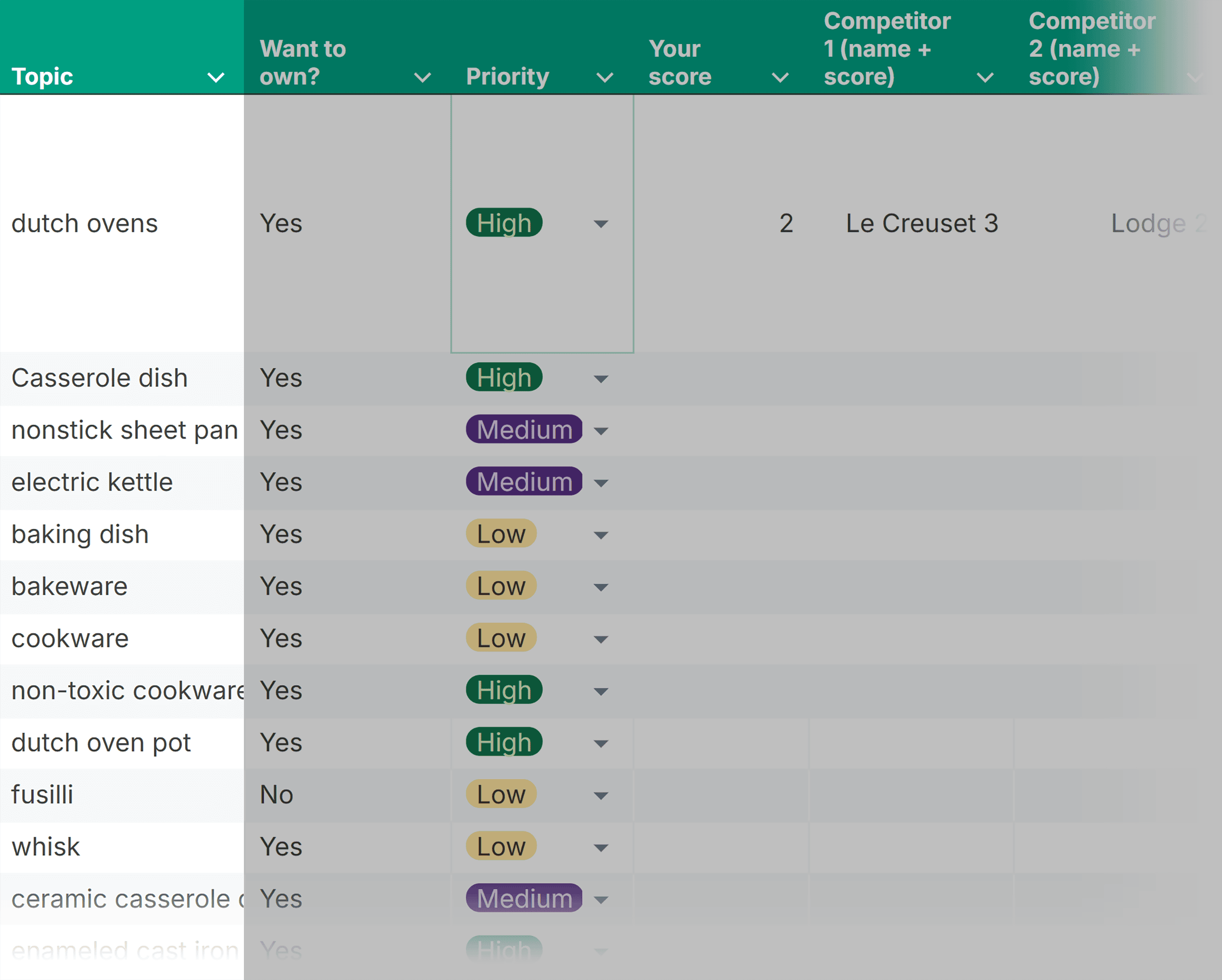
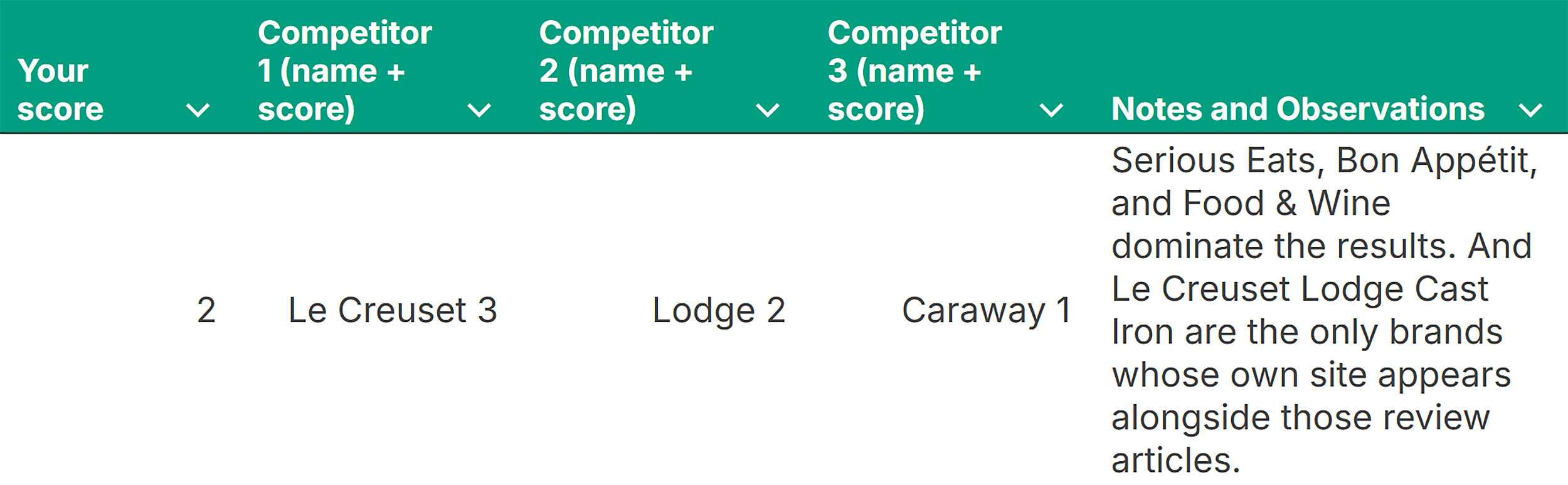
Score by Association Strength: Rate your brand and key competitors (0-3 scale) for each topic based on overall standing across foundational content, POV clarity, and external proof. A score of "3" indicates consistent prominence across high-authority sources and AI. The goal is to identify high-priority topics where your brand scores 1 or 2, and at least one competitor scores 0 or 1, indicating a "winnable position" where buyer demand exists, and the competitive barrier is low. For Great Jones, "Dutch ovens for gifting" emerged as a strong candidate, aligning with existing customer feedback about the product’s aesthetic appeal.
Step 3: Identify Your Topic Point of View (POV)
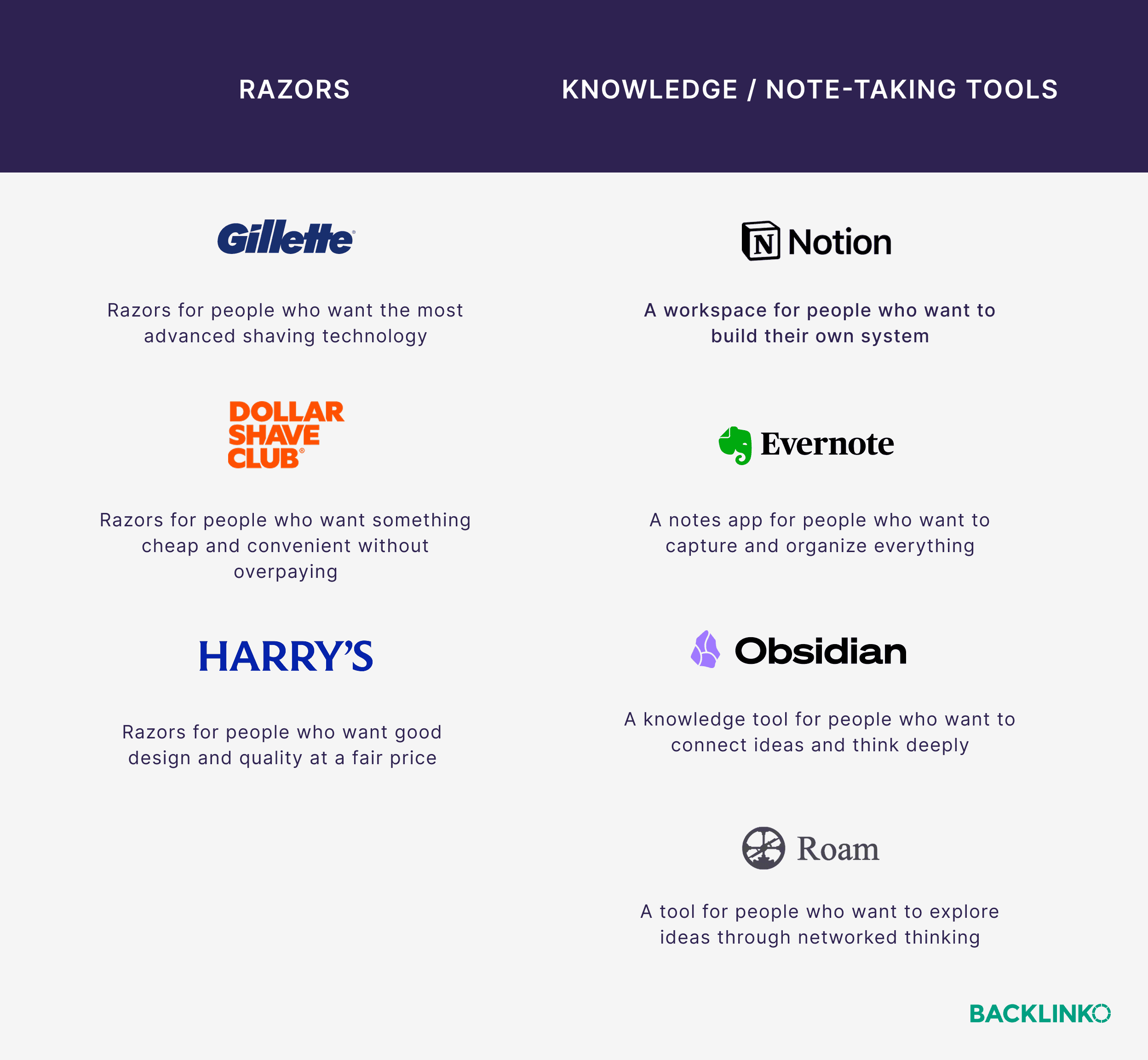
Having selected a viable topic, the next step is to define the specific reputation your brand will cultivate within that space. Your POV is the unique angle that differentiates your brand for buyers, search engines, and AI systems. It allows a brand to stand out even within a crowded market, much like how different razor brands cater to distinct aspects of shaving (e.g., Harry’s for simplicity, Gillette for precision).
-
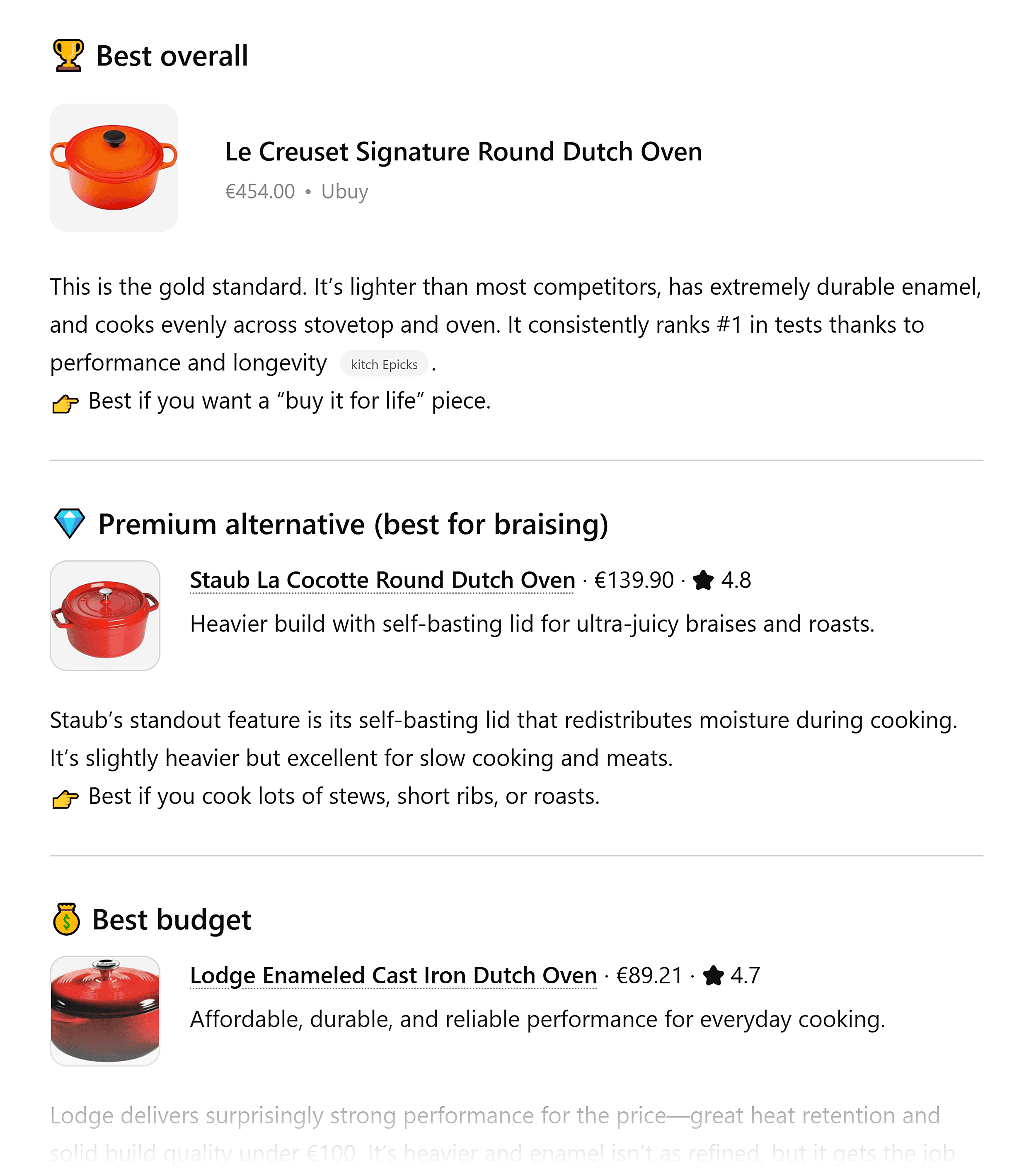
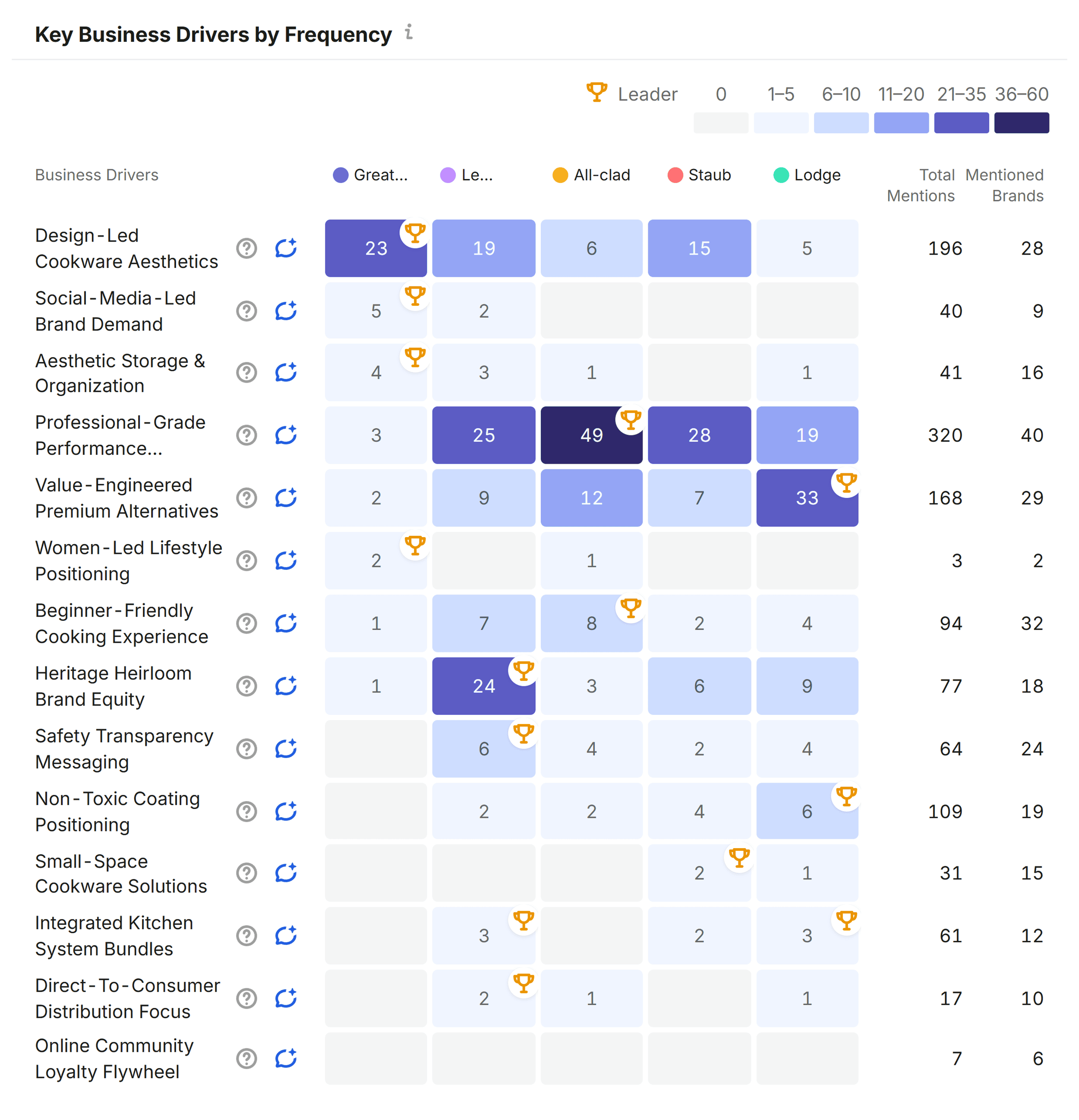
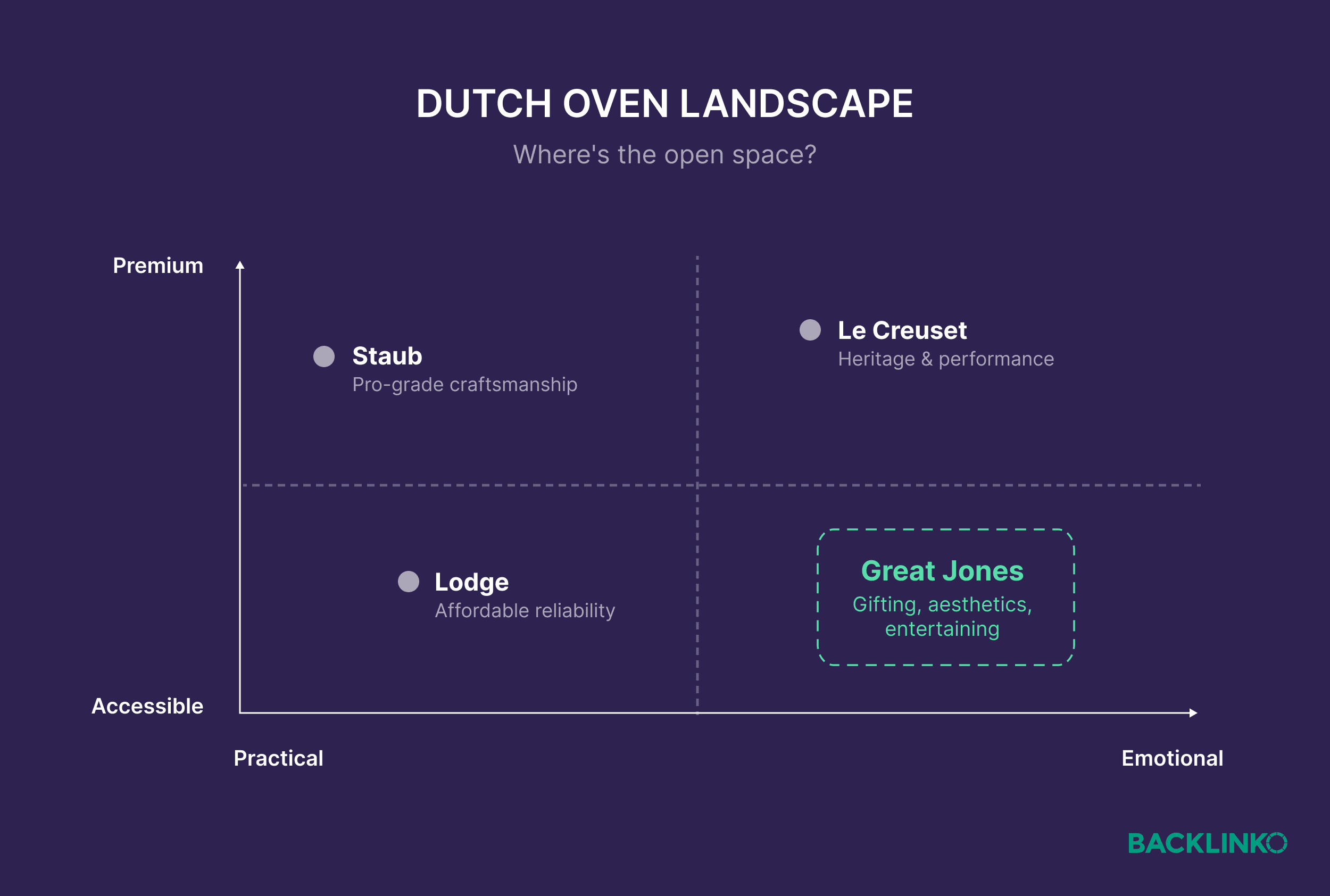
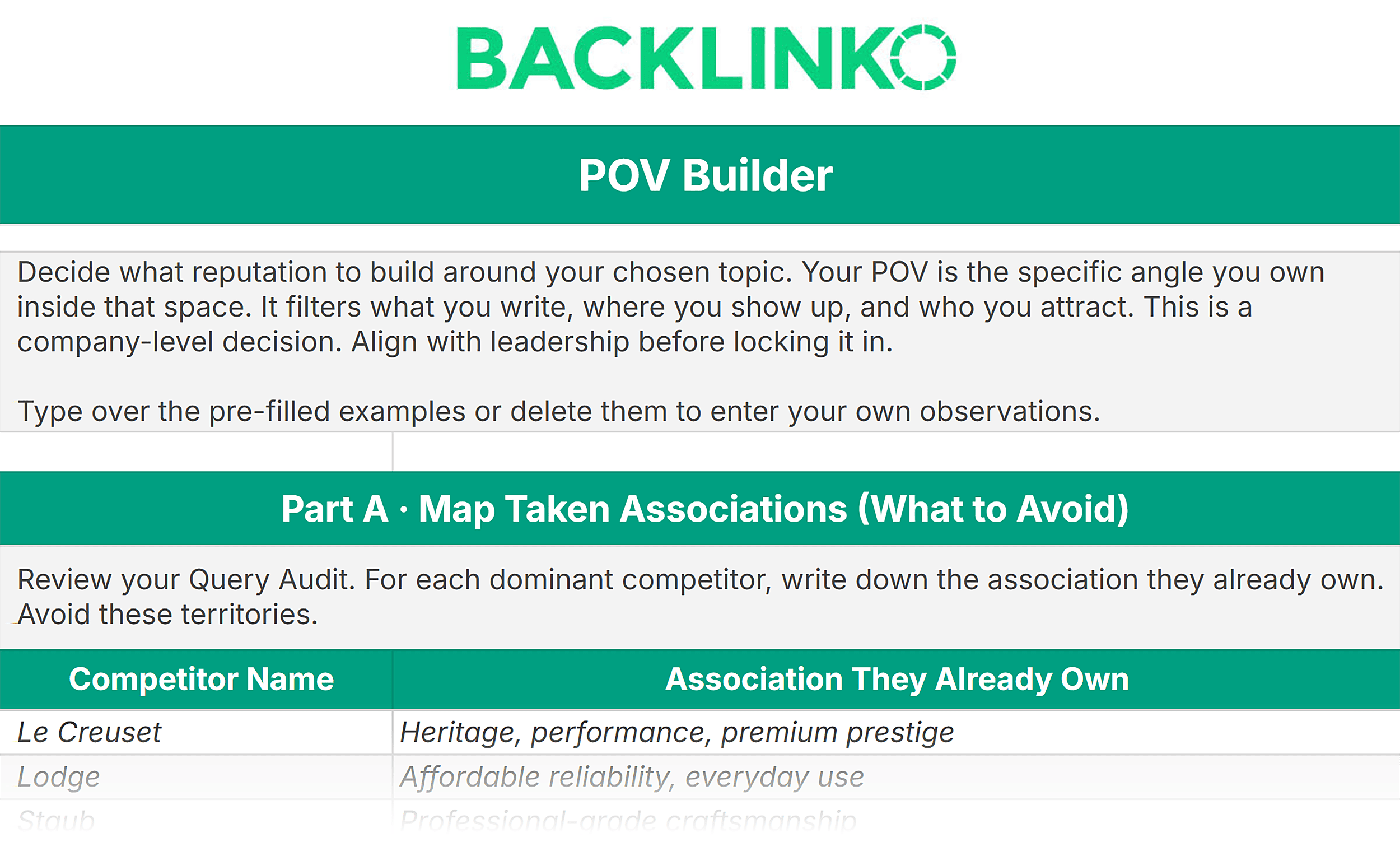
Research What’s Already Owned: Before defining your POV, meticulously map the POVs already claimed by dominant competitors. Avoid direct competition on these fronts. Tools like the Semrush AI Visibility Toolkit can highlight associations competitors are winning in AI-generated answers. For Great Jones, "durability" (Lodge), "luxury" (Le Creuset), and "non-toxic" (Caraway) were already claimed. This left fertile ground for "gifting Dutch ovens," "visual appeal," or "beginner cooking" as potential POVs, with "design" already being a slight strength for Great Jones.
-
Choose Your POV: Select a POV that passes three crucial tests:
- Authenticity: Is it genuine to your brand, products, and values?
- Market Demand: Do buyers actually care about this aspect of the topic?
- Defensibility: Can you realistically own and defend this position against competitors?
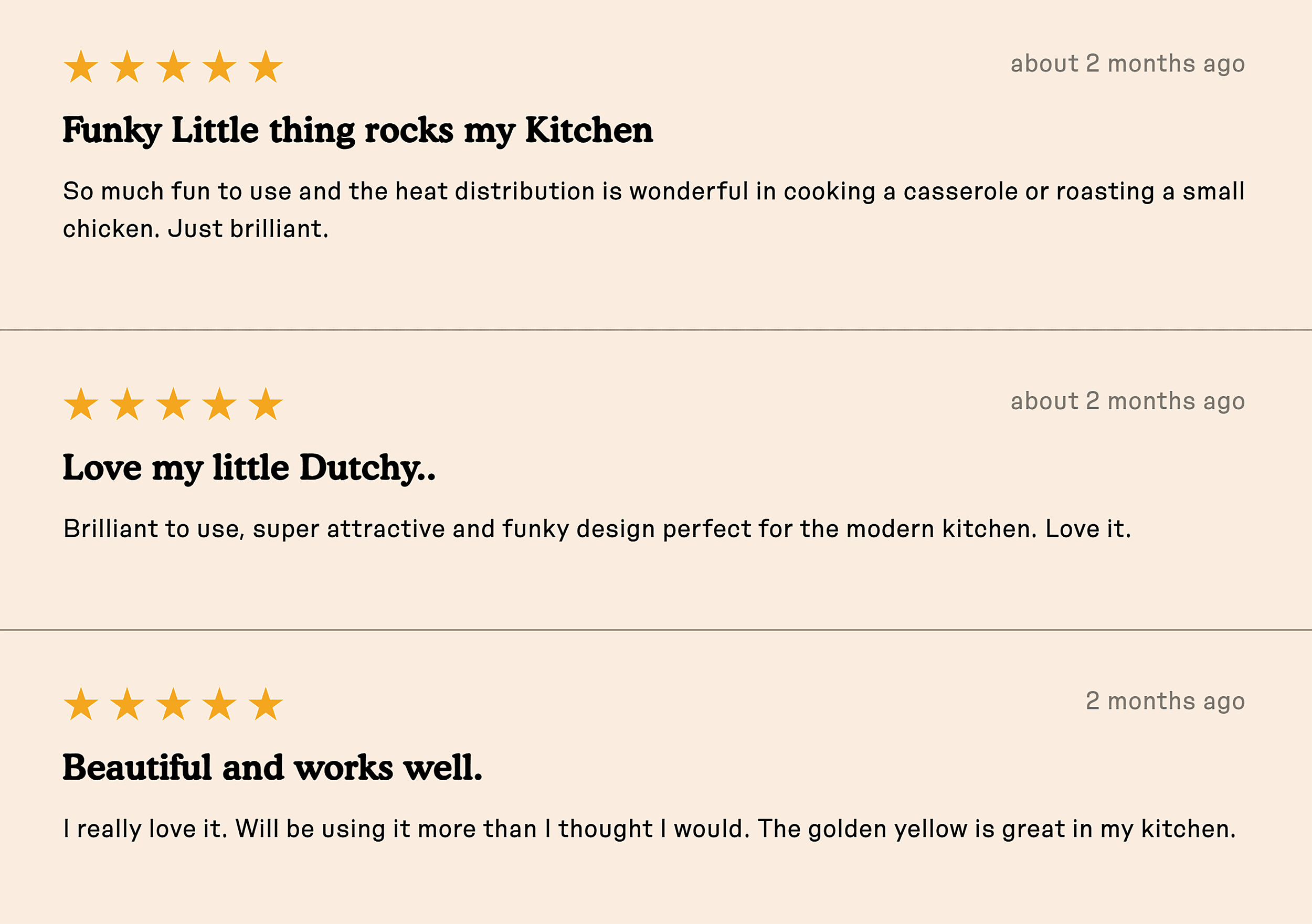
For Great Jones, "gifting" resonated strongly. People actively search for Dutch ovens as gifts, and customer reviews frequently praise The Dutchess’s "super attractive," "modern," and "beautiful" design—perfectly aligning with a gifting narrative. No major competitor had explicitly claimed this territory.
-
Write Your POV as One Sentence: A concise, repeatable POV is key for consistent messaging. For Great Jones, a strong POV could be: "Great Jones is the go-to brand for stylish, gift-worthy Dutch ovens that make a lasting impression." This clearly defines the target buyer and the unique value proposition.
Step 4: Map Your POV Proof Architecture
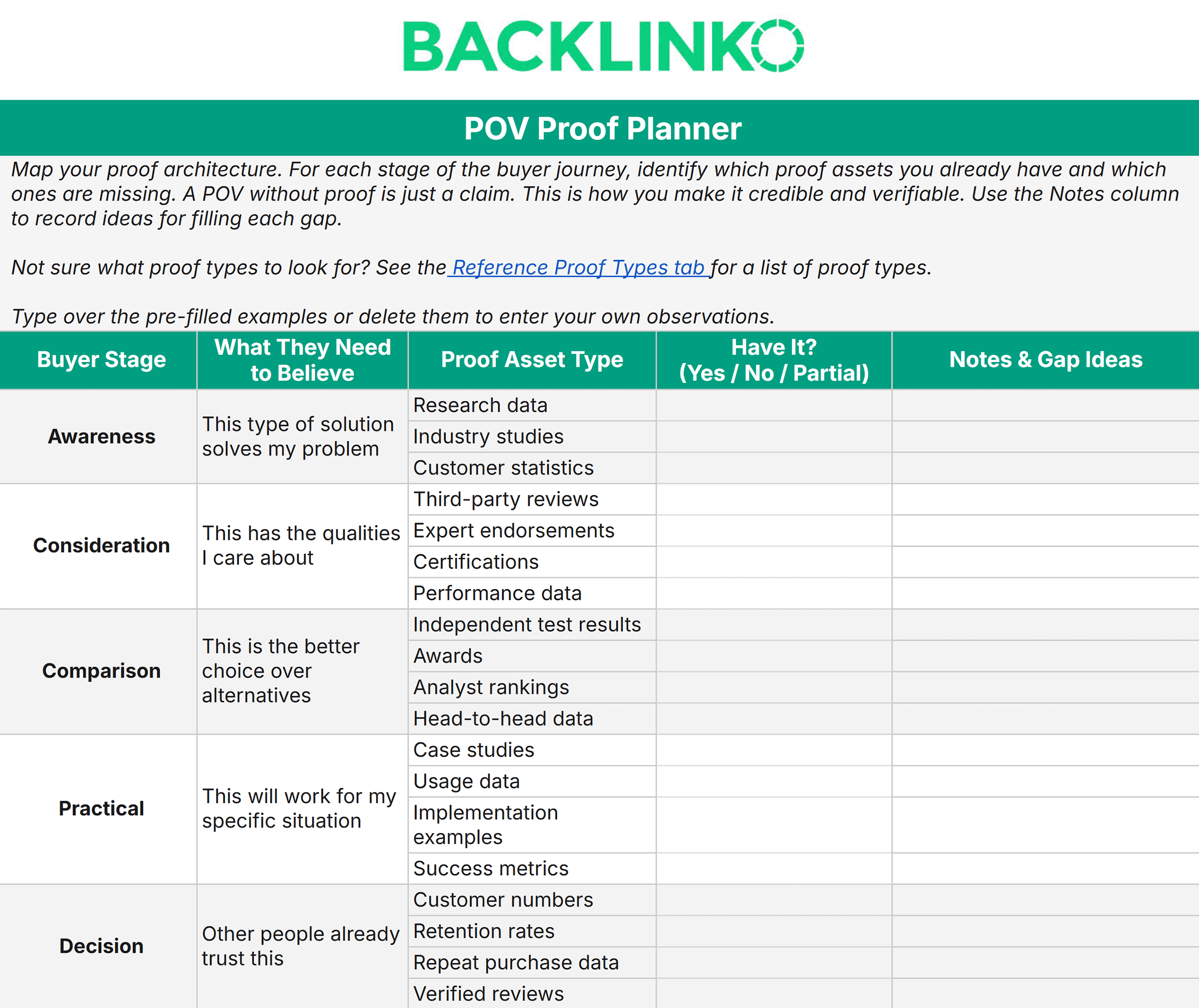
A compelling POV is merely a claim without concrete evidence. This step involves planning the "proof" – the verifiable evidence – that will substantiate your POV across your owned properties and the wider web, ensuring it resonates at every stage of the buyer’s journey.
- Audit Your Proof Across the Buyer Journey: To build credibility, you need evidence that establishes both your category relevance and your unique POV. This proof must be strategically deployed throughout the buyer’s journey:
- Awareness: Research data, industry studies, customer statistics (e.g., "Dutch ovens are a top wedding registry item").
- Consideration: Third-party reviews, expert endorsements, certifications, performance data (e.g., "The Dutchess voted ‘Best Design for Gifting’ by Food & Wine").
- Comparison: Independent test results, awards, analyst rankings, head-to-head data (e.g., "Why The Dutchess outperforms other gift-worthy Dutch ovens").
- Active Evaluation: Case studies, usage data, implementation examples, success metrics (e.g., "Real stories of joyful gift recipients").
- Decision: Customer numbers, retention rates, repeat purchase data, verified reviews (e.g., "95% of gift recipients rave about their Great Jones Dutch oven").
For Great Jones’s gifting POV, a quick audit revealed strengths in aesthetic praise but gaps in comparative data or explicit endorsements for gifting. Missing assets included specific awards for "best gift," detailed comparisons against other gift options, or usage data highlighting gifting occasions.
Step 5: Build Your On-Site Foundation
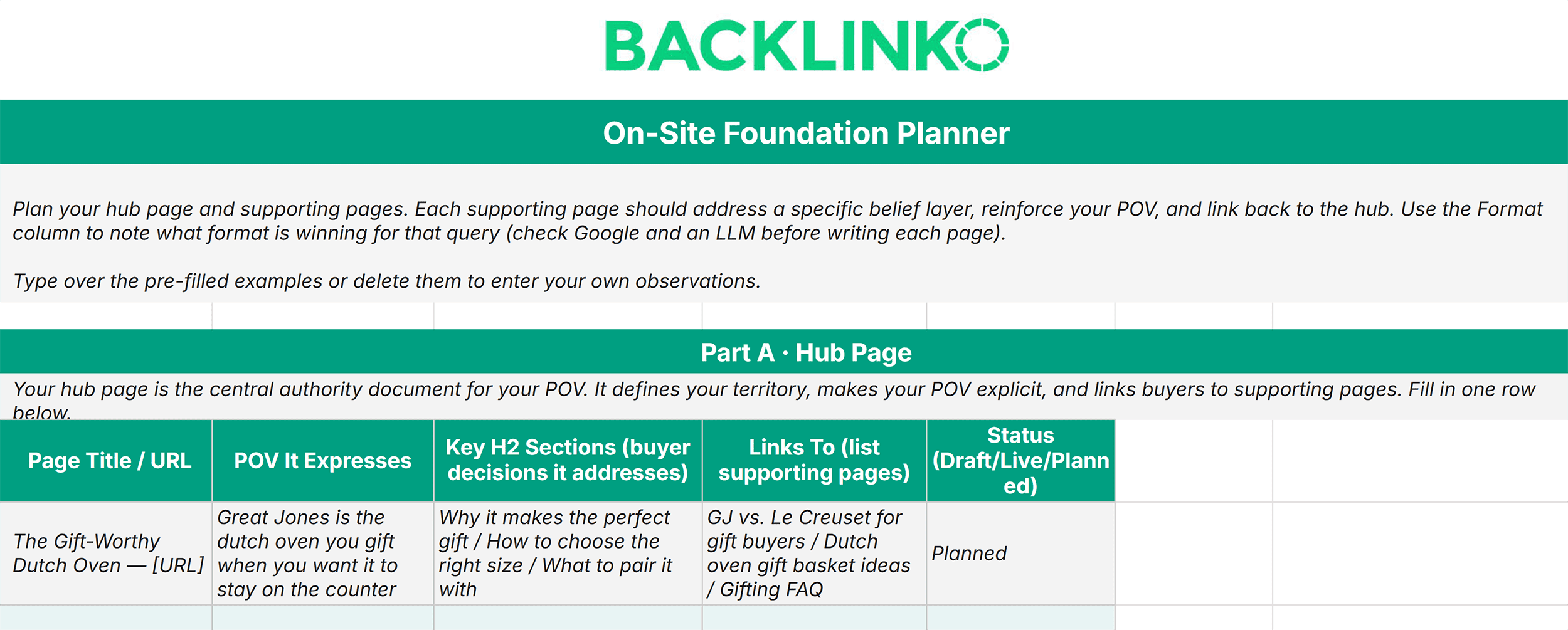
Before external entities can echo your POV, it must be firmly established on your own website. This step focuses on creating the central hub and supporting pages that integrate your topic, POV, and initial proof signals.
-
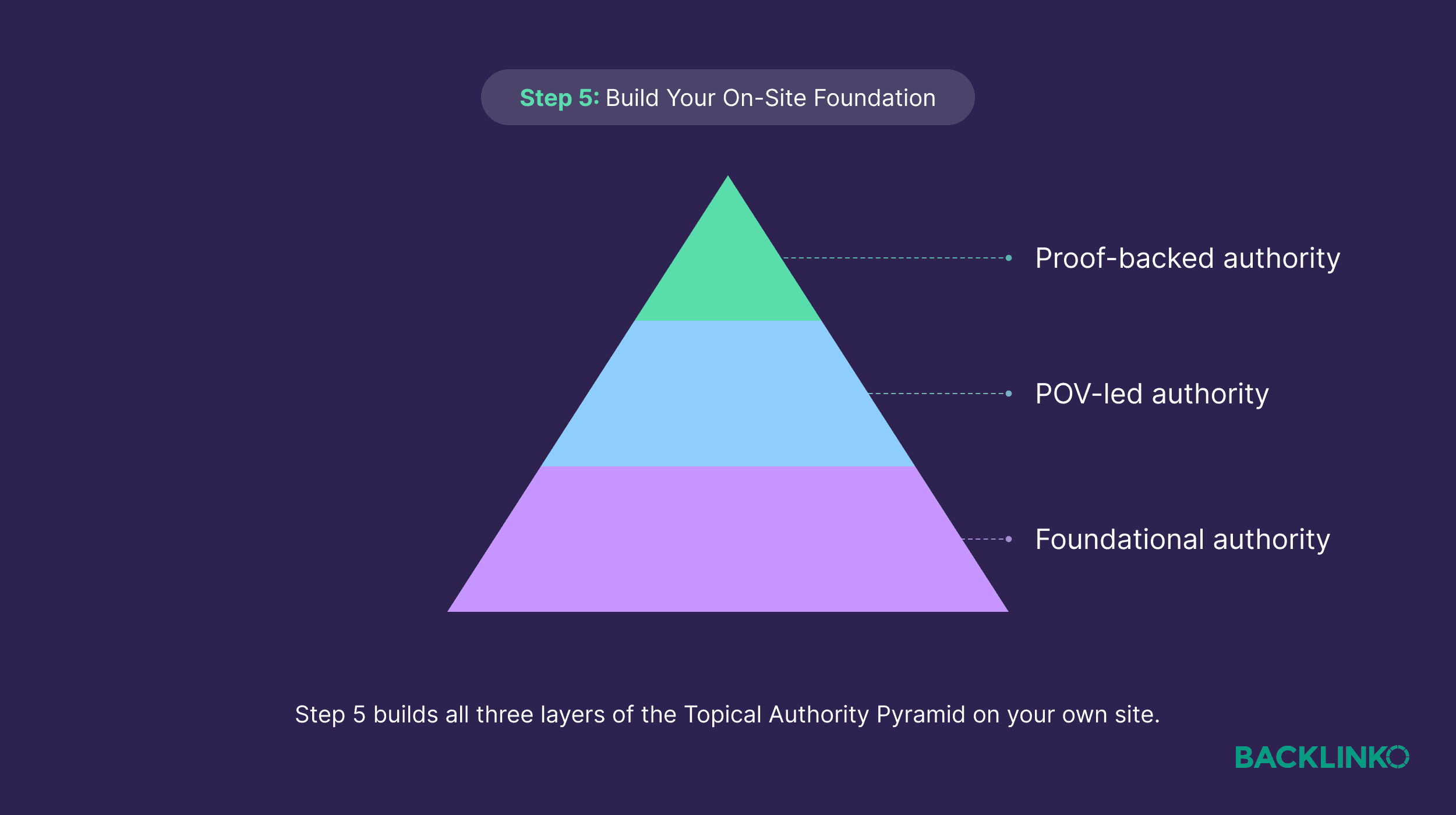
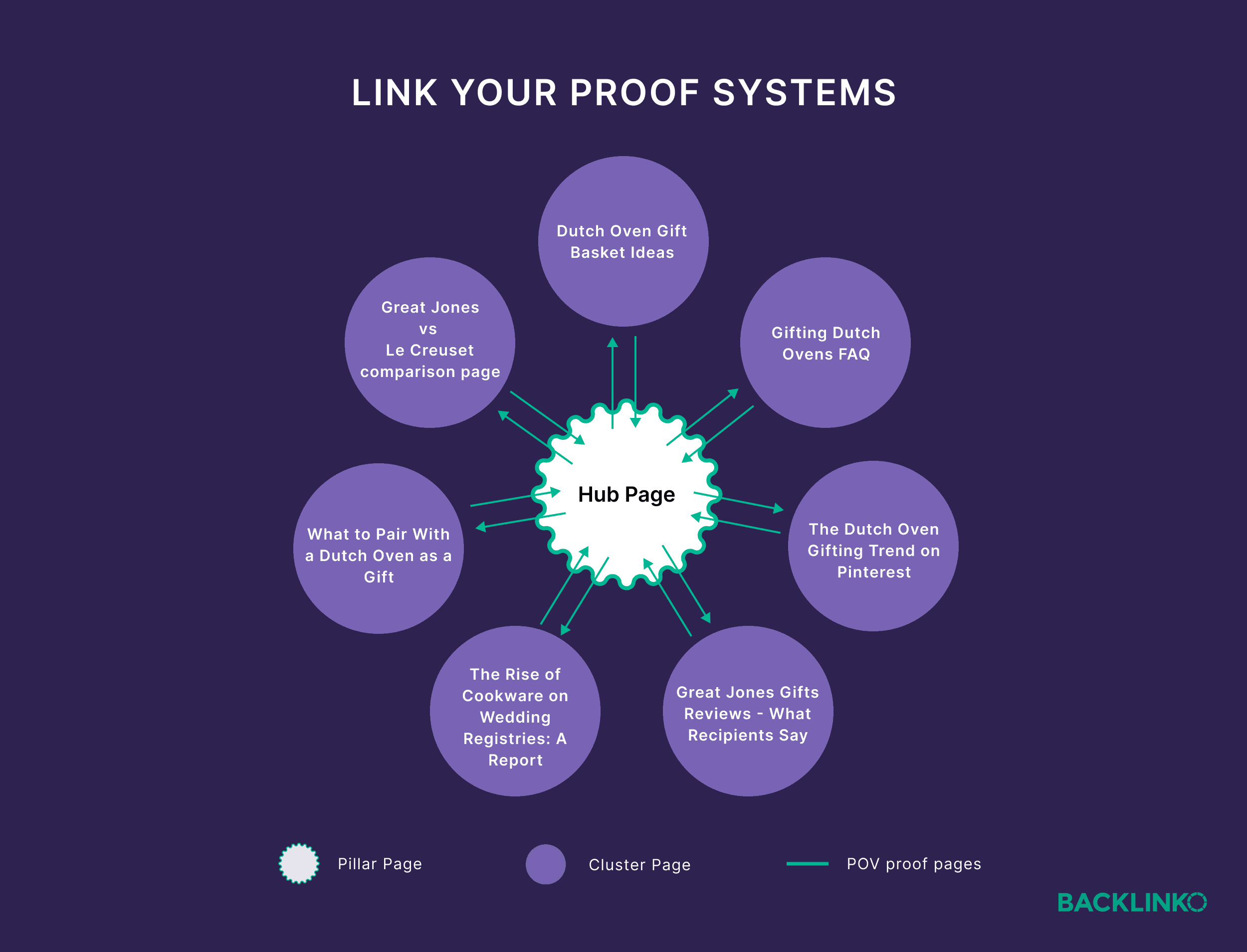
Create a Hub Page for Your POV: This is the authoritative cornerstone for your chosen topic and POV. For Great Jones, this could be a "Dutch Oven Gifting Guide." This page would define why Dutch ovens make exceptional gifts, link directly to The Dutchess product page, and provide navigational pathways to supporting content.
-
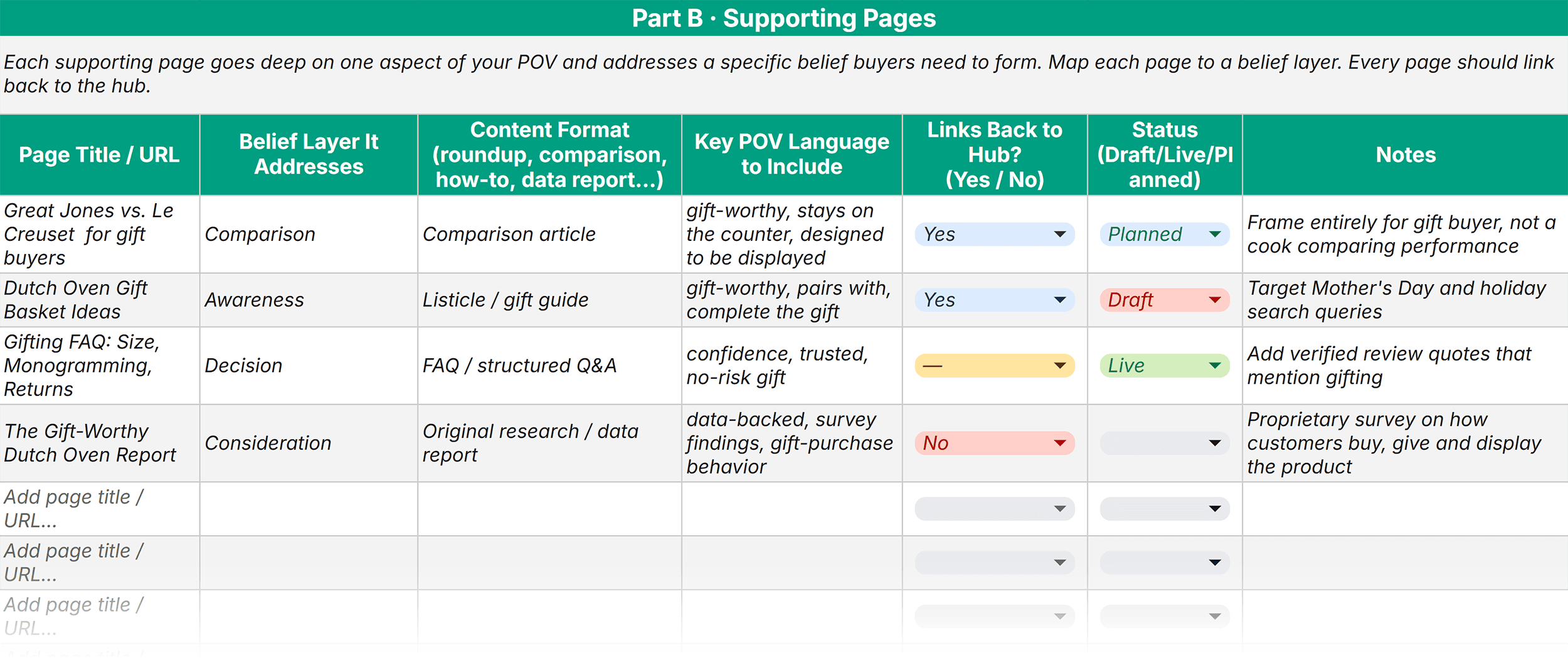
Build Supporting Pages: These pages delve deeper into specific aspects of your POV, offering proof relevant to different stages of the buyer journey. For Great Jones, this might include:
- "Curated Dutch Oven Gift Basket Ideas" (Consideration)
- "Gifting a Dutch Oven: Your FAQs Answered" (Active Evaluation)
- "The Science of Thoughtful Gifting: A Report on Cookware Trends" (Awareness)
- Dedicated comparison pages, backed by awards and expert endorsements, that position The Dutchess as the superior gift option.
-
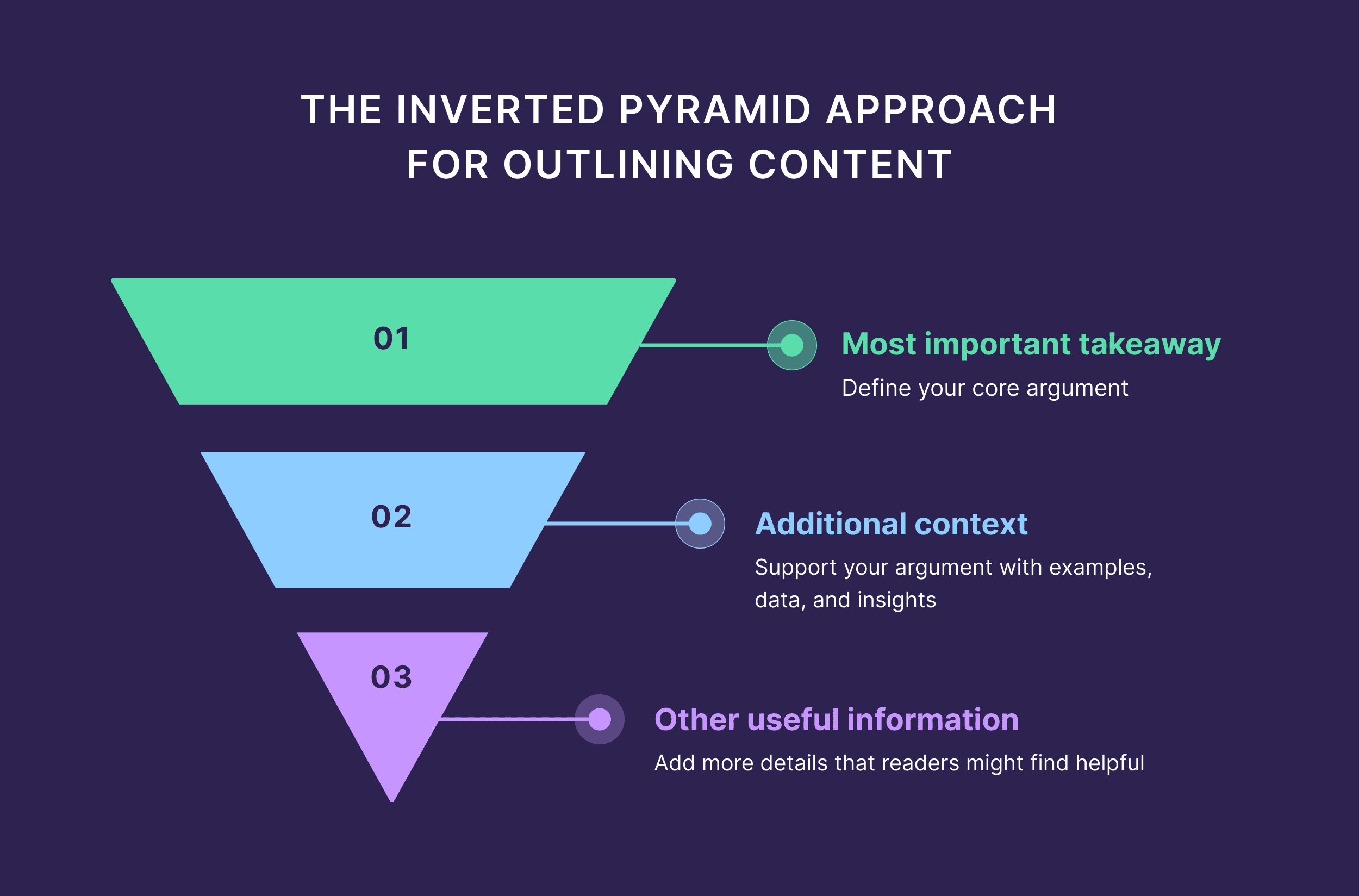
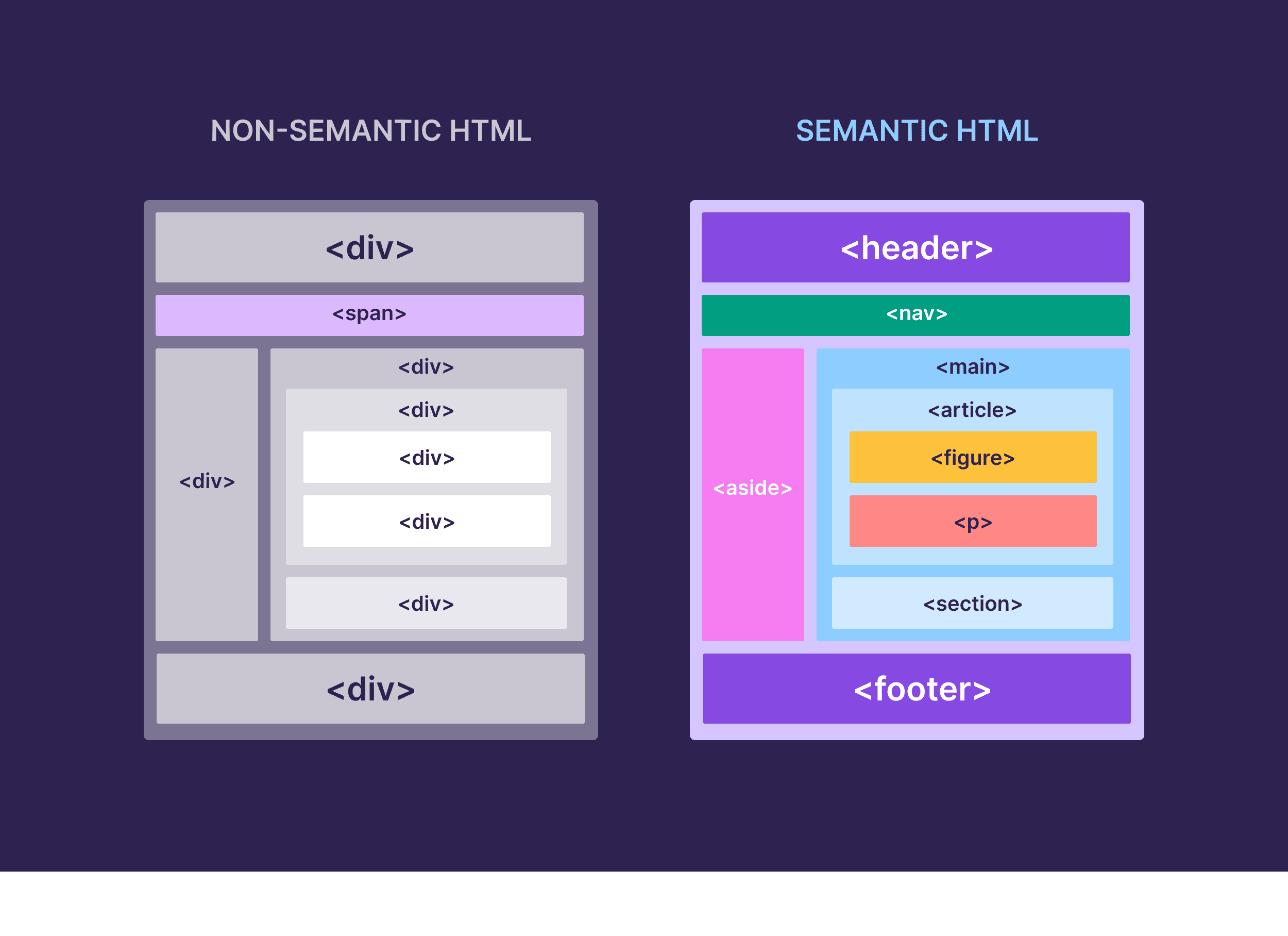
Structure Each Page for Readers and Machines: Employ an inverted pyramid structure, leading with the most critical information. Ensure pages utilize:
- Clear Headings (H1, H2, H3): Organizes content and signals topic hierarchy.
- Descriptive Internal Links: Connects related pages using keyword-rich anchor text.
- Semantic HTML: Uses appropriate tags (e.g.,
<article>,<section>,<aside>) to help search engines understand content context. - Schema Markup: Provides structured data to explicitly tell search engines about the page’s content and its relationship to your brand and topic.
-
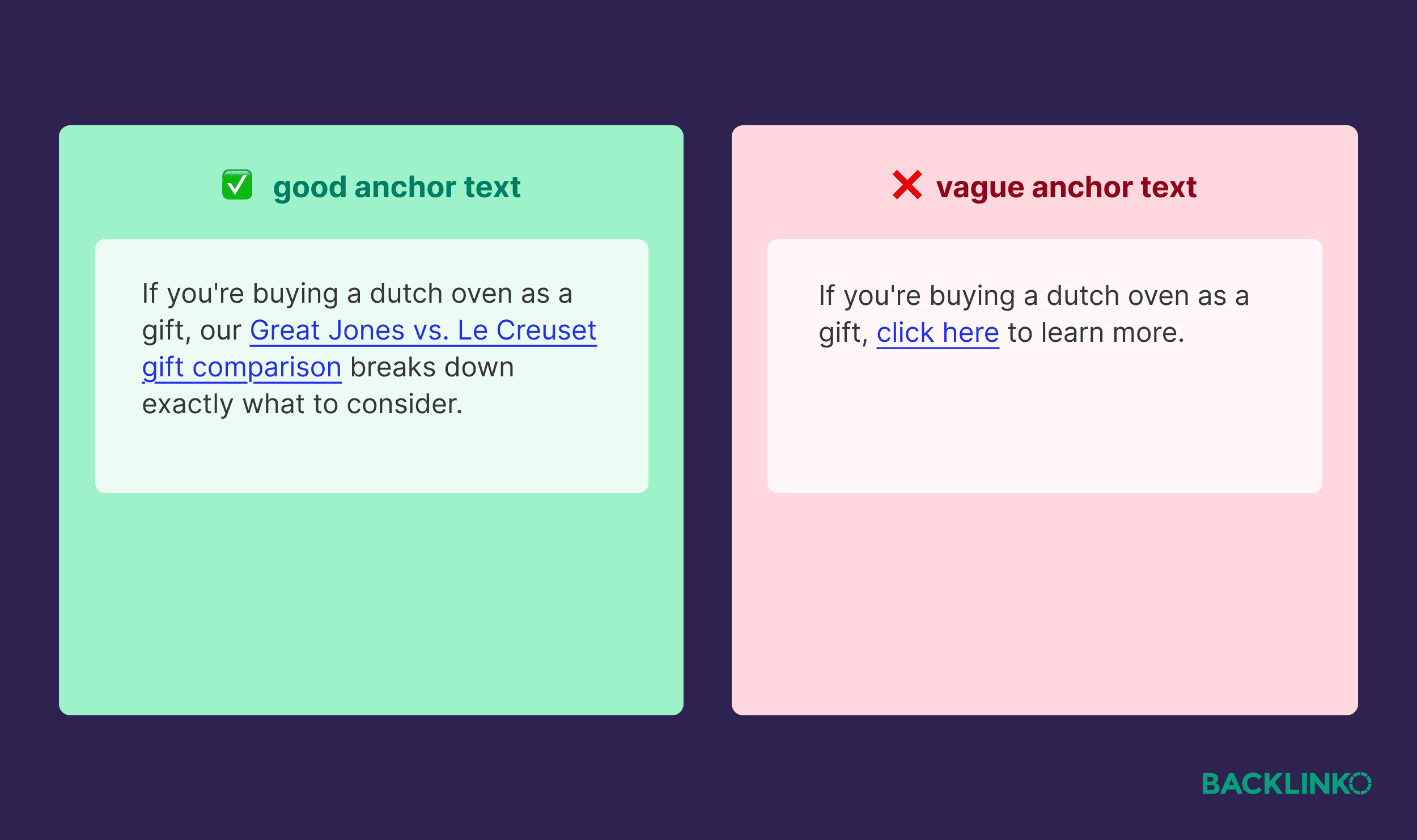
Link Your Pages: Establish a robust internal linking strategy. The hub page should link to all supporting pages, and supporting pages should link back to the hub and other relevant internal resources. Use descriptive anchor text (e.g., "our award-winning Dutch oven for weddings") rather than generic phrases ("click here"). This interconnected network strengthens the topical signal for search engines.
Step 6: Create an Off-Site Proof System
A compelling POV and a well-structured on-site foundation are insufficient if your brand’s unique association remains confined to your website. The contemporary digital landscape, particularly with AI search, necessitates external validation from trusted third-party sources. As Amanda Milligan emphasizes, "AI looks for external evidence that supports your position." This step focuses on reinforcing your POV in the external spaces where buyers and AI systems gather information.
-
Start with One Signature Proof Point: Develop an original, data-driven insight or compelling story related to your chosen topic and POV. This "signature proof point" should be something that external parties would naturally want to reference, share, or expand upon. For Great Jones and their "gifting" POV, this could be a proprietary study revealing a "4x surge in Dutch oven purchases two weeks before Mother’s Day," which they could package as a "State of Mother’s Day Cookware Gifting" report.
-
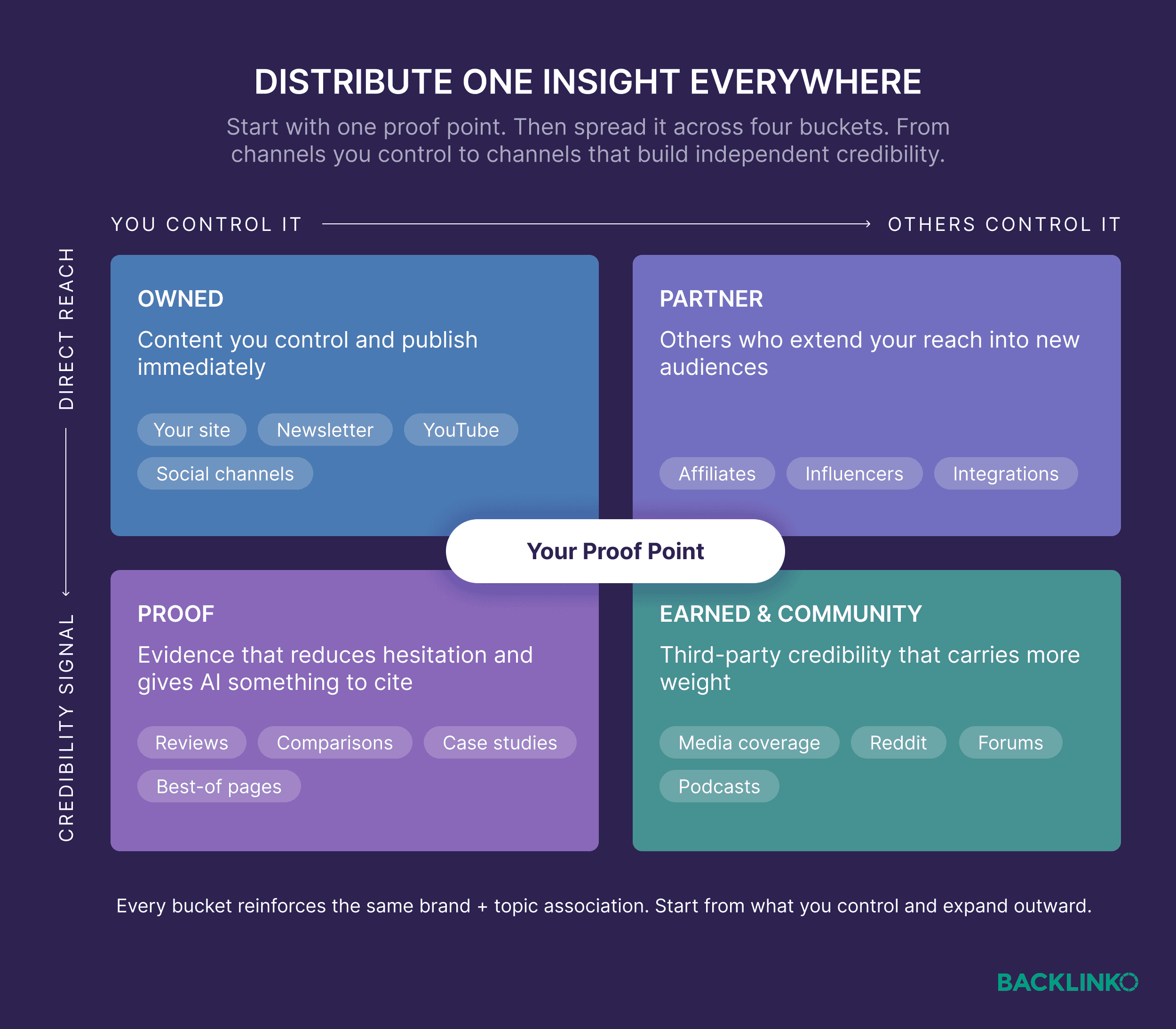
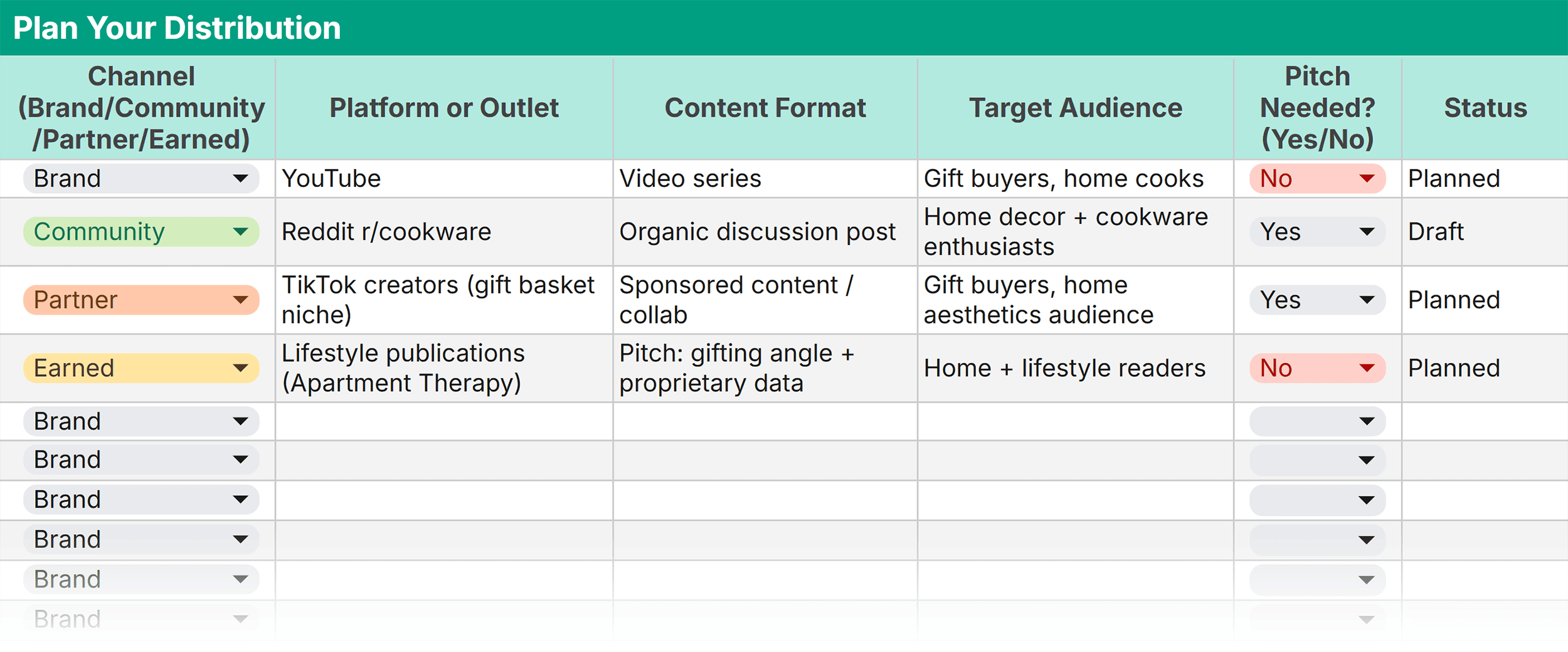
Distribute Your Proof Point Widely: Leverage existing brand equity and media relationships to disseminate your signature proof point across various channels:
- Public Relations: Pitch the report to lifestyle, home, and culinary publications (e.g., Real Simple, Food & Wine).
- Social Media: Create engaging content (infographics, videos) derived from the report for platforms like Instagram, TikTok, and Pinterest.
- Community Engagement: Share key findings and discussions in relevant online forums (e.g., Reddit’s r/gifts, cooking communities).
- Paid Media: Run targeted campaigns promoting the insight and its connection to your product.
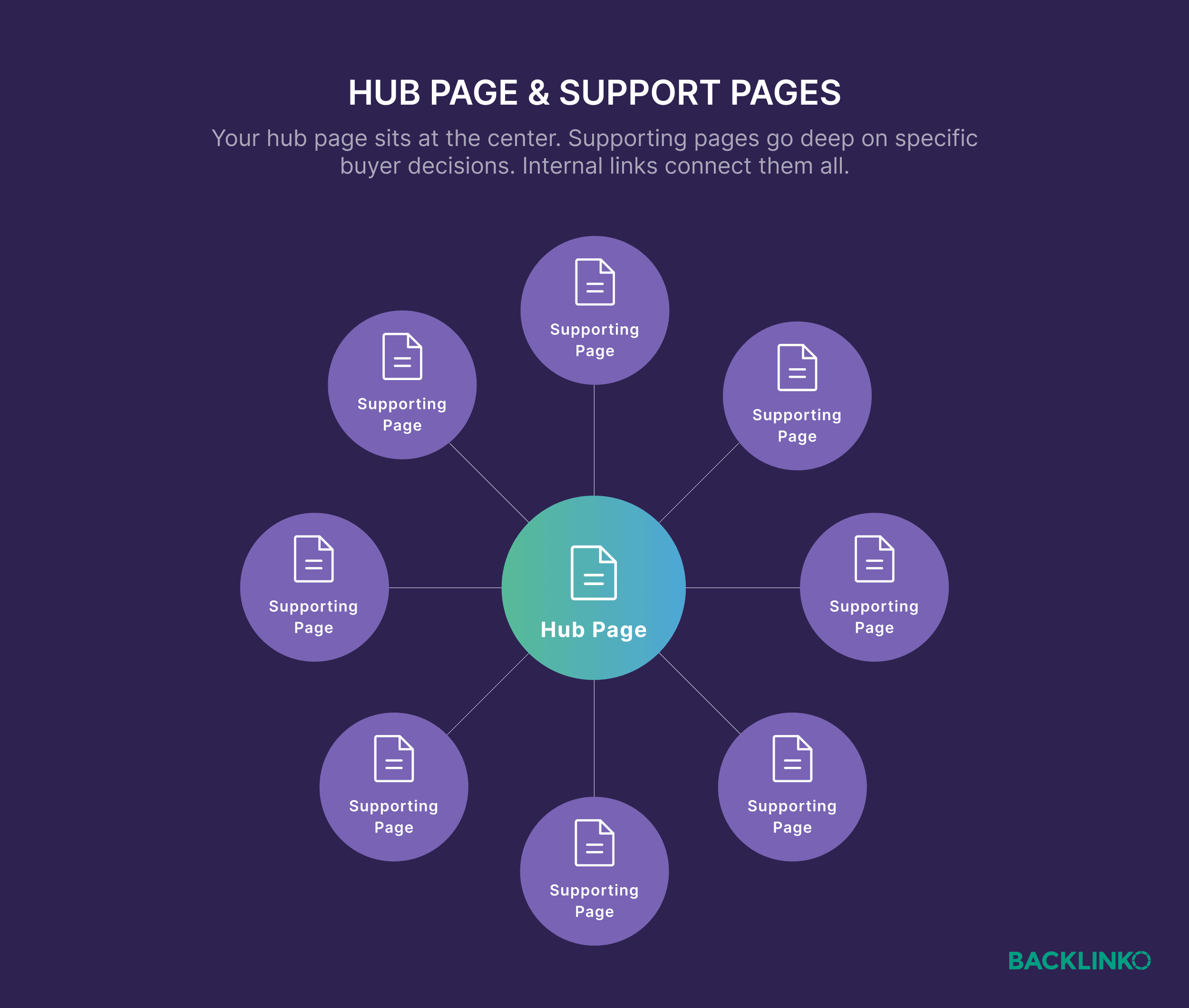
For Great Jones, this would mean turning their "gifting report" into a press release for InsideHook, a video showcasing gift-wrapping ideas for The Dutchess on YouTube, and a discussion thread in r/gifts about thoughtful kitchen presents. This focused distribution ensures the "Great Jones = gifting" association is consistently broadcast.
Step 7: Track Topical Authority Progress
The final, continuous step is to monitor the impact of your efforts. Are search engines and LLMs beginning to reflect your desired topical association?
-
Foundational Layer: Are You Showing Up More? Track the growth of your topical footprint. Rerun the initial query audit (from Step 2) at 30, 60, and 90-day intervals to see if your brand appears unprompted for non-brand queries. Monitor organic search performance using tools like Google Search Console (GSC) and Semrush’s Position Tracking for:
- Increased rankings for target keywords.
- Rising impressions and clicks for queries related to your topic and POV.
- New pages ranking for previously untargeted, relevant queries.
For Great Jones, showing up in the top results for "Dutch ovens for gifting" or related queries would signify tangible progress.
-
POV Layer: Are You Being Described Correctly? This layer tracks language and sentiment. Monthly, run POV-specific prompts on LLMs and search engines, observing the wording. When The Dutchess appears in reviews or listicles, does the language consistently echo your chosen POV (e.g., "a great house-warming gift," "splurge-worthy," "the kind of gift that gets displayed")? Tools like Semrush’s Brand Monitoring and Brand Perception can help track brand mentions and analyze the associated sentiment and keywords.
-
Proof Layer: Are Others Confirming Your POV? Monitor third-party validation. Is your signature proof point being cited or referenced by other publications or influencers? This indicates successful off-site distribution. Beyond that, track whether your brand is increasingly recommended unprompted in niche communities or discussions. Are your hub pages attracting high-quality backlinks from relevant external sites? Set up Google Alerts for "[Your Brand] + [POV]" to capture new mentions. For Great Jones, seeing The Dutchess explicitly named in wedding gift guides as "the top Dutch oven for wedding gifts" would be a clear indicator of success.
Broader Implications for Brands in the AI Search Era
The Great Jones example vividly illustrates that product excellence and traditional PR, while valuable, are no longer sufficient to secure definitive topical authority. In an era dominated by AI-powered search and content generation, the nuanced signals of consistent, positive framing across diverse trusted sources are paramount. Brands that fail to proactively build this pattern risk being overlooked by both human consumers and algorithmic gatekeepers.
This framework is not confined to kitchenware; its principles are universally applicable across e-commerce, SaaS, finance, and any industry where digital visibility is critical. For a SaaS company, it might mean establishing authority around a specific business problem it solves. For a financial institution, it could be owning the conversation around a particular investment strategy. The imperative is clear: identify a valuable, defensible topic, articulate a unique POV, build comprehensive on-site content to support it, and strategically disseminate proof across the digital ecosystem.
By diligently applying the Topical Authority Pyramid, brands can move beyond mere presence to become the definitive, go-to name in their niche. As the digital landscape continues its rapid evolution with AI at the forefront, those who master topical authority will not only survive but thrive, earning default recommendations and lasting customer loyalty. The path to digital dominance now demands a strategic, holistic approach to expertise, a pattern that, once built, ensures your brand stands out when it matters most.