The Complete Guide to Monetizing Your Instagram Account in 2026: Strategies, Tools, and Earnings Potential

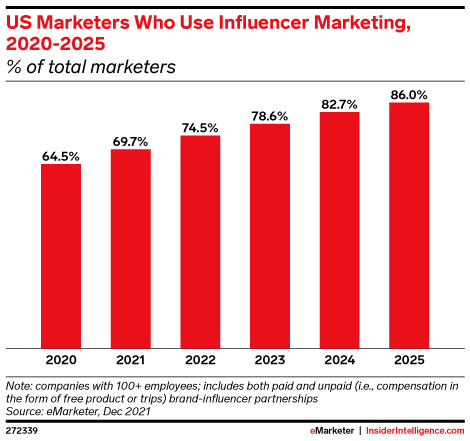
The digital creator landscape has evolved significantly over the past half-decade, transforming social media engagement from a hobby into a multi-billion-dollar global economy. As influencer marketing expenditures continue to scale—surpassing $10.5 billion in the United States alone during 2025 and projected to reach even higher milestones by 2027—platforms like Instagram have cemented their status as foundational revenue drivers for content creators, independent artists, and digital entrepreneurs.
Unlike the early days of social media, where monetization was largely restricted to macro-influencers and high-profile celebrities, the modern creator economy relies heavily on micro- and nano-influencers. Industry data indicates that creators with smaller, highly engaged followings command significant market share, capturing a substantial portion of total brand spending. This democratization of earnings has been propelled by structural shifts within Instagram itself, blurring the historical lines between content creation, direct-to-consumer social commerce, and digital entrepreneurship.

Foundational Setup: Preparing Your Instagram Account for Revenue Generation
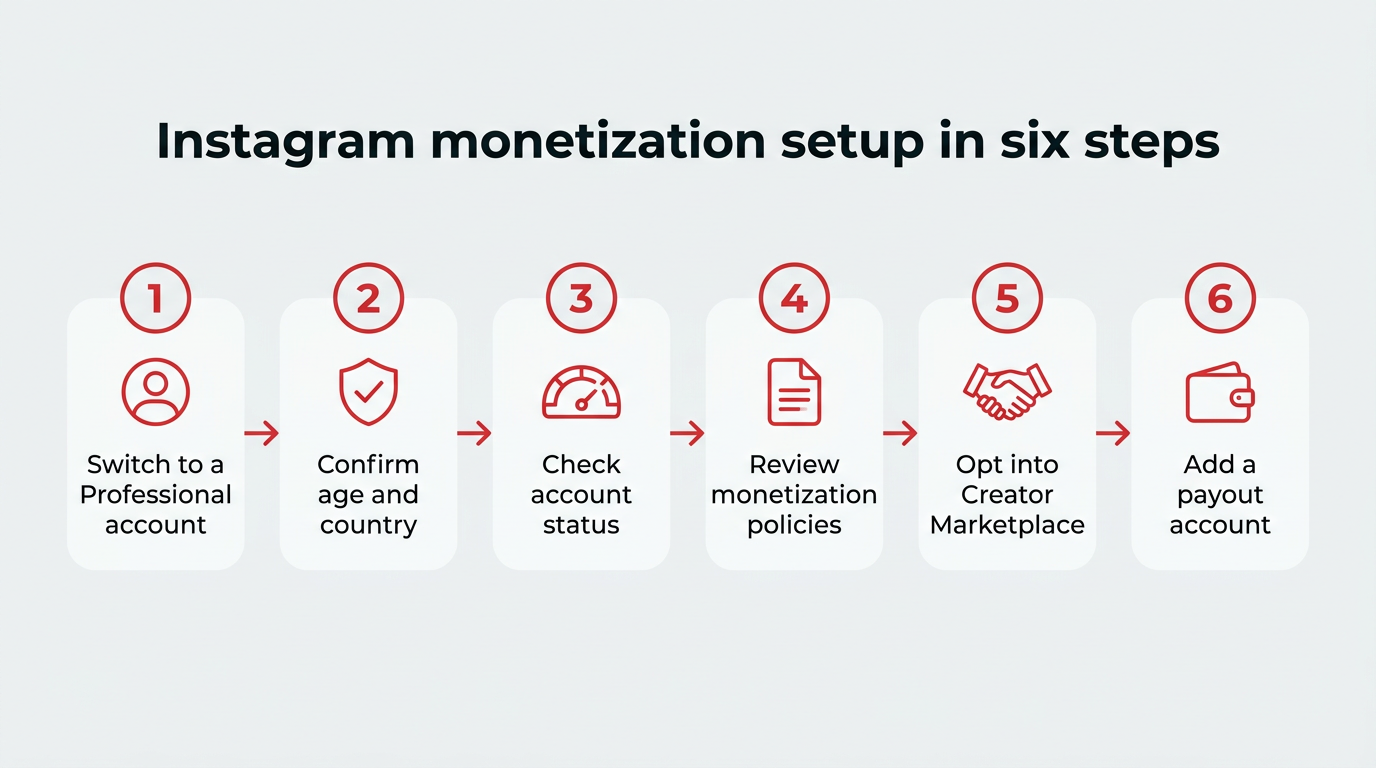
Before any creator can tap into Instagram’s native monetization features or secure lucrative brand partnerships, optimizing account architecture is an essential prerequisite. Failing to meet baseline administrative and algorithmic standards can instantly disqualify an account from revenue programs.
The transformation process begins by shifting a standard profile into a Professional account. Accessible via the application settings under account management tools, creators must choose between a Creator profile or a Business profile. The Creator classification is specifically tailored for public figures, artists, photographers, and independent influencers, offering specialized category labels and expansive analytics. Conversely, the Business classification is optimized for retail brands and service providers operating under a corporate entity.
Once the account profile is updated, creators must navigate to the Professional Dashboard to review their account status. This diagnostic hub reveals algorithmic eligibility, flags any content violations that might restrict profile distribution, and indicates whether the account is approved to be recommended to non-followers. Additionally, opting into the native Creator Marketplace allows accounts to populate a searchable profile featuring niche metrics, audience demographics, and collaboration preferences, thereby streamlining the inbound brand partnership process without requiring cold outreach.

Twelve Diversified Streams of Instagram Revenue
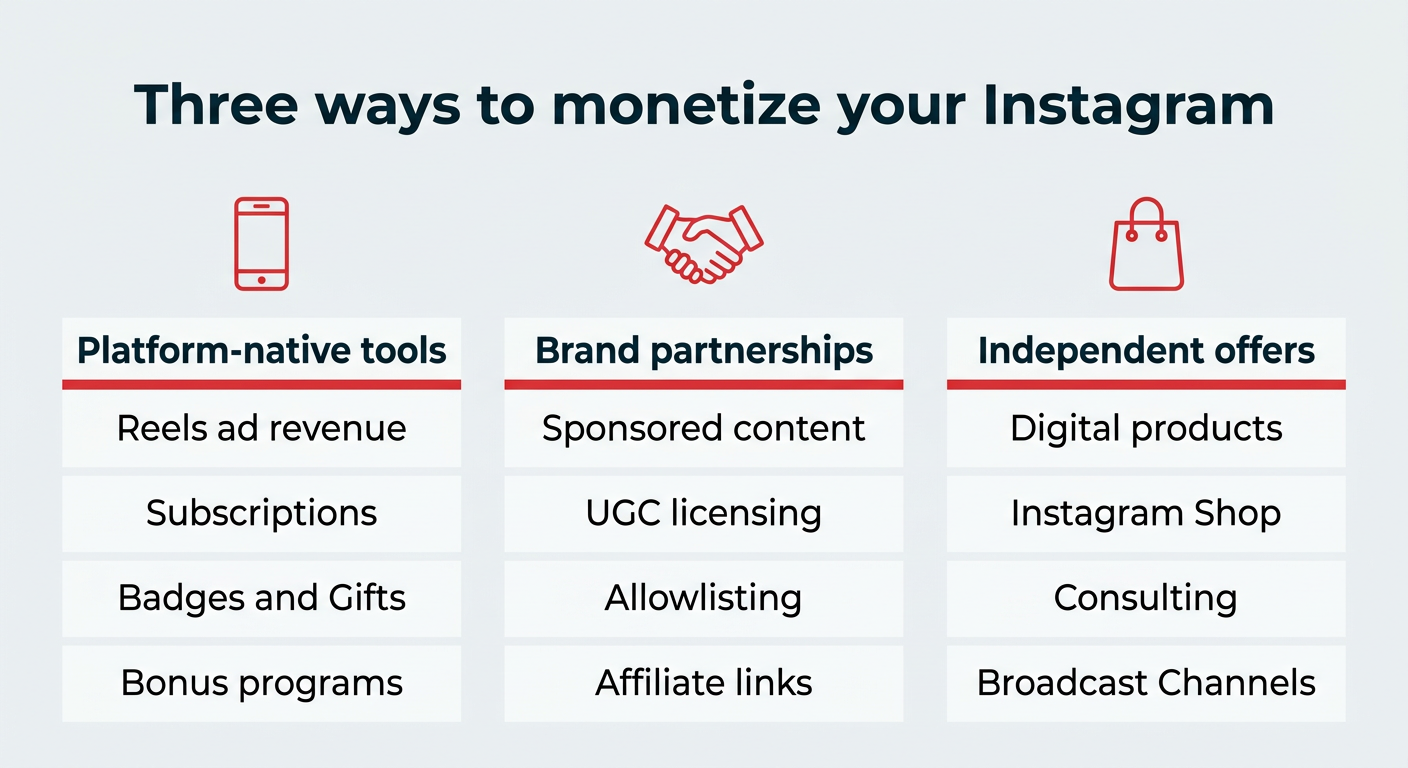
Modern monetization is rarely reliant on a single income source. Successful digital entrepreneurs typically stack multiple revenue streams to build resilient, full-time financial models. These strategies generally fall into three overarching categories: brand partnerships, platform-native tools, and independent business models.
1. Sponsored Content and Brand Partnerships
Collaborating directly with commercial entities remains a cornerstone of influencer marketing. Brands routinely compensate creators for in-feed photo placements, multi-frame Stories, and high-performing Reels. Rather than overt, traditional commercial spots, modern branded content prioritizes authenticity, seamlessly weaving product placement into native storytelling formats such as "get-ready-with-me" videos or day-in-the-life documentation. Micro-influencers frequently excel in this sector, as their specialized audience trust often translates to higher conversion rates for partner brands.
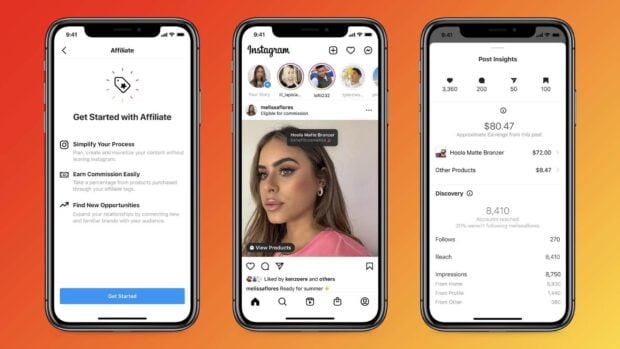
2. Affiliate Marketing Programs
Affiliate marketing allows creators to earn commissions by driving traffic and sales through trackable links. The democratization of story link stickers and the ability to host multiple URLs within a profile bio have made affiliate marketing exceptionally lucrative. By integrating links via Amazon Associates, LTK, ShareASale, or Rakuten into Story frames, bio link hubs, and broadcast messages, creators can establish passive income streams where published content continues generating revenue long after its initial upload.
3. Reels Ad Revenue Sharing
To incentivize original video production, Instagram compensates qualifying creators through ad revenue-sharing models centered around Reels. Rather than offering a flat payout per thousand views, earnings fluctuate based on niche advertising demand, viewer geography, and total qualifying video plays. Because invitation criteria and regional rollouts vary, maintaining consistent, original video output is vital for algorithmic consideration.
4. Native Instagram Subscriptions
Instagram Subscriptions provide a predictable, recurring monthly income model by allowing followers to pay a set fee—ranging from nominal amounts to higher tiers—for exclusive access to gated content. Subscribers receive a distinct identifier badge in comments and unlock exclusive Stories, Lives, Reels, and direct messaging channels. This model shifts the financial burden away from algorithmic reach, allowing creators to focus directly on deep audience monetization.
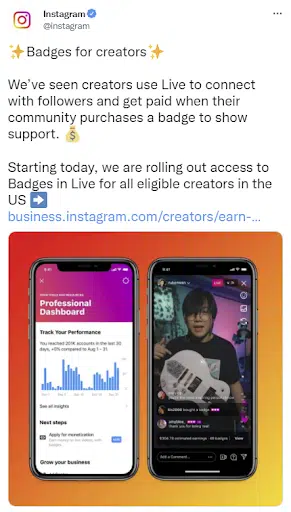
5. Live Badges and Virtual Gifts
During live streaming sessions and within eligible Reels, audiences can purchase virtual Badges and Gifts to display financial support and appreciation. These digital tokens translate directly into creator earnings, rewarding those who foster genuine community loyalty and interact directly with their base during real-time broadcasts.
6. Digital Products and Educational Resources
Selling digital assets—such as preset packs, e-books, online courses, templates, and downloadable guides—yields some of the highest profit margins in the creator economy. Because digital inventory has zero marginal fulfillment cost, creators keep nearly all revenue after payment processing fees. Utilizing profile link hubs, pinned posts, and automated direct messaging tools ensures a seamless pathway from free content discovery to paid conversion.
7. Social Commerce via Instagram Shops
For creators and merchants selling physical goods, integrated Instagram Shops allow users to browse and purchase items directly within the application interface. Product tagging across feeds, Stories, and Reels removes checkout friction, converting passive viewers into paying customers without forcing them to navigate to external e-commerce sites.
8. User-Generated Content (UGC) and Content Licensing
Brands frequently purchase creator-produced content exclusively for use on corporate marketing channels or as paid social advertisements, bypassing the need for publication on the creator’s personal profile. In UGC licensing, the value lies strictly in production quality and aesthetic execution rather than audience size, enabling newer creators with small followings to secure substantial contracts. Furthermore, allowlisting permits brands to run paid advertisements directly from a creator’s handle, commanding premium usage fees.
9. Broadcast Channels as Funnel Drivers
Broadcast Channels provide a one-to-many messaging format where creators can push updates directly to subscriber inboxes. While not a direct monetization tool, these channels act as powerful conversion funnels, boasting higher open and engagement rates than traditional feed posts due to the self-selected nature of the audience.
10. Consulting, Coaching, and Mentorship
Content that establishes clear subject-matter expertise creates an immediate demand for personalized advisory services. Whether offering portfolio reviews for photographers, strategic audits for marketers, or customized fitness programming, creators can utilize booking links within their profiles to monetize their knowledge directly.
11. Exclusive Access via Close Friends Lists
Operating similarly to formal subscription tiers, creators can manually curate a Close Friends list composed of paying members who secure access through external billing platforms. This workaround allows creators to monetize gated content even in geographic regions where native subscription tools are unavailable.
12. Algorithmic Bonus and Incentive Programs
Instagram periodically rolls out performance-based bonus payouts tied to specific content milestones, such as high-volume Reels plays or livestream engagement. While unpredictable and invitation-only, remaining active and compliant within the platform ecosystem positions creators to capitalize on these unexpected revenue injections.
Evaluating Brand Deal Pricing and Valuation Metrics
Determining appropriate compensation for brand partnerships remains one of the most significant challenges for emerging creators. While legacy benchmarks suggested charging nominal baseline rates per follower tier, modern valuation requires analyzing engagement rates, audience demographics, content formatting, and commercial usage rights.
A contemporary baseline valuation maps across various content formats based on audience size:
- 1K to 10K Followers: $75–$350 per asset
- 10K to 50K Followers: $150–$1,000 per asset
- 50K to 100K Followers: $450–$2,500 per asset
- 100K to 500K Followers: $900–$7,500 per asset
- 500K+ Followers: $3,000–$7,500+ per asset
Alternatively, pricing via Cost Per Engagement (CPE) calculates a rate based on recent interaction averages (likes, comments, shares, and saves) multiplied by a standard baseline factor typically ranging between $0.14 and $0.20 per interaction. Additionally, failing to charge separately for commercial usage rights, whitelisting permissions, and exclusivity clauses represents the primary way creators underprice their value in commercial negotiations.
Policy Compliance and Disclosure Mandates
Sustaining long-term monetization viability requires strict adherence to platform guidelines and regulatory statutes. Violating community standards or copyright policies can result in the immediate forfeiture of monetization eligibility across all features.
Furthermore, legal bodies such as the Federal Trade Commission (FTC) mandate transparent disclosures for all sponsored content. Creators are legally obligated to utilize native paid partnership tags, insert clear disclosures near the beginning of captions, and verbally acknowledge commercial relationships within video media to maintain consumer trust and regulatory compliance. Through diligent strategy diversification, transparent pricing models, and adherence to platform policies, creators can successfully transform their digital presence into a sustainable, scalable business model.
Related posts: