Beyond the Hype: How AI-Branded Laptops Are Reshaping the Creative Workflow

The technology landscape is currently undergoing a structural transformation unlike any seen since the dawn of the internet or the shift to mobile computing. Artificial intelligence, once confined to academic research laboratories and theoretical computer science papers, has thoroughly permeated every facet of the modern digital ecosystem. From automated logistics and enterprise-level data analysis to the most delicate realms of human artistic expression, AI is fundamentally altering how industries operate. Creative professionals—designers, animators, filmmakers, and digital artists—find themselves at ground zero of this seismic disruption. For many, the daily news cycle brings an overwhelming wave of announcements detailing how generative algorithms are threatening traditional jobs, radically lowering production overhead, and redefining what it means to create.
Amid this broader cultural and professional anxiety, the hardware sector has aggressively pivoted to capitalize on the trend. Laptop manufacturers across the globe have flooded the market with devices featuring dedicated Neural Processing Units (NPUs) and marketing campaigns explicitly tethered to artificial intelligence. Consumers and professionals shopping for a standard, high-performance mobile workstation now find it increasingly difficult to purchase a machine that does not bear the letters "AI" somewhere in its marketing collateral or technical specifications. This rapid market saturation has sparked a fierce debate among tech reviewers and creative purists alike: are these AI-branded laptops genuine technical breakthroughs tailored for modern digital pipelines, or are they simply a marketing gimmick designed to force unnecessary upgrades onto an already fatigued consumer base?
The Industry Shift: Promises of Efficiency Versus Creative Anxiety
The tension between technological advancement and creative preservation is palpable across the entire media production ecosystem. In the film and animation sectors, corporate leaders and software developers are championing AI as a transformative economic savior. Recently, industry discussions highlighted explosive claims from emerging technology firms partnering with traditional giants like Autodesk. Executives from AI-driven filmmaking ventures have publicly asserted that specialized generative algorithms can slash overall production costs by up to 95 percent, framing artificial intelligence as a necessary tool to fix what they perceive as a broken, financially unsustainable film industry.
While corporate stakeholders view these cost-saving measures as a vital evolution, ordinary artists and independent creators often view them with a mixture of skepticism and existential dread. The fear is that the unique human touch—the nuance, emotional depth, and distinct perspective inherent in genuine art—will be diluted or entirely replaced by algorithmic efficiency. This underlying anxiety has naturally bled over into how creatives perceive the tools they use every day. When hardware manufacturers began appending "AI" to the names of laptops, many in the creative community dismissed it as an unwelcome intrusion of corporate buzzwords into devices meant strictly for professional productivity. Reviewers and industry analysts grew fatigued by the relentless branding push, warning that buyers were being nudged toward expensive hardware configurations optimized for workloads they may neither want nor need.
Putting the Hardware to the Test: Real-World Creative Workloads
To look past the marketing hyperbole and determine the actual utility of these machines, industry experts have begun conducting rigorous real-world evaluations. Rather than accepting manufacturer claims at face value, testers have started subjecting the latest generation of hardware—such as AI-branded gaming and creator laptops—to punishing suites of localized generative workloads.
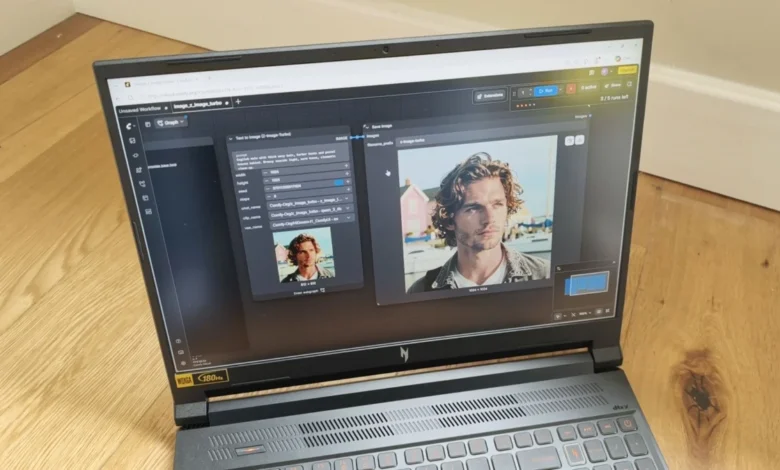
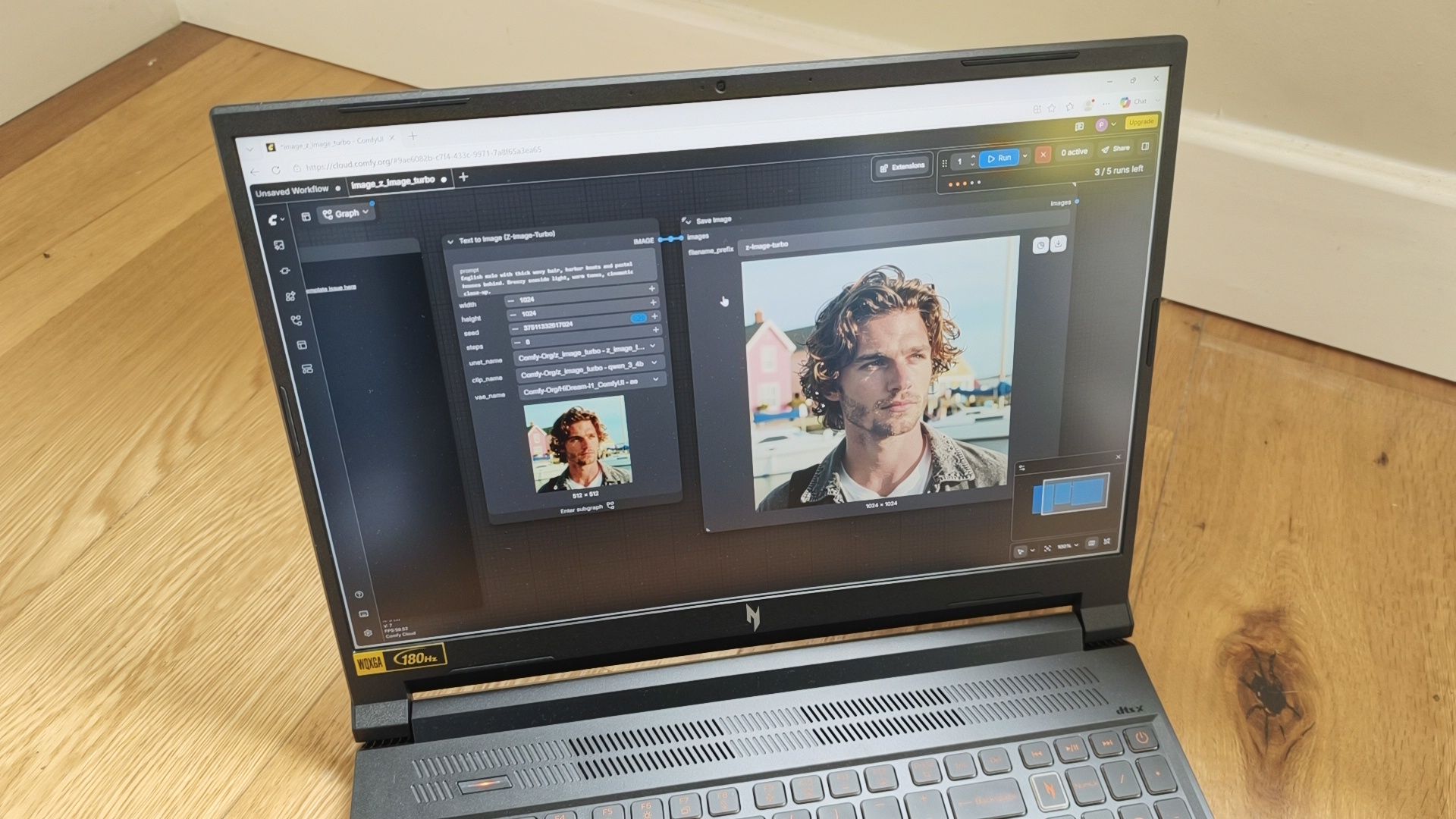
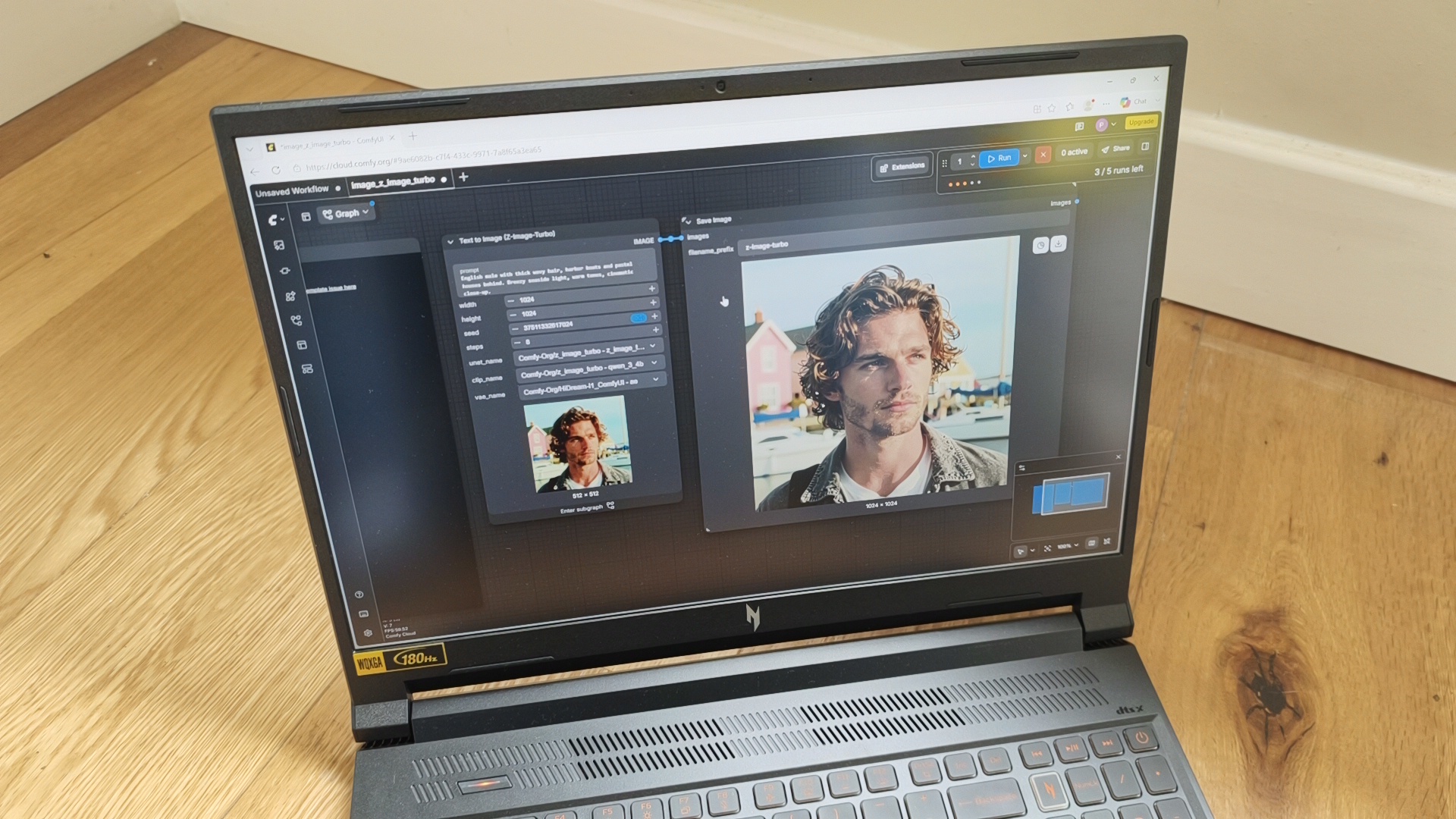
In recent evaluations of hardware like the Acer Nitro V 16 AI, testers pushed the devices well beyond standard benchmarking software, throwing intensive, local AI applications directly at the onboard architecture. Rather than buckling under the strain or proving incompatible with traditional workflows, these modern machines demonstrated unexpected resilience and capability. Tasks that previously required heavy, cloud-based server farms or dedicated desktop workstations—such as running complex ComfyUI pipelines, executing background generative fill operations in Adobe Photoshop, and driving real-time AI-powered video and audio enhancements through NVIDIA Broadcast—were handled with notable speed and reliability.
These practical findings suggest a stark dichotomy between the overhyped marketing terminology and the underlying technical reality. While the "AI" label attached to modern laptops is frequently commercialized to an exhausting degree, the underlying hardware components—specifically the integration of dedicated NPUs alongside powerful GPUs and multi-core CPUs—offer tangible performance benefits for contemporary digital artists. The challenge for the tech industry is bridging the gap between genuine technological capability and fatiguing promotional messaging.
Market Implications and the Future of Creative Hardware
As the hardware market continues to evolve, the integration of AI-capable silicon appears to be an irreversible trajectory rather than a fleeting trend. Semiconductor giants like Intel, AMD, Qualcomm, and NVIDIA have fully committed their product roadmaps to on-device neural processing, ensuring that future generations of laptops will feature even deeper AI integration by default.
This hardware shift carries significant implications for software developers, IT procurement specialists, and creative professionals. As software suites from Adobe, Autodesk, Blackmagic Design, and others increasingly rely on machine learning models to accelerate tasks like rotoscoping, audio cleanup, upscale resolution, and predictive layout design, having local hardware capable of handling these computations becomes a distinct professional advantage. Laptops equipped with robust NPUs can process AI workloads locally, which reduces latency, preserves data privacy by keeping sensitive creative assets off external cloud servers, and decreases power consumption compared to running equivalent tasks entirely on a discrete graphics card.
At the same time, the tech industry must navigate this transition carefully to avoid alienating its core user base. Hardware manufacturers face mounting pressure to adopt a more transparent and practical approach to product naming and specifications. Consumers and professionals desire clarity regarding what an NPU actually achieves in daily productivity workflows, rather than being subjected to generic buzzwords. Industry observers caution that if manufacturers continue down the path of hyper-segmentation—potentially introducing confusing tiers like "AI Pro" or hyper-specialized sub-brands—it risks creating market fatigue that could overshadow genuinely useful technological advancements.
Ultimately, the ongoing evolution of AI-integrated laptops reflects a broader maturation phase in the digital creative economy. While the initial wave of marketing has been met with justifiable cynicism, the underlying technology is proving its worth in the trenches of professional production. For the creative professional standing at the crossroads of hardware innovation and artistic tradition, the path forward involves separating the noise of corporate marketing from the undeniable utility of faster, smarter, and more capable computing tools.