Apple Taps Filmmaker Edgar Wright for High-Octane Martial Arts Commercial Highlighting Apple Pay Speed

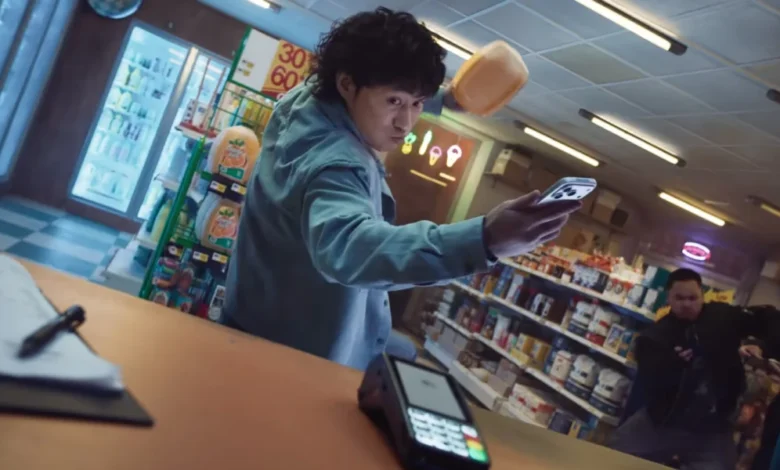
Apple Inc. has once again leaned into cinematic storytelling to promote its financial services, enlisting acclaimed British filmmaker Edgar Wright—renowned for his distinct visual style in films such as Baby Driver and Shaun of the Dead—to direct a high-octane, martial arts-inspired commercial for Apple Pay. The newly released advertisement contrasts the swift efficiency of digital wallet technology against the cumbersome nature of traditional physical payment methods, utilizing stylized fight choreography and dramatic pacing to underscore the speed and convenience of the iPhone-based service.
The Campaign Concept and Narrative Structure
The commercial’s central narrative revolves around an unlikely protagonist cornered in a convenience store who must fend off a group of adversaries. Eschewing standard product demonstrations, Wright applies his signature rapid-fire editing, snap zooms, and rhythmic action beats to the retail setting.
In the storyline, the hero utilizes everyday convenience store items as improvised weaponry, but only after executing a seamless, split-second transaction using Apple Pay. Conversely, the antagonists are hindered by conventional physical wallets, fumbling with cash, paper receipts, and traditional credit cards. This delay proves fatal to their tactical advantage, leaving them vulnerable to the protagonist’s swift counterattacks. The visual metaphor clearly implies that physical wallets slow consumers down in critical, fast-paced environments, whereas Apple Pay provides immediate authorization through a double-click of the iPhone’s side button and biometric verification via Face ID.
This strategy follows a similar marketing blueprint established by Apple in late 2025. In December of that year, the technology giant released a humorous, cinematic advertisement featuring a driver urgently needing a gas station fill-up while a towering, Godzilla-like monster wreaked havoc on a nearby town. Both campaigns share a common thematic core: demonstrating how seconds saved at the point of sale translate to tangible advantages when stakes are high, whether dealing with fictional movie monsters or choreographed convenience store brawls.

The Evolution and Background of Apple Pay
Since its introduction in October 2014 under the leadership of CEO Tim Cook, Apple Pay has evolved from a novel digital wallet into a dominant force in global mobile commerce. Initially launched in the United States with support from major credit card networks—including American Express, MasterCard, and Visa—and a handful of issuing banks, the service has expanded exponentially over the past decade.
Apple’s primary value proposition at launch was enhanced security compared to traditional magnetic stripe and chip-and-PIN cards. By utilizing tokenization—whereby a unique Device Account Number is assigned, encrypted, and securely stored in the device’s Secure Element—actual credit or debit card numbers are neither stored on the device nor shared with merchants during transactions. Furthermore, authentication requiring biometric measures such as Touch ID or Face ID adds an additional layer of protection against unauthorized physical use.
Over the years, Apple has systematically broadened the utility of the platform. The service expanded beyond basic point-of-sale terminal purchases to encompass in-app transactions, website checkouts via Safari, peer-to-peer payments through Apple Cash, transit fare payment systems in major global metropolises, and student ID integration. More recently, financial service extensions like Apple Card and the "Buy Now, Pay Later" (BNPL) offering, Apple Pay Later, have further integrated the ecosystem into consumers’ daily financial management.
Strategic Implications for Mobile Payment Adoption
Industry analysts note that high-profile, entertaining marketing campaigns are crucial for maintaining user engagement and driving adoption rates in an increasingly crowded digital payments market. While mobile wallet adoption has grown substantially, consumer habits can remain entrenched, particularly among demographics accustomed to physical card usage or cash transactions.

By utilizing high-concept, cinematic humor directed by mainstream auteur filmmakers like Edgar Wright, Apple effectively reaches audiences that might otherwise tune out standard, utility-focused financial advertisements. The approach frames Apple Pay not merely as a utilitarian tool for purchasing goods, but as a lifestyle upgrade that prioritizes friction-free efficiency.
Competitors in the mobile payment space, including Google Pay (now Google Wallet) and Samsung Pay, alongside proprietary bank apps, continuously innovate to match or exceed the convenience metrics established by Apple. However, Apple’s tight hardware-software integration—leveraging the dedicated Secure Element and seamless biometric authentication—continues to provide a competitive moat that bolsters user trust and transaction velocity.
Industry Data and Market Penetration
According to recent financial technology market research, mobile wallet transactions have experienced double-digit compound annual growth rates globally. Factors accelerating this shift include the proliferation of contactless payment terminals mandated by retail networks, post-pandemic hygiene preferences, and the widespread saturation of NFC-enabled smartphones.
Apple Pay commands a significant share of the global near-field communication (NFC) mobile payment volume, particularly in mature markets such as the United States, the United Kingdom, Canada, and Australia. In the U.S. alone, studies indicate that a vast majority of major retail chains, transit systems, and convenience stores now accept contactless payments, aligning with Apple’s marketing message that the service can be utilized "from big box retailers to your local corner market."
Furthermore, regulatory scrutiny regarding mobile wallet ecosystems—particularly in the European Union, where antitrust regulators have pushed for open access to NFC chips on iOS devices—has prompted Apple to adapt its business practices. Despite these regulatory shifts, consumer preference for integrated, secure, and fast digital payment solutions remains strong, reinforcing the efficacy of Apple’s continuous promotional efforts.

Official Statements and Public Response
In its official product description accompanying the new advertisement, Apple emphasized the core mechanics that differentiate the service from traditional payment methods:
"Apple Pay is a fast, easy, and secure way to pay with iPhone. No digging for cards. Just double-click the side button, glance at your iPhone to authenticate with Face ID, then hold it near the reader. A ding confirms your payment. The built-in security of iPhone makes paying with Apple Pay more secure than using a physical credit or debit card. Use it anywhere you see a contactless payment symbol — from big box retailers to your local corner market."
Regarding the creative direction of the piece, the company added: "Directed by Edgar Wright, this film follows an unlikely hero who gains the upper hand by tapping into his secret weapon: Apple Pay."
The commercial has generated significant buzz across digital media platforms and film enthusiast communities, who praised the crossover between commercial advertising and Wright’s distinct cinematic aesthetic. While the "Professional stunts. Do not attempt." disclaimer displayed at the beginning of the video serves as a tongue-in-cheek nod to traditional action movie tropes, the underlying commercial objective remains clear: reinforcing the narrative that in the modern retail landscape, speed and security are paramount, and physical wallets are a relic of the past.