Nintendo Switch users have until January 25 to change how they sign in to the Nintendo Switch app on their smartphones.

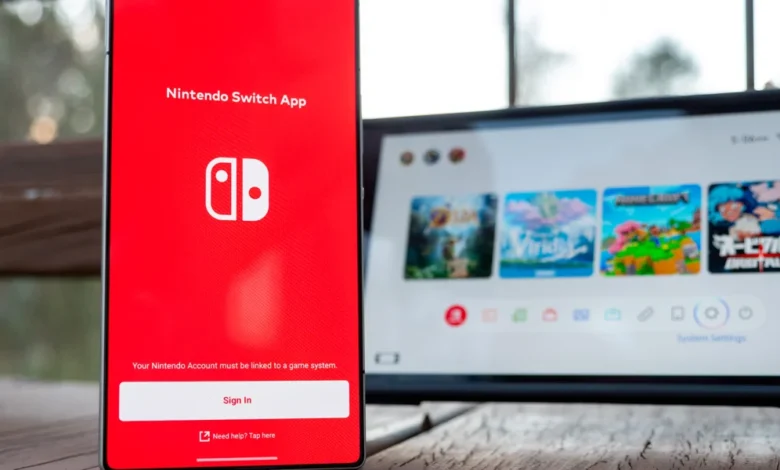
The gaming giant has announced a significant shift in its authentication infrastructure, effectively ending support for third-party social login integrations. Starting January 26, 2027, users will no longer be able to access their Nintendo accounts via Google or Apple credentials, a move that signals a broader industry transition toward proprietary security protocols and the adoption of passkey technology. This policy change, outlined in an official support bulletin, marks the conclusion of a long-standing convenience feature for millions of users who have historically utilized their existing ecosystem identities to bridge the gap between their mobile devices and their gaming consoles.
The Timeline of the Transition
The phase-out process is structured to give users a clear window for migration, though the deadline is firm. Nintendo’s technical roadmap for this change is as follows:
- Immediate Term (Current Date through January 25, 2027): Users can continue to log in via Google or Apple accounts as usual. During this period, Nintendo is actively notifying the user base through in-app prompts and email notifications to initiate the transition to a standalone Nintendo account credential or a registered passkey.
- The Cutoff Date (January 26, 2027): The integration APIs for Google and Apple authentication will be decommissioned. Attempts to use these "Quick Login" buttons will result in failure, requiring users to authenticate through Nintendo’s internal systems.
- Post-Transition (January 26, 2027 and beyond): Access to the Nintendo Switch app, as well as general Nintendo account management, will require a standard password or a passkey stored directly with Nintendo.
For users who miss this window, the account is not deleted, but access will be temporarily restricted until the account holder completes a password reset process via the official Nintendo Account portal. This manual recovery involves verifying the user’s identity through email-based codes, effectively resetting the login mechanism to a traditional format.

The Rise of Passkeys and Cybersecurity Context
The decision to move away from third-party social logins appears to be a calculated security maneuver in an era defined by sophisticated automated threats. While Google and Apple logins have been a staple of mobile convenience for over a decade, they introduce a dependency on external security postures. By centralizing authentication, Nintendo is moving toward the industry-standard "passkey" model, which relies on public-key cryptography rather than traditional shared secrets like passwords.
In a passkey system, the user’s device generates a pair of cryptographic keys. The public key is stored on the service provider’s servers, while the private key remains on the user’s hardware, protected by biometric authentication such as FaceID, TouchID, or Android’s fingerprint sensors. This system is inherently more resilient to phishing attacks, as there is no static password for a bad actor to steal or guess.
The timing of this change coincides with a notable surge in AI-driven credential harvesting. With advanced machine learning models now capable of automating complex social engineering and brute-force attacks at scale, corporations are increasingly sensitive to vulnerabilities introduced by third-party integrations. While Nintendo has not explicitly named a single security breach as the catalyst for this decision, the cybersecurity landscape has shifted toward "Zero Trust" architecture. By removing the third-party middleman, Nintendo gains full visibility and control over the authentication logs of its user base, allowing them to better detect and block malicious login attempts.
Analyzing the Impact on the User Experience
For the average Nintendo Switch player, the change represents a temporary friction point in exchange for long-term security. Historically, the convenience of "Sign in with Google" allowed for seamless account creation, reducing the barrier to entry for casual gamers. However, this convenience often comes at the cost of account portability and platform independence.

From a data privacy perspective, this transition actually empowers the user. By decoupling their gaming identity from their general-purpose Google or Apple profiles, users reduce the data-sharing footprint between their gaming habits and their broader digital lives. For parents and families, who often manage multiple Nintendo accounts under a single household, the move to passkeys may eventually simplify the login process, as modern mobile operating systems are optimized to handle multiple passkeys with simple biometric prompts.
However, the transition is not without its challenges. Users who rely on password managers that are tightly integrated with their Google or Apple accounts may find themselves needing to manually update their records. Furthermore, the reliance on a single, primary account means that if a user loses access to the specific email address associated with their Nintendo account, the recovery process could be more arduous than it would be under the broader umbrella of a Google-managed identity.
Broader Industry Implications
Nintendo’s move is part of a larger trend among tech conglomerates to reclaim control over the "Identity Layer" of their services. In recent years, firms like Sony, Microsoft, and various streaming platforms have been re-evaluating the security risks associated with OAuth integrations. While social logins were once the gold standard for user acquisition, the costs associated with potential account takeovers (ATO) have made these integrations a liability.
Data from cybersecurity research firms suggests that account takeovers cost the gaming industry billions of dollars annually. When a bad actor gains access to a Nintendo account, they can potentially access stored payment information, digital game libraries, and sensitive personal data. By mandating a direct login process, Nintendo is effectively closing off the vulnerabilities inherent in the OAuth handoff process, where a compromise at the third-party level could potentially expose the user’s Nintendo account.

Strategic Recommendations for Users
To ensure a seamless transition, users should prioritize the following steps:
- Verify Account Access: Immediately log in to the official Nintendo Account website (accounts.nintendo.com) to confirm that the associated email address is active and accessible.
- Enable Two-Step Verification: Regardless of the sign-in method, all Nintendo users should enable 2FA using an authenticator app. This remains the most effective defense against unauthorized access.
- Register a Passkey: Within the Nintendo account settings, navigate to the security tab and follow the prompts to register a passkey. This will facilitate a smoother transition than relying on traditional passwords, which are susceptible to memory lapses and credential stuffing.
- Audit Connected Accounts: Review any other services connected to the Nintendo account to ensure that the shift in primary authentication does not disrupt cross-platform play or subscription services.
Official Stance and Future Outlook
While Nintendo has remained tight-lipped regarding the specific technical vulnerabilities that may have necessitated this shift, the company’s focus on "exclusive, secure login experiences" suggests a commitment to a more robust, first-party authentication stack. This aligns with Nintendo’s historical preference for maintaining a "walled garden" approach to its ecosystem—a strategy that has served the company well in protecting the integrity of its gaming hardware and software.
As the industry continues to move away from legacy authentication methods, this transition by Nintendo is likely to be followed by other major gaming platforms. The death of the third-party social login in favor of FIDO-certified passkey standards is not merely a policy change; it is an evolution of digital identity management. For the millions of Nintendo users worldwide, the next two months represent a critical period to align their security practices with the requirements of an increasingly hostile digital environment.
Ultimately, while the inconvenience of changing a long-used login method is undeniable, the long-term benefit is a more secure, isolated, and resilient account structure. By January 26, 2027, the Nintendo ecosystem will be fully independent of the identity silos created by Big Tech, placing the control of the account squarely back into the hands of the player and the company. Users who act now will avoid the risk of temporary lockouts and ensure their gaming libraries remain fully accessible in the coming year.