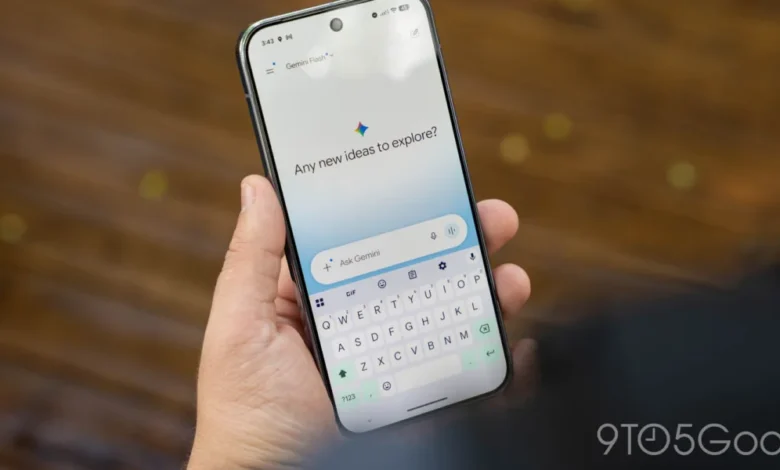
The Evolution of Custom AI at Google
When Google first introduced Gems in 2024, the objective was to provide users with a mechanism to create tailored versions of Gemini. These custom iterations allowed for specific instructions, personality adjustments, and task-oriented behaviors. Gems were designed to be static, specialized environments where a user could house specific files for context or set default tools—such as image generation or code execution—to streamline repetitive workflows.
However, the user experience for Gems was largely sequestered. Accessing them required navigating to the Gems manager, located within a side panel in the Gemini interface, and scrolling through a list of “My Gems” to find the appropriate configuration. While functional, this siloed approach created friction in the conversational flow, necessitating a context-switch every time a user wanted to shift from a general-purpose AI query to a specialized task.
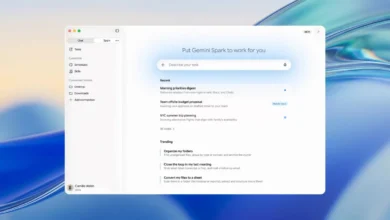
The introduction of “Skills,” first debuted as a core feature of the Gemini Spark initiative, represents a fundamental shift in design philosophy. By moving to a command-line style integration, Google is prioritizing fluid, real-time collaboration with AI.
Chronology of the Transition
The transition timeline, as indicated by current system notices within the Gems manager, follows a deliberate path toward full integration:
- 2024: Launch of Gems, enabling users to create custom versions of Gemini with persistent instructions and tool preferences.
- Early 2026: Introduction of Gemini Spark and the foundational architecture for “Skills,” allowing for slash-command integration.
- October 2026: Discovery of notices within the Google AI interface signaling the end-of-life for the standalone Gems branding.
- November 17, 2026: The official commencement of the migration process. On this date, existing Gems will begin their transition into the Skills framework.
- Late 2026 and beyond: Full deployment of the Skills-first interface, with legacy Gems support being deprecated.
Google has stated that the migration process will be automatic. Users are encouraged to continue using their existing Gems in the interim, as they will remain functional until the system-wide update is applied to their specific account.
Technical Advantages of the Skills Framework
The shift to Skills is not merely a rebranding exercise; it is a functional upgrade aimed at improving accessibility and multitasking. The primary technical advantage is the implementation of the “slash-command” (/) syntax. By typing a forward slash in the primary chat box, users can instantly summon specific AI capabilities without navigating away from their current conversation thread.
Furthermore, the Skills framework supports modularity. Unlike Gems, which functioned as individual “personas,” Skills allow for stacking. Users can potentially invoke multiple skills within a single prompt, allowing for a more nuanced and layered interaction with the AI. This versatility is expected to significantly reduce the time-to-task for power users who rely on Gemini for complex workflows.
From a development perspective, this change aligns with the broader industry trend toward “agentic workflows.” By integrating AI capabilities directly into the chat interface via commands, Google is reducing the cognitive load on the user. Instead of having to “enter” a Gem, the user is now “calling” a skill, which keeps the conversational context intact.
Supporting Data and User Experience Metrics
While Google has not released granular usage metrics for Gems, industry analysts suggest that the move toward command-driven interfaces is a response to power-user feedback. In comparative studies of AI productivity tools, interfaces that require fewer clicks and navigation steps consistently show higher retention rates.
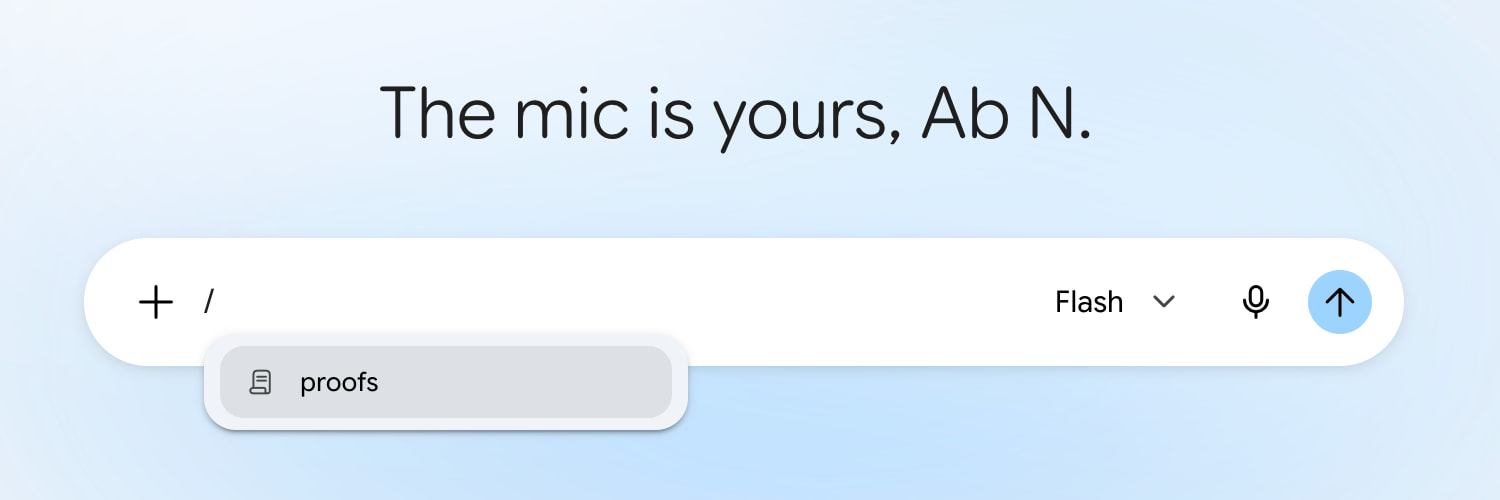
The integration of Skills into the main conversational experience suggests that Google’s telemetry data indicated a significant portion of users were not fully utilizing the Gems feature due to its lack of discoverability. By bringing these tools into the main chat box, the company is effectively increasing the utility of the AI by ensuring that specialized functionality is always a keystroke away.
Implications for Pro and Ultra Subscribers
The transition is currently being rolled out with a focus on premium tiers, specifically Google AI Pro and AI Ultra subscribers. These users, who require the highest level of efficiency and personalization, have immediate access to the Gemini Spark tab, where Skills can be authored.
For these users, the change necessitates a shift in how they organize their AI workspace. Where previously they might have maintained a library of Gems for different projects, they will now cultivate a library of Skills. These skills are designed to be more reactive and less monolithic. A user might have a “Drafting Skill,” a “Data Analysis Skill,” and a “Visual Ideation Skill,” all of which can be pulled into a single document-generation prompt.
Potential Challenges and Limitations
Despite the promised benefits, the transition is not without hurdles. As of the initial announcement, some documentation—specifically the “Learn more” help article and the “Create skills” button—remain non-functional or in a state of flux. This suggests that the internal systems for managing the migration are still being finalized.
Moreover, the migration of “context-heavy” Gems may pose challenges. Gems allowed users to upload specific files for persistent context. Ensuring that these files and the associated instructions are correctly ported over to the new Skills architecture without data loss is a critical concern for professional users who have spent months refining their custom instructions.

The Broader Impact on AI Productivity
The move toward Skills reflects a maturing AI market. In the early stages of the generative AI boom, the focus was on building “personas” (Gems/GPTs). As the technology has evolved, the focus has shifted toward “functional interoperability.” The industry is moving toward a state where AI is less of a chatbot and more of a modular operating system.
By standardizing this command-based interaction, Google is also creating a more scalable platform for third-party developers. If Skills can be triggered via slash-commands, it is logical to speculate that the ecosystem will eventually allow for the integration of external plugins or third-party services directly into the chat prompt, creating a truly unified interface.
Conclusion and Future Outlook
The transition from Gems to Skills is a pivotal moment for Google’s AI strategy. By prioritizing speed, accessibility, and modularity, the company is positioning Gemini as a more competitive tool for professional environments. While the migration period will undoubtedly involve a learning curve for current users of the Gems platform, the long-term potential for a streamlined, command-based AI assistant appears to be a net positive for productivity.
As November 17, 2026, approaches, users should prepare for the automatic migration of their current setups. In the meantime, the availability of the Gemini Spark tab for Pro and Ultra subscribers provides an opportunity to begin testing the new workflow. For the average user, this evolution signifies that the AI is moving from being a separate, static entity to an integrated, responsive part of the everyday digital toolset. Whether this transition will be seamless remains to be seen, but the intent behind the change—to make AI more usable and less cumbersome—is a clear indication of Google’s long-term vision for the future of human-AI collaboration.