Lenovo Googlebook Duet 13 leaks reveal a high-performance detachable tablet arriving in early 2027

The landscape of portable computing is poised for a significant shift as new intelligence emerges regarding the upcoming Lenovo Googlebook Duet 13. Following Google’s strategic pivot toward the "Googlebook" branding—a move designed to unify the premium tier of ChromeOS hardware—industry analysts have been tracking the development of new form factors. Latest reports, supported by high-fidelity leaks from industry insider Evan Blass, confirm that a 13-inch detachable model is scheduled for a market release in January 2027, likely coinciding with the Consumer Electronics Show (CES) in Las Vegas.
A New Chapter for ChromeOS Hardware
The Lenovo Googlebook Duet 13 represents the next evolution of the popular IdeaPad Duet series, which originally popularized the ChromeOS detachable form factor. By transitioning this specific product line into the "Googlebook" moniker, Google is signaling a more aggressive stance in the premium tablet market. Unlike the budget-conscious tablets that defined the early days of ChromeOS, the Googlebook line is positioned to compete directly with high-end productivity tablets like the iPad Pro and the Microsoft Surface Pro.

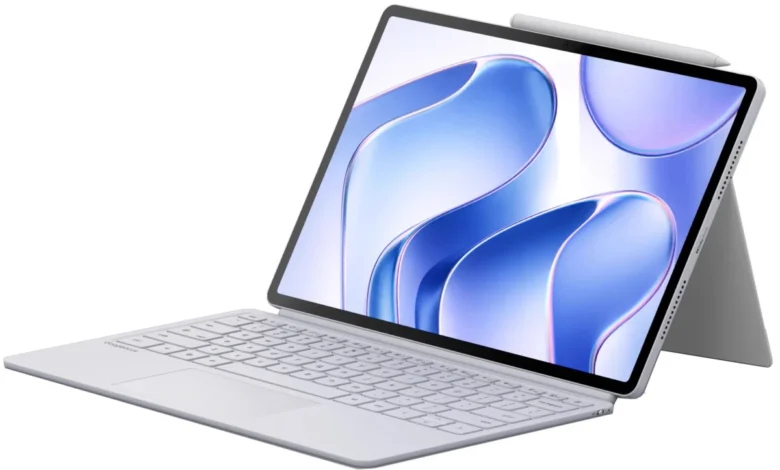
The device design leans heavily into a refined aesthetic. Leaked imagery shows a sleek, professional chassis featuring a magnetically attached keyboard cover that mirrors the design language of its predecessors, albeit with more refined ergonomics. The keyboard includes the signature curved keycaps and a compact trackpad, while the rear of the device features a sophisticated, diagonal-fold magnetic stand.
Chronology of the Googlebook Expansion
The trajectory of the Googlebook project has been a subject of intense speculation since the summer of 2026. The current timeline provides a clear view of how the ecosystem is expanding:
- July 2026: Initial reports surface regarding a new hardware initiative, with leaks showing a prototype 2-in-1 tablet alongside two distinct laptop form factors.
- October 2026: The Lenovo Googlebook 15 officially hits the market, establishing the baseline for the series with its 3K OLED touchscreen, Intel Core Ultra 5 series processors, and 16GB of RAM.
- November 2026: Google focuses on critical software refinements, issuing a series of firmware updates and bug fixes to stabilize the Googlebook software environment.
- November 2026 (Current): High-resolution renders of the 13-inch Duet model confirm hardware specifics, including stylus integration and port placement.
- January 2027 (Expected): Official announcement and retail launch at CES 2027.
Hardware Specifications and Design Nuances
The technical composition of the Duet 13 highlights a focus on connectivity and utility. One of the most intriguing features identified in the recent leaks is the inclusion of a pill-shaped cutout at the top-right edge. While initial speculation suggested this might be a secondary power interface, the presence of a USB-C port on the left-hand edge, coupled with a separate power button, implies a multi-functional design approach.

The inclusion of a magnetically attached, charging stylus on the top edge addresses a common pain point in previous tablet generations, where users were forced to rely on bulky external cases or risk losing the accessory. The "Glowbar"—a signature hardware element seen in newer Google-branded hardware—is positioned adjacent to the rear camera module, likely serving as a visual indicator for system activity or notification alerts.
Strategic Market Implications
The shift toward the Googlebook brand is not merely cosmetic; it reflects a broader strategy by Google to control the hardware-software verticality of ChromeOS. By partnering with manufacturers like Lenovo to produce high-spec devices, Google is attempting to mitigate the historical perception of Chromebooks as "browser-only" machines.
Industry analysts suggest that the 13-inch screen size is a strategic "sweet spot." It offers enough screen real estate for split-screen multitasking—a critical feature for productivity users—without sacrificing the portability that makes the Duet series a compelling alternative to traditional laptops. The move to adopt Intel’s Core Ultra architecture in the 15-inch model, and likely a similar high-performance chip in the 13-inch version, suggests that these devices are intended for professional workflows, including software development, video editing, and advanced web applications.

The Role of CES 2027
CES has historically served as the launchpad for major PC industry shifts. By targeting a January release window, Lenovo and Google are positioning the Duet 13 as a flagship product for the first quarter of the year. This timing allows the companies to capitalize on the post-holiday shopping lull, where consumers and enterprise buyers are looking to refresh their productivity setups.
Furthermore, the recent software updates released by Google throughout November 2026 suggest that the operating system is being fine-tuned to handle the unique demands of detachable hardware. The integration of improved touch-gesture support and a more fluid desktop-to-tablet transition is expected to be a major selling point for the new Duet 13.
Analysis: Can Google Compete?
The success of the Googlebook Duet 13 will depend largely on its pricing and the depth of its app ecosystem. While the hardware is clearly high-end, the "Googlebook" label carries the weight of a premium promise. To capture market share from Apple and Microsoft, the device must offer a seamless experience that justifies a price point likely to exceed the $700–$900 range for the base configuration.

The emphasis on "Googlebook" as a distinct category suggests that the company is moving toward a strategy similar to the Pixel phone lineup: providing a "reference" experience that showcases the best of what its software can achieve. If the Duet 13 succeeds, it could set a new standard for ChromeOS tablets, forcing competitors to rethink their own entry-level and mid-range offerings.
Conclusion and Looking Ahead
As we approach the January 2027 window, all eyes will be on the official unveiling at CES. The leaked details—from the magnetic stylus charging to the sophisticated rear stand and the promise of the 13-inch display—paint a picture of a device that is well-prepared to challenge the status quo in the portable computer market.
For current users of the Lenovo IdeaPad Duet, the 13-inch model represents a logical, albeit significantly more premium, upgrade path. For Google, it is a litmus test for the viability of high-end ChromeOS tablets in a post-pandemic work environment that increasingly demands hybrid solutions. With the technical foundation laid by the October launch of the Googlebook 15 and the ongoing software optimizations, the stage is set for a pivotal moment in the history of ChromeOS. Whether the market is ready to embrace a premium Google-branded tablet will be the primary narrative of the upcoming tech season.