The Last Ditch Bar and Arts Venue in Western Massachusetts announces closure following viral controversy over COVID-19 safety protocols.

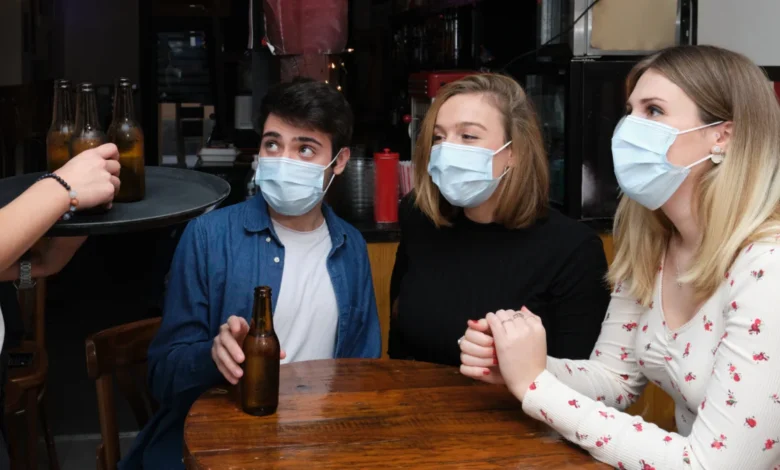
The Last Ditch Bar and Arts Venue, a niche establishment in Western Massachusetts that gained national attention for its stringent COVID-19 mitigation efforts and subsequent internal strife, has announced its immediate closure. In a statement posted to social media on Monday, ownership characterized the move as a “soft” closure, signaling that while current operations have ceased, the space remains open to potential investors, partners, or a complete transfer of ownership to a new management collective.
This development follows a period of intense public scrutiny that began last month when a report in The Boston Globe detailed a localized firestorm regarding the venue’s attempt to relax its KN-95 mask mandate. The resulting fallout—which involved heated public discourse, allegations of ableism, and a breakdown of the establishment’s leadership structure—has effectively forced the venue to shutter its doors, highlighting the precarious nature of operating specialized, community-focused queer spaces in an increasingly polarized climate.
A Chronology of Conflict
The trajectory of Last Ditch reached a breaking point following a series of events that began in early 2024. The venue, which had marketed itself as a sanctuary for those prioritizing immunocompromised safety, maintained a strict mask policy long after most public venues had abandoned such mandates.
The crisis began when the venue’s ownership proposed a modification to this policy. The suggestion that masks might no longer be strictly required for all patrons triggered an immediate and vocal backlash from the venue’s core demographic. Critics argued that such a move was exclusionary, specifically citing the needs of the immunocompromised and disabled members of the lesbian and LGBTQ+ community.
The discourse quickly moved from local community meetings to the digital sphere. Within days, social media platforms were flooded with criticism. According to reports, the intensity of the reaction included personal attacks against ownership, accusations of abandoning the community’s core mission of accessibility, and in some instances, threats of violence. The controversy culminated in a high-profile feature by The Boston Globe, which highlighted not only the mask policy debate but also the idiosyncratic nature of the venue’s management, including anecdotes about the owners’ diverse professional backgrounds.
Following the media coverage, the venue’s internal leadership team reportedly fractured. Attempts to navigate the public outcry, including issuing apologies and hosting town hall-style meetings, proved insufficient to stem the tide of criticism. By early this week, the inability to form a sustainable governing board to oversee a transition to a worker-owned cooperative model left ownership with little choice but to cease operations.
Contextualizing the Lesbian Bar Decline
The closure of Last Ditch is particularly poignant given the broader, long-term decline of lesbian bars in the United States. According to the Lesbian Bar Project—a nationwide initiative dedicated to documenting and supporting these spaces—the number of brick-and-mortar lesbian bars has plummeted over the last four decades.
In the 1980s, there were an estimated 200 lesbian bars across the country. Today, that number has dwindled to fewer than 30. This decline is attributed to a variety of factors, including the gentrification of urban centers, the rise of digital dating, the shift toward more inclusive "queer" bars, and the economic pressures of running independent hospitality businesses.
Last Ditch occupied a specific, modern niche within this landscape. It was not merely a bar; it was conceived as a community hub, an arts venue, and a "network of care." By centering its business model on COVID-19 safety, it sought to address a gap in the hospitality market for individuals who felt excluded from traditional nightlife. However, the reliance on a singular, highly specific mission statement created both a fiercely loyal customer base and a rigid operational requirement that proved difficult to maintain under economic and social pressure.
The Dynamics of Community-Owned Spaces
The struggle to transition Last Ditch into a worker-owned cooperative is a common challenge for community-based organizations. Moving from a founder-led model to a collective structure requires significant administrative capacity, legal expertise, and financial stability—resources that are often in short supply for small, mission-driven entities.
"We have put our lives on hold to foster networks of care, resources, and a home base for organizing," the venue’s owners stated in their closure announcement. "It’s time we pass it on. We’ve been fighting since the beginning to fill out the team, and we still don’t have a board or leadership to manage the worker-owned co-op transfer."
This statement underscores the "burnout" factor that frequently plagues grassroots movements. While the community demands the existence of safe, specialized spaces, the operational burden of sustaining these spaces often falls on a handful of individuals. When those individuals reach their limit, the lack of a formal succession plan or an engaged volunteer base often leads to the dissolution of the project.
Analysis of the Public Reaction
The viral nature of the Last Ditch controversy serves as a case study in how niche community disputes can be amplified and distorted by modern media algorithms. While the disagreement began as a local debate over public health policy, the external coverage—specifically the focus on the venue’s eccentricities—shifted the narrative away from the substance of the conflict and toward a form of internet "parody."
Sociologists who study online communities note that when a specialized space becomes the subject of a national news cycle, the local stakeholders often lose agency over the conversation. The arrival of thousands of outside commentators who are not members of the venue’s local community can exacerbate tensions rather than resolve them. The "outsized reaction" described by observers resulted in a feedback loop where the owners felt attacked from all sides, leading to the rapid disintegration of the management team.
Broader Implications for Queer Nightlife
The closure of Last Ditch leaves a void in Western Massachusetts’ queer infrastructure. For many, these bars serve as the only physical spaces for political organizing, cultural expression, and social support. As the LGBTQ+ community continues to navigate a landscape where physical spaces are becoming increasingly scarce, the loss of any venue—regardless of the specific controversy—is viewed as a blow to the community’s visibility and resilience.
Looking forward, the future of the Last Ditch space remains uncertain. The call for new ownership is an attempt to salvage the physical assets and the mission, but finding individuals willing to step into a role that has recently been the subject of such intense public scrutiny will be a significant challenge.
In the final analysis, the story of Last Ditch is a synthesis of modern dilemmas: the tension between rigid safety standards and operational sustainability, the volatility of online community management, and the fragility of the remaining network of lesbian bars in America. Whether or not a successor emerges, the case serves as a stark reminder of the complexities involved in maintaining physical spaces dedicated to specific, non-negotiable community values in an era of rapid, often unforgiving, digital discourse. The community now waits to see if the "soft" closure will lead to a rebirth or if this marks the final chapter for the venue.