Divine Reborn: Jack Dorsey Funds Vine’s Return as a Human-Centric Short-Form Video Platform Battling AI ‘Slop’ in 2026

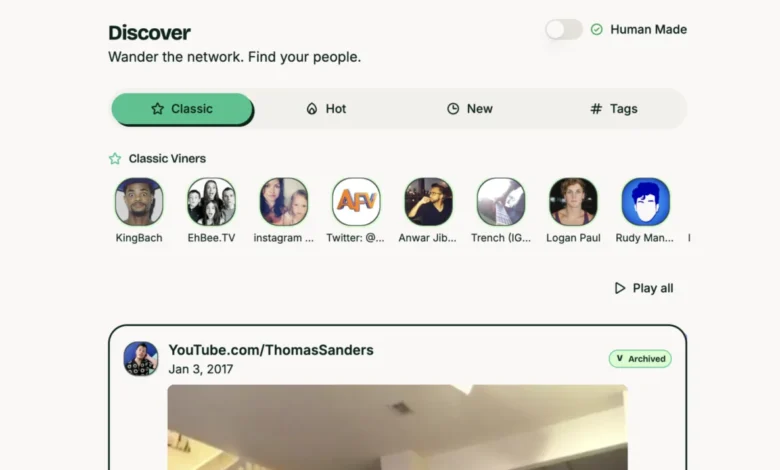
Almost a decade after its unceremonious closure, the iconic short-form video platform Vine has been resurrected in 2026 as Divine, a new application dedicated to human creativity and authenticity in an increasingly AI-saturated digital landscape. This unexpected revival is particularly notable as it is funded by Jack Dorsey, the former Twitter CEO who oversaw Vine’s shuttering in 2017. Divine launches with a dual mission: to serve as a contemporary host for original six-second videos and to preserve a vast archive of 500,000 classic Vine clips, all while explicitly championing "freedom from AI slop."
The platform’s re-emergence arrives at a pivotal moment, challenging the dominant short-form video ecosystem shaped by TikTok, Instagram Reels, and YouTube Shorts. Divine’s core differentiator is its stringent policy against AI-generated content, a direct response to growing concerns about synthetic media’s impact on online authenticity and artistic integrity. Available now on both the Google Play Store and Apple App Store, Divine represents a bold proposition: a return to raw, human-made humor and creativity in a hyper-optimized digital world.
The Genesis of Vine and Its Cultural Phenomenon
To fully appreciate Divine’s return, one must recall the meteoric rise and equally abrupt fall of its predecessor. Vine was founded by Dom Hofmann, Rus Yusupov, and Colin Kroll in June 2012 and quickly acquired by Twitter in October 2012, just months before its official launch in January 2013. Its premise was simple yet revolutionary: users could record and share six-second looping videos. This constraint, rather than limiting creativity, fostered a unique brand of rapid-fire humor, experimental filmmaking, and spontaneous performance.
Vine swiftly became a cultural touchstone, particularly among younger demographics. Within its first year, it garnered over 40 million users, peaking at an estimated 100 million monthly active users globally. The platform democratized content creation, launching the careers of a new generation of digital stars, including Logan Paul, David Dobrik, Liza Koshy, and Shawn Mendes, many of whom leveraged their Vine fame into broader entertainment careers. Its distinctive format gave birth to countless memes, catchphrases, and an entirely new comedic vernacular that permeated mainstream culture. Vine’s short, digestible, and endlessly rewatchable clips were perfectly suited for viral spread, making it a hub for internet culture and an early incubator for the influencer economy.
The Decline and Dorsey’s Role in Vine’s Demise
Despite its cultural impact and massive user base, Vine faced significant challenges that ultimately led to its downfall. By 2014, competitors like Instagram had introduced their own video features, often with longer time limits and better monetization tools, siphoning off creators and viewers. Snapchat’s ephemeral content also presented a strong alternative. Vine struggled to provide its top creators with adequate monetization opportunities, leading many popular Viners to migrate to platforms that offered more lucrative brand deals and advertising revenue shares. This creator exodus was a critical blow, as the platform’s value was intrinsically tied to its vibrant community.
Twitter, under various leadership changes, including Jack Dorsey’s return as CEO in 2015, was also grappling with its own financial and strategic difficulties. The company struggled with profitability and user growth, leading to a period of restructuring and a focus on its core product. In October 2016, Twitter announced it would discontinue the Vine mobile app, citing a need to streamline its operations and focus on "things that have the greatest impact." The move was met with widespread disappointment and criticism from users and creators alike, who mourned the loss of a platform they felt was truly unique. The app officially ceased operations in January 2017, leaving a void that would soon be filled by a new global phenomenon.
The Rise of TikTok and the AI ‘Slop’ Conundrum
Vine’s departure cleared the path for TikTok, which launched internationally in 2017 and rapidly ascended to become the dominant force in short-form video. TikTok perfected the algorithm-driven, hyper-personalized feed, captivating billions with an endless stream of engaging content. Its success prompted rivals like Instagram to launch Reels in 2020 and YouTube to introduce Shorts in 2020, both mirroring TikTok’s vertical video format and rapid-fire content delivery. Today, this landscape is fiercely competitive: TikTok boasts over 1 billion monthly active users globally, Instagram Reels generates billions of views daily, and YouTube Shorts averages more than 200 billion daily views.
However, the proliferation of content across these platforms has coincided with the rapid advancement of artificial intelligence. While AI offers powerful tools for content creation and personalization, it has also given rise to a phenomenon increasingly referred to as "AI slop" – a deluge of low-quality, generic, unoriginal, and often misleading content generated by AI algorithms. This includes everything from poorly written articles and repetitive images to deepfakes and automated video compilations, all designed to capture attention without genuine human creativity or intent. The concern is that this "slop" threatens to dilute authentic human expression, obscure truth, and ultimately degrade the quality of the internet experience. It is against this backdrop of AI proliferation and market dominance by existing platforms that Divine stakes its claim.
Divine’s Anti-AI Mandate: A Stand for Human Authenticity
The central tenet of Divine’s relaunch is its unwavering commitment to "freedom from AI slop." This isn’t merely a philosophical statement but a foundational design principle embedded into the platform’s architecture. To ensure all new content is human-made, Divine employs a multi-layered verification system. Users are encouraged to record videos directly within the app, which inherently verifies human input. For videos uploaded from external sources, a mandatory human verification tool processes the content before it can be posted. This tool, powered by the human rights nonprofit the Guardian Project, leverages its expertise in secure communication and digital authenticity to discern human-created content from AI-generated material. The app even features a specific filter, allowing users to exclusively view content verified as human-made, offering a curated experience devoid of synthetic media.

Evan Henshaw-Plath, known online as Rabble, a former Twitter employee and a respected figure in the open-source community, leads the Divine project. Henshaw-Plath originally embarked on a mission to create a permanent archive for old Vines, recognizing their cultural significance. His vision for Divine extends beyond mere preservation, aiming to "recapture an era of social media built around real people, algorithm control, and authentic content." This sentiment directly addresses the perceived shortcomings of contemporary social platforms, where algorithms often dictate user experience, and the line between human and machine-generated content blurs.
Jack Dorsey’s Evolving Vision and the Creator Economy
The financial backing for Divine comes from Jack Dorsey’s nonprofit organization, "and Other Stuff," which is dedicated to funding open-source social media projects. This involvement marks a full-circle moment for Dorsey, whose prior leadership at Twitter led to Vine’s closure. In a statement to The Guardian, Dorsey acknowledged the original platform’s shortcomings, particularly regarding creator autonomy and monetization. He emphasized that a core principle of Divine’s relaunch is that "creators will always own their content and followers," and crucially, they will be empowered to "build their own revenue off of them."
This commitment to creator ownership and revenue generation directly tackles one of the primary reasons for Vine’s original decline. While the specifics of Divine’s monetization model are expected to evolve, the emphasis on direct revenue streams for creators – potentially through subscriptions, direct tipping, or transparent ad-sharing models – aligns with Dorsey’s broader philosophical shift towards decentralized and creator-centric social media, as evidenced by his involvement in projects like Bluesky. This approach contrasts sharply with the often opaque and platform-controlled monetization systems prevalent in the industry, signaling a move towards greater transparency and equity for content creators.
The Archive: Preserving Digital Heritage
Beyond fostering new human-made content, Divine serves as an invaluable digital archive. The platform hosts approximately 500,000 videos from "OG Vine," ensuring that the iconic clips that defined an era of internet culture are not lost to time. This archival effort is critical for digital heritage preservation, providing a permanent home for content that shaped online humor, creativity, and the early days of social media stardom. For many, the return of these classic Vines is a powerful draw, tapping into a deep well of nostalgia and offering a bridge between the past and present of short-form video.
The test launch of Divine in November 2025 offered a glimpse into its potential, generating considerable buzz among former Vine users and digital culture enthusiasts. During an interview with TechCrunch at the time, Henshaw-Plath reiterated the platform’s aspirational goal to recreate an environment where genuine human interaction and creativity thrive, free from the algorithmic manipulation and synthetic content that increasingly define much of the internet.
Navigating a Crowded and Consolidated Market
Divine enters a short-form video market that is vastly different from 2013. The landscape is not only saturated but also dominated by tech giants with immense resources and entrenched user bases. TikTok’s sophisticated recommendation engine, Instagram’s seamless integration with its broader social network, and YouTube’s unparalleled video infrastructure present formidable barriers to entry. Divine’s commitment to the six-second format, while a nostalgic nod, also represents a significant constraint in an era where short-form video often stretches to 60 seconds or even three minutes.
The challenge for Divine will be to attract a critical mass of users and creators who prioritize authenticity over the potentially broader reach or more diverse content offerings of its competitors. Will the "no-AI slop" mandate resonate strongly enough to carve out a sustainable niche? The platform might appeal to creators disillusioned with algorithmic feeds and the pressure to produce high volumes of content, potentially drawing those who seek a more curated, human-centric, and less commercialized creative outlet.
Implications for the Future of Digital Content
Divine’s launch could have broader implications for the debate surrounding AI in creative industries. By explicitly rejecting AI-generated content, Divine positions itself at the forefront of a growing movement advocating for human authorship and originality. This stance might inspire other platforms or spark discussions about the need for clearer labeling and differentiation between human and AI-created media. In a world where distinguishing between reality and simulation becomes increasingly difficult, Divine offers a sanctuary for verifiable human expression.
Jack Dorsey’s investment in Divine also signifies his continued evolution as a tech visionary, shifting from the centralized control of Twitter to advocating for open, decentralized, and community-driven platforms. His backing of Divine, alongside other open-source initiatives, suggests a long-term vision for a more equitable and authentic internet.
Ultimately, Divine is more than just a nostalgic reboot; it is an experiment in social media’s future, testing whether a commitment to human authenticity and creator autonomy can thrive in an age dominated by AI and corporate giants. Its success will depend on its ability to cultivate a vibrant community, foster new forms of six-second creativity, and prove that there is indeed a significant demand for genuine human connection in the digital realm.