Descript’s Underdog Strategy: How Niche Focus and Smart Content Drive AI Search Visibility Against Tech Giants

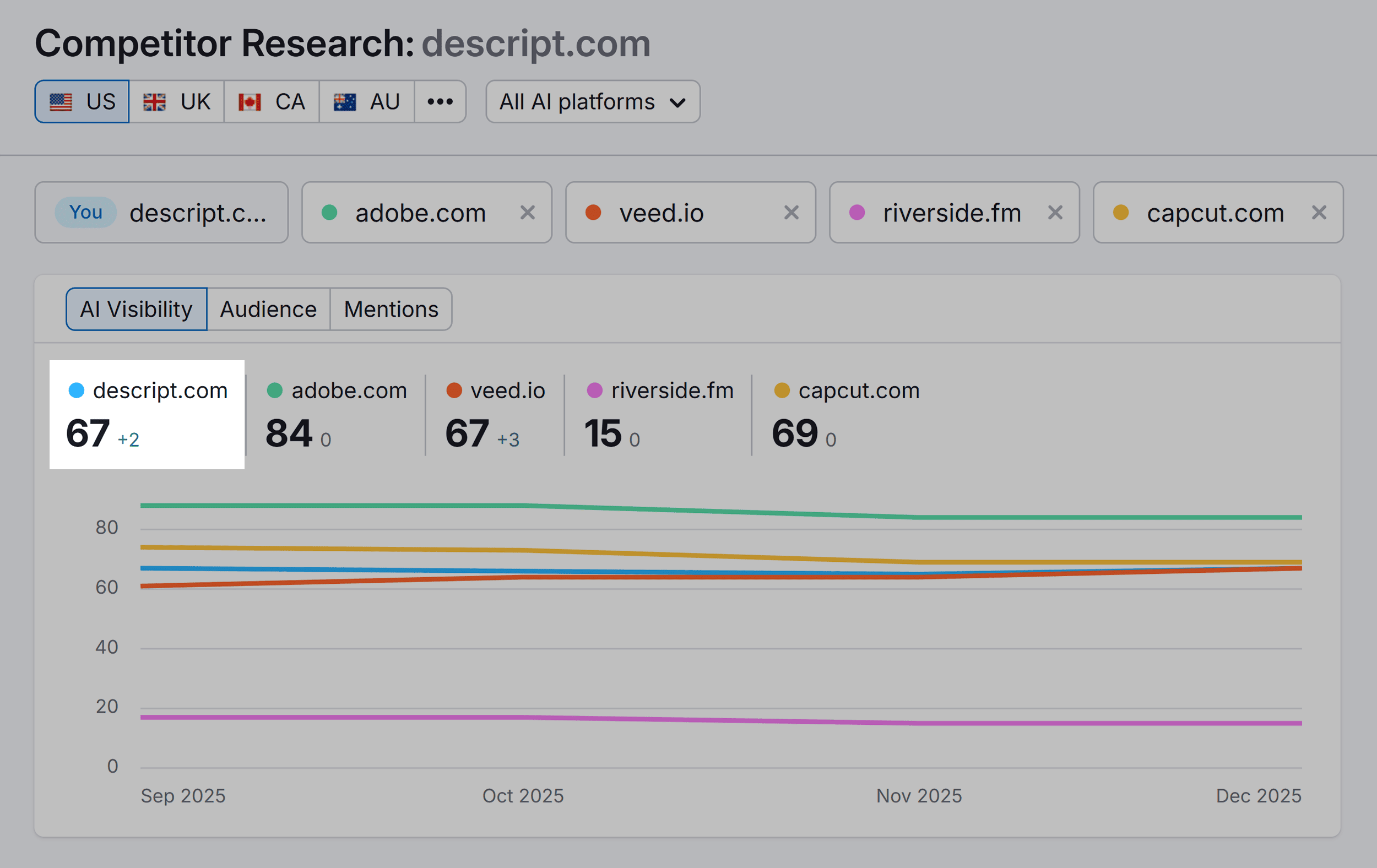
In the rapidly evolving landscape of digital tools, a company with fewer than 200 employees, Descript, is demonstrating an exceptional ability to compete with industry behemoths like Adobe and CapCut in the burgeoning field of Large Language Model (LLM) search visibility. While not the largest, most robust, or most popular video editing software by traditional metrics, Descript has strategically carved out a formidable presence, leveraging targeted messaging and high-quality content to punch significantly above its weight. This case study delves into Descript’s successful approach to AI visibility, offering replicable strategies for other SaaS companies navigating the new era of search.

The Shifting Tides of Search: AI’s New Dominance
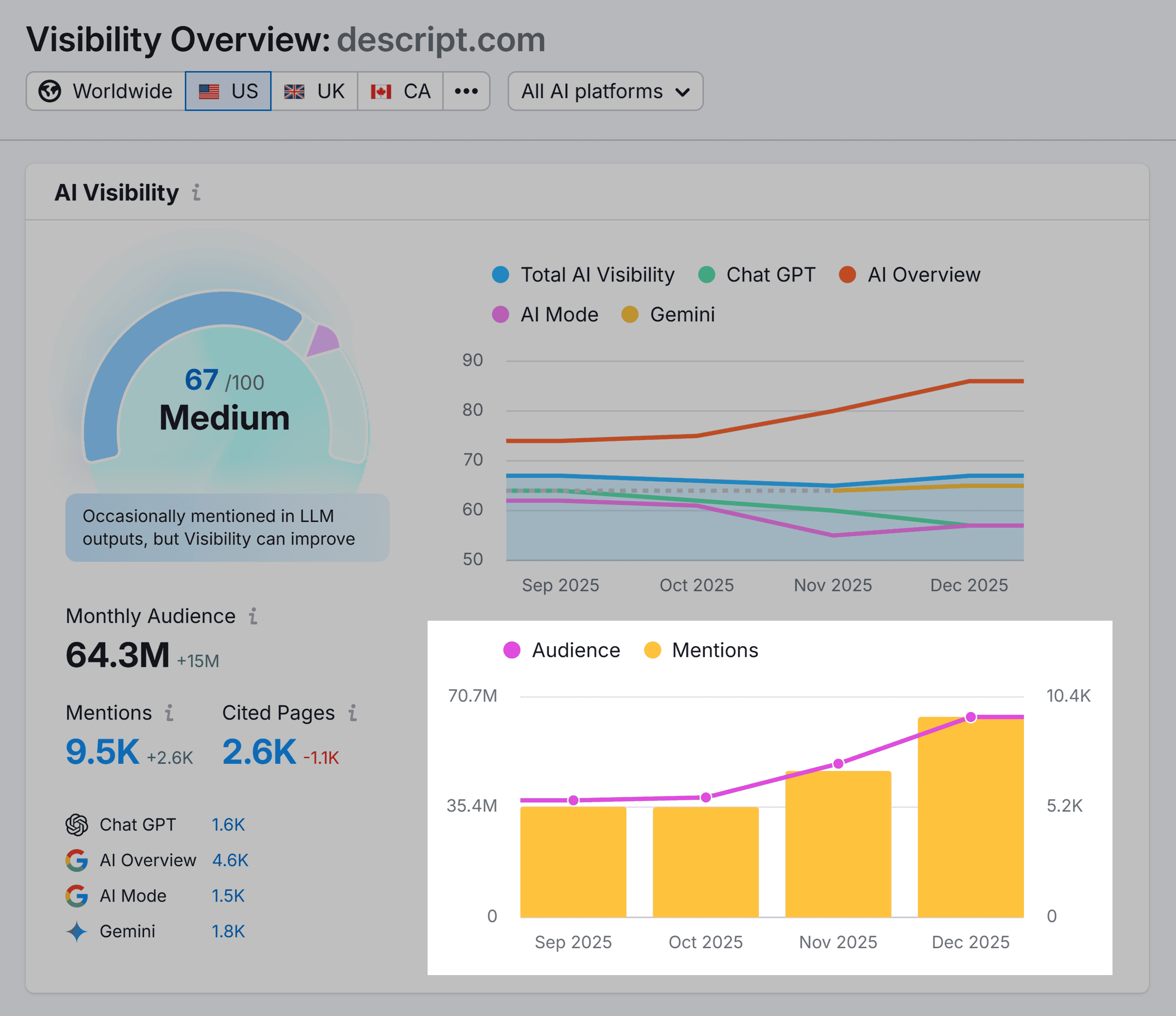
Traditionally, success in online visibility was largely measured by Search Engine Optimization (SEO) rankings, a game often dominated by established brands with vast resources. However, the advent of AI-powered search, characterized by LLMs, has introduced a new paradigm. Tools like Google’s AI Mode and ChatGPT don’t merely surface web pages; they synthesize information from various sources to provide direct answers, often citing their references. This fundamental shift, as evidenced by Semrush’s AI Visibility score, allows agile companies like Descript to gain ground where traditional SEO alone might fall short. Descript’s remarkable competitive standing in LLM search, rivaling that of multi-billion dollar companies, underscores a critical lesson: AI visibility is not solely about brand size but about strategic alignment with how LLMs process and present information.
Choosing Clear Niche Messaging: The Foundation of AI Relevance
For years, Descript has cultivated a strong identity as a specialized podcast editing tool. This focused positioning has proven to be an invaluable asset in the age of AI search. When users inquire about "podcast editing," Descript consistently appears in AI-generated answers, whether the original source is a blog post, an online forum, or a dedicated product page. This isn’t accidental; it’s the result of a deliberate strategy to define a clear audience and tailor all content to that specific need.
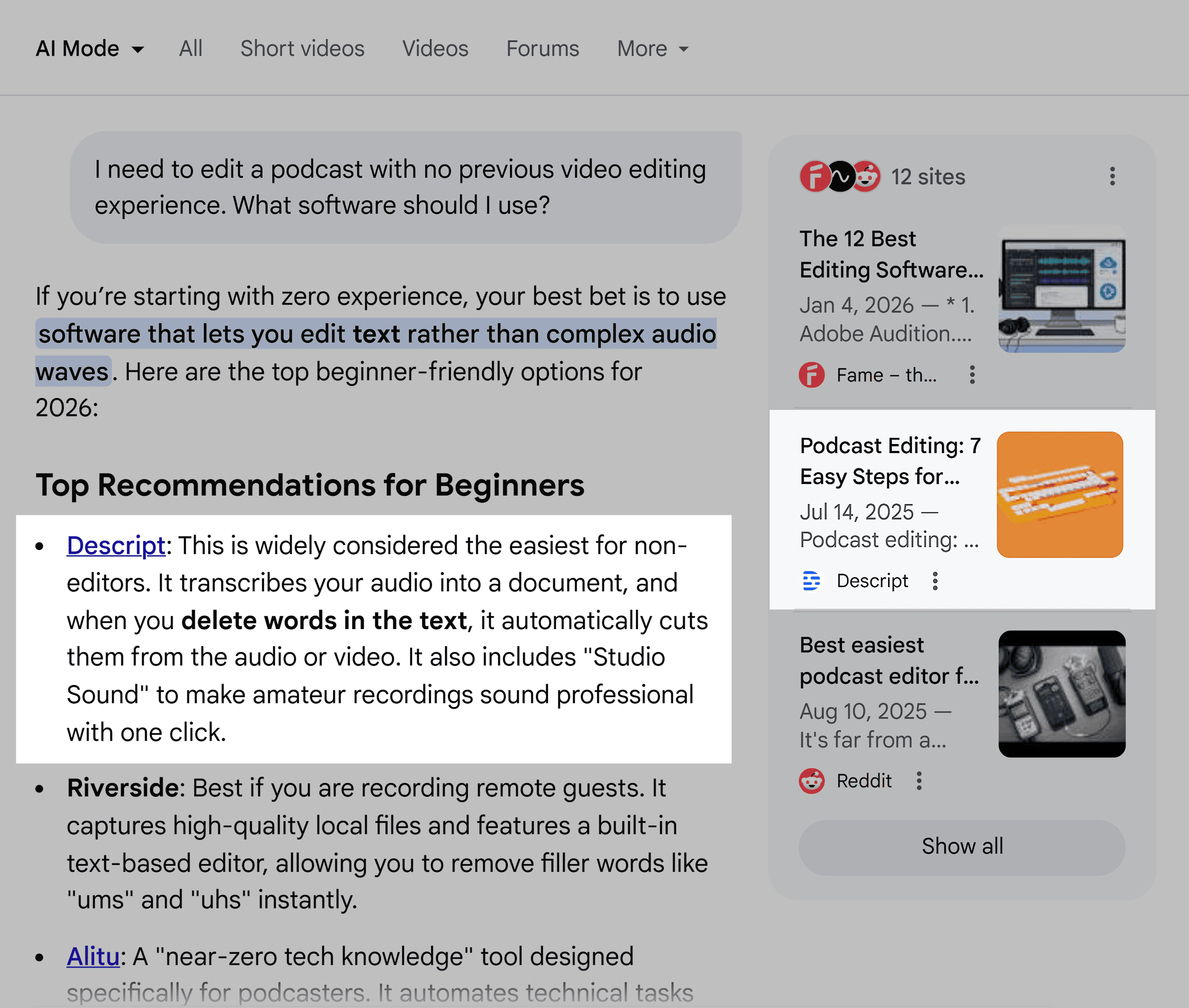
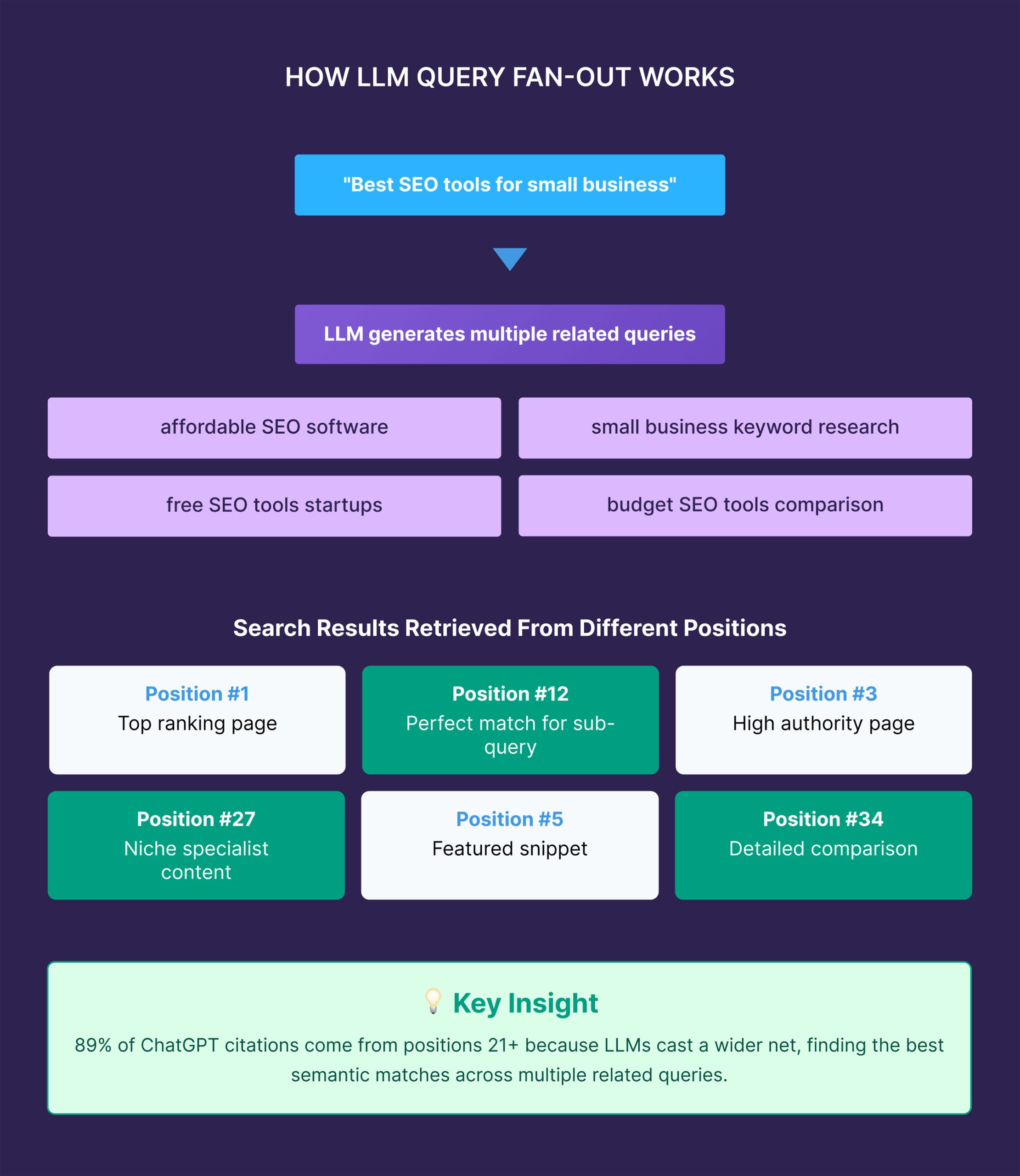
Descript’s website, product descriptions, and blog posts consistently speak to a core audience: individuals seeking to edit podcasts with ease, particularly those without extensive video editing expertise. This clarity is crucial because LLMs operate on a principle known as "query fan-out." When an AI receives a query, it generates multiple sub-queries to explore related concepts and find the most precise, contextually relevant answers. A narrowly defined product with consistent messaging maps cleanly to these granular AI queries, making it a prime candidate for citation. For instance, when asked by Google’s AI Mode for the "best software to edit podcasts" for someone without video editing skills, Descript was a top recommendation, with one of its own blog posts about podcast editing cited as a primary source.
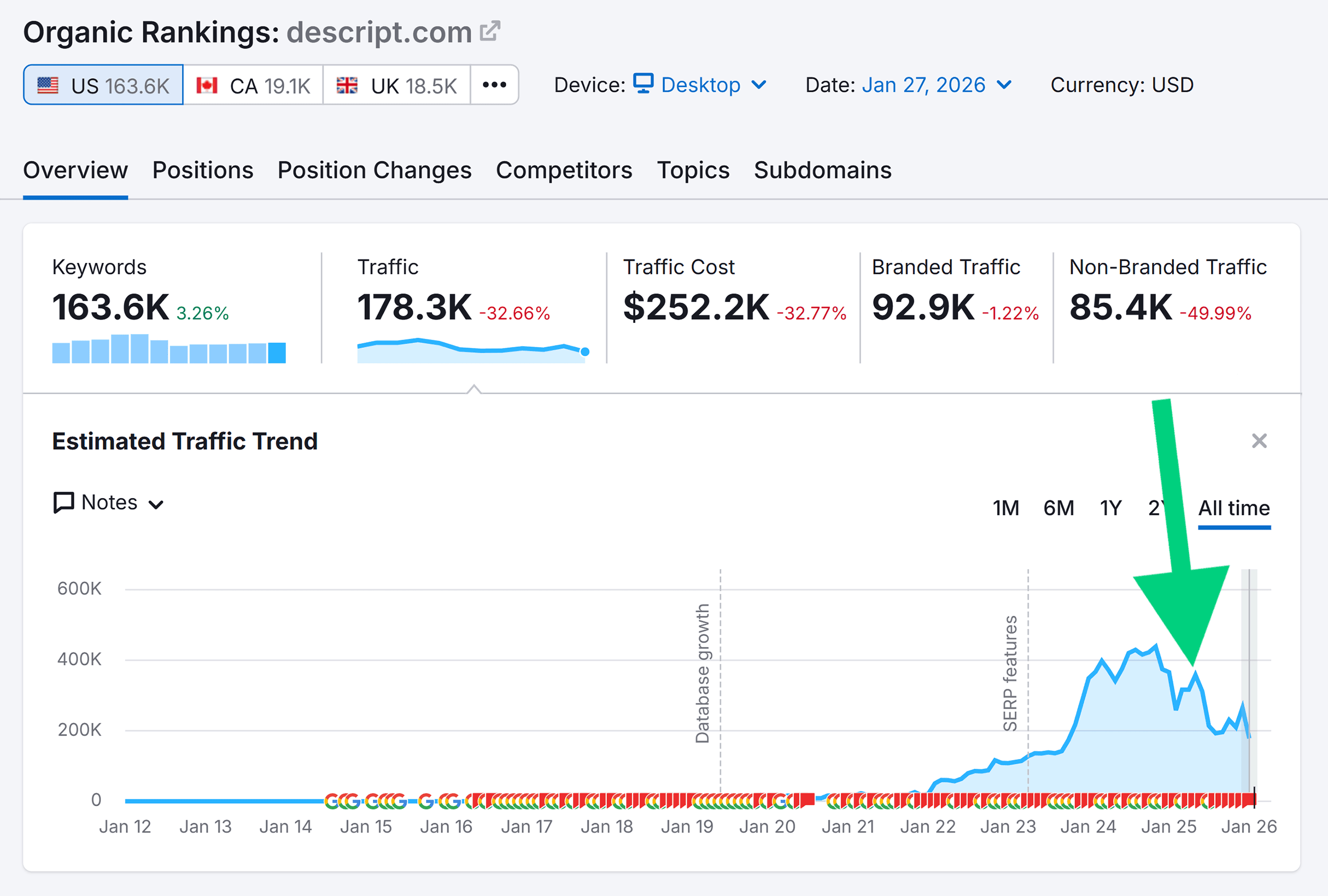
Interestingly, this AI visibility doesn’t always correlate with traditional SEO performance. While Descript’s traffic from traditional organic search experienced a steady decrease from its peak in 2024, its branded search traffic simultaneously increased. This divergence suggests that heightened AI mentions are contributing significantly to brand recognition, leading more users to search for "Descript" directly. The brand’s ability to semantically match its content with audience queries, through natural language and expert-led narratives, ensures it remains a go-to recommendation for AI systems. Their blog articles, for example, feature quotes from internal experts, mirroring the authentic conversations of their target audience, thereby increasing their semantic relevance to AI.
Action Item: Identify and Focus on Your Niche Market
To replicate Descript’s success, SaaS companies must resist the urge to be "all things to all people." Instead, define the narrowest viable segment of your core audience. This involves asking critical questions: Who are our most successful customers? What problems do they consistently face? What unique solutions do we provide that resonate specifically with them? The overlap of these answers defines your niche. Once identified, anchor your product messaging to this specific "job-to-be-done." For example, shifting from a generic "all-in-one AI platform" to "edit podcasts and spoken audio, without technical complexity" provides the clarity AI systems need to understand and recommend your product for specific use cases. This strategic focus, though requiring medium effort, promises high impact on AI visibility.
Developing Seriously Helpful Content: The AI’s Trusted Advisor
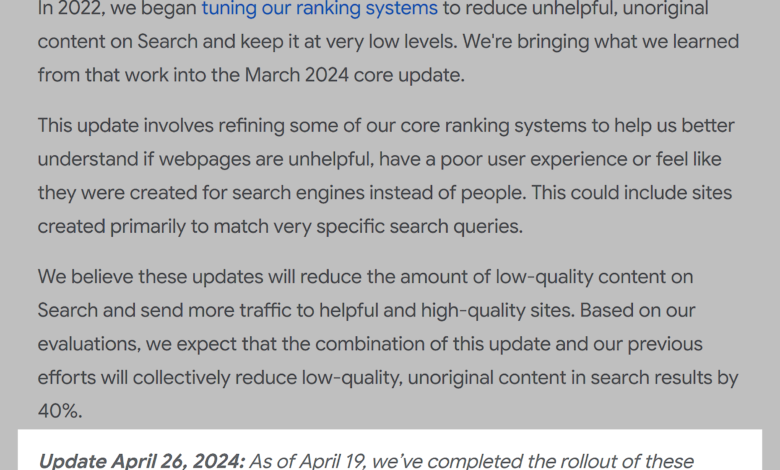
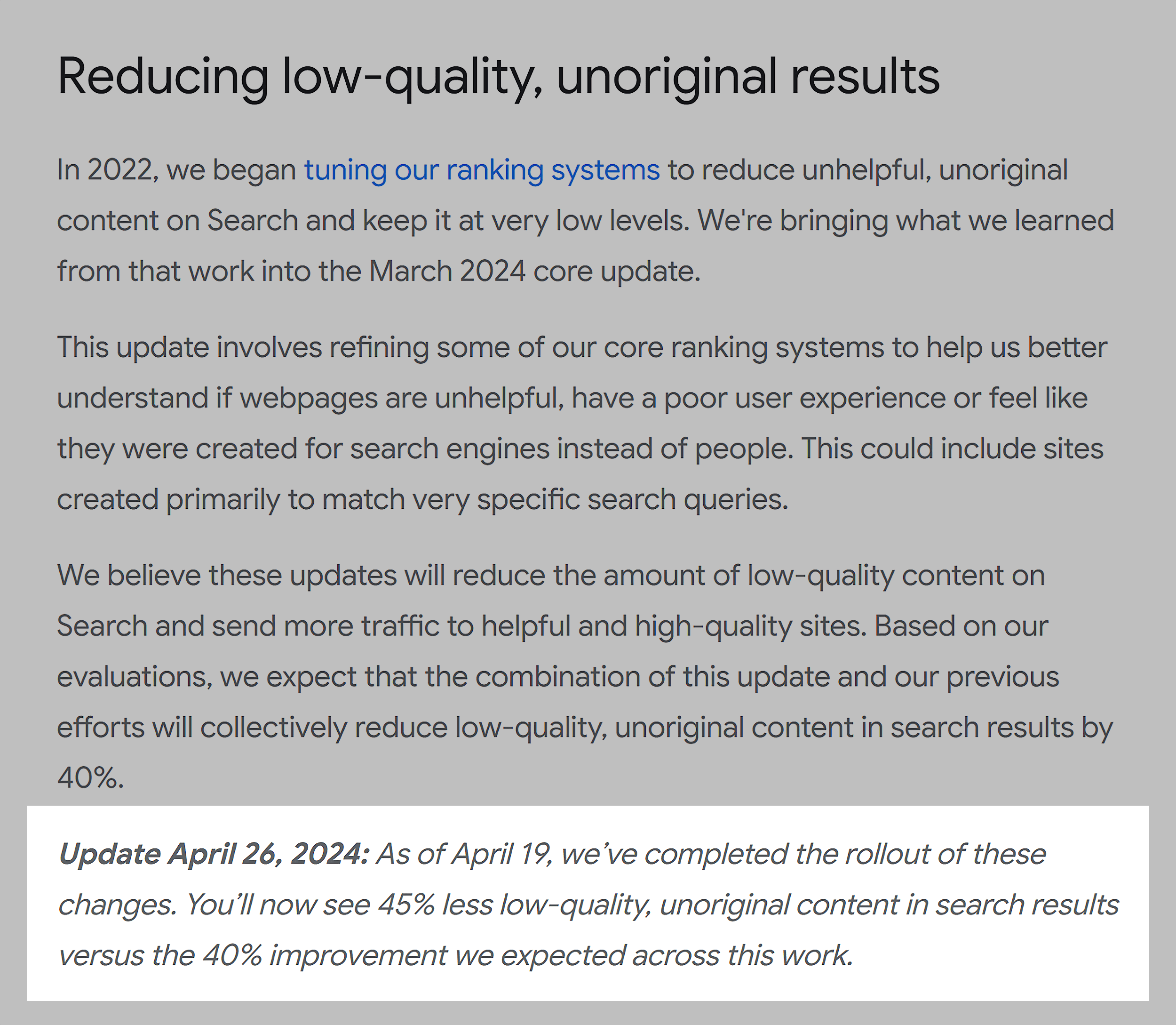
Beyond clear niche messaging, Descript excels in creating genuinely helpful content. This isn’t a new concept in SEO; Google has long prioritized "helpful content," as reinforced by its 2024 algorithm changes that reportedly reduced low-quality search results by 45%. However, for AI search, the stakes are even higher. LLMs actively seek out comprehensive, authoritative, and unique information to construct their answers.
Descript’s content strategy avoids superficiality, opting instead for:
- In-depth guides that cover complex topics comprehensively.
- Tutorials demonstrating practical applications of their software.
- Expert interviews that provide unique perspectives and insights.
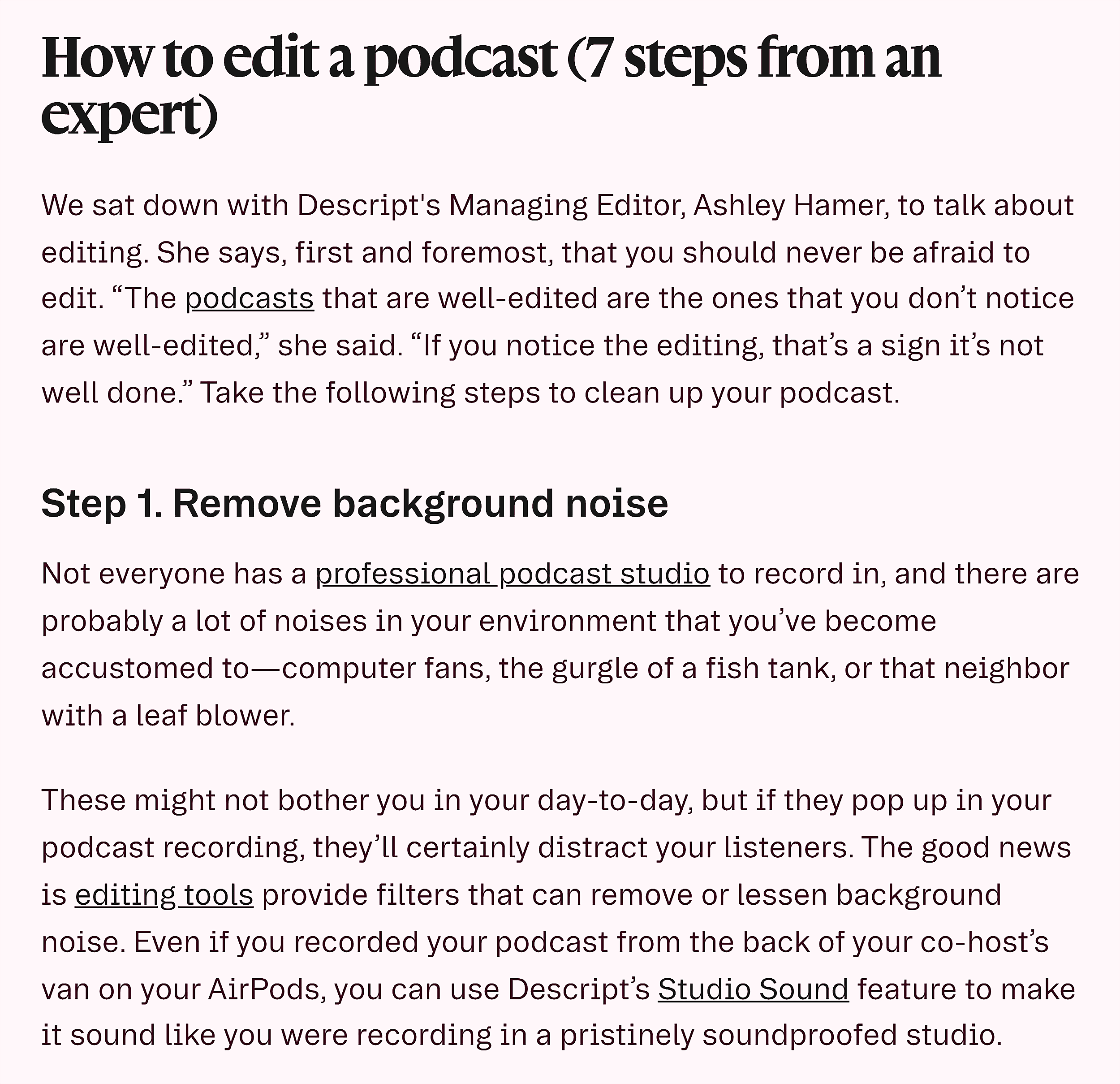
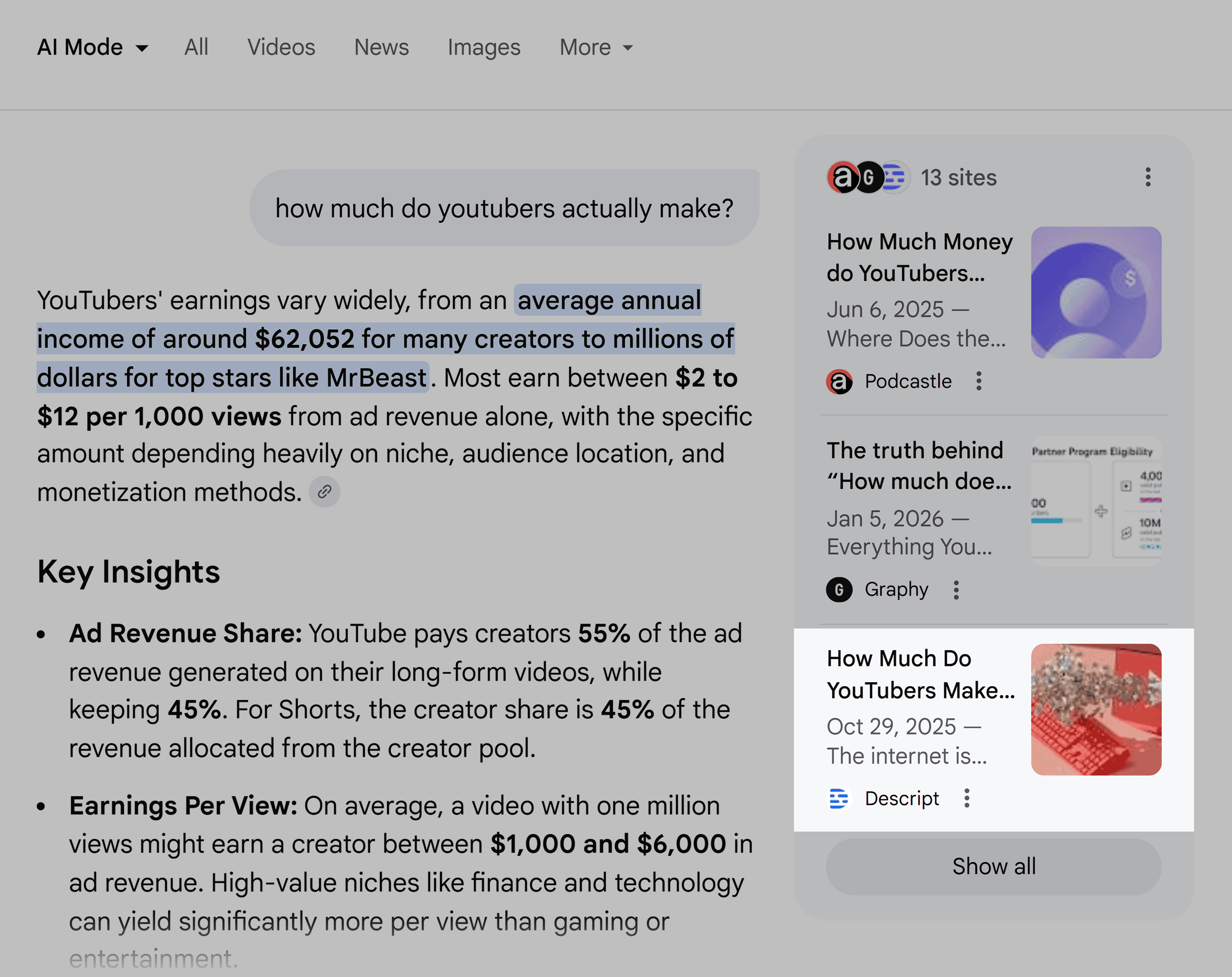
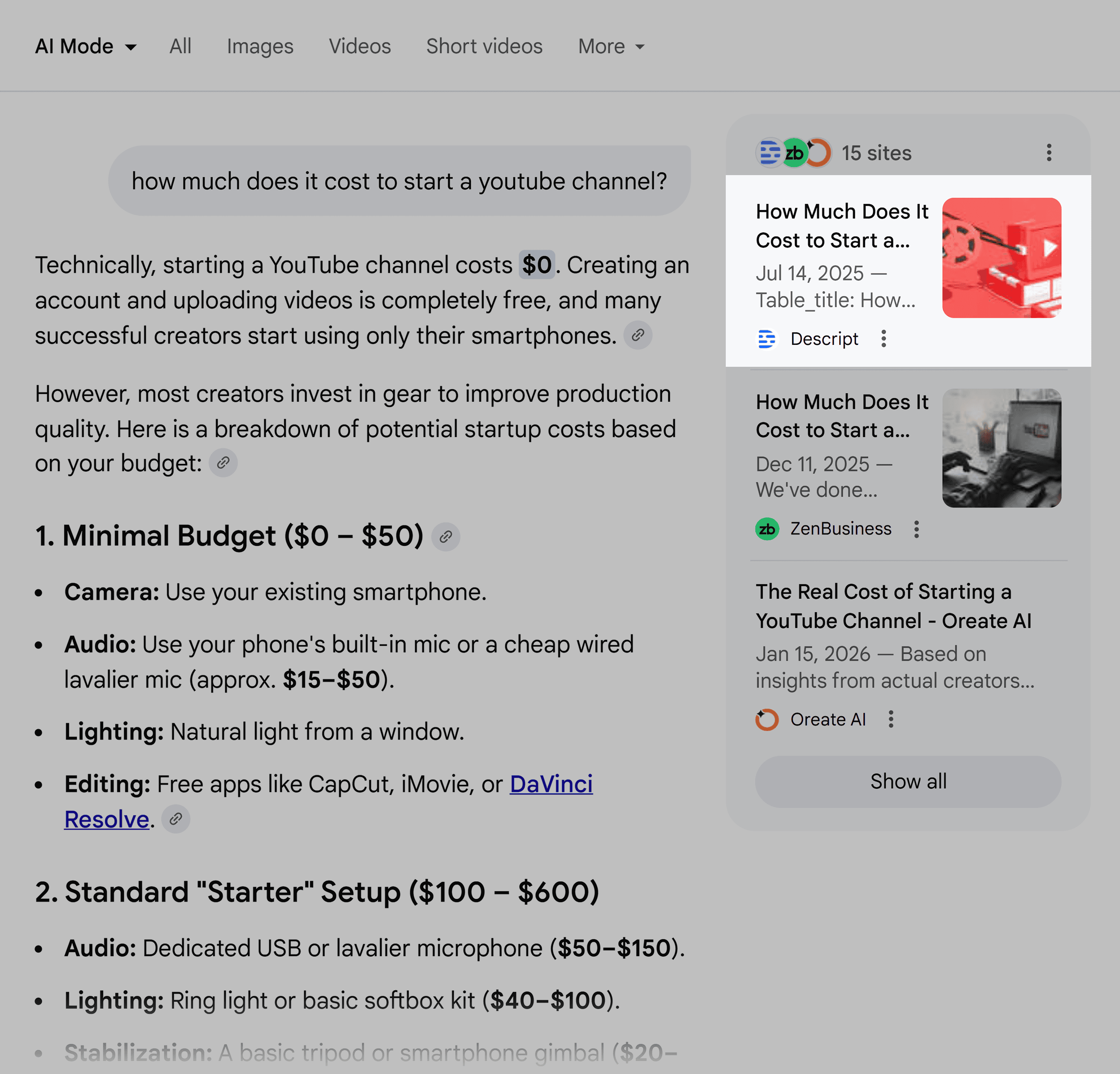
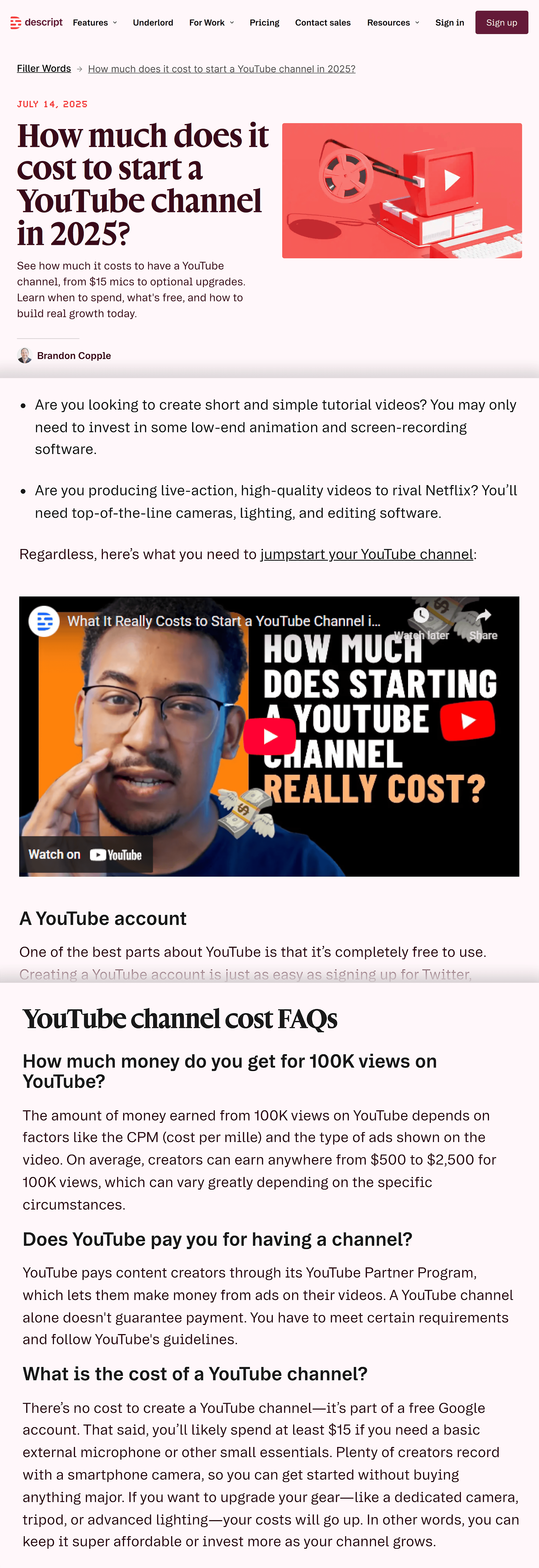
They also publish content that, while not directly about their product, is highly relevant to their target audience. For example, when asked "how much YouTubers actually make," Google’s AI Mode cited a Descript blog post. This article wasn’t just a list of figures; it included detailed breakdowns of income streams, real-world examples, and expert insights. Similarly, a query about "how much it costs to start a YouTube channel" also led to a comprehensive Descript article featuring FAQs and embedded video tutorials from their YouTube channel.
This pattern reveals a clear truth: depth and expertise drive AI citations. Surface-level content, often generated en masse, is increasingly overlooked by LLMs in favor of sources that offer real value and demonstrate authority. Descript’s commitment to rich, well-researched content positions them as a trusted information source, making their website a valuable repository for AI systems.
Action Item: Focus Your Content on Being Helpful
Once your niche is defined, the next step is to create content that genuinely assists that audience. Instead of broadly targeting "video editing professionals," Descript focuses on "content creators and podcasters." This means their content addresses the specific challenges and aspirations of this group. To emulate this:
- Conduct thorough keyword research, looking beyond simple terms to understand user intent.
- Analyze competitor content, identifying gaps where you can offer more depth or a unique perspective.
- Engage directly with your audience through surveys, customer interviews, and community forums (like Reddit) to uncover their most pressing questions and complaints.
By deeply understanding your audience’s daily reality, you can produce content that isn’t just optimized for keywords but genuinely solves problems. This "high effort, medium impact" strategy (medium impact because it’s foundational and needs other elements to shine) ensures your content becomes a primary source for AI answers, building both awareness and authority, even if it doesn’t always lead to direct brand mentions in the initial AI response.

Showcasing Images and Videos: Speaking to Multimodal AI
The evolution of AI has moved beyond text-only understanding. Modern LLMs, equipped with image-processing models like Contrastive Language–Image Pre-training (CLIP), can interpret visuals—screenshots, diagrams, and videos—not just the accompanying text. This multimodal understanding means that how a product is visually presented directly impacts its AI visibility.
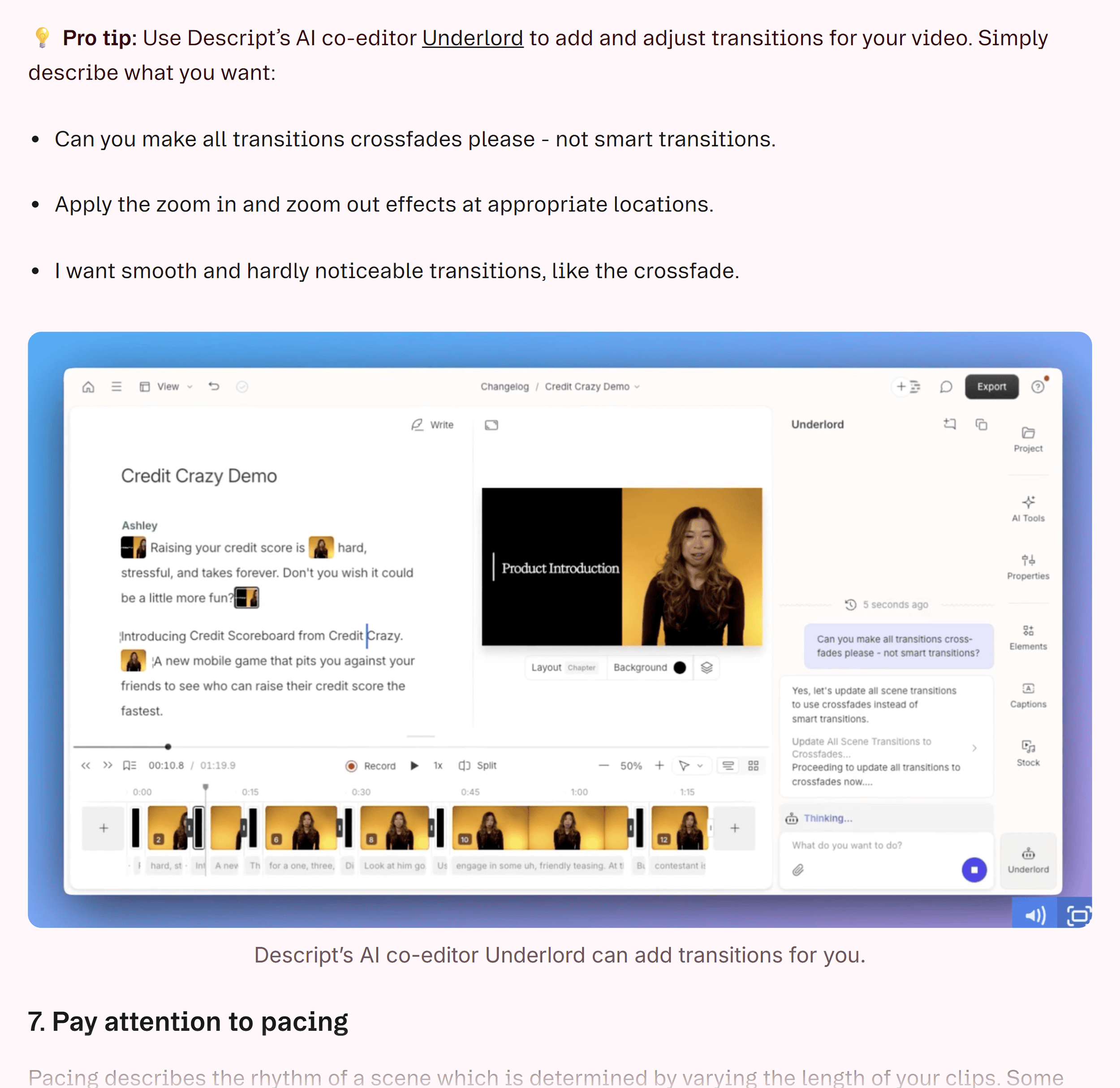
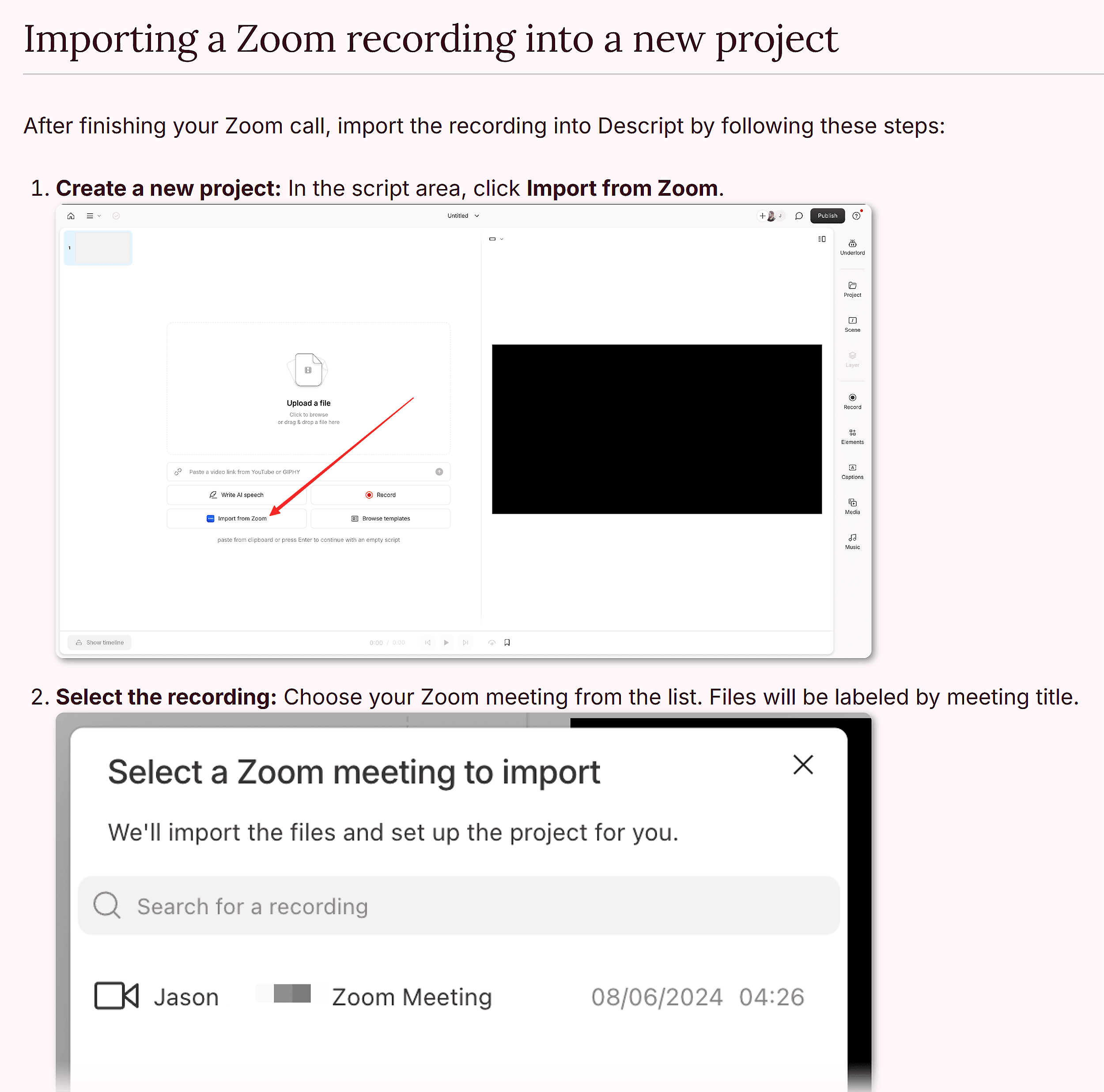
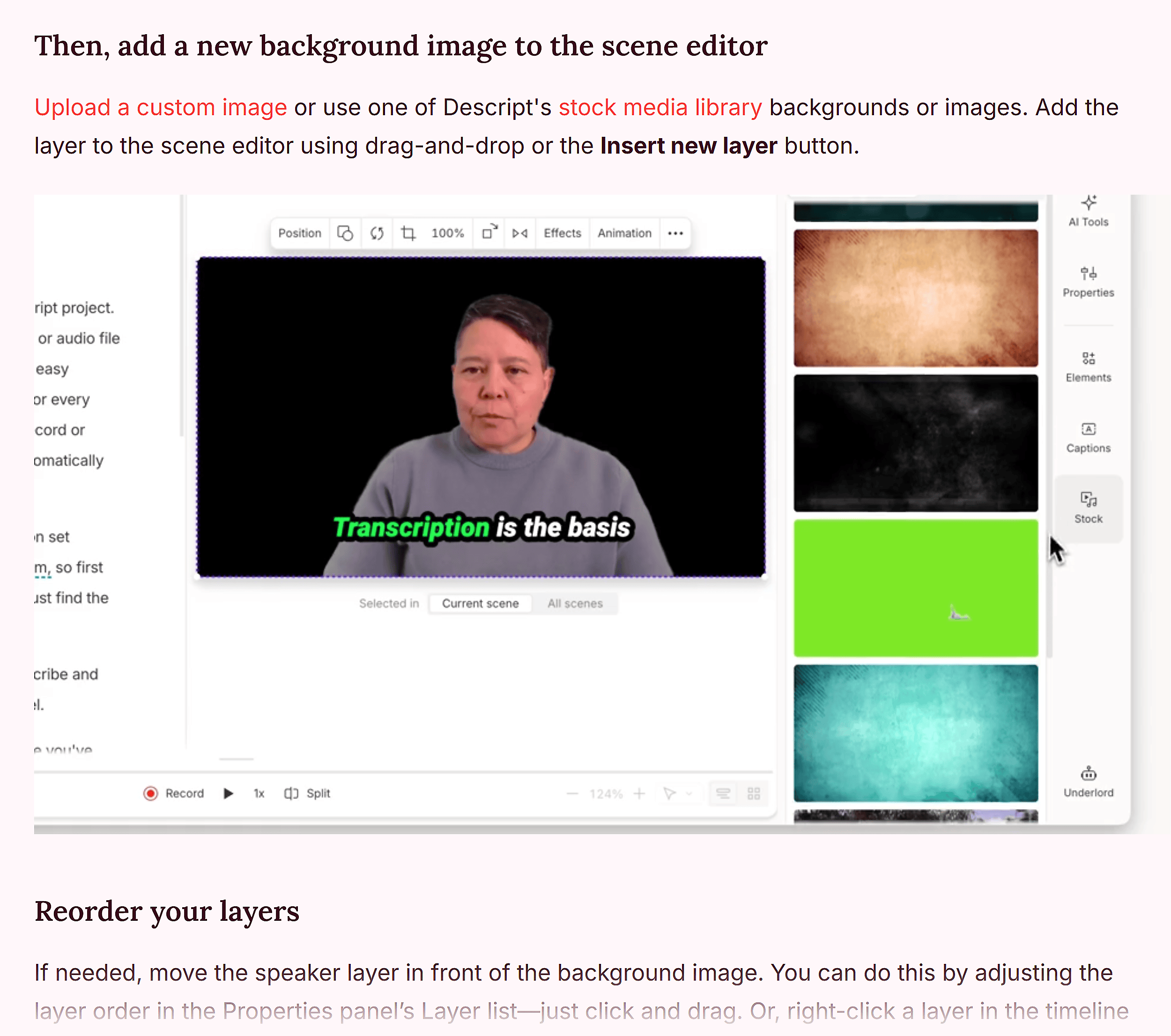
Descript effectively leverages this by consistently integrating real product images and videos across its website, help center articles, and blog content. These aren’t generic marketing mockups but actual in-product visuals demonstrating:
- The software’s user interface and design.
- Specific features in action.
- Step-by-step workflows.
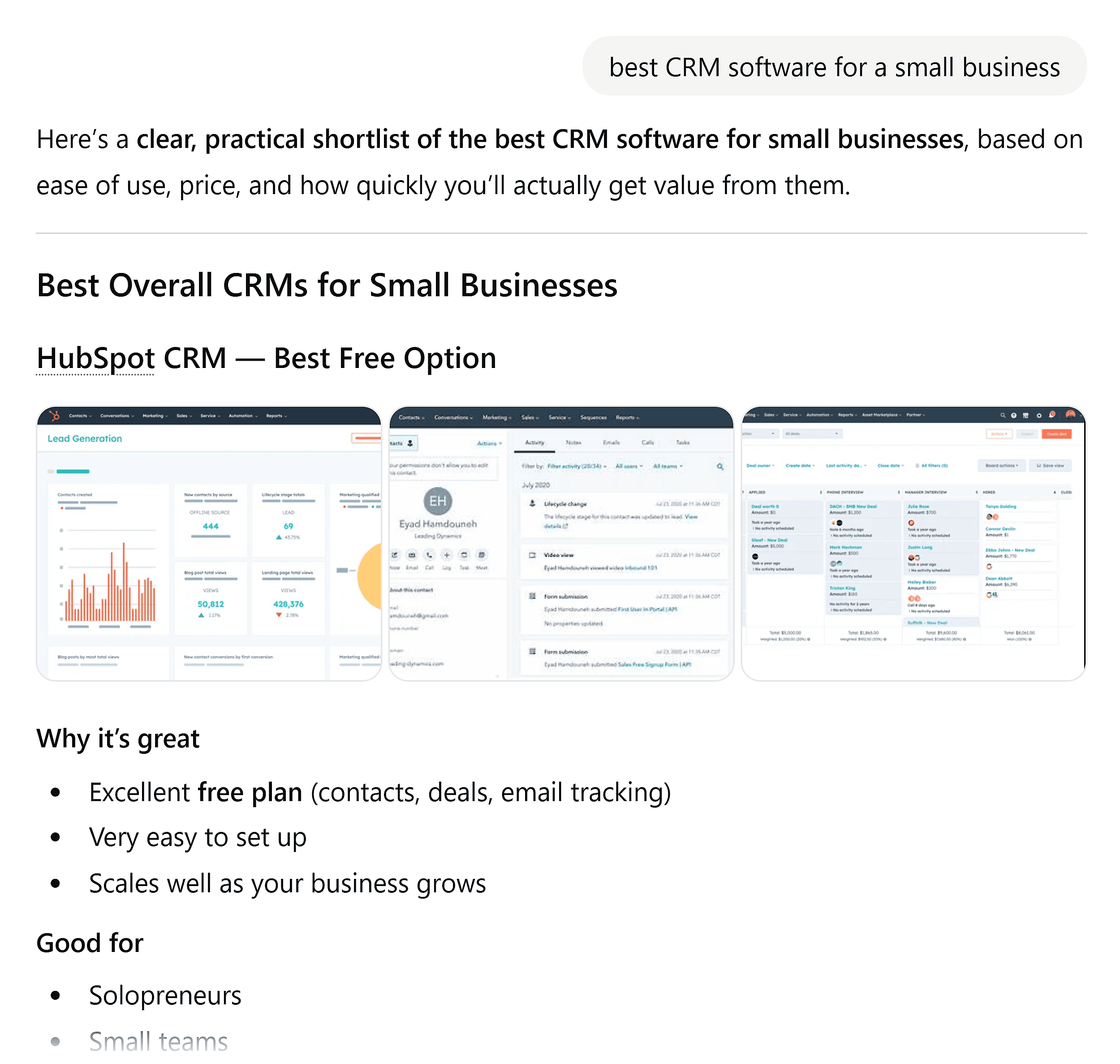
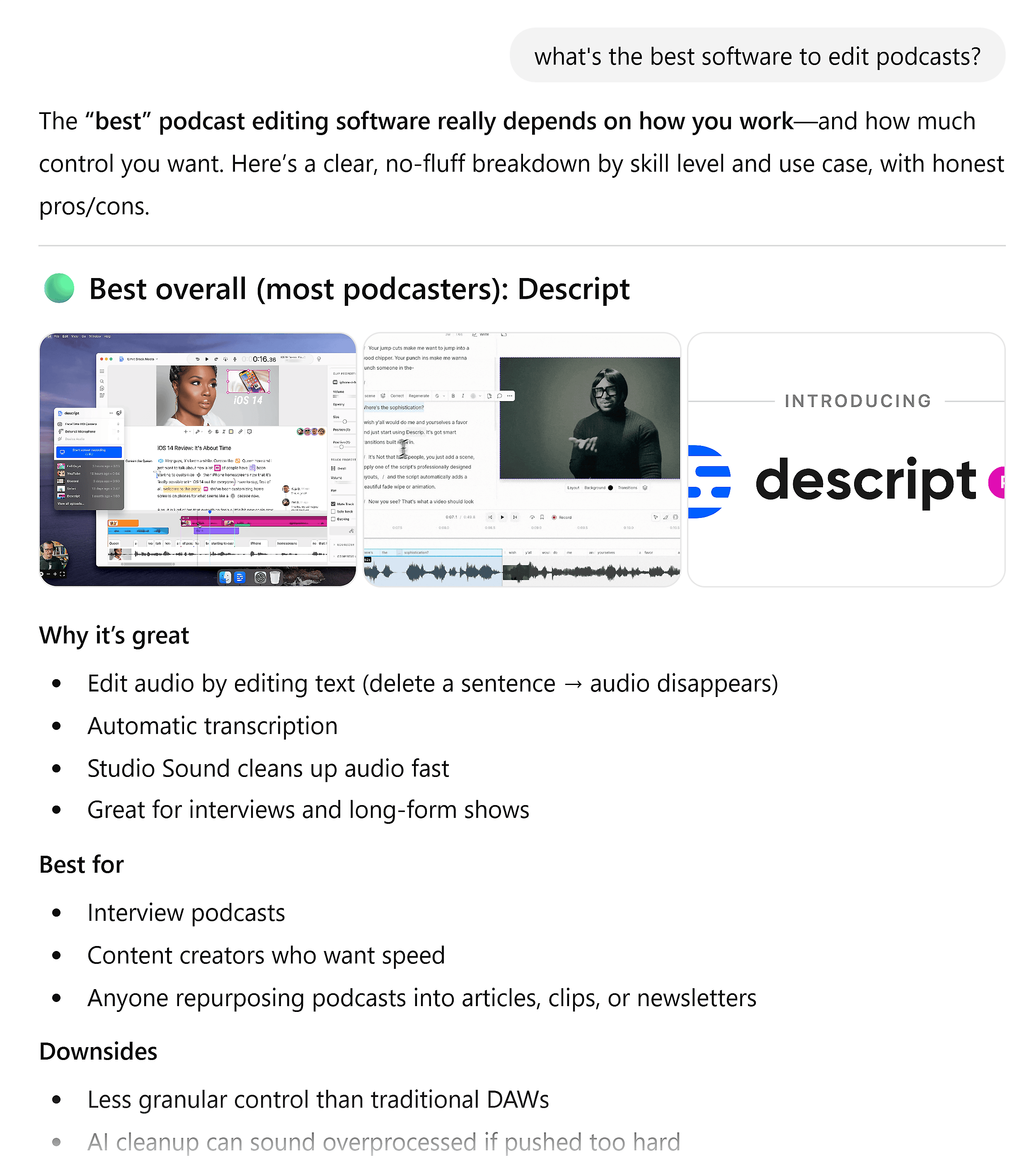
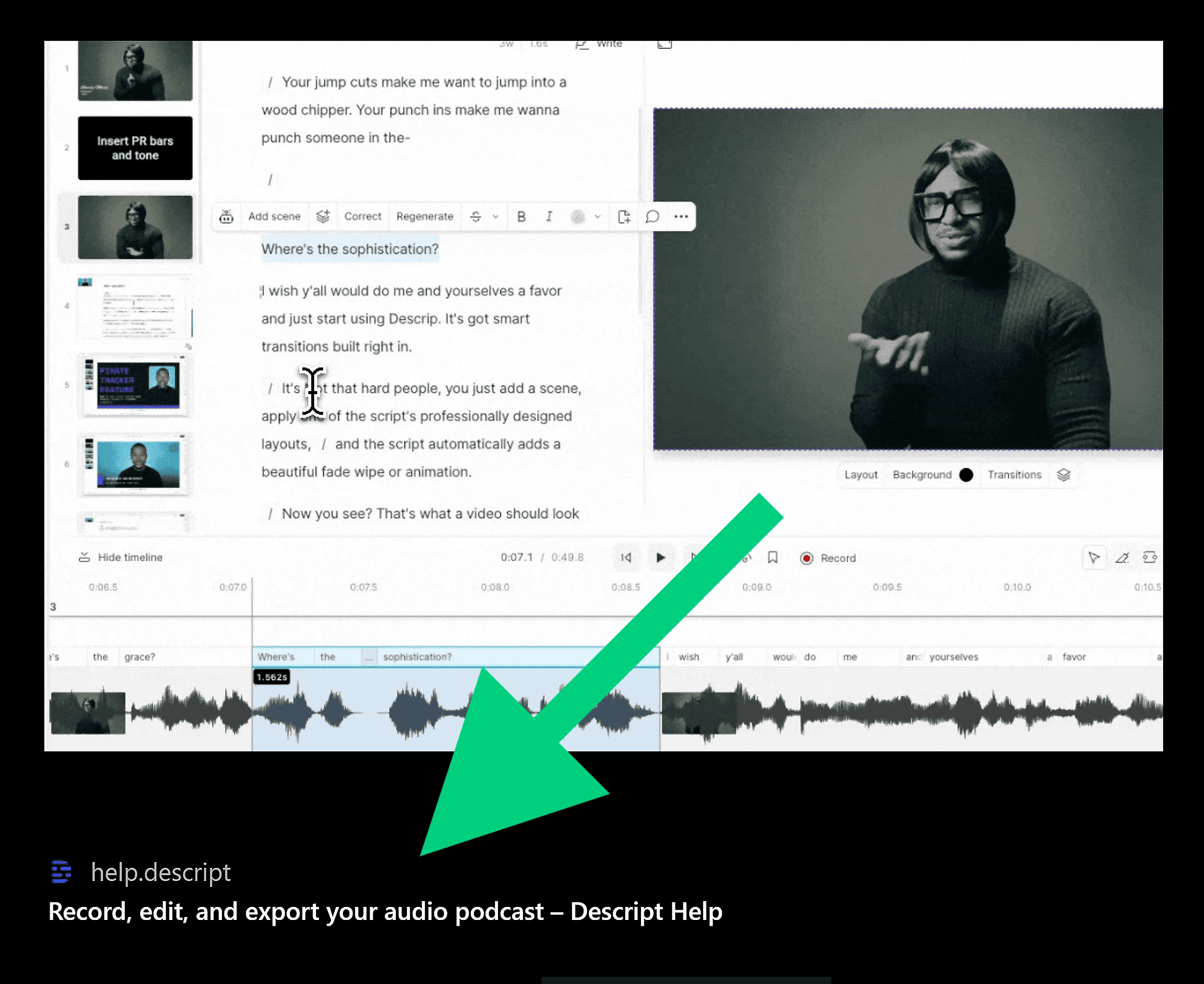
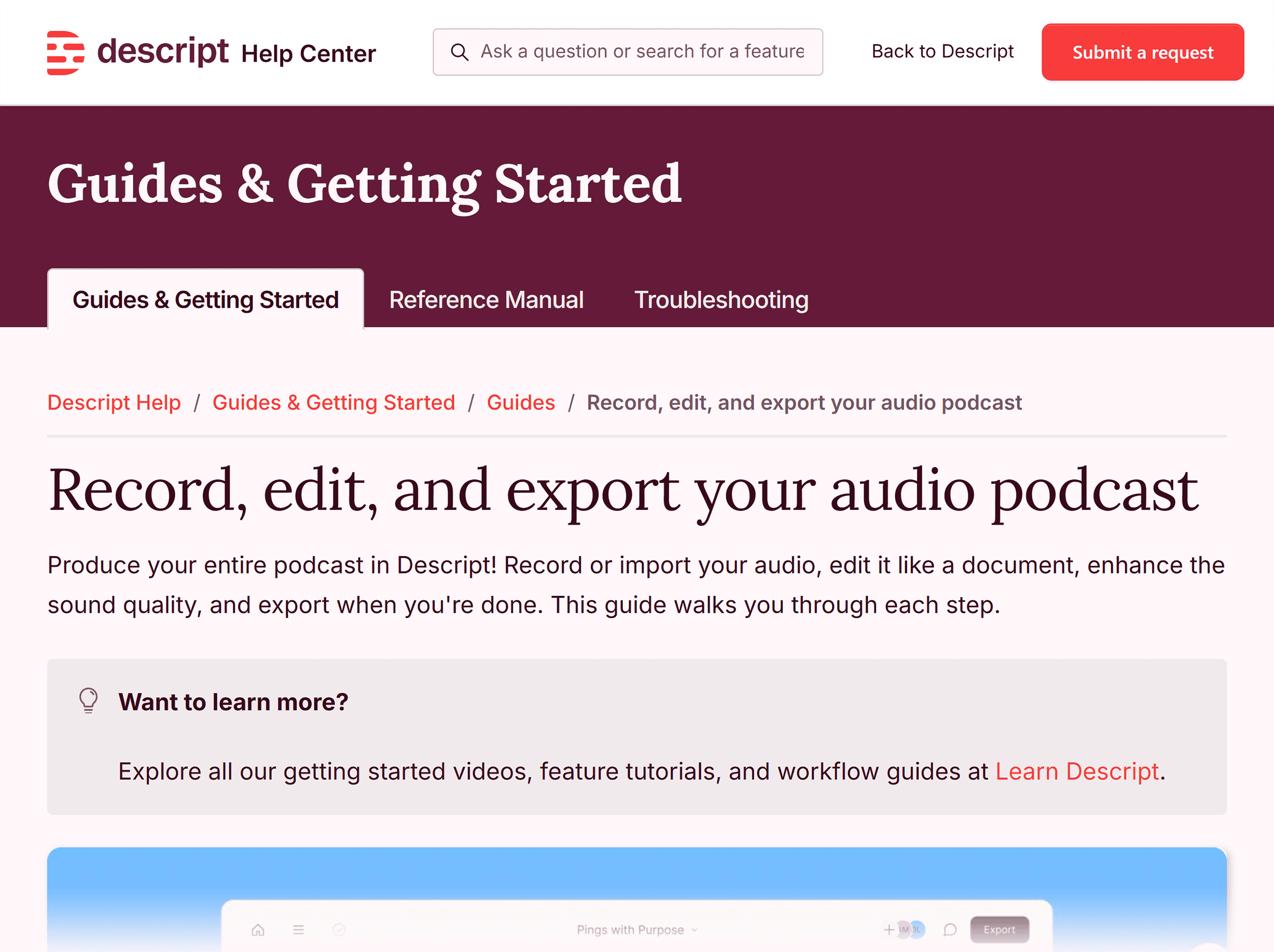
When a user searches for "best CRM software for a small business" on ChatGPT, the AI response often includes images of actual product interfaces. Descript achieves a similar effect; when asked for "best software to edit podcasts," ChatGPT presents Descript alongside relevant product visuals. These visuals are often pulled from detailed Help Center guides or blog posts, complete with links back to Descript’s site. This practice ensures that AI systems not only read about Descript but "see" its functionality, making it easier to recommend and recognize. The clarity offered by these real-world visuals aids user comprehension and provides concrete material for AI systems to reuse in their answers.
Action Item: Include In-Product Images in Your Marketing Content
This strategy offers a "low effort, medium impact" opportunity. Start by ensuring every highlighted feature on your product pages includes a real screenshot of it in action. Replace abstract diagrams with actual in-product visuals wherever possible. Extend this practice to blog posts and help articles; if you mention a feature or explain a workflow, provide a corresponding screenshot or a short screen capture video. The goal is clarity. Visuals help users understand your product faster and provide AI systems with rich, interpretable data, making your product more easily discoverable and recommendable in AI search.
Creating Detailed MoFu/BoFu Content: Guiding the Buyer’s Journey
Effective AI visibility also hinges on providing content tailored to different stages of a user’s awareness. Descript understands that not all queries are "top-of-funnel" (ToFu) discovery searches. They strategically develop Middle-of-Funnel (MoFu) and Bottom-of-Funnel (BoFu) content for product-aware and solution-aware audiences.
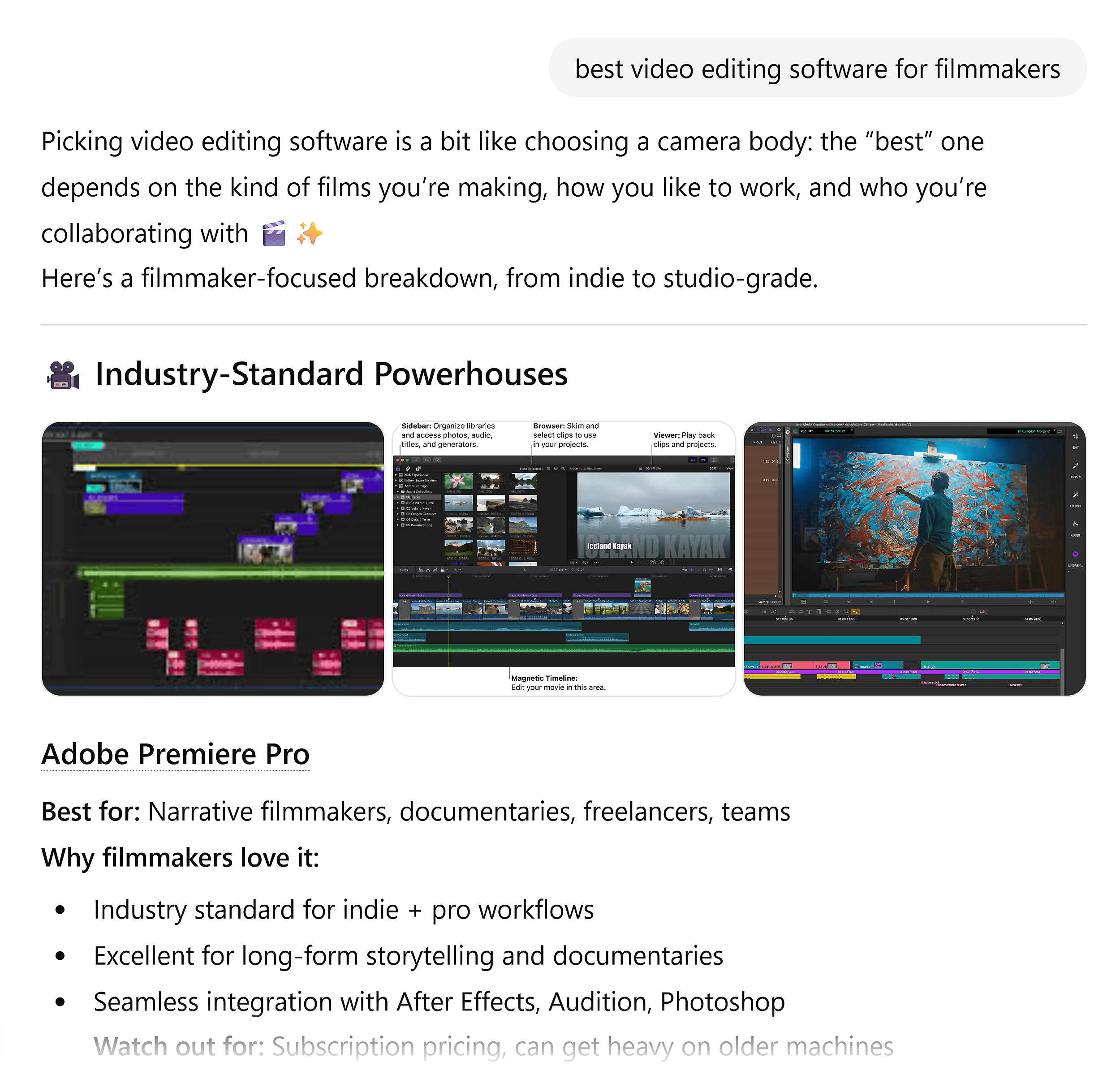
When users search for "video creation or editing tools" on ChatGPT, Descript often appears, with its own content cited as a source. This might be a "best of" article comparing various video tools, meticulously detailing each product’s:
- Primary use cases.
- Strengths and weaknesses.
- Ideal user profiles.
This granular, comparative content helps AI recommend Descript to the right people, not just everyone. Descript applies this approach to multiple "best of" lists and comparison pages against its main competitors. This ensures that when AI is asked to "compare podcast video editing tools," Descript appears with clear, context-rich labels defining its specific advantages and target user.
For solution-aware audiences, Descript focuses on "how-to" content that naturally integrates their product as the solution. For instance, a query on "how to reduce background noise from a microphone" led Google’s AI Mode to reference a Descript how-to article. This article wouldn’t just explain the concept; it would demonstrate how Descript’s features specifically address that problem.
Action Item: Create Citable MoFu and BoFu Content
This is a "high effort, high impact" strategy. To increase product-level AI visibility, focus on content for Product Aware and Solution Aware queries.
- Product Aware audiences benefit from comparison pages, feature deep-dives, and alternative analyses. Consult your sales team to understand which features close deals and which competitors are frequently mentioned. This feedback directly informs the creation of compelling comparison content that AI loves to cite.
- Solution Aware audiences need how-to guides and problem-solution content where your product is naturally showcased. Leverage tools like Semrush’s AI Visibility Toolkit to identify topics and prompts where your competitors are being cited. Analyze the specific questions behind these prompts to create superior, more detailed answers.
The goal isn’t just more content, but content that answers the right questions at the right stage of the user journey, in a format that AI can confidently cite and recommend.
Building Positive Sentiment: Digital PR and Affiliate Marketing
AI visibility extends beyond a company’s owned channels. LLMs actively seek "consensus" signals across the web, meaning positive sentiment and mentions from third-party sources are crucial. Descript strategically cultivates this external validation through two key channels: digital PR and a robust affiliate marketing program.
Research from Semrush’s December 2025 AI visibility report in SaaS indicates that Google’s AI Mode favors certain high-authority websites for software recommendations, including Zapier, Medium, Gartner, and G2. Descript’s presence across nearly all these top sources is a testament to its effective digital PR strategy. The company ensures it is mentioned in reputable software listicles (like "Best Transcription Apps" on Zapier), real-world experience articles (on platforms like Medium), and comprehensive review sites (Gartner, G2). When AI systems draw from these trusted sources, Descript gains visibility by association, even if it’s not the primary focus of the article. This "presence where AI is already looking" is a powerful, indirect form of endorsement.
Furthermore, Descript’s affiliate program incentivizes creators and influencers to promote their product. This program is designed to be attractive, offering:
- Competitive commission rates.
- Clear guidelines and support for affiliates.
- Long cookie durations.
- High-converting landing pages.
These incentives encourage a vast network of creators to produce content (e.g., YouTube walkthroughs, blog reviews) that naturally features Descript, often including affiliate links. When a user asks Google’s AI Mode "how to use Descript," a relevant YouTube tutorial from an affiliate partner can be cited as a source. This demonstrates how affiliate-generated content creates a valuable ecosystem of citable, trusted references that AI systems then reuse, amplifying Descript’s reach and authority.
Action Item: Build a Strategy to Get More Mentions Online
This is a "high effort, high impact" strategy centered on relationship building.
- Digital PR: Identify publishers that AI systems already trust (using tools like Semrush’s AI Visibility Toolkit to see competitor sources). Cultivate relationships with their editorial teams to get your brand included in relevant listicles, reviews, and industry analyses. Position your product with unique insights or case studies that resonate with their audience.
- Affiliate Marketing: Design an affiliate program that genuinely attracts and empowers creators. Provide clear positioning, example use cases, demo workflows, and reusable assets. Treat affiliates as true distribution partners, not just a side channel. Track the impact of these efforts using AI visibility data to identify which third-party content and creators are driving the most significant AI citations and mentions. Double down on what works.
Where Descript Could Improve: The Reddit Marketing Gap
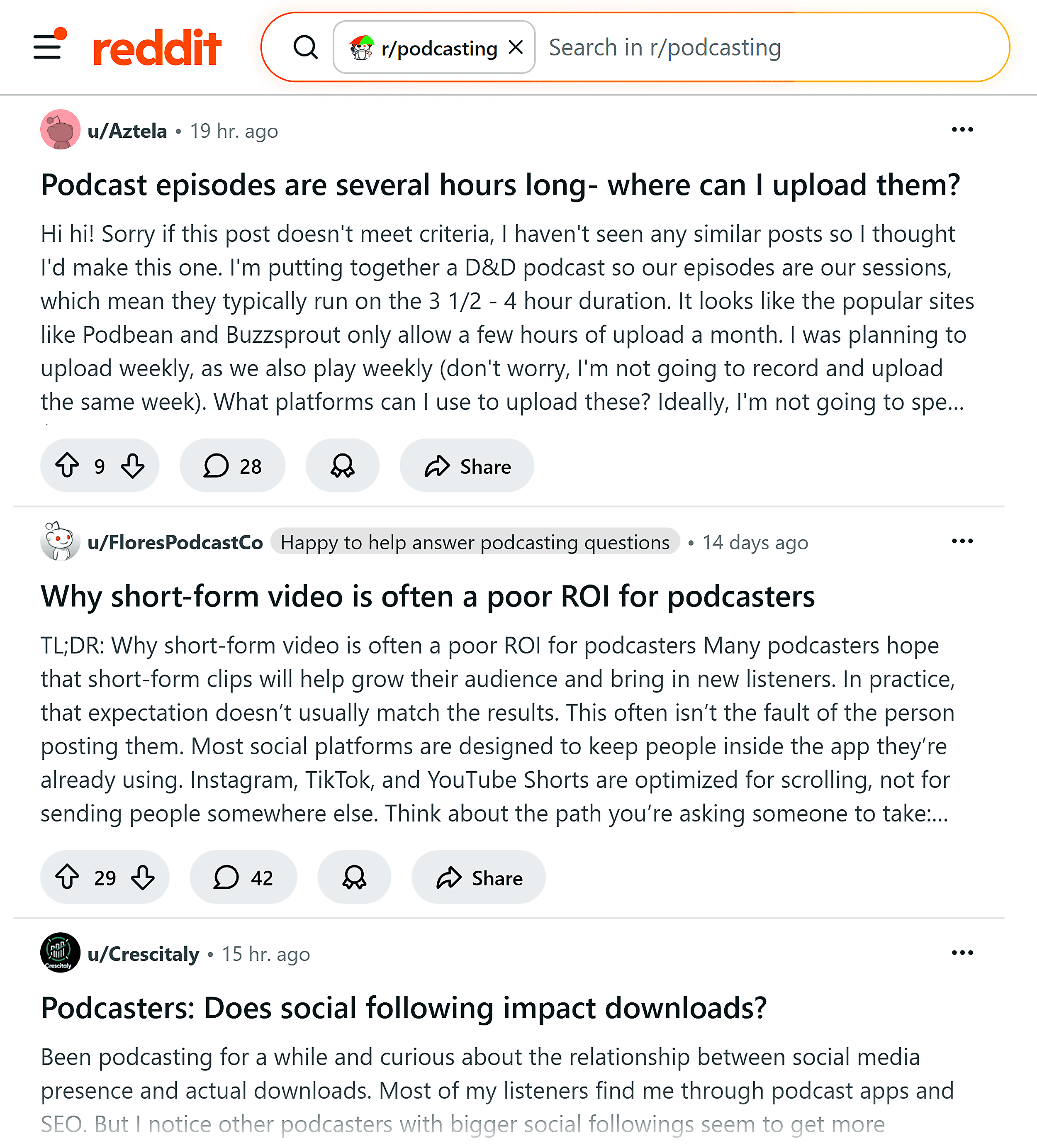
Despite its many successes, Descript has a notable area for improvement: Reddit marketing. Reddit remains a highly influential source for Google’s AI Mode, frequently cited in responses, particularly within niche communities like r/podcasting. The problem for Descript is that while Reddit mentions them, the sentiment is often skewed negative.
Searching for Descript within podcasting subreddits reveals numerous threads titled with complaints, bugs, or user frustrations. While positive mentions exist, they are frequently buried under a wave of critical commentary. For LLMs, which seek "consensus" to inform their recommendations, this imbalance in sentiment is a significant vulnerability. A strong product can be undermined if external, trusted sources predominantly highlight its shortcomings. AI recommendations may weaken, pushing users towards alternatives, even when Descript’s core offering is superior.
Descript has recently taken a positive step by taking control of a dedicated brand subreddit, with a Product Marketing Manager (PMM) actively engaging. Their responses in this space appear Reddit-friendly, avoiding marketing jargon. However, engagement outside this branded subreddit, particularly in broader community discussions where organic conversations happen, seems minimal. To truly leverage Reddit for AI visibility, Descript needs to expand its community engagement.
Action Item: Turn the Tide on Reddit with Proactive Engagement
This is a "high effort, high impact" area for improvement.
- Proactive Monitoring: Actively track mentions of your brand, product, and related keywords across relevant subreddits.
- Authentic Engagement: Participate in discussions as a helpful expert, not just a marketer. Answer questions, offer solutions, and genuinely engage with user feedback.
- Address Concerns Transparently: Respond to negative sentiment constructively and transparently, demonstrating a commitment to improvement.
- Foster Positive Discussions: Encourage satisfied users to share their experiences, and consider initiating discussions on common challenges that your product effectively solves.
- Share Value: Provide valuable content or insights without overtly promoting your product, building trust and authority within the community.
By actively engaging and stabilizing sentiment on Reddit, Descript can transform a potential liability into a powerful asset, strengthening its overall AI visibility and ensuring that LLMs encounter a more balanced and positive consensus about its brand.
Conclusion: Clarity, Helpfulness, and External Validation for AI Success
Descript’s journey illustrates that achieving significant AI visibility is not reserved for the largest companies. It is a result of a deliberate, multi-faceted strategy focused on clarity, helpfulness, and external validation. By choosing clear niche messaging, developing seriously helpful content, showcasing their product with real visuals, creating detailed MoFu/BoFu content, and building positive sentiment through digital PR and affiliate marketing, Descript has established itself as a formidable player in the AI search landscape.
The key takeaways for any SaaS company seeking to enhance its LLM visibility are clear:
- Niche Focus (Medium Effort, High Impact): Define who you serve and what problem you solve with utmost clarity.
- Helpful Content (High Effort, Medium Impact): Create in-depth, expert-driven content that genuinely assists your target audience.
- Visual Product Showcasing (Low Effort, Medium Impact): Integrate real product screenshots and videos to help AI understand your product visually.
- Funnel-Aligned Content (High Effort, High Impact): Develop content that addresses different stages of customer awareness, from problem identification to product comparison.
- External Validation (High Effort, High Impact): Actively seek mentions on trusted third-party sites and build strong affiliate partnerships to generate positive external sentiment.
- Community Engagement (High Effort, High Impact): Proactively engage with online communities like Reddit to manage sentiment and provide authentic value.
AI search visibility is not about manipulating algorithms; it’s about making your product intrinsically easier for intelligent systems to understand, trust, and recommend. By consistently adhering to these principles, any company, regardless of its size, can significantly increase its brand mentions and citations in the AI-powered search results of tomorrow.