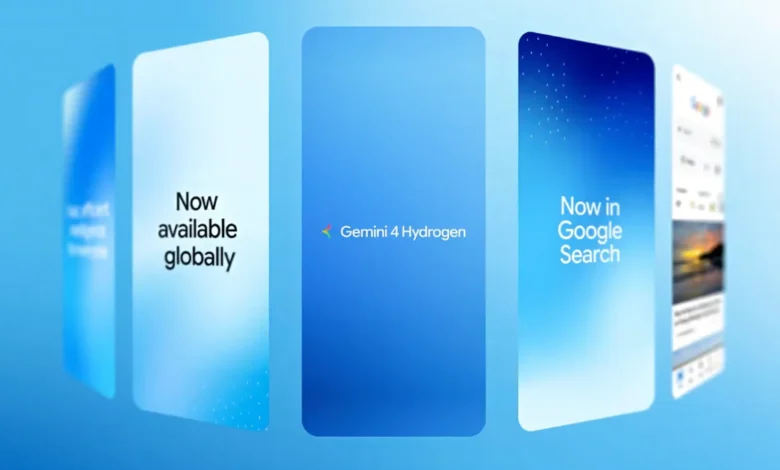
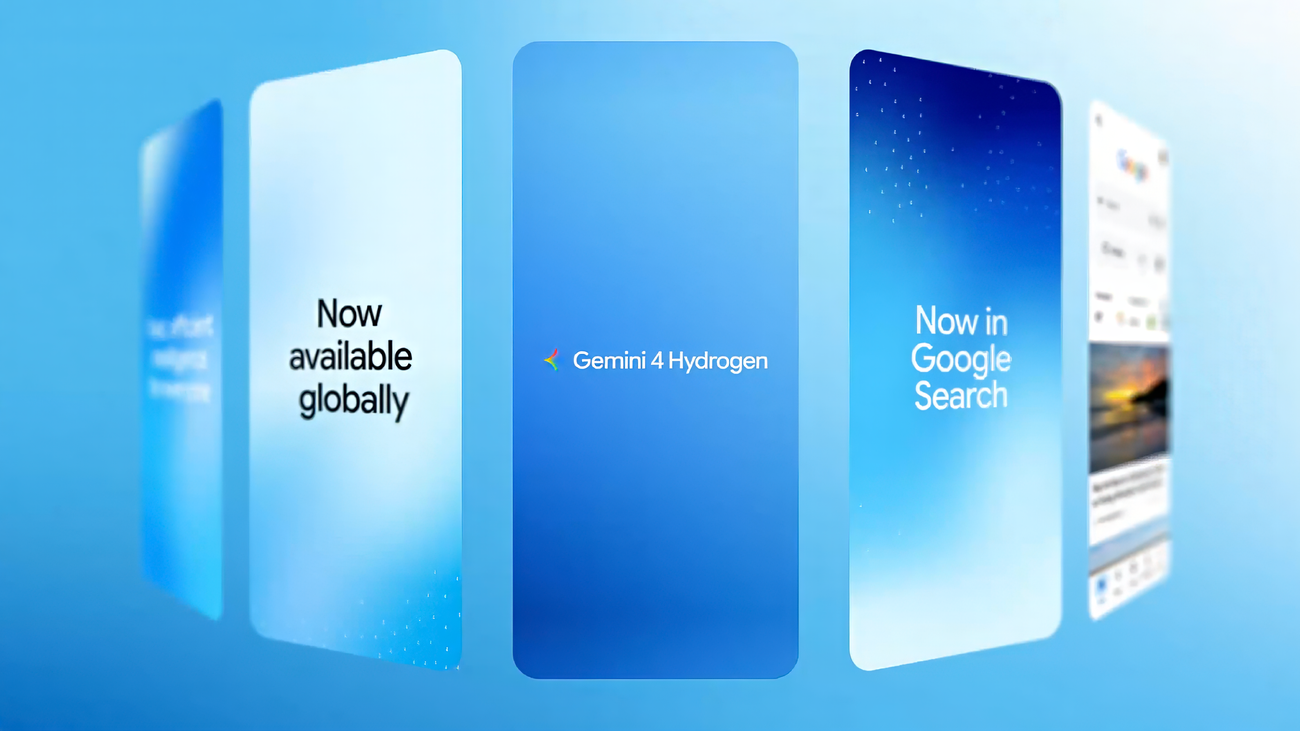
Google has officially launched its most substantial artificial intelligence model upgrade to date for its flagship search engine, introducing Gemini 4 Hydrogen to users worldwide. Billed as a monumental leap forward in consumer-facing AI technology, the rollout represents the culmination of years of iterative development in multimodal reasoning, computational efficiency, and user-interface design. The deployment of Gemini 4 Hydrogen is immediate, automatically rolling out across global markets to reshape how billions of users interact with the internet’s premier information discovery platform.
The integration of Gemini 4 Hydrogen into Google Search shifts the platform from a traditional keyword-matching index to an advanced, highly intuitive reasoning engine. According to Google executives, the new model is designed to parse complex, multi-part queries with unprecedented nuance, delivering synthesis rather than mere lists of links. This architectural transformation addresses long-standing user demands for faster, more accurate, and contextually aware answers, positioning Google at the vanguard of the fiercely competitive generative AI landscape.
Background and Context of the Gemini Architecture
To understand the magnitude of the Gemini 4 Hydrogen release, it is necessary to examine the rapid evolution of Google’s proprietary foundational models. Following the initial rollout of the Gemini ecosystem, Google has consistently iterated on its multimodal capabilities, aiming to seamlessly blend text, audio, image, and video processing into a cohesive foundational structure. Previous iterations established the groundwork by demonstrating advanced coding proficiency, large context windows, and sophisticated logical reasoning.
However, deploying these massive models at the scale of Google Search—which processes billions of queries daily across every conceivable language and device—presents profound engineering challenges. Early versions of generative search features occasionally grappled with latency, computational overhead, and the delicate balance between creative synthesis and strict factual accuracy. Gemini 4 Hydrogen was engineered specifically to overcome these bottlenecks. By optimizing model architecture and inference efficiency, Google’s research and engineering teams have managed to deliver high-tier intelligence without compromising the blistering search speeds users have relied on for decades.
The engineering breakthroughs behind Hydrogen focus heavily on localized efficiency and distributed processing. By refining how the model handles sparse data activation and context retention, Google has enabled the search engine to comprehend not just the literal words of a query, but the underlying intent. This contextual depth allows the system to anticipate follow-up questions, summarize dense academic or technical literature instantly, and construct visual answers that adapt dynamically to the user’s device and preferences.
Chronology of the Launch and Global Deployment
The pathway to Gemini 4 Hydrogen’s global release spans an intensive period of internal testing, closed-beta evaluations, and gradual infrastructure scaling. While initial generative search capabilities were introduced to select cohorts via experimental programs such as Search Generative Experience (SGE), the unveiling of the Gemini 4 family represents a unified commercial push.
In the months leading up to the Hydrogen rollout, Google’s infrastructure teams quietly upgraded data centers worldwide with specialized tensor processing units (TPUs) designed to handle the heavier compute loads required by advanced reasoning models. Concurrently, product safety and quality assurance teams subjected the model to rigorous red-teaming exercises to mitigate hallucinations, bias, and security vulnerabilities.
The formal announcement today marks the inflection point where these behind-the-scenes developments transition into a universal consumer reality. Unlike previous phased rollouts that restricted access to specific geographic regions or premium subscription tiers, Gemini 4 Hydrogen is launching globally across standard Google Search interfaces. This ensures that users from metropolitan technology hubs to remote regions with mobile-first infrastructure gain immediate access to the same tier of cutting-edge AI assistance.
Key Features and Capabilities of Gemini 4 Hydrogen
Gemini 4 Hydrogen introduces several distinct architectural and functional enhancements that differentiate it from its predecessors. Chief among these is a dramatic improvement in visual and text synthesis. When users submit complex, open-ended queries—such as planning a multi-city itinerary tailored to specific dietary restrictions and historical interests, or troubleshooting a nuanced mechanical failure—the engine compiles comprehensive, structured overviews accompanied by relevant visual media.
Furthermore, the model exhibits superior multimodal comprehension. Users can input a combination of text, voice prompts, and captured images into a single query framework, allowing Gemini 4 Hydrogen to process the inputs holistically. For instance, a user photographing a damaged bicycle component while verbally asking for repair instructions and compatible replacement parts will receive a unified, step-by-step diagnostic guide generated in real time.
Data handling capabilities have also seen a radical expansion. The model features an extended context window, enabling users to upload massive documents, spreadsheets, or code repositories directly into the search interface for instant analysis, summarization, and query execution. This blurs the traditional line between a web search engine and a dedicated enterprise productivity suite, bringing sophisticated data analysis tools directly to the everyday web browser.
Statements and Leadership Perspectives
Robby Stein, Vice President of Product for Google Search, emphasized the transformative nature of the new release, framing it as a natural evolution of Google’s core mission to organize the world’s information and make it universally accessible and useful.
"Today, we are bringing cutting-edge intelligence to everyone with Gemini 4 Hydrogen," Stein stated. "This represents the biggest model upgrade to Search yet. Hydrogen is designed to deliver more helpful, visual, and intuitive responses, fundamentally changing what people can accomplish when they come to Google looking for answers."
Industry analysts note that leadership’s emphasis on accessibility underscores Google’s strategic imperative to maintain its dominant market share in the face of aggressive competition from alternative AI-driven search startups and integrated platform rivals. By making advanced reasoning universally available on day one, Google is signaling confidence in both its infrastructure scale and the tangible utility of its AI investments.
Fact-Based Analysis of Market Implications
The launch of Gemini 4 Hydrogen carries profound implications for the digital ecosystem, spanning digital publishing, advertising, SEO, and enterprise software markets. As search engines evolve from directional traffic referrers into direct answer providers, website publishers and content creators face a shifting paradigm regarding web traffic acquisition.
Proponents of the technology argue that generative search elevates high-quality, authoritative content by synthesizing expert sources into comprehensive summaries that properly attribute and link back to original publishers. Conversely, critics and publisher advocacy groups have expressed ongoing concerns regarding user engagement retention, as direct-answer formats may reduce click-through rates to traditional web properties. Google has maintained that its generative features are designed to drive deeper engagement with the web, sending valuable traffic to a diverse array of sources while helping users find precisely what they need faster.
From a competitive standpoint, the deployment of Gemini 4 Hydrogen raises the barrier to entry in the search market significantly. Delivering state-of-the-art AI inference at a global scale requires immense capital expenditure, proprietary silicon, and hyper-optimized data center architecture—resources that few technology conglomerates possess. By integrating this capability directly into the default search entry point used by billions, Google reinforces its formidable market moat.
Looking Ahead: The Future of Information Discovery
As Gemini 4 Hydrogen begins processing billions of daily queries worldwide, its performance in the wild will provide critical data for the next phase of Google’s AI roadmap. Engineers and researchers will monitor latency metrics, user satisfaction indices, and edge-case failure rates to refine subsequent updates.
The launch marks a definitive milestone in the transition from static web indexing to dynamic, conversational knowledge synthesis. By bridging the gap between raw computational power and everyday utility, Gemini 4 Hydrogen sets a new benchmark for how humanity interacts with information, paving the way for an era where technology anticipates needs, clarifies complexity, and empowers curiosity with unprecedented speed and precision.