Blackmagic Design Unveils 7th Order Ambisonic Microphone to Revolutionize Immersive Audio Production

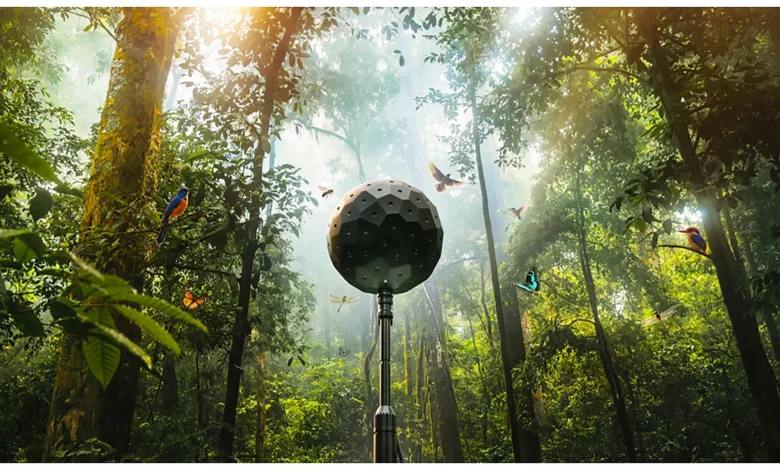
The landscape of immersive video production is undergoing a significant transformation with the introduction of the Blackmagic Design Ambisonic Microphone. Designed to capture high-fidelity, full-sphere 3D audio, this new hardware solution addresses a long-standing challenge in the industry: the difficulty of synchronizing professional-grade spatial audio with high-resolution immersive video. By utilizing 7th-order ambisonics—a format typically reserved for high-end studio installations—Blackmagic Design aims to democratize spatial sound, making it accessible for independent filmmakers and professional broadcast crews alike.
The device represents a departure from traditional microphone arrays, which often require cumbersome external processing units or complex post-production software workflows. By integrating the encoding process directly into the microphone’s internal hardware, Blackmagic has created a streamlined pipeline for capturing audio that matches the complexity of modern virtual reality and spatial video formats.
The Technical Evolution of 7th Order Ambisonics
Ambisonics is a full-sphere surround sound format that covers not only the horizontal plane but also the vertical axis, allowing listeners to experience sound as if they were physically present in the recording environment. While lower-order ambisonics (typically 1st or 2nd order) provide a basic sense of spatiality, they often suffer from poor localization and a limited "sweet spot."
Seventh-order ambisonics (7OA) represents the upper echelon of current spatial audio technology. To achieve this level of precision, the system utilizes 64 distinct audio channels to represent the sound field. This high channel count allows for significantly sharper sound source localization, meaning that when a viewer turns their head within an immersive video, the audio shifts with surgical accuracy, mimicking the way human ears naturally process sound in the real world.
The Blackmagic Ambisonic Microphone achieves this by housing an array of 108 digital MEMS (Micro-Electro-Mechanical Systems) microphones. Each MEMS unit is a miniature acoustic sensor etched onto silicon, allowing for an incredibly dense packing of sensors within a compact, faceted metal housing. This dense array is essential for calculating the complex mathematical matrices required to output 7th-order ambisonic data, effectively mapping the entire three-dimensional sonic landscape.
A Streamlined Architectural Approach
Historically, the workflow for capturing 7OA audio required a massive array of microphones connected to an external breakout box, followed by hours of processing time in a workstation to encode the audio into a usable spatial format. Blackmagic Design has eliminated these bottlenecks by embedding an internal processor within the microphone itself.
This internal engine runs advanced encoding filters—specifically designed in collaboration with Apple—to convert the raw signals from the 108 MEMS sensors into a 7th-order ambisonic output in real time. Because the conversion occurs at the point of capture, the output is ready for immediate integration into editing suites, significantly reducing the turnaround time for content creators.
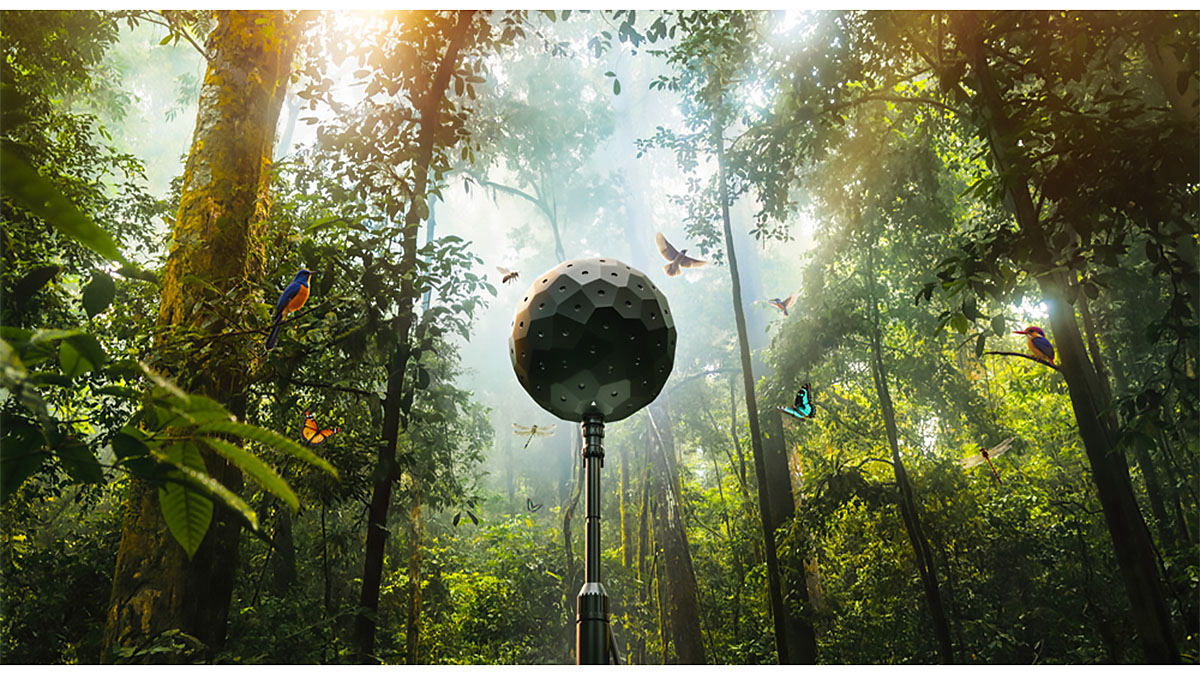
The connection interface relies on a single USB-C cable, which handles both data transmission and power delivery. This "plug-and-play" capability is inherently class-compliant, meaning the device requires no proprietary drivers or software plugins to function with modern operating systems, including macOS and Windows. This design choice aligns with the broader Blackmagic philosophy of lowering the barrier to entry for high-end production tools.
Compatibility and Workflow Integration
The most immediate application for this microphone is in tandem with the Blackmagic URSA Cine Immersive camera system. The URSA Cine Immersive was engineered to capture video content specifically for the Apple Vision Pro and other spatial computing platforms. Until now, users of such systems were often restricted to stereo audio captures, which failed to provide the necessary spatial cues to make VR or immersive experiences feel truly natural.
By mounting the Ambisonic Microphone directly onto the URSA Cine Immersive, filmmakers can record spatial audio that is metadata-linked to the video files. This ensures that the audio and visual planes are perfectly synchronized during the recording process. Furthermore, the microphone’s compatibility extends beyond the URSA ecosystem; it can be connected to an iPhone via the Blackmagic Camera app, allowing mobile creators to experiment with high-end spatial audio recording on the go.
For broadcast professionals, Blackmagic has also signaled the impending release of a USB-to-SMPTE-2110 converter. This move suggests that the company intends to position the microphone as a viable tool for live sports broadcasting and remote event coverage, where SMPTE-2110 is the standard for professional media-over-IP workflows.
Chronology of Development and Market Entry
The development of this microphone follows a multi-year trajectory of Blackmagic Design’s increasing investment in the immersive space. Following the initial rollout of their immersive camera systems, the company identified that audio quality was the primary limiting factor for developers attempting to create truly realistic virtual environments.
The announcement, slated for a December release, marks the culmination of an internal development cycle focused on miniaturizing acoustic arrays. While the market has seen previous ambisonic microphones, most have been limited to lower-order capture. The jump to 7th order represents a significant leap in data density, putting this product in direct competition with professional-grade spatial audio rigs that often retail for tens of thousands of dollars. By pricing the unit at $1,695, Blackmagic is attempting to disrupt the pro-audio segment, much like it previously disrupted the digital cinema camera market with the original Cinema Camera.
Analysis: Implications for Immersive Media
The widespread adoption of immersive content—driven largely by the rise of spatial computing headsets—has created a "content gap." While the technology to view immersive media is rapidly maturing, the tools to produce it remain fragmented and costly. The Blackmagic Ambisonic Microphone acts as a bridge in this ecosystem.
From a production standpoint, the implications are profound. Audio is often described as the "invisible" half of the cinematic experience; it provides the psychological context that makes a visual image believable. When audio is localized correctly in 3D space, it significantly reduces the sense of artificiality that can lead to motion sickness or cognitive dissonance in VR users. By providing a portable, high-resolution solution, Blackmagic is essentially setting a new baseline for what constitutes "professional" immersive audio.
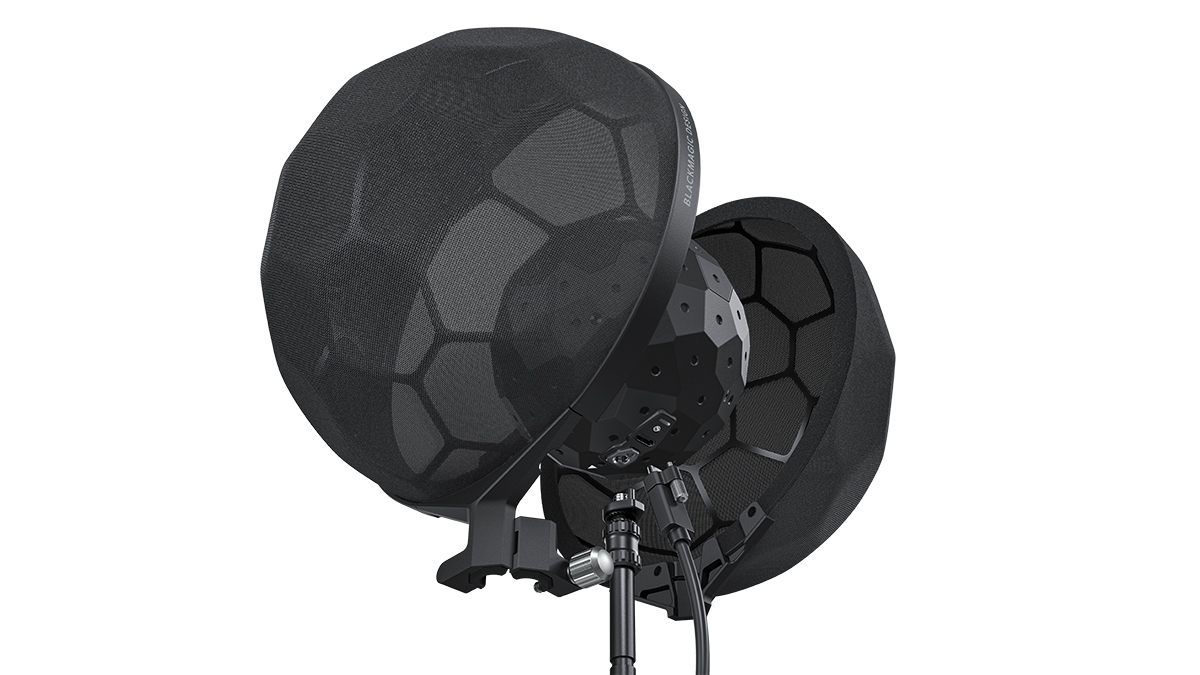
Furthermore, the integration with Fairlight Live—Blackmagic’s proprietary audio post-production and mixing environment—indicates that the company is building an end-to-end ecosystem. Users can now capture, monitor, and mix 7th-order ambisonic sound within a single software-hardware loop, a level of vertical integration that few other manufacturers can claim.
Expert Perspectives and Industry Impact
While official technical reviews are currently limited to controlled pre-release demonstrations, early reactions from the audio engineering community suggest a cautious but positive reception. Industry experts point to the use of 108 MEMS microphones as a "brute force" solution that, while clever, requires high-quality shielding and advanced signal-to-noise ratio management to ensure that the internal processor does not introduce digital artifacts.
However, given Blackmagic’s track record in digital signal processing, analysts anticipate that the microphone will perform well in controlled environments, such as studio sets and live stage performances. The ability to record directly to an iPhone also suggests a target demographic that includes digital creators and social media influencers who are looking to upgrade their production quality for immersive platforms like YouTube VR or Meta Quest.
The long-term impact of this product may extend beyond immersive video. As the broadcast industry moves toward next-generation audio formats like MPEG-H and Dolby Atmos, the ability to capture a high-density sound field becomes increasingly valuable for live events. If the microphone proves reliable in high-pressure broadcast environments, it could displace traditional surround-sound microphone arrays, which are often heavier, more fragile, and significantly more difficult to calibrate.
Conclusion
The release of the Blackmagic Ambisonic Microphone is more than a simple hardware launch; it is a strategic effort to define the standards for the next generation of digital media. By focusing on 7th-order ambisonics, Blackmagic Design is signaling that the era of "flat" audio for immersive experiences is coming to an end.
As the December release date approaches, the industry will be watching closely to see how effectively the microphone handles complex acoustic environments. If the hardware lives up to its technical specifications, it will likely become an essential tool in the kits of modern cinematographers, sound designers, and virtual reality producers. With a price point that puts it well within the reach of high-end prosumers and independent production houses, Blackmagic Design continues to push the boundaries of what is possible in the intersection of affordable technology and high-end cinematic performance. Whether in the hands of a documentary filmmaker capturing the ambient sound of a rainforest or a broadcast engineer covering a live musical performance, this microphone is poised to change the way audiences hear, and therefore feel, the digital worlds they inhabit.