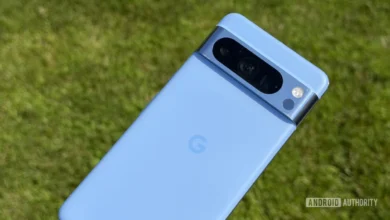
Pixel 11 to Feature Enhanced Face Unlock, While Pixel 11a and 12a Details Emerge Through Leaks


As anticipation builds for the official launch of the Pixel 11, new information has surfaced regarding its enhanced Face Unlock capabilities, promising a significant improvement in user experience. Concurrently, a fresh wave of leaks has provided an early glimpse into Google’s future mid-range offerings, revealing preliminary specifications for the Pixel 11a, codenamed "Formosan," and even hinting at the Pixel 12a, known as "marmoset." These insights, primarily attributed to the reliable leak source Mystic Leaks, paint a comprehensive picture of Google’s strategic direction for its smartphone lineup over the coming years.
Pixel 11: A Revival of Advanced Face Unlock
The most immediate and impactful revelation pertains to the Pixel 11, which is slated for release in the near future. According to sources cited by Mystic Leaks, Google has "actually improved Face Unlock in the Pixel 11." This enhancement is described as delivering an experience that is "faster, more secure and accurate in low-light." This news marks a potential turning point for Google’s biometric authentication strategy, which has seen a checkered history since its initial ambitious rollout.
The Pixel’s Face Unlock Journey: A Brief History
Google first introduced a sophisticated facial recognition system with the Pixel 4 in 2019. This system was notable for its use of an infrared (IR) dot projector and flood illuminator, akin to Apple’s Face ID, designed to create a secure 3D map of the user’s face. Unlike simpler 2D camera-based systems, the Pixel 4’s Face Unlock was intended to be highly secure, suitable for unlocking the device and authenticating payments. However, its implementation was not without controversy. Early reports highlighted a significant flaw: the system could unlock the device even if the user’s eyes were closed, raising privacy and security concerns. Google addressed this with software updates, but the feature itself was ultimately discontinued in subsequent Pixel flagships, with Google opting for under-display fingerprint sensors as the primary biometric method. The Pixel 5, 6, 7, 8, 9, and 10 series have all relied on fingerprint authentication, leaving many users longing for a secure and convenient facial recognition alternative.
The return of an "improved" Face Unlock in the Pixel 11 is therefore a significant development. The claims of "faster, more secure and accurate in low-light" directly address the shortcomings of the Pixel 4’s implementation and the general challenges of camera-only facial recognition, which struggles in suboptimal lighting conditions. In May, Mystic Leaks had previously suggested that the necessary IR-powered face unlock hardware for the Pixel 11 was "simply still not ready for release." The current update does not specify whether the improvements are purely software-based, leveraging advanced computational photography and AI algorithms, or if Google has finally managed to integrate the dedicated IR hardware suite previously deemed unready. Given the emphasis on "low-light" accuracy, it is plausible that a hardware-assisted solution, such as a refined IR system, is now in place, providing the necessary depth data and illumination for robust performance in varied environments. Without such hardware, achieving significantly enhanced low-light accuracy with a standard camera system alone presents considerable technical hurdles.
Implications of Enhanced Face Unlock
A truly secure and reliable Face Unlock system would significantly elevate the Pixel 11’s competitive standing. In an era where biometric security is paramount for safeguarding personal data and facilitating digital transactions, a robust facial recognition system would offer users a seamless and intuitive authentication method. It would bring the Pixel series closer to the user experience offered by competitors like Apple, which has successfully maintained Face ID as a cornerstone of its flagship iPhone experience. For Google, this could mean a more complete and premium user experience, further solidifying the Pixel’s position in the high-end smartphone market.

Looking Ahead: The Pixel 11a and 12a Leaks
Beyond the immediate future of the Pixel 11, the leaks also provide a fascinating glimpse into Google’s long-term product roadmap, specifically concerning its popular "a-series" of mid-range smartphones. These devices have traditionally offered compelling value by incorporating key Pixel features, particularly camera capabilities and Google’s software experience, at a more accessible price point.
Pixel 11a: Powering the Mid-Range with Tensor G6
The Pixel 11a, codenamed "Formosan," is rumored to launch in March 2027. The most striking detail about this device is its purported inclusion of the latest Tensor G6 chip. This represents a significant strategic shift for Google’s a-series. The previous Pixel 10a reportedly utilized the same chip as its immediate predecessor (the G4, if the 10a followed the 9a’s pattern of using the previous flagship’s chip), with rumors suggesting the Tensor G5 was deemed too expensive for the mid-range offering. The decision to equip the 11a with the cutting-edge Tensor G6, the same chip expected to power the flagship Pixel 11, signals Google’s intent to deliver a premium performance experience even in its more affordable line.
A Deep Dive into the Tensor G6 and Accompanying Hardware:
-
Tensor G6 Chip: Google’s Tensor chips are custom-designed System-on-Chips (SoCs) developed in collaboration with Samsung. They emphasize artificial intelligence (AI) and machine learning (ML) capabilities, enabling advanced on-device processing for features like computational photography, speech recognition, and system optimization. The move to include the latest G6 in the 11a suggests a commitment to democratizing these advanced AI features across its portfolio. This would provide the Pixel 11a with flagship-level processing power, ensuring smooth performance for demanding applications, advanced gaming, and future-proof capabilities for evolving AI tasks. This could also mean a significant jump in energy efficiency compared to older Tensor generations, potentially offsetting any battery capacity changes.
-
Titan M3 Security Chip: Complementing the Tensor G6 will be the latest Titan M3 security chip. Google’s Titan M series chips are dedicated hardware security modules designed to protect sensitive user data, encrypt the device, and ensure the integrity of the Android operating system. The Titan M3 will likely incorporate enhanced cryptographic features, improved resistance against physical attacks, and more robust protection for biometric data and payment information. This reinforces Google’s strong emphasis on device security, providing users with peace of mind regarding their personal information.
-
PowerVR C-Series CXTP-48-1536 GPU: The inclusion of a PowerVR C-Series CXTP-48-1536 GPU is noteworthy. While Google’s Tensor chips typically integrate Mali GPUs, a PowerVR unit could indicate a diversification or optimization strategy for graphics processing. PowerVR GPUs are known for their efficiency and performance, and this specific model suggests a capable graphics engine for gaming, high-resolution video playback, and complex UI rendering. Its integration would ensure a fluid visual experience, supporting the high refresh rates and graphical demands of modern mobile applications.
-
MediaTek M90 Modem: The Pixel 11a is also expected to feature a MediaTek M90 modem. MediaTek has significantly advanced its modem technology in recent years, becoming a strong competitor in the 5G modem market. The M90 modem would provide comprehensive 5G connectivity, including support for various sub-6GHz and potentially mmWave bands, ensuring fast and reliable cellular data speeds. MediaTek’s modems are also increasingly known for their power efficiency, which would be crucial for extending battery life in a mid-range device.

-
RAM: Despite these significant upgrades, the RAM capacity is reported to remain at 8 GB. While 8 GB is sufficient for current multitasking needs, some may hope for an increase in future iterations, especially as Android applications and operating systems become more memory-intensive. However, Google’s optimization of Android on Pixel devices often allows for efficient performance even with seemingly lower RAM compared to some competitors.
Display and Design: Brighter Visuals, Familiar Form Factor
The display specifications for the Pixel 11a maintain a familiar profile but with a notable enhancement in brightness.
-
Display Dimensions and Resolution: The device will retain a 6.3-inch display with a resolution of 1080×2424 pixels. This size has proven popular for balancing screen real estate with single-handed usability, and the resolution provides a sharp visual experience at typical viewing distances.
-
Brightness Boost: A significant upgrade comes in the form of increased brightness: 2,250 nits HDR and 3,350 nits peak. To put this in context, "nits" measure the luminance of a display. Higher nit counts mean a brighter screen, which is crucial for outdoor visibility under direct sunlight and for a more immersive High Dynamic Range (HDR) viewing experience. The 2,250 nits for HDR content and an impressive 3,350 nits peak brightness would place the Pixel 11a among the brightest displays in the market, even challenging some flagships. This ensures excellent contrast, vibrant colors, and superior readability in all lighting conditions, making media consumption and general usage more enjoyable.
Battery and Camera: A Slight Trade-off, A New Vision
-
Battery Capacity: Curiously, the minimum battery capacity for the Pixel 11a is reported to be 4,870 mAh, a slight downgrade from the 5,000 mAh found in the Pixel 10a. This minor reduction could be attributed to several factors, including internal design constraints, the physical space required for new components, or Google’s confidence in the power efficiency of the Tensor G6 chip and other hardware. Modern software and hardware optimizations often allow devices with slightly smaller batteries to achieve comparable or even better real-world endurance.
-
Front-Facing Camera: "dokkaebi": The only camera specification provided is the inclusion of a new front-facing camera codenamed "dokkaebi." This codename, referring to a mythical Korean goblin or spirit, suggests a unique or significant upgrade. While specific megapixels or aperture details are unknown, a "new" front-facing camera typically implies improvements in sensor technology, lens design, or computational photography algorithms, leading to better selfies, enhanced video calls, and potentially a more sophisticated implementation of facial recognition if the Pixel 11a also incorporates advanced Face Unlock features.
Aesthetic Choices and Future Hints

The Pixel 11a will be offered in a range of colors, blending traditional with vibrant options:
- Obsidian: A classic black, offering a timeless and professional look.
- Fog: Described as silver, providing a subtle and elegant alternative.
- Olive: A more playful green hue, catering to users who prefer a touch of color.
- Frost: A unique purple shade, adding a distinct and fashionable option to the lineup.
These color choices align with Google’s past strategies for the a-series, which often include one or two "fun" or pastel colors alongside more conventional options, appealing to a broader demographic.
Finally, the leaks also extend to the even more distant future, with Mystic Leaks sharing the codename for the Pixel 12a: "marmoset" (a small monkey). This continues Google’s tradition of using animal-themed codenames for its Pixel devices, offering a playful hint at what lies beyond the 11a.
Strategic Implications and Market Impact
The leaked specifications for the Pixel 11a, particularly the inclusion of the Tensor G6 chip, indicate a significant evolution in Google’s "a-series" strategy. By equipping its mid-range offering with a flagship-level processor, Google is effectively blurring the lines between its premium and affordable segments. This move could be aimed at:
- Democratizing AI Capabilities: Ensuring that a wider audience can experience the advanced AI and ML features that are central to Google’s software ecosystem.
- Enhancing Performance and Longevity: Providing users with a device that offers superior performance for its price point and remains relevant for a longer duration, given the powerful chip.
- Strengthening Ecosystem Lock-in: By offering a consistent, high-quality Pixel experience across price tiers, Google can further integrate users into its hardware and software ecosystem.
- Competitive Advantage: A Pixel 11a with a Tensor G6 and an exceptionally bright display could pose a formidable challenge to other mid-range and even some "flagship killer" devices from competitors like Samsung, OnePlus, and Xiaomi, which often rely on Qualcomm’s Snapdragon 7-series or MediaTek’s Dimensity chips for their mid-range offerings.
The Pixel 11’s improved Face Unlock, if implemented securely and effectively, would address a long-standing user demand and bring a crucial premium feature back to the Pixel flagship line. This, combined with the ambitious plans for the Pixel 11a, suggests Google is focused on delivering a cohesive and high-performance smartphone experience across its entire portfolio, leveraging its in-house silicon and software expertise to differentiate itself in a highly competitive market.
As these devices move closer to their respective launch windows, more concrete details and official confirmations will undoubtedly emerge. For now, these leaks provide an exciting glimpse into Google’s strategic vision for the Pixel lineup, promising significant advancements in both flagship innovation and mid-range value.