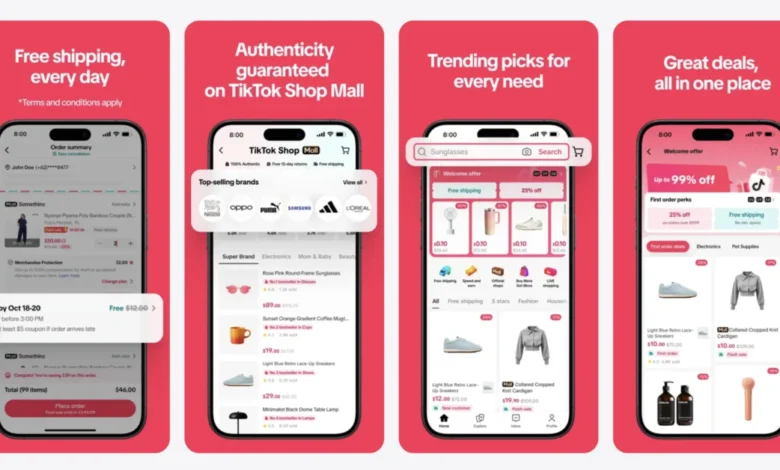
TikTok has officially pivoted its aggressive e-commerce strategy by launching a standalone application dedicated exclusively to its shopping ecosystem. The new platform, titled TikTok Shop, is currently available to users in Singapore, Malaysia, Thailand, and the Philippines, marking a significant departure from the company’s previous reliance on integrating commerce features directly within the primary social media feed. This strategic shift represents a calculated effort to transition from a discovery-based entertainment platform into a destination-based retail powerhouse.
The rollout, which was initially identified by industry observers, including social media consultant Matt Navarra, signifies the next phase of ByteDance’s global commerce ambitions. By decoupling the shopping experience from the main TikTok app, the company is positioning itself to compete more directly with regional and global e-commerce giants such as Shopee, Lazada, Amazon, and the rising tide of cross-border discount platforms like Temu and Shein.
A Strategic Evolution of the User Experience
For years, TikTok has cultivated an environment where creators drive consumer demand through viral makeup tutorials, kitchen gadget demonstrations, and fashion hauls. The integration of "Shop" buttons directly into video content served as a frictionless bridge between entertainment and transaction. However, by launching a dedicated app, TikTok is signaling that it no longer views shopping merely as an auxiliary feature to its social feed, but as a core business vertical that warrants its own digital real estate.

The standalone application, currently available on both iOS and Android platforms, functions as a centralized marketplace. Features within the app include personalized algorithmic product recommendations, live-streamed shopping events, integrated order tracking, and a 24/7 customer support portal. Early adopters have noted that the app experience is highly gamified, offering app-exclusive discounts, free shipping promotions, and specific "first-order" incentives designed to drive high-volume user acquisition during the initial launch phase.
Chronology of the TikTok Commerce Expansion
The launch of the standalone app is the culmination of a multi-year effort to refine the platform’s commercial capabilities.
- Early 2023: TikTok began aggressive testing of its "Shop" tab in various international markets, observing significant conversion rates from users who engaged with long-form product reviews.
- Late 2024: The company streamlined its logistics partnerships in Southeast Asia, setting the stage for more complex inventory management systems.
- Mid-2025: Reports emerged of internal discussions regarding the potential to "unbundle" core features, allowing the company to monetize specific behaviors—like booking travel or purchasing goods—outside of the main content feed.
- November 2026: The official launch of the standalone TikTok Shop application in Singapore, Malaysia, Thailand, and the Philippines, marking the first time the company has separated its shopping arm into a distinct, dedicated mobile utility.
Market Context and Strategic Implications
The decision to focus the initial rollout on Southeast Asia is not accidental. The region has become one of the most competitive battlegrounds for "social commerce" in the world. With high mobile penetration rates and a demographic that is increasingly comfortable with live-streamed purchasing, the four selected markets provide a robust testing ground for the app’s infrastructure.
According to data from the Google Play Store, the app has already surpassed 50,000 downloads, with consistent traffic reported in the Singaporean Apple App Store. The technical infrastructure of the app is managed by TikTok Pte. Ltd., which operates independently from the U.S.-based TikTok USDS Joint Venture. This distinction is vital; while the U.S. branch focuses on data security, algorithm moderation, and regulatory compliance within the American market, the global entity remains free to experiment with aggressive e-commerce growth strategies in regions with different regulatory landscapes.

The Broader "App-Within-an-App" Trend
TikTok’s move to create a standalone shop is part of a larger, broader trend of "verticalizing" digital services. Earlier this year, the company introduced "TikTok GO," a specialized service for travel and hotel bookings that allows users to move from video discovery to reservation within the same ecosystem. Furthermore, the company launched "Must Eat," a localized restaurant discovery and booking guide in major U.S. metropolitan areas, and "PineDrama," a dedicated app for short-form serialized dramas.
These developments suggest a deliberate "unbundling" strategy. By creating niche apps for shopping, travel, and entertainment, TikTok is attempting to capture the user’s intent-based traffic. When a user opens the main TikTok app, they are typically in a "discovery" mindset—looking to be entertained or distracted. By contrast, a user who downloads and opens the TikTok Shop app is in a "transactional" mindset, intending to spend money. Capturing both mindsets through separate interfaces allows for more tailored advertising models and improved data collection on consumer purchasing habits.
Economic Impact and Retail Competition
The implications for the broader retail landscape are significant. If successful, the standalone Shop app could siphon market share away from traditional e-commerce platforms that lack the social discovery element. By leveraging its vast library of creator content, TikTok Shop can effectively lower the "cost of trust" for new products. When a consumer sees a product being tested in real-time by a creator they follow, the psychological barrier to purchase is significantly lower than when viewing a static product image on a traditional retail site.
However, the transition to a standalone app also presents challenges. The company must now convince users to download a secondary app, effectively increasing the friction in the user journey. The success of this endeavor will depend on whether the exclusive deals, specialized search functions, and improved user interface of the new app offer enough value to overcome the convenience of simply shopping within the main social media feed.

Industry Analysis: What Lies Ahead?
Analysts tracking the tech sector suggest that this move is a high-stakes gamble on the longevity of the "creator economy." As traditional digital advertising becomes more expensive and ad-blockers become more prevalent, brands are increasingly looking for "closed-loop" systems where they can track a sale from the initial impression to the final transaction.
If the standalone app gains traction in Southeast Asia, industry experts anticipate a phased rollout in other major markets. However, the path to expansion will likely be dictated by local regulatory environments. In the United States, for example, the regulatory scrutiny surrounding data handling and foreign-owned entities remains high. While TikTok has not formally commented on whether the Shop app will reach North American shores, the company’s history of iterative testing suggests that if the metrics in the four current markets prove successful, a global expansion is a probable next step.
Conclusion: A New Retail Paradigm
The launch of the TikTok Shop app represents the maturation of social commerce. TikTok is no longer just a place to watch videos; it is attempting to become a fully integrated digital mall. By isolating the shopping experience, the company is not only seeking to increase its revenue streams but is also defining a new category of consumer behavior: the "entertainment-first" shopper.
As the company continues to refine its logistics, inventory, and user interface, the success of the TikTok Shop app will serve as a bellwether for the future of digital retail. Whether this standalone model will become the new standard for social platforms or if it will face pushback from consumers tired of app fragmentation remains to be seen. What is clear, however, is that the line between social media and the marketplace is effectively disappearing, and TikTok is currently leading the charge in dismantling the boundary between the two.