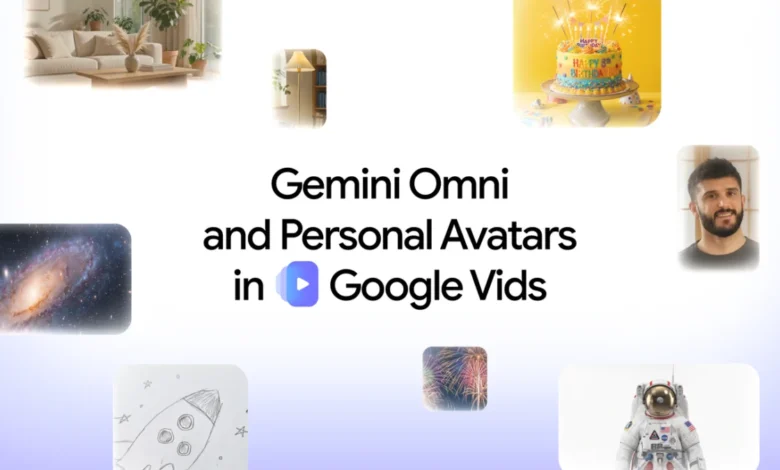
Google has announced a significant expansion of its AI-driven video creation platform, Google Vids, introducing two transformative features designed to streamline professional video production: Gemini Omni and personal avatars. These updates represent a pivotal shift in how enterprise teams approach internal communications, training, and marketing, moving away from traditional, resource-heavy production toward a prompt-based, generative workflow. By integrating the Gemini multimodal model directly into the Vids interface, Google is enabling users to generate, edit, and star in high-quality video content using little more than natural language and static images.
The launch follows a year of rapid iteration for Google’s productivity suite, as the company seeks to maintain its competitive edge against rivals like Microsoft and emerging AI startups such as Runway and HeyGen. Justin Luk, a Product Manager at Google, emphasized that these tools are designed to remove the "hard work" of the editing process, allowing users to focus on narrative and strategy rather than technical execution.
The Rise of Gemini Omni: A Multimodal Approach to Video
The centerpiece of this update is Gemini Omni, a feature that leverages Google’s most advanced multimodal AI capabilities to handle complex video generation tasks. Unlike previous iterations of video AI that relied solely on text-to-video prompts, Gemini Omni allows for a more nuanced synthesis of inputs. Users can now provide a simple text description alongside reference materials, such as a company logo, a rough hand-drawn sketch, or a specific photograph, to guide the AI’s creative direction.
The system processes these diverse inputs to ensure the resulting video aligns with the user’s specific visual vision. For example, a marketing manager could upload a sketch of a product layout and a text prompt describing a "sleek, modern office environment," and Gemini Omni will generate a professional-grade clip that incorporates both elements seamlessly. This capability addresses a common pain point in generative AI: the difficulty of achieving precise visual consistency through text alone.
Furthermore, Gemini Omni introduces a "chat-to-edit" functionality. This allows users to refine their videos through iterative dialogue with the AI. Instead of manually scrubbing through timelines or adjusting keyframes, a creator can simply type, "make the background brighter" or "swap the office setting for a beach at sunset." Because the model supports step-by-step edits, changes can be applied to specific segments of a video without requiring the entire project to be regenerated from scratch, saving significant computational time and creative effort.
Personal Avatars: The Future of Virtual Presence
Perhaps the most striking addition to the Google Vids toolkit is the introduction of personal avatars. This feature allows users to create a digital likeness of themselves that can deliver scripted messages, effectively eliminating the need for cameras, lighting setups, or multiple takes. To set up an avatar, a user uploads a single selfie and a brief voice recording. Google’s AI then maps these characteristics onto a dynamic digital model capable of synchronized lip-movement and naturalistic gestures.
Once the avatar is created, the user only needs to type their script into the Google Vids editor. The digital twin will then "perform" the text, matching the user’s unique vocal cadence and appearance. This technology is aimed squarely at the "quick update" or "personalized shout-out" use cases—scenarios where a video message is more impactful than an email, but the sender lacks the time or equipment to record a traditional video.
To address security and ethical concerns, Google has implemented strict guardrails for this feature. Personal avatars are strictly linked to an individual’s Google Account and are restricted to the account holder’s own likeness. Additionally, access is currently limited to users aged 18 and older in specific geographic regions. This controlled rollout reflects the broader industry caution regarding "deepfake" technology and the potential for identity misuse.
A Chronology of Google Vids Development
The introduction of Gemini Omni and personal avatars marks a significant milestone in the evolution of Google Vids, which was first unveiled as a "video-first" addition to the Google Workspace ecosystem.
- April 2024: Google Vids was officially announced at the Google Cloud Next conference. It was positioned as an AI-powered video creation app for work, sitting alongside Docs, Sheets, and Slides.
- June 2024: The platform entered a "Labs" phase, where a select group of Workspace customers began testing the initial "Help me create" features, which focused on generating storyboards and scripts.
- February 2025: Google integrated Veo 3.1, its high-definition video generation model, into Vids. This allowed users to generate short cinematic clips for the first time within the app.
- Mid-2025 (Current): The rollout of Gemini Omni and Personal Avatars marks the transition of Vids from a simple assembly tool to a fully generative production studio.
This timeline highlights Google’s strategy of incremental deployment, ensuring that the AI models are robust enough for enterprise-grade demands before adding layers of complexity like digital avatars.

Technical Infrastructure and Transparency
Underpinning these new features is Google’s commitment to "Responsible AI." A critical component of this is the integration of SynthID, a digital watermarking technology developed by Google DeepMind. Every video clip generated via Gemini Omni or featuring a personal avatar includes an invisible SynthID watermark embedded in the metadata and the pixels of the video.
SynthID is designed to be resilient against common editing techniques such as cropping, resizing, or color adjustments. This allows viewers and platforms to verify the AI-generated origin of the content, providing a layer of transparency that is increasingly demanded by corporate compliance departments and regulatory bodies.
Technically, Gemini Omni utilizes the Gemini 1.5 Pro and Flash architectures, which feature a massive "context window." This allows the AI to process and remember long sequences of video and large amounts of documentation simultaneously, ensuring that a 10-minute training video remains stylistically consistent from the first second to the last.
Market Context and Industry Implications
The expansion of Google Vids comes at a time when the corporate world is increasingly prioritizing video content. According to recent industry data, over 75% of knowledge workers now use generative AI in some capacity to assist with their daily tasks. In the realm of communication, video is often cited as having higher engagement and retention rates than text-based manuals or emails.
However, the "production gap"—the distance between wanting a video and having the skills to make one—has historically been a barrier for many employees. By lowering this barrier, Google is betting that Vids will become the default medium for project updates, employee onboarding, and sales pitches.
The competitive landscape is also a factor. Microsoft has been aggressively integrating Copilot into its 365 suite, including video features in PowerPoint and Clipchamp. Meanwhile, specialized startups like Synthesia and HeyGen have gained traction by offering high-quality AI avatars for training videos. Google’s advantage lies in its ecosystem integration; because Vids is built into Workspace, it can pull data directly from a user’s Drive, Docs, and Calendar, creating a seamless workflow that standalone apps struggle to match.
Analysis of Broader Impact
The implications of these updates extend beyond simple productivity. The ability to "star" in a video without being physically present suggests a fundamental shift in the concept of digital presence. For global companies, personal avatars could eventually offer real-time translation capabilities, allowing a CEO in New York to deliver a personalized video message to employees in Tokyo, with the avatar speaking fluent Japanese in the CEO’s own voice.
From a resource perspective, the "chat-to-edit" feature could drastically reduce the need for external video agencies for routine internal tasks. What used to take days of back-and-forth communication with an editor can now be accomplished in minutes through a chat interface.
However, the rise of such tools also prompts questions about the "human touch" in communication. As digital avatars become indistinguishable from real recordings, the value of authentic, unpolished human interaction may increase. Organizations will need to find a balance between the efficiency of AI-generated content and the necessity of genuine human connection.
Availability and Next Steps
Gemini Omni and the personal avatar features are currently being rolled out to specific tiers of the Google ecosystem. Access is granted to Google AI Pro and Ultra subscribers, as well as Google Workspace business customers. These tiers are designed for power users and enterprise environments where the demand for high-volume content is highest.
As Google continues to refine these models, the company has indicated that further updates will likely focus on deeper integration with other Workspace apps and expanding the customization options for avatars. For now, the introduction of Gemini Omni and personal avatars serves as a clear signal: the era of the "AI-first" video editor has arrived, and it is poised to redefine the visual language of the modern workplace.
Related posts: