Inside MareNostrum V: The Architectural Evolution and Strategic Impact of Europes New Supercomputing Powerhouse

The campus of the Polytechnic University of Catalonia in Barcelona presents a striking architectural juxtaposition that captures the history of human calculation. Within the 19th-century Torre Girona chapel, beneath high stone arches and stained-glass windows, sits a massive illuminated glass box that once housed the primary racks of the original MareNostrum supercomputer. Today, while the chapel remains a museum piece for the 2004 iteration, its successor, MareNostrum V, occupies a dedicated, state-of-the-art facility next door. Representing a total investment of over €202 million, MareNostrum V is not merely an upgrade; it is a fundamental shift in High-Performance Computing (HPC) architecture, designed to serve as a cornerstone for European scientific research, artificial intelligence, and quantum exploration.
The inauguration of MareNostrum V in late 2023 marked a milestone for the EuroHPC Joint Undertaking, a collaborative effort between the European Union, Spain, Portugal, and Turkey. As one of the fifteen most powerful supercomputers in the world, the machine offers a peak performance of approximately 314 Petaflops, a scale of computation that allows for simulations and data processing tasks that were previously impossible on the continent. For the modern data scientist, transitioning from standard cloud environments like AWS or distributed frameworks like Spark to an HPC environment of this magnitude requires a complete recalibration of how software interacts with hardware.

The Dual-Partition Architecture: GPP and ACC
Unlike a traditional server, MareNostrum V is bifurcated into two distinct computational partitions, each optimized for specific types of scientific inquiry. This hybrid design ensures that the machine can handle both traditional numerical simulations and the massive parallel requirements of modern generative AI.
The General Purpose Partition (GPP) is the workhorse for highly parallel CPU tasks. It consists of 6,408 nodes, each equipped with 112 Intel Sapphire Rapids cores. With a combined peak performance of 45.9 Petaflops, the GPP is designed for applications such as climate modeling, weather forecasting, and complex engineering simulations where raw serial processing power and large memory per core are paramount.
The Accelerated Partition (ACC), by contrast, is the engine of the AI revolution. It contains 1,120 nodes, each powered by four NVIDIA H100 SXM5 GPUs. The H100 is widely considered the gold standard for training large language models and conducting molecular dynamics research. With a single H100 unit retailing for approximately $25,000, the GPU infrastructure alone represents a capital investment exceeding $110 million. This partition reaches a peak performance of 260 Petaflops, providing the necessary throughput for the next generation of European AI development.

The Network as the Computer: Fat-Tree Topology
In the realm of distributed computing, the physical wiring of the machine is as critical as the processors themselves. A common bottleneck in large-scale neural network training is "GPU idling," where expensive chips sit dormant while waiting for data to transfer across the network. To mitigate this, MareNostrum V utilizes an InfiniBand NDR200 fabric arranged in a fat-tree topology.
In a standard network, bandwidth often becomes congested as more nodes attempt to communicate through a central switch. A fat-tree topology addresses this by increasing the bandwidth of the links as they move up the network hierarchy—essentially making the "trunk" of the tree thicker to accommodate the traffic from the "branches." This architecture ensures non-blocking bandwidth, meaning any of the 8,000 nodes can communicate with any other node with minimal latency. For researchers, this means that the "computer" is not a single node, but the entire interconnected fabric, operating as a singular, cohesive entity.
A Chronology of Supercomputing Excellence in Barcelona
The arrival of MareNostrum V is the latest chapter in a two-decade timeline of computational advancement at the Barcelona Supercomputing Center (BSC-CNS).

- 2004: MareNostrum 1 is installed in the Torre Girona chapel, debuting as the most powerful supercomputer in Europe with a performance of 42.35 Teraflops.
- 2006: The system is upgraded to MareNostrum 2, nearly doubling its capacity to 94.21 Teraflops.
- 2012: MareNostrum 3 is launched, transitioning to Intel Xeon processors and reaching 1.1 Petaflops.
- 2017: MareNostrum 4 arrives with a performance of 13.7 Petaflops, incorporating a diverse range of technologies including ARM and POWER9 processors.
- 2023: MareNostrum V is inaugurated, representing a twenty-fold increase in power over its predecessor and integrating quantum computing capabilities for the first time.
Integration of Quantum Infrastructure
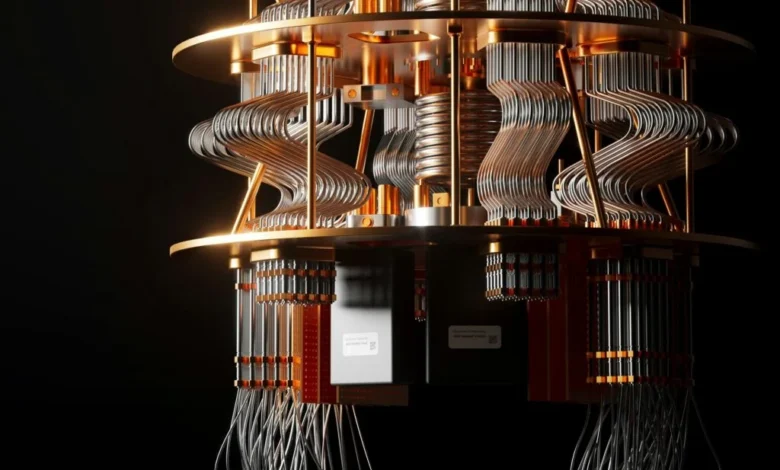
Perhaps the most forward-looking aspect of MareNostrum V is its logical and physical integration with Spain’s first quantum computers. The facility now houses MareNostrum-Ona, a state-of-the-art quantum annealer based on superconducting qubits. This integration creates a hybrid classical-quantum computing environment.
In this ecosystem, quantum processing units (QPUs) do not replace the classical CPU or GPU; instead, they act as highly specialized accelerators. When the supercomputer encounters "hard" optimization problems—such as those found in quantum chemistry or complex logistics—it can offload those specific sub-tasks to the quantum hardware. This synergy positions the Barcelona Supercomputing Center at the forefront of the "Quantum Advantage" era, where classical and quantum systems work in tandem to solve problems that were previously intractable.
Operational Realities and the SLURM Ecosystem
Accessing a €202 million machine is fundamentally different from using a local workstation or a commercial cloud provider. The environment is heavily restricted, operating behind a strict "airgap" for security reasons. Compute nodes have no outbound internet access, meaning researchers cannot download libraries or datasets on the fly. All dependencies must be pre-compiled and staged in the storage directory before a job is submitted.

The management of these resources is handled by the Simple Linux Utility for Resource Management (SLURM). Because thousands of researchers share the machine, users do not execute code directly. Instead, they submit bash scripts containing #SBATCH directives that specify the required number of nodes, CPU cores, GPUs, and a strict "wall-time" limit. If a simulation exceeds its requested time by even a second, the scheduler terminates the process to ensure the next researcher’s job can begin on schedule.
This "logging in the dark" approach requires a disciplined workflow. Since there is no live terminal output during a run, researchers must rely on standard output (stdout) and error (stderr) log files to monitor progress and debug failures.
The Limits of Parallelism: Amdahl’s Law in Practice
A recurring challenge in HPC is the efficient scaling of software. Newcomers often assume that doubling the number of cores will halve the computation time, but they are frequently met with the reality of Amdahl’s Law. This mathematical principle states that the speedup of a program is strictly limited by its serial fraction—the part of the code that cannot be parallelized.

For example, if only 95% of a code can be parallelized, the maximum theoretical speedup is 20x, regardless of whether the researcher uses 100 cores or 10,000. Furthermore, as the number of nodes increases, the "communication overhead"—the time spent moving data between cores via the InfiniBand network—eventually outweighs the computational gains. Writing code for MareNostrum V is therefore an exercise in balancing the compute-to-communication ratio, ensuring that the hardware is used productively rather than being wasted on excessive data synchronization.
Strategic Implications for European Sovereignty
The investment in MareNostrum V carries significant weight in the context of global technological competition. By providing free access to European researchers through the Spanish Supercomputing Network (RES) and the EuroHPC Joint Undertaking, the EU is fostering a self-sufficient ecosystem for high-tech development.
Director of the Barcelona Supercomputing Center, Mateo Valero, has frequently emphasized that such infrastructure is vital for "digital sovereignty." By hosting these capabilities within Europe, the scientific community can pursue advancements in sensitive areas like personalized medicine, climate change mitigation, and sovereign AI models without relying on external corporate entities. The "Development Access" track specifically encourages data scientists to port their machine learning models to the HPC environment, lowering the barrier to entry for the next generation of computational researchers.

Conclusion
MareNostrum V stands as a testament to the evolution of digital architecture, moving from the modest racks of the early 2000s to a massive, hybrid, quantum-integrated powerhouse. While the blinking cursor of a standard SSH login prompt may seem underwhelming, it represents a gateway to one of the most sophisticated machines ever built. By mastering the complexities of SLURM, the nuances of fat-tree topologies, and the constraints of Amdahl’s Law, researchers are leveraging this €202 million engine to redefine the boundaries of what is possible in science and technology. As the facility continues to integrate quantum capabilities, the chapel at Torre Girona remains a reminder of how far the architecture of thought has traveled in twenty years.