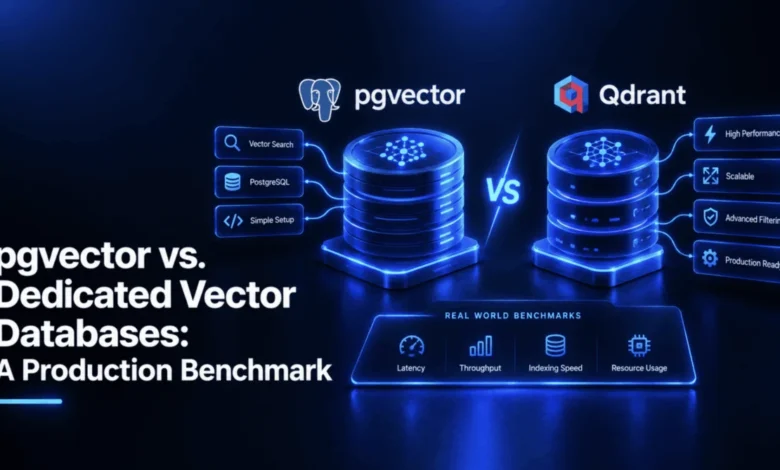
The rapid evolution of Large Language Models (LLMs) has necessitated a fundamental shift in data infrastructure, bringing the "vector database" to the forefront of modern software architecture. For many engineering teams, the dilemma is whether to integrate vector search capabilities directly into an existing PostgreSQL instance using the pgvector extension or to deploy a specialized, purpose-built vector database. This decision carries significant implications for operational overhead, query latency, and system scalability. By examining technical benchmarks and architectural trade-offs, we can move beyond marketing rhetoric to determine which approach is most suitable for production environments.
The Evolution of Vector Search in PostgreSQL
The introduction of pgvector in 2021 transformed PostgreSQL from a traditional relational database into a multimodal powerhouse. By enabling the storage and querying of high-dimensional embeddings alongside structured relational data, pgvector allowed developers to perform hybrid searches—combining semantic similarity with SQL-based filtering—without introducing a new moving part into their stack.
The chronology of vector search adoption mirrors the broader AI boom. Initially, organizations relied on specialized systems like Milvus or Pinecone, which were built from the ground up for high-throughput similarity searches. However, as PostgreSQL matured, the pgvector extension evolved from a experimental tool to a production-ready solution, supporting advanced indexing methods like HNSW (Hierarchical Navigable Small World) and IVFFlat. This progress has prompted a persistent debate: Is a general-purpose database equipped with vector capabilities sufficient for enterprise-grade AI applications, or do dedicated systems offer an indispensable performance advantage?
Technical Architectures: Integrated vs. Specialized
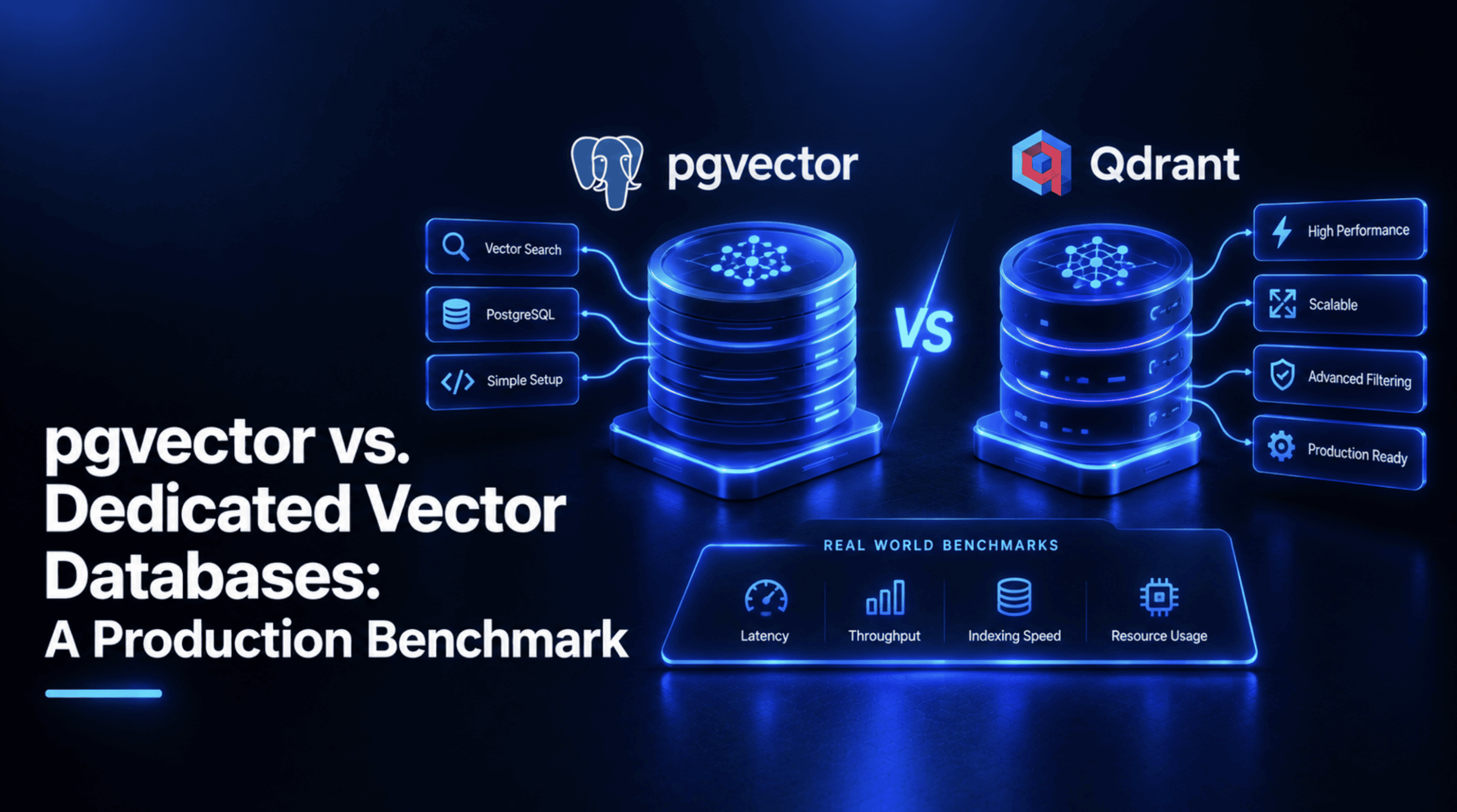
The primary argument for pgvector is architectural simplicity. In a standard microservices environment, adding a dedicated vector database requires managing another network hop, ensuring data consistency across two distinct systems, and monitoring an additional set of infrastructure logs and backups. With pgvector, an embedding resides in the same table as the source text, allowing developers to execute a single query that joins relational metadata with vector similarity results.
Conversely, dedicated vector databases are designed as distinct, purpose-built services. Systems such as Qdrant, Pinecone, Weaviate, and Milvus are engineered to handle massive, distributed datasets where vector search is the primary operation rather than an ancillary feature. These systems often employ specialized memory management, GPU acceleration, and sharding strategies that are optimized for scenarios where billions of vectors must be queried with sub-millisecond latency.
Benchmarking Performance at Scale
To provide an objective assessment, it is essential to look at performance under load. While small-scale testing on a local development machine can confirm functionality, it often fails to expose the architectural limits of either system. According to industry-standard benchmarks—notably those conducted using the ANN-Benchmarks framework—the divergence in performance becomes apparent when datasets reach the 50-million-vector threshold.
In comparative tests utilizing AWS r6id.4xlarge hardware, results indicated a nuanced performance profile. When using pgvector (augmented with the pgvectorscale extension), the system demonstrated superior throughput, reaching upwards of 470 queries per second (QPS) at 99% recall. This suggests that for high-volume, read-heavy workloads where concurrency is a priority, PostgreSQL is highly competitive.
However, dedicated solutions like Qdrant demonstrated distinct advantages in tail latency. In the same 50-million-vector test, Qdrant maintained a tighter distribution of response times, with p99 latencies approximately 48% lower than the pgvector configuration. This makes dedicated systems more attractive for applications where strict Service Level Agreements (SLAs) regarding latency are non-negotiable. Furthermore, index build times—a critical factor for frequently updated datasets—tended to be significantly faster in dedicated vector engines, which are often optimized for rapid ingestion and re-indexing.
Contextualizing the Decision: The "Vendor Pitch" vs. Reality
A common pain point for engineering managers is the pressure from vendors to migrate to a dedicated vector database prematurely. These pitches often rely on the assertion that general-purpose databases will "hit a wall." However, empirical data suggests that this wall is significantly further out than often claimed. For many organizations, the complexity of maintaining a secondary database far outweighs the marginal performance gains achieved at the 10-million-vector scale.
The decision-making framework should ideally be centered on the specific requirements of the application:
- Transactional Integrity: If your application requires atomic updates where an embedding must be updated in perfect sync with its associated relational data, the integrated approach of pgvector is a significant advantage.
- Operational Complexity: For teams with limited DevOps capacity, the "zero-ops" nature of managed vector databases (like Pinecone) or the ability to reuse existing PostgreSQL infrastructure is a decisive factor.
- Scale and Latency SLAs: If the system is expected to serve hundreds of millions of vectors with hard real-time latency requirements, the distributed, specialized architecture of Milvus or Qdrant becomes the logical choice.
Industry Implications and Future Trends
The ongoing competition between integrated and dedicated solutions is driving innovation in both camps. The emergence of extensions like pgvectorscale indicates that the PostgreSQL ecosystem is actively closing the performance gap. By introducing features like StreamingDiskANN, the pgvector community is attempting to bring the specialized performance of dedicated vector engines directly into the relational world.
Meanwhile, dedicated vector databases are increasingly adopting "hybrid" features, attempting to mirror the relational capabilities of PostgreSQL to stay relevant in traditional enterprise workflows. This convergence suggests that the future of data infrastructure may be less about choosing one category over the other and more about selecting the right tool for specific architectural bottlenecks.
Final Assessment
The data indicates that there is no singular winner in the pgvector vs. dedicated vector database debate. For most applications, especially those in the early to growth stages, pgvector offers a highly efficient, cost-effective, and operationally simple path forward. It is more than capable of handling millions of records with high concurrency, provided the system is properly tuned with appropriate indexing methods like HNSW.
However, the "dedicated" argument is not without merit for specific, high-scale enterprise use cases. Organizations operating at the extreme edge of data volume, or those requiring advanced, built-in features like hybrid BM25 search, vector quantization, and hardware-accelerated indexing, will find that purpose-built systems offer a more predictable and scalable foundation.
Ultimately, the choice should be dictated by a rigorous internal audit of existing infrastructure, developer expertise, and the specific performance thresholds required by the product roadmap. The "wall" that vendors often warn about is real, but it is rarely the obstacle that dictates the success or failure of a modern AI-driven application. Most teams will find that by the time they truly outgrow the capabilities of a well-optimized PostgreSQL instance, their organization will have the resources, data volume, and engineering maturity to make a transition to a specialized database a natural and informed evolution rather than a reactive panic.
As the ecosystem continues to mature, we can expect the lines between these categories to blur further, with PostgreSQL likely continuing its dominance as the primary store for integrated AI applications, while dedicated databases solidify their niche as high-performance engines for the most demanding, massive-scale search operations in the industry. For the engineering manager, the mandate remains: measure your own workloads, prioritize the simplicity of your stack, and defer infrastructure complexity until your data volume or performance requirements demand a dedicated solution.