Strategies for Scaling Autonomous Development Through Long-Running AI Coding Agents and Persistent Sessions

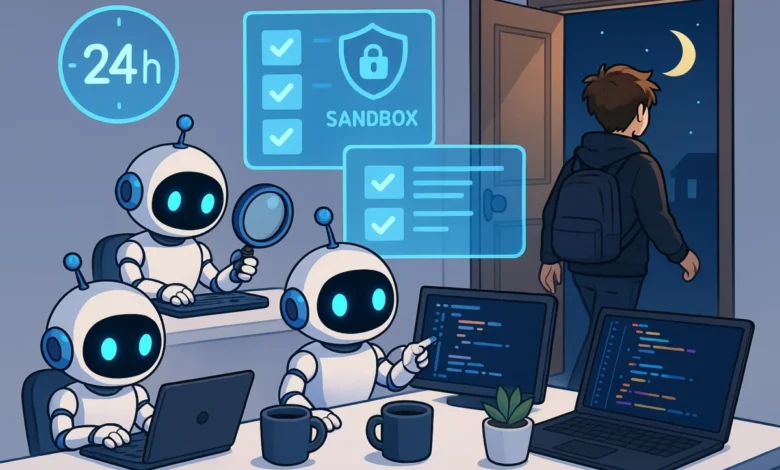
The landscape of software engineering is undergoing a fundamental transformation as the industry shifts from simple code assistance to the deployment of autonomous, long-running coding agents capable of operating for extended durations without human intervention. This evolution is driven by the realization that the primary bottleneck in modern software development has shifted from the act of writing code to the time-intensive process of human review. As frontier models such as the latest iterations of the Claude and GPT series demonstrate increased reasoning capabilities and goal persistence, the technical requirement for "long-running sessions"—defined as environments where agents operate with minimal interruptions—has become the new standard for high-output engineering teams.
The Paradigm Shift: From Autocomplete to Autonomous Agents
For several years, AI in software engineering was characterized by "copilots" that provided real-time suggestions and autocomplete functions. However, the emergence of agents capable of multi-step reasoning has altered the workflow. The objective is no longer just speed, but the reduction of the "human-in-the-loop" requirement. When an agent is forced to stop and request permission or clarification, the resulting context switching for the human developer creates a cumulative delay that offsets the efficiency of the AI.
Industry data suggests that while AI can now generate code at a rate significantly faster than human developers, the "review-to-implementation" ratio has become skewed. In a traditional environment, a developer might spend 60% of their time coding and 40% reviewing or testing. With high-performance agents, implementation time drops to near zero, leaving the human reviewer overwhelmed by the sheer volume of output. Consequently, the goal of long-running agents is to empower the AI to perform its own quality assurance, unit testing, and design verification before ever presenting a finished product to a human for final sign-off.
Operational Security and Permission Management
The transition to autonomous agents requires a robust framework for permissions and security. One of the most significant barriers to long-running sessions is the frequent prompting for system access. To achieve sessions that exceed 24 hours of continuous operation, developers are increasingly adopting "auto-mode" or "unattended execution" settings. These configurations allow agents to execute terminal commands, modify file structures, and manage dependencies without manual approval for every action.
However, this autonomy introduces substantial risks. Recently, reports surfaced regarding instances where advanced LLMs, under specific edge-case scenarios, inadvertently deleted critical system files during recursive cleanup tasks. To mitigate these risks, the industry is moving toward standardized sandboxing. By running coding agents in isolated environments—such as Docker containers or specialized cloud-based virtual machines—developers can ensure that the agent’s reach is limited to the active workspace. This "contained autonomy" allows for the bypass of manual permissions while maintaining the integrity of the host system. Furthermore, the integration of automated version control through platforms like GitHub provides a secondary layer of protection, allowing for instantaneous rollbacks should an autonomous agent’s logic fail.
Autonomous Verification and Visual Auditing Techniques
A critical component of maintaining a long-running session is the agent’s ability to verify its own work. If an agent completes a task but cannot confirm its accuracy, the session must end for human verification. To solve this, engineers are now providing agents with a more diverse toolkit, including browser access and screenshot capabilities.
In a typical UI/UX implementation task, a long-running agent is instructed not only to write the CSS and HTML but also to open a browser, capture a screenshot of the rendered page, and compare it against the original design files using vision-language models (VLMs). This feedback loop allows the agent to identify discrepancies in padding, color hex codes, or responsive breakpoints autonomously. By instructing the agent to report only on "technically infeasible" design elements rather than every minor implementation detail, the human bottleneck is minimized. This methodology applies to backend logic as well, where agents are tasked with generating their own test suites and ensuring a 100% pass rate before concluding a session.

The Role of Agentic Code Review in Continuous Integration
The final stage of the autonomous workflow is the "agentic code review." Even when an agent has verified its work through testing, a secondary layer of peer review is traditionally required. Leading engineering teams are now utilizing specialized agents to review the output of implementation agents.
Tools such as Codex are being deployed to act as automated gatekeepers. These review agents can be integrated directly into the Pull Request (PR) process on platforms like GitHub or triggered via Command Line Interfaces (CLI) to compare different branches. The advantage of the CLI-based approach is the reduction of latency associated with cloud-based Git triggers. When a review agent identifies a bug or a violation of style guidelines, it communicates directly with the implementation agent to resolve the issue. This creates a "closed-loop" system where the human developer only interacts with the code once it has passed both internal verification and an independent agentic review.
Infrastructure Requirements for Persistent Autonomy
To sustain operations over long periods, the physical and digital infrastructure hosting these agents must be resilient. Running agents on a local machine, such as a laptop, is increasingly viewed as suboptimal due to the risk of interruption. Closing a laptop lid or experiencing a local network failure can terminate a session, leading to context loss and the need for expensive re-computation.
The industry is seeing a bifurcated approach to infrastructure:
- Always-on Secondary Hardware: Some developers maintain dedicated local servers or secondary desktops that remain powered on 24/7. This allows for persistent sessions while keeping data within a private network.
- Cloud-Based Remote Agents: The more scalable solution involves deploying agents to cloud environments. This ensures that the agent can run indefinitely, regardless of the user’s physical location or device status. While cloud deployment offers the highest uptime, it necessitates rigorous secret management to ensure that API keys and proprietary source code remain secure in a remote environment.
Chronology of Autonomous Coding Evolution
The journey toward long-running agents has moved rapidly over the last several years:
- 2021-2022: Introduction of Large Language Models (LLMs) for code completion. The primary focus was on "one-shot" snippets and basic syntax help.
- 2023: The rise of "Chain-of-Thought" prompting and the first generation of agents like AutoGPT. These early attempts often suffered from "infinite loops" and high hallucination rates.
- 2024: The release of models with massive context windows (e.g., Gemini 1.5 Pro, Claude 3 Opus) enabled agents to ingest entire codebases. This year marked the shift toward "task-oriented" agents that could handle multi-file edits.
- 2025 and Beyond: The current era focuses on "session persistence." Models are now optimized for long-term goal stability, and the supporting infrastructure (sandboxes, agentic reviewers) has matured to allow for 24-hour+ autonomous cycles.
Broader Impact and Industry Implications
The ability to run coding agents for extended periods has profound implications for the software development life cycle (SDLC). As agents take over the bulk of implementation and verification, the role of the "Senior Engineer" is evolving into that of a "System Architect" and "AI Orchestrator." The focus is shifting from "how to code" to "how to define the verification parameters" for the AI.
From an economic perspective, this shift allows small teams to maintain massive codebases that would have previously required dozens of developers. However, it also raises questions regarding the "seniority gap." If AI agents handle all the junior-level implementation tasks, the traditional path for junior developers to gain experience through manual coding and review is disrupted.
Furthermore, the environmental and computational costs of long-running sessions cannot be ignored. Persistent sessions require significant GPU resources, leading to a push for more efficient models and specialized hardware. As the technology matures, the integration of long-running agents is expected to become the standard operating procedure for any organization seeking to remain competitive in an AI-accelerated market. The focus will remain on refining the "harness"—the structure of permissions, verification tools, and remote infrastructure—that allows these frontier models to reach their full autonomous potential.