Mastering LLM Pipeline Versioning: A Technical Guide to Integrating Scikit-LLM and MLflow

In the rapidly evolving landscape of artificial intelligence, the operationalization of Large Language Models (LLMs) within standard machine learning workflows has shifted from an experimental endeavor to a business-critical requirement. As enterprises increasingly transition from prototype-based LLM applications to production-grade systems, the necessity for robust versioning, tracking, and reproducibility has never been more acute. This article examines the integration of Scikit-LLM, a library designed to bridge the gap between scikit-learn and generative AI, with MLflow, the industry-standard platform for the end-to-end machine learning lifecycle. By combining these tools, developers can effectively manage the lifecycle of LLM-integrated pipelines, ensuring that model updates, backend changes, and performance metrics are meticulously documented and readily available for audit.
The Evolution of LLM Operations (LLMOps)
The integration of LLMs into classic scikit-learn pipelines represents a significant paradigm shift in machine learning engineering. Historically, scikit-learn has been the workhorse for tabular data, classification, and regression tasks. However, the emergence of Large Language Models has necessitated a new architectural approach where text-processing components act as estimators within traditional pipelines. This hybrid model allows teams to leverage the zero-shot reasoning capabilities of models like GPT-4 or local variants like Falcon and Orca, while maintaining the modularity and syntax of the scikit-learn ecosystem.
However, this integration introduces complexity. Unlike traditional models—where weights are deterministic and stored in standard formats—LLMs often rely on external APIs, local inference backends, and varying prompt engineering configurations. Without a centralized tracking mechanism, teams risk "experiment drift," where the lineage of a model becomes obscured by multiple iterations of prompt refinements and backend swaps. This is where MLflow emerges as a critical component of the LLMOps stack, providing the infrastructure to treat LLM pipelines as first-class, versioned assets.
Establishing the Foundational Environment
To begin the process of building and tracking these pipelines, practitioners must establish a robust development environment. The initial step involves the installation of the scikit-llm library, specifically with the gpt4all extension, which allows for local execution of models without the dependency on external cloud providers. This local capability is essential for organizations concerned with data privacy and cost-efficiency.
The configuration of the SKLLMConfig serves as the entry point for backend settings. In a production environment, this would involve managing sensitive API keys and organizational tokens. For development and testing, however, local execution keys provide a sandbox to validate pipeline logic. Once the environment is configured, the focus shifts to the MLflow tracking URI. By utilizing a SQLite database backend, developers can create a persistent registry of their experiment runs. This ensures that every iteration—whether it involves a different model architecture or a variation in input data—is recorded with a unique, traceable identifier.
The Anatomy of a Reproducible Pipeline
A fundamental challenge in LLM development is reproducibility. When using LLMs, the "model" is not merely the weights of the neural network but also the configuration of the inference engine. By wrapping these components into a standard Pipeline object, developers gain the ability to chain preprocessing steps with LLM-based estimators.
The implementation of these pipelines follows a logical progression:
- Definition: Initializing the
ZeroShotGPTClassifierwithin a pipeline structure. - Parameterization: Logging the specific LLM model file and backend engine as parameters in MLflow.
- Execution: Fitting the pipeline to the training dataset.
- Serialization: Using
cloudpickleas the serialization format to bridge the gap between complex Python objects and MLflow’s model storage requirements.
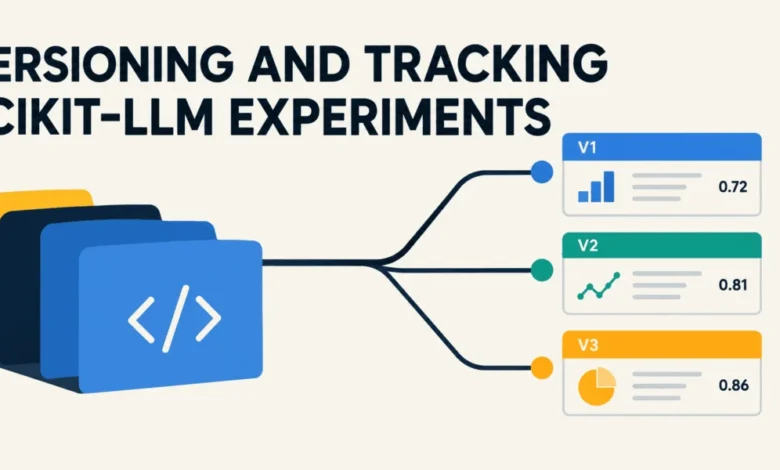
By isolating each phase within an mlflow.start_run block, engineers can tag specific versions with metadata. For instance, moving from a lightweight model like "Orca-Mini" to a more robust architecture like "Falcon" is documented as a distinct run. This granular approach to tracking is essential for debugging. If a production model begins to exhibit performance degradation, the engineering team can reference the exact run ID to inspect the parameters and the specific model file used at that point in time.
Auditing and Comparative Analysis
The ability to audit experiment history is a key differentiator for high-performing AI teams. Using the MLflow search API, practitioners can transform raw run logs into structured dataframes. This allows for an objective comparison of different model iterations. By analyzing columns such as run_id, params.llm_model_file, and status, team leads can quickly identify which experiments were successful and which encountered errors.
This data-driven approach removes the ambiguity from model selection. Instead of relying on anecdotal performance, teams can query the experiment tracking database to find the model that performed best on a validation set. For example, by ordering runs by an accuracy metric—metrics.accuracy DESC—the most effective configuration is identified programmatically. This ensures that the transition from a "sandbox" experiment to a "registered" production model is based on empirical performance metrics rather than arbitrary selection.
Transitioning from Experimentation to Production
The final, and perhaps most critical, stage of the workflow is the formal registration of the model. Registration signifies that a specific pipeline version has met the organization’s quality standards and is ready for deployment. Using mlflow.register_model, the chosen run is moved into the Model Registry. This creates a versioned entry, such as "Production_ZeroShot_Classifier Version 1," which can then be invoked by downstream services.
The implications of this structured process are significant for enterprise-level AI governance. By standardizing the registration process, organizations can:
- Maintain Audit Trails: Ensure that every model deployed to production can be traced back to its training code, dataset, and configuration.
- Streamline CI/CD: Automate the deployment process by triggering pipelines upon the successful registration of a new model version.
- Reduce Technical Debt: Prevent the proliferation of "shadow" models by enforcing a central registry that acts as the single source of truth for all production-ready LLM pipelines.
Implications for the Future of LLMOps
As we look toward the future, the integration of LLMs with traditional machine learning frameworks is only expected to intensify. The methods described here provide a blueprint for managing the inherent volatility of LLM-based systems. By leveraging the combined strengths of scikit-learn’s simplicity and MLflow’s robust tracking capabilities, developers are better equipped to navigate the challenges of the current AI landscape.
Ultimately, the goal of these systems is to remove the "magic" from LLM deployment. By treating LLMs as measurable, versionable software components, organizations can foster a culture of engineering excellence that prioritizes reliability and reproducibility. The transition from an ad-hoc, notebook-based workflow to a formal, registry-centric model is a necessary step for any team aiming to deliver sustained value through generative AI. As the technology continues to mature, the tools that enable this visibility and control will become as standard as the version control systems used in traditional software engineering today. Through this structured approach, the industry is moving closer to a future where AI systems are not only powerful but also transparent, accountable, and seamlessly integrated into the fabric of modern enterprise architecture.
Related posts: