HubSpot Pioneers Answer Engine Optimization with XFunnel, Unveiling Transformative Results in AI-Driven Search Landscape

The evolving digital landscape has ushered in a new era of information discovery, dramatically reshaping how consumers interact with brands and products. In response to this fundamental shift, HubSpot, a leading provider of customer relationship management (CRM) software, has successfully spearheaded an ambitious initiative into Answer Engine Optimization (AEO), partnering with the specialized AEO tool, XFunnel. This strategic pivot, initiated in June 2025, has not only provided HubSpot with an unprecedented understanding of its visibility within AI-powered search environments but has also yielded remarkable improvements across key performance indicators, setting a new benchmark for digital marketing in the age of artificial intelligence.
The Dawn of Answer Engines: A Paradigm Shift in Buyer Behavior
For years, traditional search engine optimization (SEO) has been the cornerstone of digital visibility, focusing on keywords, backlinks, and technical website performance to rank high on platforms like Google. However, the proliferation of sophisticated AI models such such as ChatGPT, Google Gemini, and Perplexity AI has fundamentally altered the buyer’s journey. Modern consumers are increasingly bypassing traditional search results pages, instead posing complex queries directly to AI-powered "answer engines" that synthesize information from various sources to provide concise, direct responses—often without requiring users to click through to external websites. Google’s own "AI Overviews" further solidify this trend, indicating a broader industry shift.
This seismic shift presented a significant challenge for marketers globally. While the allure of instant, personalized answers appealed to users, it created a visibility black hole for businesses. Companies struggled to ascertain whether their content was being surfaced by these AI systems, how their brand was being portrayed, or if their carefully crafted SEO strategies were still relevant. The absence of reliable measurement tools for AI visibility meant that for many, the new frontier of AI search remained largely uncharted and unoptimized.
HubSpot’s Proactive Stance: Recognizing the Need for AEO
As a company built on empowering businesses through innovative marketing and sales solutions, HubSpot recognized the critical imperative to adapt to this evolving landscape. Remaining a leader meant not just acknowledging the shift but actively shaping the future of digital engagement within AI environments. The company’s internal analysis revealed a growing disconnect: while HubSpot’s content was meticulously optimized for traditional search engines, there was no dependable method to gauge its presence or influence within the burgeoning answer engine ecosystem. This insight spurred an urgent strategic review.
"Our buyers were clearly migrating from search engines to answer engines," stated Sarah Johnson, HubSpot’s Chief Marketing Officer, in a recent press briefing. "We understood that if HubSpot wasn’t present and influential in these AI-driven conversations, we risked becoming invisible to a significant portion of our future customers. The challenge was immense: how do you optimize for an environment that doesn’t operate on traditional link clicks and ranking algorithms?"
The XFunnel Partnership: Building a Foundation for Measurement
Recognizing the need for a specialized solution, HubSpot’s marketing team initiated a partnership with XFunnel in June 2025. XFunnel emerged as a pioneering AEO tool specifically designed to measure and optimize AI visibility across leading answer engines like ChatGPT, Gemini, and Perplexity. The initial phase of the partnership was dedicated to establishing a robust measurement architecture, a foundational step deemed crucial before any optimization efforts could commence.
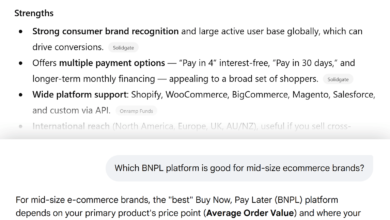
The first critical task was to meticulously define the buyer’s journey across these new answer engines for effective prompt tracking. This involved identifying the specific types of questions and problems potential customers would ask AI about solutions HubSpot offers. For instance, a buyer might ask, "What is the best CRM for small businesses?" or "How does marketing automation improve lead generation?" Understanding these natural language prompts was paramount to assessing HubSpot’s relevance.
![How HubSpot became the #1 CRM in AI search [A case study]](https://53.fs1.hubspotusercontent-na1.net/hubfs/53/How-HubSpot-became-the-%231-CRM-in-AI-search.png)
To ensure comprehensive coverage and enable agile optimization, HubSpot implemented a "product-led AEO" approach. XFunnel containers were set up for each of HubSpot’s core product lines—CRM, Marketing Hub, Sales Hub, Service Hub, and CMS Hub. This granular structure allowed sub-teams to conduct targeted experiments, track incremental improvements, and optimize AEO performance for their specific offerings, while simultaneously providing a holistic, bird’s-eye view of the company’s overall AEO strategy. This architecture also facilitated the aggregation of data across various product lines, enabling cross-functional insights and strategic alignment.
With the measurement system in place, HubSpot began tracking four core AEO Key Performance Indicators (KPIs):
- AI Visibility Score: This metric quantifies the overall presence of HubSpot’s brand and content within AI-generated answers for a defined set of prompts.
- Citation Score: This tracks how frequently AI answer engines explicitly reference or cite HubSpot’s website pages or content as sources for their responses. A higher citation score indicates greater authority and direct influence on AI output.
- Brand Mention Rate: This measures the frequency with which HubSpot’s brand name is mentioned in AI-generated answers, even if not directly cited with a link. This is crucial for brand awareness in conversational AI.
- Average Ranking Position (AI Context): While not a traditional SERP rank, this metric assesses how prominently HubSpot’s offerings or content appear within the structured output of AI answers, often as a primary recommendation or within a concise summary.
"The data we started receiving from XFunnel was eye-opening," remarked David Chang, Head of Digital Strategy at HubSpot. "It confirmed our suspicions about the shifting landscape and, more importantly, gave us the actionable intelligence we needed. We could finally see where we stood, where our competitors were winning, and the exact gaps we needed to fill."
A Three-Pillar Strategy for Dominating AI Search
Based on the initial data analysis, HubSpot formulated a comprehensive three-pillar AEO strategy, designed to systematically enhance its presence and influence across answer engines. The strategy was built on the fundamental understanding that successful AEO required a multi-faceted approach, integrating on-site content optimization, off-site amplification, and strategic community engagement.
"Our strategy was clear: we needed to ensure HubSpot was not just present, but authoritative and highly relevant in every AI-driven conversation related to our products and the problems they solve," explained Sarah Johnson. "This meant going beyond traditional SEO and embracing a holistic approach to content, partnerships, and community."
Pillar 1: On-Site Content Optimization for AI Readability
Initial XFunnel data revealed that while HubSpot’s overall AI visibility scores were respectable, its citation scores were notably weak. Answer engines were not frequently referencing pages on HubSpot’s website, indicating a missed opportunity for direct influence and traffic. The strategic imperative became clear: increase the likelihood of HubSpot content being cited as a primary source by AI.
The Growth team, analyzing the granular XFunnel data, pinpointed a critical need for more ultra-specific content tailored to the hyper-personalized nature of AI-generated answers. Answer engines often struggled to surface HubSpot content deemed worthy of citation when addressing nuanced buying questions or industry-specific fit assessments. This led to a focus on creating content designed to answer the fundamental question: "Will HubSpot work for my business?"
-
AI-Powered Industry Solutions: To address the demand for industry-specific relevance, HubSpot embarked on a large-scale project to create dedicated industry solutions pages. Leveraging an advanced internal AI content generation system, content was initially drafted using HubSpot’s extensive library of case studies, customer testimonials, and product documentation. Critically, every piece of AI-generated content underwent rigorous human review and refinement by subject matter experts before publication to ensure accuracy, quality, and brand voice consistency. These pages were meticulously structured with Breadcrumb and FAQ schema, providing AI with easily digestible, structured data. This initiative proved immensely successful: 92% of these new industry pages were subsequently cited by answer engines, leading to an impressive 49% lift in overall AI visibility for related queries. Furthermore, the team published highly targeted software comparison articles, such as "5 best CRMs for construction businesses," which saw an astounding 642% increase in citations and a 58% increase in overall mentions within AI answers.
-
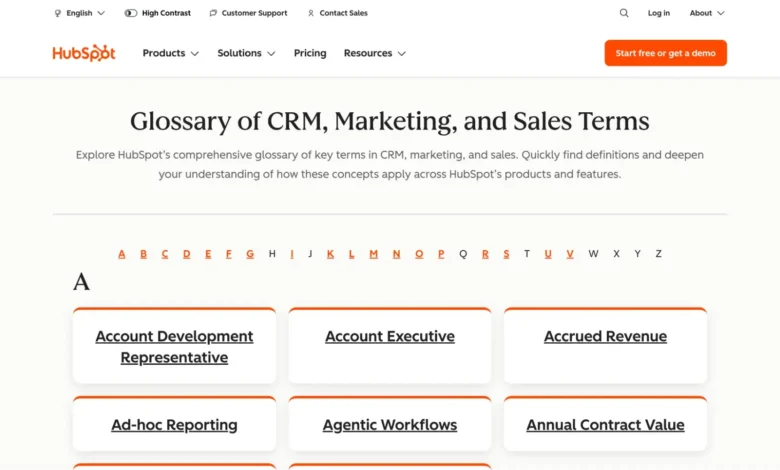
Strategic FAQ Glossaries: XFunnel data also highlighted a significant gap in HubSpot’s presence during the "Problem Exploration" stage of the buyer’s journey. Prospects often turned to AI to understand foundational concepts like "what is marketing automation?" or "how does lead scoring work?" To capture these crucial top-of-funnel queries, HubSpot launched an extensive FAQ glossary. Each glossary page featured a concise definition, common related questions, and direct links to relevant HubSpot features and educational content. Owning the definitions for these fundamental industry terms positioned HubSpot as an authoritative source from the very first interaction. As a direct result, citation share for prompts related to these terms increased by over 60%, and brand visibility for awareness-stage prompts saw a remarkable 35 percentage point increase whenever the glossary was cited.
![How HubSpot became the #1 CRM in AI search [A case study]](https://53.fs1.hubspotusercontent-na1.net/hubfs/53/CRM-in-AI-search-1-20260414-7418567.webp)
-
Enhanced Product Pages: Recognizing that product feature pages are critical for converting informed prospects, HubSpot undertook a comprehensive optimization effort. Existing pages were revamped to align with how answer engines understand and retrieve information. This included adding dedicated FAQ sections, rewriting headlines to directly address common buyer questions (e.g., "How does HubSpot’s CRM integrate with X?"), and improving overall formatting with tables and lists for enhanced readability by AI. Crucially, structured data markup was embedded throughout these pages, making it easier for AI models to parse and categorize the content. These optimizations led to a 56% increase in citations from AI answer engines and an improvement in the average AI-driven ranking position from 1.5 to a top-tier position of 1 for relevant product queries.
Pillar 2: Off-Site Amplification through Strategic Partnerships
HubSpot’s AEO benchmarks revealed a critical insight: a significant portion of AI answers about HubSpot’s products were being shaped by third-party content. This underscored the importance of building a robust presence across the broader digital ecosystem, not just on HubSpot’s owned properties.
Leveraging XFunnel’s analytical capabilities, HubSpot’s partnership team was able to identify influential publishers and industry platforms that were already winning citations from AI answer engines for relevant topics but were not consistently mentioning HubSpot. These insights allowed for highly targeted outreach. HubSpot provided these partners with tailored AEO recommendations and content templates, guiding them on how to create AI-friendly content that would not only win more citations for themselves but also prominently feature HubSpot as a leading solution.
This program scaled rapidly. By the end of 2025, HubSpot had established partnerships with hundreds of websites globally, resulting in the creation of nearly a thousand new pages of optimized content. This extensive network generated hundreds of thousands of new AI citations, all strategically linking back to or mentioning HubSpot, significantly amplifying its brand presence across the AI-driven web. "Our partnerships became an extension of our AEO strategy," noted Emily Chen, Head of Strategic Partnerships at HubSpot. "By empowering trusted third-party voices with AEO best practices, we exponentially grew our footprint where it mattered most."
Pillar 3: Leveraging Forum Growth and Community Engagement
Another compelling discovery from the XFunnel benchmarks was the substantial influence of community forums, particularly Reddit, as a highly cited source for many of HubSpot’s tracked prompts. AI models frequently pulled insights and discussions from these platforms, reflecting real-world user experiences and opinions.
In response, HubSpot integrated always-on Reddit citation monitoring into its weekly reporting through XFunnel. This allowed the team to identify high-impact subreddits and pinpoint specific instances where HubSpot mentions were lacking within relevant discussions. HubSpot then mobilized its network of community advocates—both internal product experts and external brand enthusiasts—to actively engage in these subreddits, posting helpful content that directly addressed top buyer questions and provided valuable insights, often referencing HubSpot solutions where appropriate.
The impact of localized campaigns was particularly striking. XFunnel data highlighted significant Reddit citation growth in markets like Germany (DE) and France (FR), but with virtually zero mentions of HubSpot within those citations. HubSpot swiftly launched localized advocacy campaigns in these regions. Within a single month, HubSpot’s mention rate surged from 0% to an impressive 33.5% in French subreddits and 17.1% in German subreddits, demonstrating the power of targeted, community-driven engagement. The overall growth in Reddit-driven citations was exponential, skyrocketing from a mere 178 in May 2025 to a staggering 146,000 by December 2025.
Unprecedented Results and Future Outlook
The comprehensive AEO strategy, powered by XFunnel, delivered transformative results for HubSpot throughout 2025. The company’s overall AI visibility and citation scores saw significant improvements across all product lines and buyer journey stages. The strategic blend of on-site optimization, off-site amplification, and community engagement ensured that HubSpot was not only present but consistently positioned as an authoritative and relevant answer within the new AI search landscape.
![How HubSpot became the #1 CRM in AI search [A case study]](https://53.fs1.hubspotusercontent-na1.net/hubfs/53/CRM-in-AI-search-2-20260414-1844703.webp)
This proactive approach solidified HubSpot’s position as a forward-thinking leader in the marketing technology space, demonstrating its agility in adapting to paradigm shifts in digital consumer behavior. The insights gained also provided a clear roadmap for continuous improvement, establishing AEO as a permanent and integral component of HubSpot’s overarching digital strategy.
Democratizing AEO: HubSpot’s Tools for the Broader Market
Building on the success of its internal AEO initiatives, HubSpot has moved to democratize these capabilities, making its proprietary AEO tools available to its customers. This integration allows businesses leveraging HubSpot’s platform to gain similar real-time visibility into how their brand and content appear across leading answer engines like ChatGPT, Gemini, and Perplexity.
Key features of HubSpot’s AEO tools include:
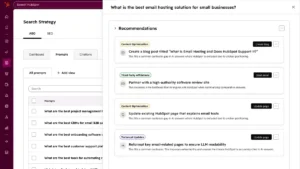
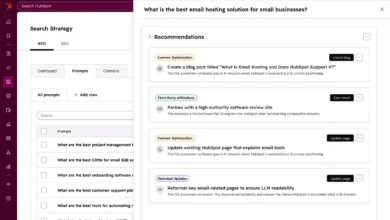
- Real-time Visibility Dashboards: Providing a clear overview of AI visibility, citation scores, and brand mention rates for tracked prompts.
- Prioritized Recommendations: Delivering actionable insights and specific content optimization suggestions, built directly from the successful tactics piloted by HubSpot’s own marketing team.
- CRM-Powered Prompt Suggestions: For Marketing Hub Pro and Enterprise users, the AEO tools integrate with their CRM data, offering prompt suggestions informed by their specific business context, customer queries, and sales cycles, rather than requiring a manual build-from-scratch approach.
"The initial question was simple: ‘When buyers asked AI, was HubSpot an answer?’" reflected Sarah Johnson. "The journey to answer that question led us to develop a sophisticated measurement system first, which then powered an incredibly effective strategy. Now, we are empowering our customers with these same capabilities, ensuring they too can thrive in this new era of AI-driven search."
This move provides HubSpot customers with a distinct competitive advantage, enabling them to proactively adapt their digital strategies to the realities of AI search. It underscores HubSpot’s commitment not only to innovating for itself but also to equipping its vast ecosystem of users with the cutting-edge tools necessary for future success.
The Broader Implications for Digital Marketing
HubSpot’s pioneering work in AEO carries significant implications for the broader digital marketing industry. It signals a fundamental shift from a keyword-centric approach to an intent- and context-driven strategy. Marketers must now focus on:
- Semantic Understanding: Creating content that comprehensively answers user questions and demonstrates deep domain expertise, rather than just targeting specific keywords.
- Structured Data and Content Readability: Optimizing content with schema markup, clear formatting (FAQs, lists, tables), and concise language to make it easily digestible and retrievable by AI models.
- Beyond Owned Media: Recognizing the growing influence of third-party platforms and community forums in shaping AI answers, necessitating a broader amplification and engagement strategy.
- Ethical AI Content Generation: The successful integration of AI in content creation, coupled with human oversight, highlights a sustainable and scalable model for producing high-quality, relevant content.
- Measurement Innovation: The necessity for new tools and metrics specifically designed to track and optimize performance within AI environments, moving beyond traditional analytics.
"HubSpot’s AEO initiative is a bellwether for the industry," commented Dr. Eleanor Vance, a leading analyst in digital marketing trends. "They’ve not only demonstrated that AEO is measurable and optimizable but have also laid out a clear playbook. Companies that fail to adapt to this shift will find themselves increasingly marginalized in the AI-first search economy."
Conclusion: A New Era of Digital Visibility
The journey undertaken by HubSpot, from recognizing a nascent challenge to developing a robust, data-driven solution, exemplifies proactive leadership in a rapidly changing technological landscape. By prioritizing measurement and then building a comprehensive three-pillar strategy, HubSpot has successfully navigated the complexities of Answer Engine Optimization. This strategic pivot ensures its continued relevance in an AI-dominated digital world and now extends these capabilities to its customers, heralding a new era of digital visibility where being the ‘answer’ is paramount. The future of digital marketing is conversational, intelligent, and increasingly AI-driven, and HubSpot is clearly positioned at its forefront.