Department of Justice Clears Federal Employees to Download TikTok on Government Devices After Landmark Ownership Transfer

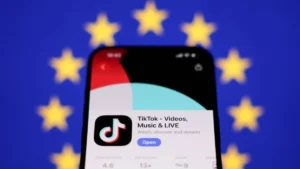
Washington D.C. – In a significant policy reversal, the U.S. Department of Justice (DOJ) has announced that federal employees are now permitted to download and utilize the popular short-form video application, TikTok, on their government-issued devices. This decision, communicated via an internal DOJ memo, marks a substantial departure from a 2022 law that had explicitly banned the app’s use on such devices due to national security concerns. The change in policy comes on the heels of a complex ownership restructuring deal, finalized in early 2026, which transferred control of TikTok’s U.S. operations to a new joint venture backed by American tech giant Oracle, private equity firm Silver Lake, and investment group MGX.
The memo, reportedly issued on July 17, 2026, clarifies that the previous prohibition no longer applies, citing the comprehensive restructuring of TikTok’s U.S. ownership and operational framework. While the original ban was a direct response to fears regarding data security and potential influence from TikTok’s former parent company, Beijing-based ByteDance, the new arrangement is designed to mitigate these concerns. Under the terms of the deal, Oracle assumes a pivotal role as the designated security partner for the joint venture, tasked with overseeing U.S. user data and content moderation operations, thereby theoretically isolating sensitive American information from ByteDance’s direct control. Despite this, ByteDance reportedly retains a 19.9% stake in the new entity, a detail that continues to draw scrutiny from some corners.
President Donald Trump is reported to have cleared "employees of Executive Branch agencies" to proceed with downloading TikTok onto their official devices. However, this authorization is not absolute, as the memo stipulates that such use remains "subject to the agency’s discretion and consistent with all applicable workplace policies." This caveat ensures that individual federal agencies retain the autonomy to impose their own specific restrictions or guidelines based on their unique security protocols and operational requirements.
Background and Genesis of the Ban
The journey of TikTok within the U.S. government ecosystem has been tumultuous, characterized by escalating national security concerns and a series of legislative and executive actions. The 2022 law that initially banned TikTok from federal devices was a direct culmination of mounting bipartisan apprehension in Congress and across various intelligence agencies. Lawmakers and national security experts expressed deep worries that ByteDance, as a Chinese company, could be compelled by Beijing under China’s national security laws to provide access to U.S. user data or to influence content on the platform. This access, it was argued, could potentially be exploited for espionage, propaganda, or surveillance purposes, posing a direct threat to national security, particularly if utilized by government employees handling sensitive information.
Concerns extended beyond mere data access to the potential for the Chinese government to leverage TikTok’s powerful algorithm for censorship or the dissemination of state-sponsored narratives. The app’s immense popularity, particularly among younger demographics, and its pervasive presence in digital culture, amplified these fears, transforming a tech policy debate into a geopolitical flashpoint. The initial ban specifically targeted government devices to prevent any direct or indirect compromise of official communications or classified information.
A Broader National Ban and Its Legal Challenges
The federal device ban was merely a precursor to a much broader attempt by the U.S. government to restrict or even fully ban TikTok across the entire United States. Throughout 2020 and 2021, under the Trump administration, executive orders were issued aiming to block new downloads of TikTok and effectively cease its operations in the U.S. These executive actions were predicated on similar national security arguments, asserting that the app posed an unacceptable risk to American data privacy and national security.
However, these efforts encountered significant legal hurdles. Civil liberties groups, TikTok itself, and numerous creators challenged the executive orders in federal courts, arguing that they violated constitutional rights, including freedom of speech and due process. Multiple injunctions were issued by federal judges, effectively blocking the implementation of the full national ban. The legal battles created a protracted period of uncertainty for TikTok’s operations in the U.S., highlighting the complexities of balancing national security imperatives with economic interests and individual freedoms in the digital age.
Just as a comprehensive ban seemed imminent and the app briefly experienced service disruptions in early 2025 due to legal and operational uncertainties, President Trump repeatedly delayed its enforcement. These delays, often accompanied by public statements urging service providers to restore access, underscored the political and economic intricacies of a full ban, especially given TikTok’s vast user base of over 150 million Americans and its significant economic footprint. The ongoing legal challenges and the political desire to find an alternative solution ultimately paved the way for negotiations surrounding an ownership restructuring.
The Landmark Ownership Transfer Deal
The current policy shift by the DOJ is directly attributable to the consummation of a complex, multi-faceted deal designed to address the deep-seated national security concerns while allowing TikTok to continue operating in the U.S. The negotiations for this deal, often referred to informally as "Project Texas" in reference to similar data localization efforts, spanned several years and involved extensive discussions with the Committee on Foreign Investment in the United States (CFIUS), an interagency committee that reviews foreign investments in the U.S. for national security implications.
The final agreement established a new U.S.-based joint venture to control TikTok’s American operations. Key components of this deal include:
- Oracle’s Role as Security Partner: Oracle, a prominent American software and cloud technology company, was designated as the primary security partner. This entails Oracle hosting all of TikTok’s U.S. user data on its cloud infrastructure, independently verifying TikTok’s software code for backdoors, and managing the application’s U.S. content moderation systems. The intention is to create a "firewall" around U.S. data, preventing unauthorized access by ByteDance or any foreign government.
- Joint Venture Ownership: The new entity is reportedly backed by Oracle, Silver Lake (a leading global technology investor), and MGX (an investment group). The exact percentage of ownership among these American entities is proprietary, but it is understood they hold a controlling stake in the U.S. operations.
- ByteDance’s Retained Stake: While the operational control and data security are now under U.S.-based entities, ByteDance maintains a 19.9% minority stake in the new U.S. joint venture. This residual ownership has been a point of contention for some critics, who argue that even a minority stake could potentially provide avenues for influence or information sharing. However, proponents of the deal contend that strict contractual agreements and Oracle’s oversight sufficiently mitigate this risk.
- Independent Oversight: The deal is expected to include provisions for independent oversight mechanisms, possibly involving a U.S.-appointed board or third-party auditors, to ensure compliance with the security agreement and to monitor data flows and content moderation decisions.
This intricate structure was meticulously crafted to satisfy the rigorous demands of U.S. national security agencies while allowing TikTok to maintain its market presence and technical continuity.
Statements and Reactions from Related Parties (Inferred)
While no immediate public statements from all parties have been released following the DOJ memo, their likely reactions can be inferred based on their past positions and the outcomes of the deal:
- Department of Justice: The memo itself serves as the official statement, indicating the DOJ’s assessment that the new ownership structure adequately addresses the national security concerns that underpinned the original ban. This suggests a careful review process and a determination that the Oracle-backed deal provides sufficient safeguards.
- TikTok/ByteDance: The company would undoubtedly view this as a significant victory and a validation of their efforts to comply with U.S. regulatory demands. A spokesperson might emphasize TikTok’s commitment to user privacy and data security, reiterating the transparency and robust protections established through the partnership with Oracle. They would likely highlight their continued dedication to providing a platform for creativity and connection for all Americans, including federal employees.
- Oracle: As the pivotal security partner, Oracle would likely underscore its role in securing U.S. user data and its commitment to upholding the highest standards of cybersecurity. Statements from Oracle executives would likely emphasize the technological sophistication of their cloud infrastructure and their unique position to provide a trusted, sovereign environment for TikTok’s U.S. operations, ensuring that American data remains in America.
- Congressional Members: Reactions from Capitol Hill are likely to be mixed. Some members, particularly those who have been vocal critics of ByteDance and Chinese tech influence, may express continued skepticism, questioning whether the 19.9% ByteDance stake represents a lingering vulnerability. They might call for ongoing vigilance and robust oversight of the new joint venture. Others might welcome the resolution, seeing it as a pragmatic approach that addresses security concerns without resorting to an outright ban, which could have negative economic and free speech implications.
- Federal Employees: For the approximately 2.2 million civilian federal employees and countless military personnel, the lifting of the ban offers a degree of convenience and greater access to a widely used social media platform. While many may not choose to download it on official devices, the option provides flexibility and removes a previous restriction that felt arbitrary to some in their personal and professional lives.
Broader Impact and Implications
The DOJ’s decision carries significant implications across various sectors, from national security policy to the future of global tech governance.
- Precedent for Foreign-Owned Tech Companies: This resolution sets a crucial precedent for how the U.S. government might handle other foreign-owned technology platforms that face similar national security scrutiny. The "Oracle model," involving a trusted U.S. third party for data hosting and security oversight, could become a blueprint for mitigating risks associated with foreign tech investments, potentially avoiding outright bans. This offers a middle ground between complete exclusion and unfettered access, creating a new regulatory pathway.
- Data Sovereignty and Cybersecurity: The deal reinforces the growing emphasis on data sovereignty and robust cybersecurity measures. It highlights the U.S. government’s determination to ensure that sensitive data belonging to its citizens and government personnel remains protected within its borders or under the control of trusted domestic entities. This could spur other nations to demand similar arrangements from global tech companies.
- Geopolitical Tech Rivalry: While not fully resolving the broader U.S.-China tech rivalry, this specific outcome represents a de-escalation in one high-profile area. It demonstrates a potential path for foreign companies to operate in critical markets despite geopolitical tensions, provided they meet stringent national security requirements. However, it does not diminish the underlying strategic competition in areas like AI, semiconductors, and quantum computing.
- Economic Impact for TikTok: For TikTok, this is a monumental win. Maintaining access to the U.S. market, which represents a substantial portion of its global user base and advertising revenue, is critical for its long-term viability and growth. The legitimization from the U.S. government could bolster advertiser confidence and attract even more users, further cementing its position in the social media landscape.
- Agency Discretion and Employee Responsibility: The clause allowing individual agencies to maintain their own discretion is vital. It means that while the overarching federal ban is lifted, agencies dealing with highly sensitive information (e.g., Department of Defense, intelligence agencies) may still opt to restrict or prohibit TikTok on their specific devices, citing their unique risk profiles. This places an onus on each agency to conduct its own risk assessment and implement appropriate policies, and on individual federal employees to exercise caution and adhere to all workplace guidelines when using any application on government devices. Training and awareness programs will likely be crucial to ensure compliance.
- Evolution of Digital Policy: This case underscores the dynamic nature of digital policy in an era of rapid technological change and evolving geopolitical landscapes. Governments are continually grappling with how to regulate global tech platforms, balancing innovation, economic benefits, individual freedoms, and national security. The TikTok saga provides a vivid illustration of this ongoing challenge and the complex solutions being devised.
In conclusion, the Department of Justice’s decision to permit federal employees to download TikTok on government devices marks a pivotal moment in the ongoing debate surrounding foreign-owned technology and national security. It reflects a nuanced approach, where a comprehensive restructuring of ownership and operational control, coupled with stringent security partnerships, has been deemed sufficient to mitigate previously identified risks. While questions and scrutiny may persist regarding the long-term effectiveness of such arrangements, this development offers a significant resolution for TikTok and sets a notable precedent for the future of global tech governance.