Google and MIT FutureTech Convene Inaugural AI for the Economy Forum to Address Global Labor Market Shifts and Technological Productivity

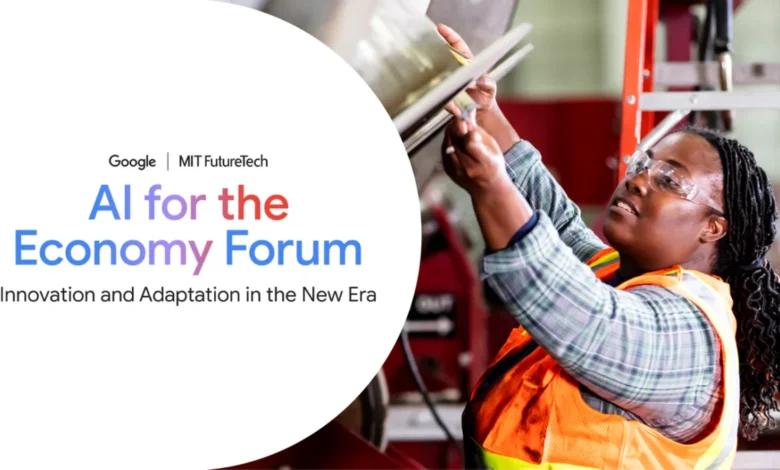
Google and MIT FutureTech have launched the inaugural AI for the Economy Forum in Washington, D.C., establishing a new high-level platform for economists, policymakers, and industry leaders to navigate the complex intersection of artificial intelligence and global commerce. The summit, centered on the premise that the socio-economic outcomes of AI are not predetermined, seeks to move beyond speculative debates and toward a data-driven framework for managing the technological transition. As artificial intelligence continues to permeate various sectors of the global economy, from manufacturing to high-level cognitive work, the forum emphasizes that realizing the technology’s full potential will require an unprecedented level of cooperation between private enterprises, labor organizations, academic researchers, and government regulators.
The convening comes at a pivotal moment for the technology sector, as the rapid deployment of generative AI has sparked both optimism regarding productivity gains and concern over potential job displacement. Google’s leadership articulated that neither the benefits—such as increased GDP and streamlined workflows—nor the risks—including workforce disruption and algorithmic bias—are guaranteed. Instead, the forum serves as a catalyst for a "new era of partnership" designed to shape how AI impacts lives and livelihoods. By gathering a diverse cohort of experts, including Nobel laureates and former economic advisors, the initiative aims to identify critical gaps in current understanding and lay a durable foundation for long-term collaboration.
A Chronology of Strategic Investment and Research
The establishment of the AI for the Economy Forum is the latest milestone in a multi-year trajectory of investments aimed at understanding and facilitating the digital transition. Google’s commitment to this space has evolved from internal product development to a broader focus on societal readiness.
In recent years, the company has scaled its efforts significantly. The timeline of these initiatives reflects a growing urgency to address the "productivity paradox"—the phenomenon where technological advancement does not immediately translate into measurable economic growth. To counter this, Google has progressively launched programs like the Digital Futures Project and the Global AI Opportunity Fund.
The current phase of this strategy involves the formalization of the AI & Economy Research Program. This program is designed to facilitate deep collaboration with external academic institutions. For instance, the Visiting Fellows program has already integrated leading economists, such as MIT’s David Autor, who is widely recognized for his work on how automation and globalization affect labor markets. Autor’s involvement signals a shift toward rigorous, peer-reviewed analysis of how AI tools can be designed to augment rather than replace human labor.
Furthermore, the chronology of these efforts includes the recent release of research by MIT’s Ben Armstrong and Julia Shah. Their findings, supported by Google’s Digital Futures Project, suggest that AI integration is most successful when it focuses on "human-in-the-loop" systems. These systems are specifically designed to minimize repetitive drudgery, promote continuous learning, and foster collaboration between human workers and machine intelligence.
Expanding the Research Infrastructure
To deepen the global understanding of these shifts, Google is expanding its research footprint through both financial grants and technical resources. This includes a new wave of Google.org funding and Google Cloud credits for a diverse group of researchers. These scholars are tasked with conducting cutting-edge studies on organizational productivity and the transformation of specific sectors, such as healthcare and manufacturing.
The research initiative is not limited to domestic concerns. Google.org is supporting a global cohort of research institutions to investigate AI’s impact on international labor markets. This global perspective is essential, as the International Monetary Fund (IMF) has recently estimated that nearly 40% of global employment is exposed to AI, with that figure rising to 60% in advanced economies. By funding research in varied policy environments, the program seeks to identify the specific regulatory frameworks needed to maximize workforce opportunities across different cultural and economic contexts.
Internally, Google is also intensifying its own analytical efforts. These studies range from the real-world impact of generative AI on knowledge-worker productivity—using Google Workspace as a primary case study—to more theoretical explorations into the "economics of AI agents." The latter is particularly significant, as autonomous AI agents represent the next frontier of the technology, capable of performing multi-step tasks with minimal human intervention.
Strategic Guidance from Global Economic Leaders
To ensure the integrity and relevance of its research and policy recommendations, the forum and the broader AI & Economy Research Program are drawing on an elite group of academic advisors. These include:
- Michael Spence: A Nobel Laureate in Economics, known for his work on signaling in labor markets and his expertise on growth in developing economies.
- Dame Diane Coyle: A professor at the University of Cambridge and a leading expert on the digital economy and the measurement of economic progress.
- Mohamed El-Erian: The former CEO of PIMCO, President of Queens’ College, Cambridge, and a professor at the Wharton School, bringing a high-level perspective on global finance and market volatility.
The inclusion of these figures suggests that the forum intends to address AI not merely as a technical challenge, but as a macroeconomic shift comparable to the Industrial Revolution or the advent of the internet.
Workforce Development and the $120 Million Opportunity Fund
Parallel to its research efforts, Google is scaling its training programs to address the "skills gap" that often accompanies technological shifts. The company reported that it has already trained 100 million people globally in digital skills, including 13 million in the United States. However, the transition to AI requires a more specialized curriculum.
To meet this need, the company has introduced the AI Professional Certificate. This program is designed to move participants beyond basic digital literacy toward "AI fluency," equipping them with the practical skills required to implement AI solutions in professional environments. Supporting these efforts is the $120 million Global AI Opportunity Fund, which focuses on making AI education accessible to underserved communities worldwide.
The education initiative also extends to the foundational level of the workforce. Through the Google AI Educator Series, in partnership with ISTE+ASCD, the company is providing AI products and literacy training to all six million K-12 teachers and higher education faculty in the U.S. This "train-the-trainer" approach is intended to ensure that the next generation of workers enters the labor market with a fundamental understanding of how to utilize AI tools responsibly and effectively.
Infrastructure and Economic Impact Data
The forum also highlighted the massive capital investment required to sustain an AI-ready economy. Google has committed $1 billion to support AI education and job training in the U.S., which is part of a larger, multi-billion-dollar investment in technical infrastructure. This includes the expansion of data centers, research and development facilities, and increased energy capacity to power the high-compute demands of large language models.
According to Google’s most recent annual U.S. Economic Impact Report, digital tools are already serving as a primary engine for economic mobility. The report highlights businesses in every state that have utilized technology to scale operations and reach new markets. The integration of AI is viewed as an extension of this trend, offering the potential to level the playing field for small and medium-sized enterprises that can leverage AI to perform tasks previously reserved for large corporations with massive human resources.
Policy Endorsements and Official Responses
A significant portion of the Washington D.C. forum was dedicated to the role of governance. Google has officially endorsed several bipartisan bills aimed at preparing the American workforce for the AI transition. These legislative efforts focus on three primary pillars:
- Economic Assessment: Developing standardized metrics to track how AI is influencing productivity and labor demand in real-time.
- Workforce Equipping: Providing federal support for AI skill development and vocational training programs.
- Worker Empowerment: Encouraging the adoption of AI in ways that enhance worker agency and job quality rather than merely reducing headcount.
While industry reactions have been generally positive regarding the call for collaboration, some labor advocates have expressed a need for more concrete protections against automated displacement. The forum serves as a venue for these discussions, allowing for a dialogue between tech giants who provide the tools and the policymakers who must manage the societal fallout of their deployment.
Broader Impact and Economic Analysis
The implications of the AI for the Economy Forum extend far beyond the immediate announcements of funds and certificates. From a macroeconomic perspective, the initiative represents a proactive attempt to manage "technological unemployment"—a concept famously coined by John Maynard Keynes.
If successful, the partnership between Google and MIT could provide a blueprint for how the private sector can mitigate the disruptive effects of its own innovations. By focusing on "labor-augmenting" AI, the research aims to prove that technology can increase the value of human labor rather than commoditizing it. For example, in healthcare, AI can handle the administrative burden of documentation, allowing clinicians to focus more on patient care. In manufacturing, AI-driven predictive maintenance can reduce downtime, making the entire operation more profitable and stable for the workers involved.
However, the success of this transition depends on the speed of institutional adaptation. Historically, education systems and regulatory bodies move slower than technological innovation. The $1 billion infrastructure and $120 million opportunity fund are significant, but they represent only a fraction of what will be required globally to retrain hundreds of millions of workers.
Ultimately, the Washington D.C. forum underscores a growing realization in Silicon Valley and beyond: the "move fast and break things" era of tech development is incompatible with the profound economic shifts promised by artificial intelligence. By building a foundation of collaborative research, inclusive training, and sensible policy, the participants of the AI for the Economy Forum are attempting to ensure that the AI revolution results in a more productive, equitable, and resilient global economy. The transition is inevitable, but as the forum’s organizers noted, the direction of that transition remains a matter of collective choice.